


Areas We Cover
Categories

How a Niche TV Platform Quietly Became the Go-To Solution for an Entire Diaspora Community
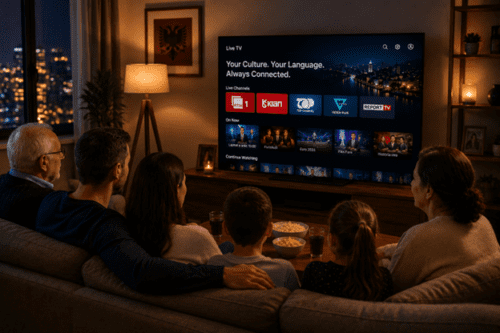
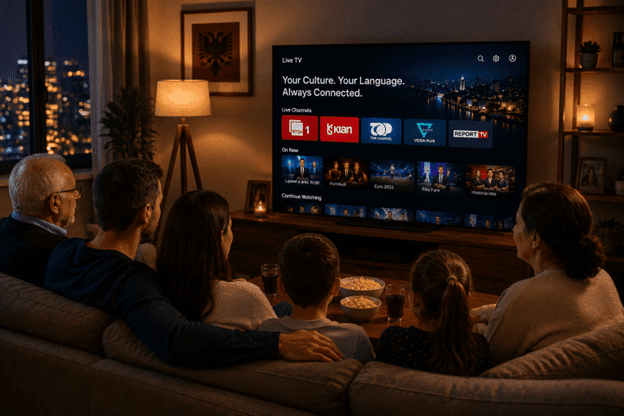
For Albanian families in Europe, television has never been purely about entertainment. It runs in the background during dinner, gets rewound when someone misses a line, gets handed to the kids when parents want them to hear the language spoken the way it sounds at home. Managing that across borders used to require real effort.
These families have always moved between languages and contexts without making a production of it. A TV service that couldn’t keep up was always going to be a problem.
When Access Becomes Infrastructure
Most diaspora media solutions feel like projects — something families have to actively maintain, troubleshoot, or use a VPN for. The online apps for live TV (shqip TV app) changed that dynamic by functioning more like infrastructure than entertainment. It’s there when needed, works without explanation, and doesn’t require the family tech person to manage subscriptions or debug connections every few weeks.
There’s a kind of invisible labour that comes with maintaining access to home country media, including the annual renewal panic, the settings that stopped working after an update, the workarounds that required a second workaround. When a platform is genuinely stable, that labour disappears. Families stop allocating mental space to “Albanian TV maintenance” and start using it the same way they use any other household utility.
This shift from “Albanian TV as a special service” to “Albanian TV as a basic household routine” happened gradually. Families stopped thinking about it as a separate category of television and started treating it as part of their regular viewing rotation.
Part of what makes this work is device behavior. When a Smart TV app loads the same way every time, without requiring re-login after updates or manual troubleshooting when the picture freezes, it builds trust the way any household appliance does — not through features, but through repetition. It works on Tuesday. It works the following Tuesday, and it works the Tuesday after a firmware update.
The reliability factor matters more than channel count. When your 75-year-old mother can access her morning shows without calling for help, the technology succeeds by disappearing. That’s where modern platforms (platforma shqip TV) apps deliver what matters most: consistency. The infrastructure is simply there when families need it, whether that’s at 7 am before school or at midnight after a long shift.
The Language Background Effect
Albanian television in diaspora households often functions as ambient language maintenance rather than appointment viewing. It plays in the background during Sunday lunch preparation, gets turned on during homework time, and stays active while relatives video-call from Pristina or Tirana. The language fills the house without demanding attention.
This background presence matters more for second and third-generation family members than direct programming choices. Teenagers absorbing Albanian through comedy shows they’re not actively watching. Toddlers’ hearing their grandmother’s language is reinforced by cartoons and children’s programming. Parents maintain their own fluency without scheduling specific learning time.
The Network Effect Nobody Planned
Albanian television succeeded in European diaspora communities not by replacing local media consumption but by integrating with it. Families didn’t want to choose between maintaining their cultural connections and adapting to their new countries. They wanted both, accessible through the same remote control, on the same living room television where their children watch German cartoons and Italian football matches. The platform that made this seamless integration possible became essential infrastructure rather than optional entertainment.
The platform’s growth followed diaspora networks rather than traditional media expansion patterns. Families in the same apartment buildings started using it. Cousins recommended it to cousins. Albanian community centers began relying on it for cultural events. What started as individual household decisions became community infrastructure.
This organic spread created something unusual: a media platform that serves both intimate family moments and larger community gatherings. The same service that helps a Stuttgart grandmother watch her morning talk shows also provides programming for Albanian cultural associations hosting integration events or language classes.
NimiTV, the largest and most trusted Albanian media platform in Europe, operates as this kind of language infrastructure for hundreds of thousands of families. Not appointment television, but the sound of home running alongside daily life in Milan, Frankfurt, or Brussels.
The technical requirements for this kind of reach are significant — 250+ Albanian channels accessible across dozens of countries with varying internet infrastructure and device preferences. But the social requirements are more complex: understanding that diaspora media consumption happens in group settings as often as individual viewing, and that reliability matters more than features.