


Areas We Cover
Categories

HOW AI VIDEO TOOLS ARE CHANGING THE WAY INDEPENDENT ARTISTS CREATE MUSIC VISUALS
For independent musicians, small theater groups, and emerging filmmakers, visual storytelling has always been powerful but difficult to produce consistently. A strong music video, a short promotional clip, or a character-driven teaser can help an audience understand the mood of a project before they hear a full song, watch a scene, or buy a ticket. The challenge is that many artists do not have access to a full production crew, studio lighting, editors, animators, or post-production teams.
That is why AI video tools are becoming more relevant to the arts. They are not replacing directors, performers, cinematographers, or editors. Instead, they are giving smaller creative teams a way to test ideas, build visual drafts, and create shareable content without waiting for a full production budget.
For indie musicians in particular, this shift matters. A song now needs more than an audio file. Artists are expected to create short-form clips, lyric visuals, behind-the-scenes content, album teasers, and social media videos across multiple platforms. The visual identity of a release often starts before the official music video is even planned.
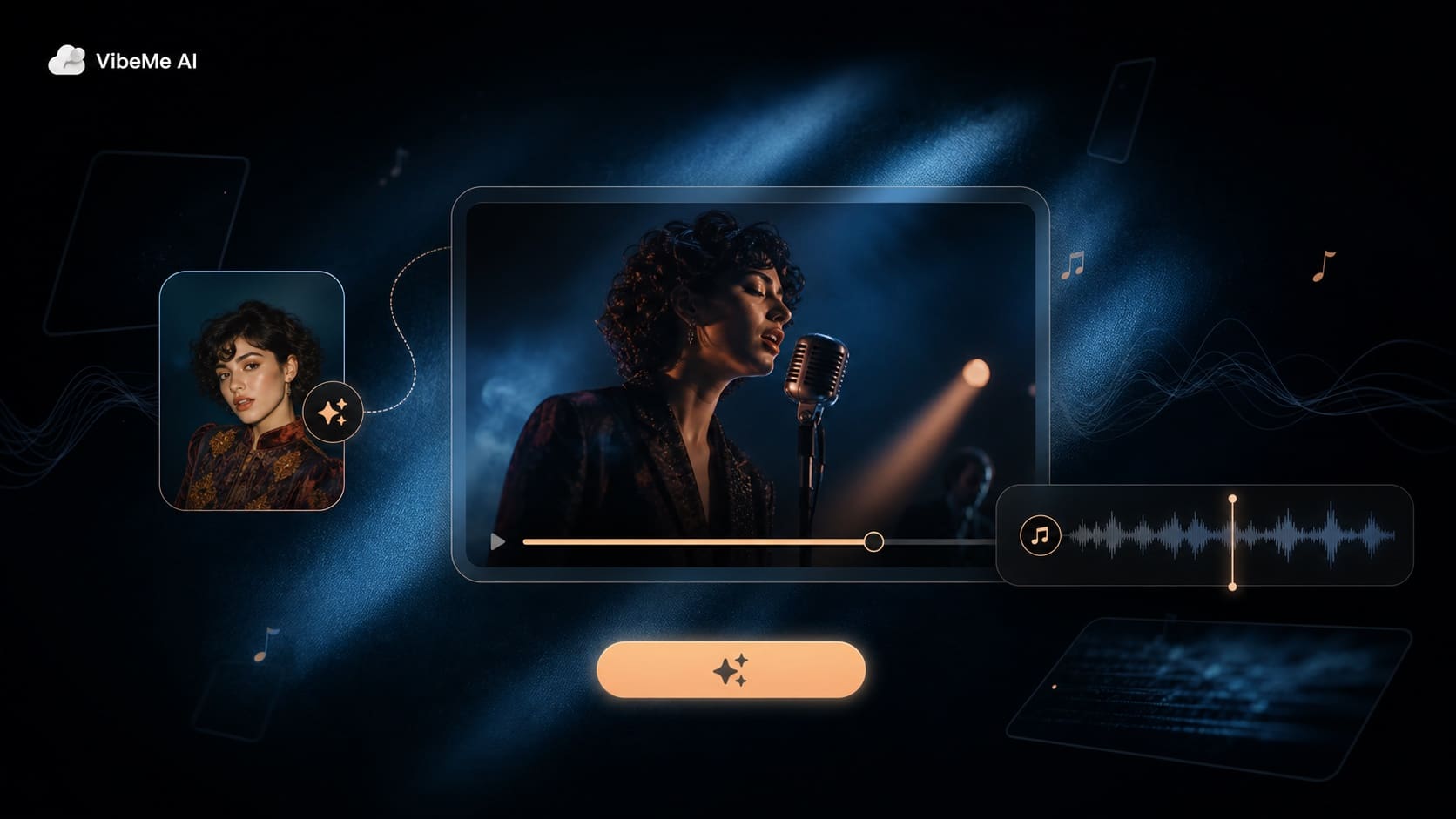
One example is VibeMe AI, a browser-based creative tool that helps artists and creators turn music, images, and ideas into short visual assets. For creators working outside the studio system, this kind of workflow can make experimentation faster and more accessible.
A New Sketchbook for Music and Film Ideas
In traditional production, the first version of a visual idea might live in a mood board, a written treatment, or a storyboard. Those formats are still valuable, but AI video tools add another layer: motion. An artist can see whether a concept feels dreamlike, theatrical, intimate, cinematic, or energetic before committing to a shoot.
A musician can test whether a song works better with a surreal visual mood, a close-up performance style, or a more narrative sequence. For song-led projects, an audio to video AI workflow can help creators begin with the rhythm, tone, and emotional shape of the track instead of starting from a blank visual canvas. A director can explore how a character might appear in motion before organizing a production day. A theater company can create atmospheric promotional clips for a performance without staging a full trailer shoot.
This does not mean every AI-generated clip should become the final piece. In many cases, the value is in the draft. Seeing an idea move can help creators decide what to shoot, what to cut, and what emotional tone they want to pursue.
Why Performance Still Matters
Even as AI tools become more advanced, audiences still respond strongly to faces, rhythm, and performance. A portrait, a singer’s expression, or a character’s subtle movement can make a short video feel personal. This is why visual tools connected to music and performance are becoming useful for campaign planning.
A musician might use artwork from an album campaign and turn it into a short animated visual. A theater group might create a moving character poster to promote an upcoming show. A filmmaker might explore a mood with a still image before casting, location scouting, or filming. For portrait-based creative assets, a singing photo AI tool can turn a still face or character image into a performance-style clip that feels connected to music, expression, and stage presence.
In all of these cases, the point is not to replace the live performance. The point is to give artists more ways to develop and communicate their ideas before a full production is possible.
Helping Smaller Artists Stay Visible
The modern arts landscape rewards consistency. Musicians, directors, actors, and production teams are often expected to publish visual content regularly, even when they are between major releases. This can be difficult for independent creators who are managing songwriting, rehearsals, editing, promotion, and audience building at the same time.
AI video tools can help fill that gap. A single project can produce several types of visual material: a teaser, a looping social clip, a character portrait, a music preview, or a simple promotional video. These smaller assets may not replace a full official music video, but they can keep an audience engaged while a larger project is still in development.
This is particularly helpful in music, theater, and film, where atmosphere matters. A poster can announce a project, but a moving visual can suggest rhythm, tone, and emotion.
The Best Use Is Still Human-Led
The strongest AI-assisted creative work usually starts with a clear artistic direction. The tool can generate motion, but the creator still decides the mood, pacing, message, and purpose. A musician knows what the song is about. A director understands the emotional arc. A theater artist understands the character and performance style.
AI works best when it supports those decisions instead of replacing them. An artist might use AI to create several rough visual directions, then choose one to refine with human editing. A filmmaker might use it to test a concept before investing in a shoot. A performer might use it to create social content that matches the visual language of a larger campaign.
What This Means for Independent Creativity
The most exciting part of this shift is not that every artist can suddenly make a blockbuster-level video. It is that more artists can now participate in visual storytelling at all. A musician with a small budget can create a visual world around a song. A theater company can promote a performance with more than a still poster. A filmmaker can test mood and movement before stepping onto a set.