


Areas We Cover
Categories

AGE GAP LOVE STORIES IN FILM THAT ACTUALLY FEEL BELIEVABLE

Reynolds Woodcock is 60 in Phantom Thread. Alma, the waitress he takes into his home, is 34. Paul Thomas Anderson never states the gap aloud, and he never needs to. The film treats the distance between them as the engine of the story and refuses to apologize for it. Reynolds selects Alma, reshapes her days around his routines, and fits her into his designs. Then she takes the control back, and the movie earns every minute of their strange, codependent bond. A convincing age gap always works like this, with the script accounting for the years and making them matter. A hollow one skips that and hopes nobody notices.
Most films with a wide age gap get this wrong. They cast two actors decades apart, then write the couple as if both were the same age. The believable ones work differently. They build the gap into what each character wants and fears.
Shared Circumstance in Lost in Translation
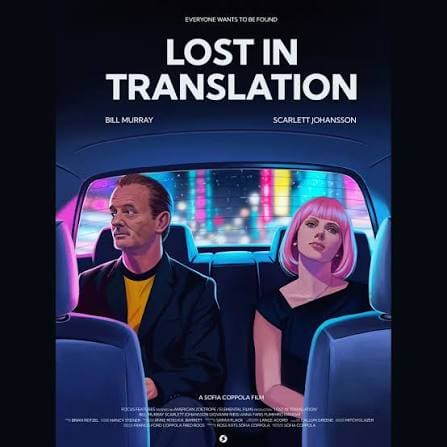
Sofia Coppola’s Lost in Translation pairs a 53-year-old actor with a woman in her early twenties. On paper the match looks like a problem. On screen it holds, because Coppola gives the two of them the same condition. Bob and Charlotte are married, stranded in the same Tokyo hotel, sleepless, and unsure of what their lives have become. The age difference stops being the point once that shared isolation takes over. Coppola also refuses the easy ending. The romance stays restrained, and the closest the two come to a declaration is a whisper on a crowded street that the audience never hears. The withholding is what makes it feel real. Two lonely people find each other for a few days, and the film lets that be enough.
The casting matters too. Bill Murray brings a worn, mid-life fatigue that a younger actor could not fake, and Scarlett Johansson plays Charlotte with the stalled uncertainty of someone whose adult life has not started yet. The gap between those two life stages is the true subject of the movie. The birth years are secondary.
Power and Its Reversal in Phantom Thread
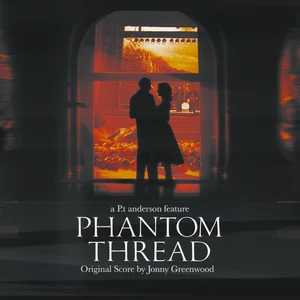
Phantom Thread deserves a closer look for how it uses the distance between its leads. Daniel Day-Lewis plays a fashion designer in 1950s London. Vicky Krieps plays the younger woman he installs in his house and his work. Anderson sets up the expected dynamic, the older established man arranging a younger partner’s life, then takes it apart. Alma finds her own form of leverage, and by the end she ends up with the power. The film argues for a bond that is unhealthy and durable at the same time. The gap is the reason the power struggle exists, and the reason the ending feels earned.
What the film understands is that a large age difference creates a default imbalance. The older partner usually has money, status, and a settled life. A lazy script leaves that imbalance unexamined. Anderson puts it at the center, then lets his younger character fight her way out of it.
Age-Gap Couples by the Numbers
Real couples rarely look like the screen. U.S. Census figures put the average age gap between heterosexual spouses at about 2.2 years, down slightly from 2.4 across the past two decades. In roughly 75% of marriages the husband is the older partner, which is why dating an older man is the pattern audiences recognize fastest when a film presents it. Only about 8.5% of opposite-sex marriages are a decade or more apart, and roughly 1% reach 28 years or beyond. The gaps that dominate movies are statistical outliers, and that rarity is part of why a weak version feels off. Viewers measure it against a world where two or three years is the norm.
The data also explains a double standard audiences carry into the theater. A film pairing an older man with a younger woman draws less objection than the reverse, and marriage statistics lean the same way. When the screen matches the pattern people already see in real life, they question it less, even at gaps the numbers call rare.
Geography changes the math. The average gap is about 2.2 years in North America and 2.7 in Europe, but it is 8.7 years in Bangladesh, 11.8 in Nigeria, and 14.8 in Gambia. A pairing that looks extreme to one audience is ordinary to another. Believability is partly cultural, which is why a film’s setting can make a wide gap plausible on its own.
Mentorship and Manipulation in An Education

An Education shows the harder version of a believable gap. Carey Mulligan plays a sixteen-year-old courted by a charming older man who turns out to be a liar and a thief. The film does not romanticize the pairing. It tracks how an older partner’s attention can seem like flattery while serving as control. The result convinces because it refuses to soften the imbalance. The discomfort is deliberate, and the film trusts the audience to sit with it. Films like Fish Tank and The Diary of a Teenage Girl work the same ground, treating the gap as a source of harm when the older party has all the leverage. A believable age-gap story turns on honesty about who controls the relationship. The ending can be tender or bleak, and either version works as long as the power dynamic is named.
The Limits of Complementary Quirks
Harold and Maude is the rare comedy that sells an enormous gap. Maude is nearly 80. Harold is 20. Their pairing works because the writing gives them a real personality match. Maude’s appetite for living answers Harold’s fixation on death, and the absurdity is the entire design. The film knows the pairing is ridiculous, so the years become part of the joke and part of the meaning. The lesson is narrow, though. Matched temperaments can support a comedy built around eccentricity. They cannot rescue a straight romance that never explains why these two people want each other in the first place.
Markers of a Convincing On-Screen Gap
A believable age-gap love story is one where the years change the relationship and the script admits it. The gap changes what each character wants and who has the power between them. Lost in Translation grounds the pairing in shared circumstance. Phantom Thread turns the distance into a power struggle. An Education treats the imbalance as a danger worth naming. Each film starts from the difference and constructs the relationship on top of it. The pairings that hold up are built on shared values and a balance of power the two can live with. When a movie does that, the audience stops counting birthdays and starts following the people. When it skips the work, no chemistry between the actors will fill the space the writers left empty.