


Areas We Cover
Categories

Opera Review: ADRIANA LECOUVREUR (Opera Festival of Chicago / North Shore Center for the Performing Arts in Skokie)
by Barnaby Hughes | July 1, 2026
in Chicago, Theater
A VERISMO MIXED BAG
Opera Festival of Chicago tackles a
neglected verismo work with admirable
ambition but uneven results
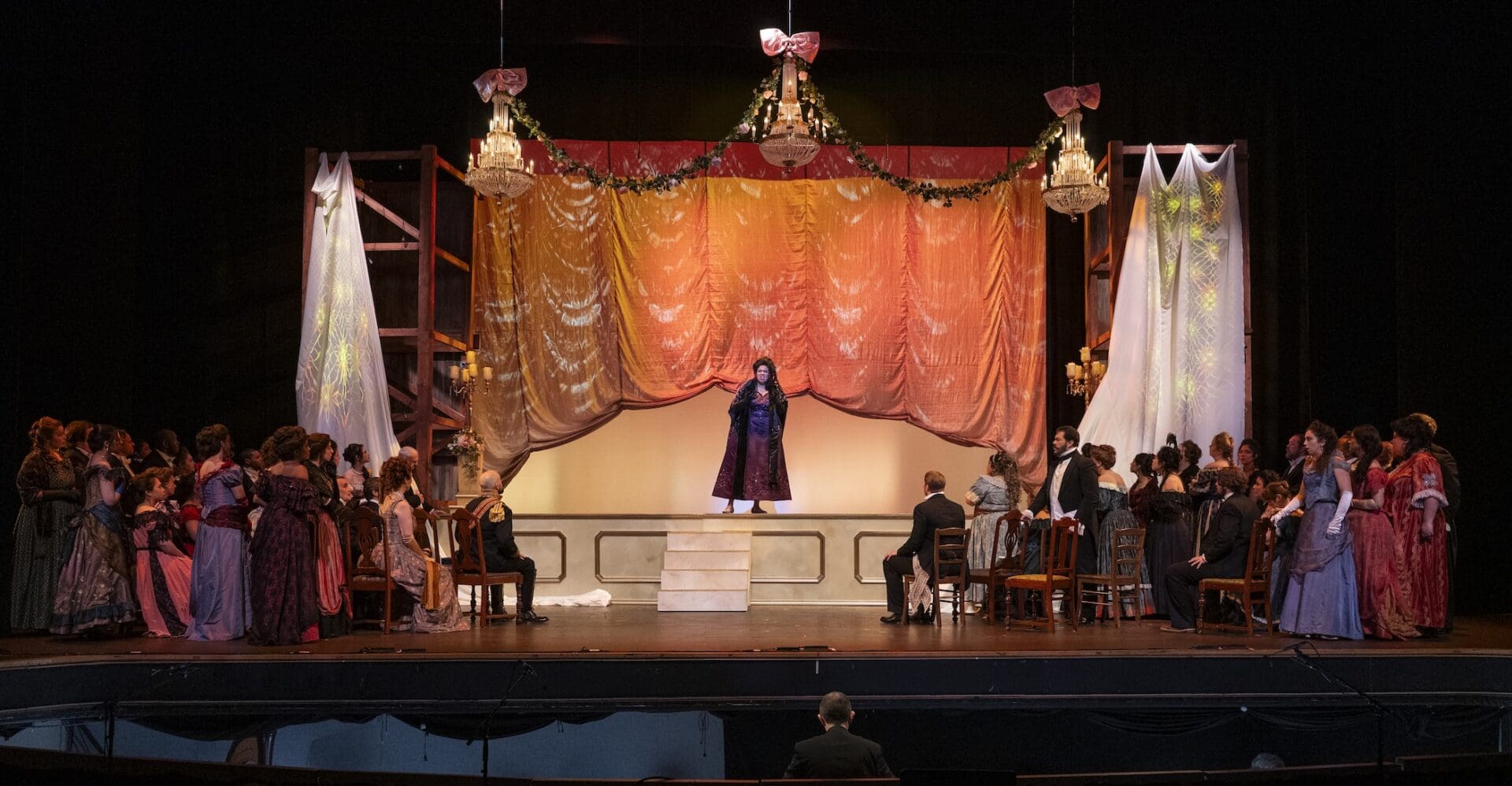
Zhanna Alkhazova (“Adriana Lecouvreur”) in Opera Festival of Chicago’s Adriana Lecouvreur
Opera Festival of Chicago’s sixth season features the company’s characteristic blend of classic and lesser-known verismo operas. Francesco Cilea’s Adriana Lecouvreur, which falls into the latter category, hasn’t been performed in Chicago since Renata Tebaldi sang the title role at Lyric Opera in 1957. The lack of audience recognition showed in the half-empty auditorium at Skokie’s North Shore Center for the Performing Arts on opening night. Opera Festival of Chicago has mounted Cilea’s work on a grand scale, complete with full orchestra, cast, staging, and ballet. Unfortunately, the quality of the production is uneven across the board, making for a somewhat unsatisfying experience.
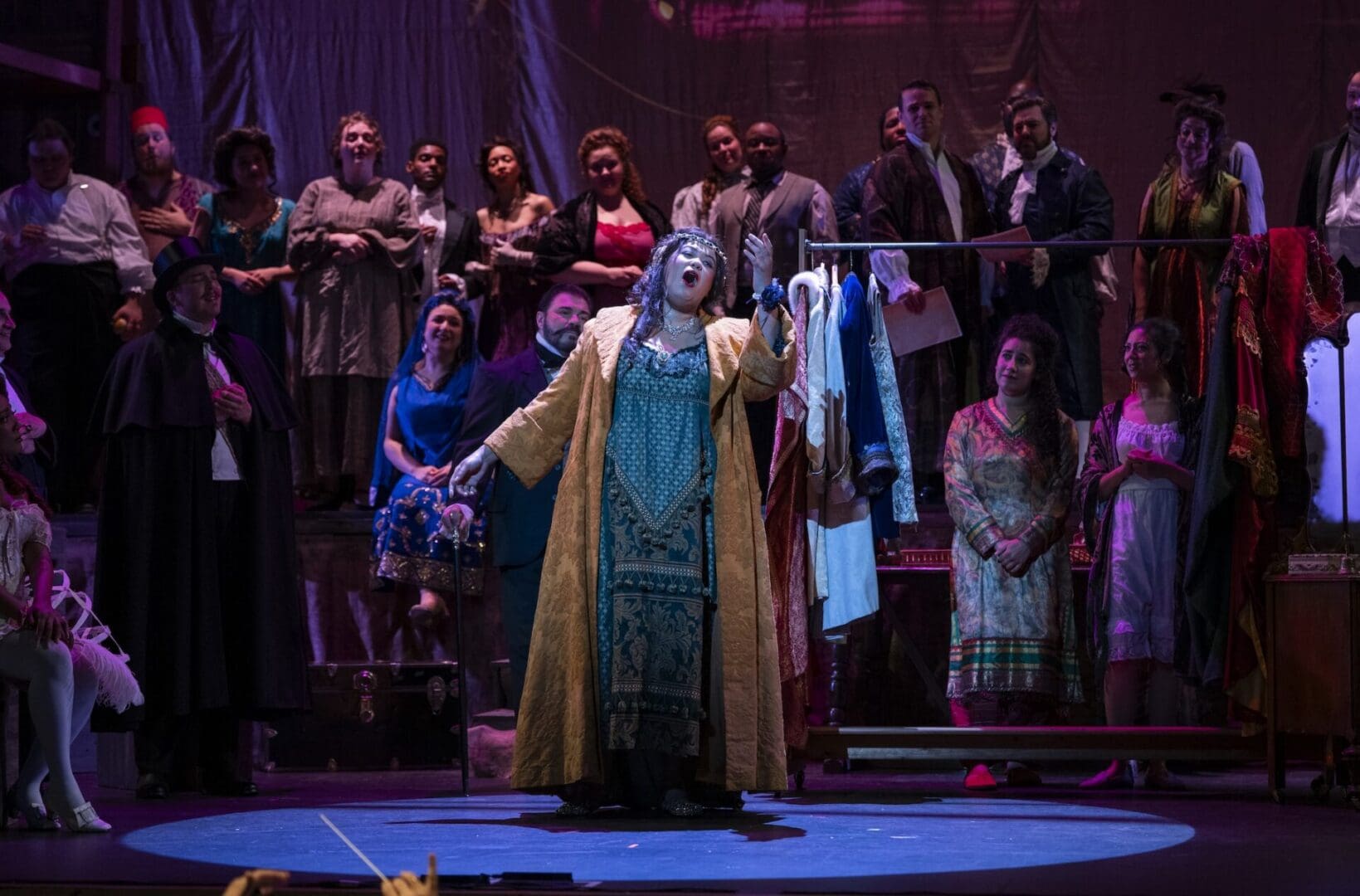
Zhanna Alkhazova (“Adriana Lecouvreur”) and members of the cast
Although consistently categorized as verismo, Cilea’s Adriana Lecouvreur is, at first glance, an unlikely example of the genre. First, Arturo Colautti’s libretto is based on the French play Adrienne Lecouvreur (1849) and set in the 18th century. It is thus twice removed from its titular subject, the famed French actress of the Comédie-Française, who is wooed by both Michonnet, her fellow actor, and Maurizio, Count of Saxony. Just as she gains her heart’s desire, Adriana is poisoned by her royal rival, the Princess de Bouillon. The overly complex plot is Shakespearean, with overlapping love triangles and lovers in disguise (though no cross-dressing). Thus, not only is the opera’s historical setting atypical, but its cast also includes as many aristocratic characters as working-class ones—as actors then were. Second, the opera’s third act includes a lengthy ballet that, though integral to the plot, is more reminiscent of French opera.
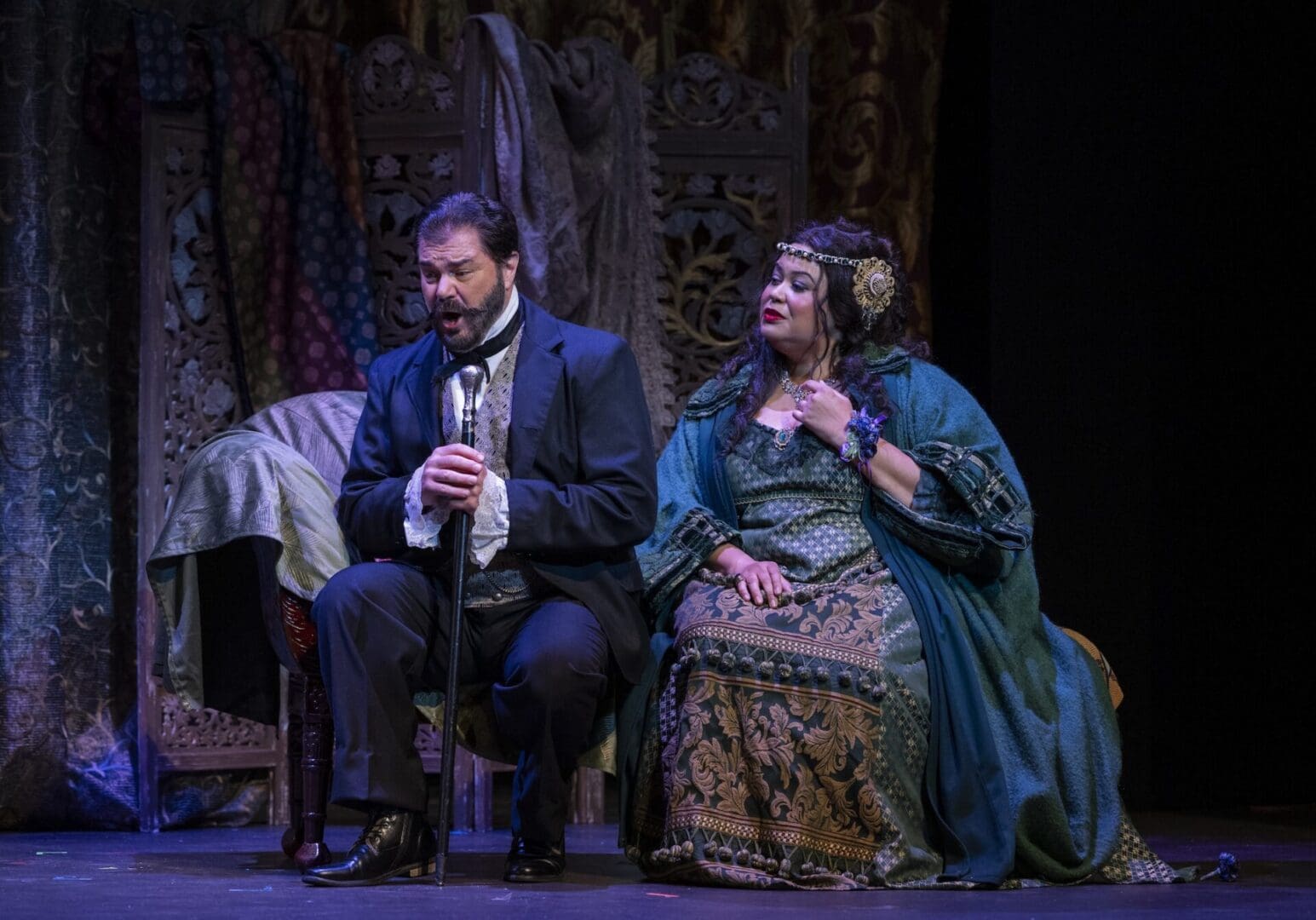
Franco Pomponi (“Michonnet”) and Zhanna Alkhazova (“Adriana Lecouvreur”)
In other ways, however, Adriana Lecouvreur is quintessentially verismo. The opera’s thespian subjects are certainly reminiscent of those in Pagliacci, and Cilea’s score clearly shows the influence of Mascagni and Puccini, whose La Bohème is playing in rep with Adriana Lecouvreur.
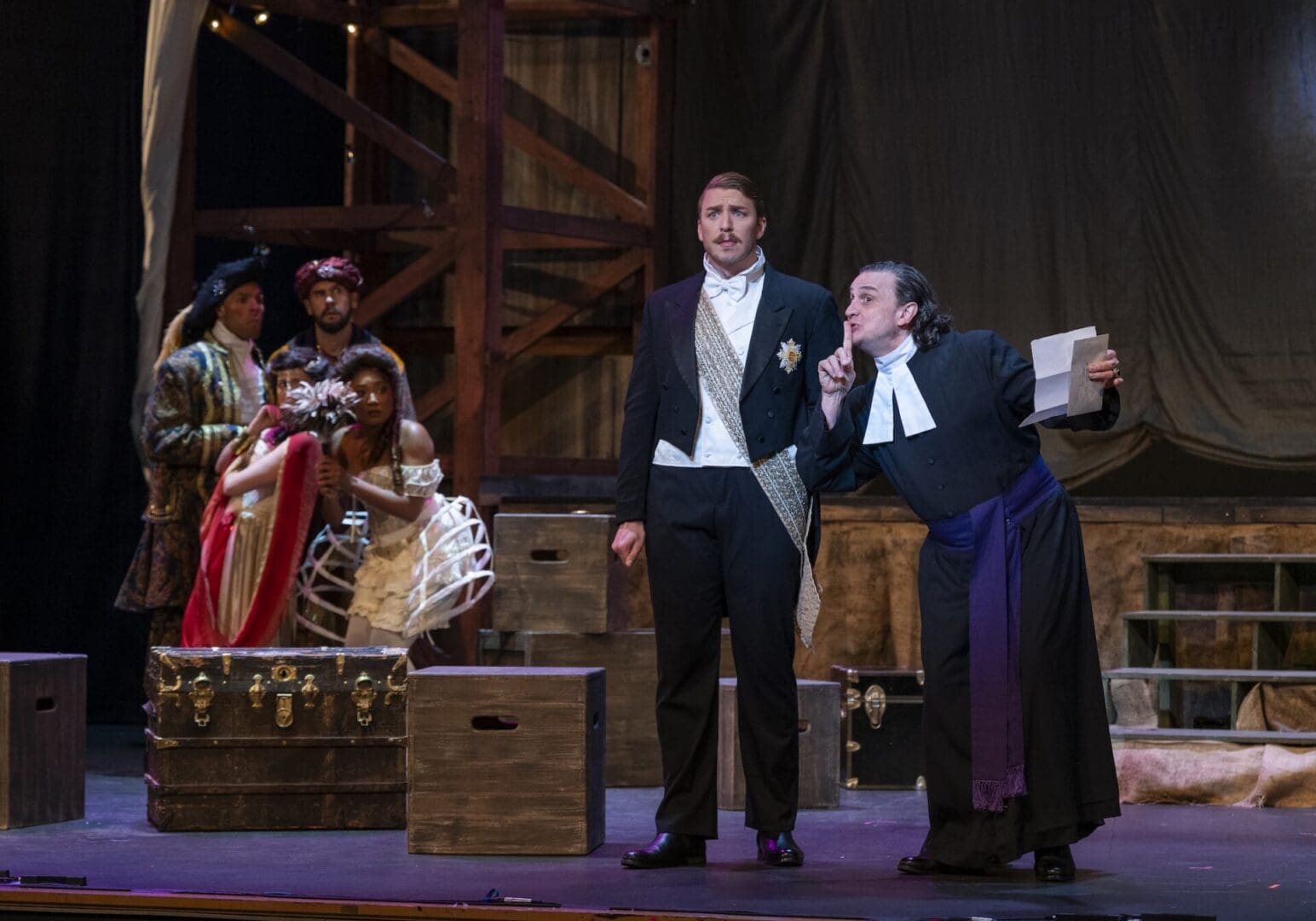
(front) Christopher Filipowicz (“Il Principe di Bouillon”), David Cangelosi (“L’Abate di Chazeuil”), (back) Eric Wassenaar (“Poisson”), Angela De Venuto (“Madamigella Jouvenot”), and Jade Dashá “Madamigella Dangeville”
The cast is startlingly uneven, mixing excellent veteran performers with less experienced, less impressive singers. One exception is the young Christopher Filipowicz as the Prince de Bouillon, whose clear-toned bass is a delight to hear. Filipowicz frequently appears alongside David Cangelosi as the Abbé de Chazeuil. A remarkable actor and tenor, Cangelosi appeared frequently at Lyric Opera of Chicago from the late 1990s through the mid-2010s. Italian baritone Franco Pomponi plays Michonnet with suitable pathos—and even comedy—while Hungarian-born Viktoria Vizin brings fire to the role of the Princess de Bouillon.
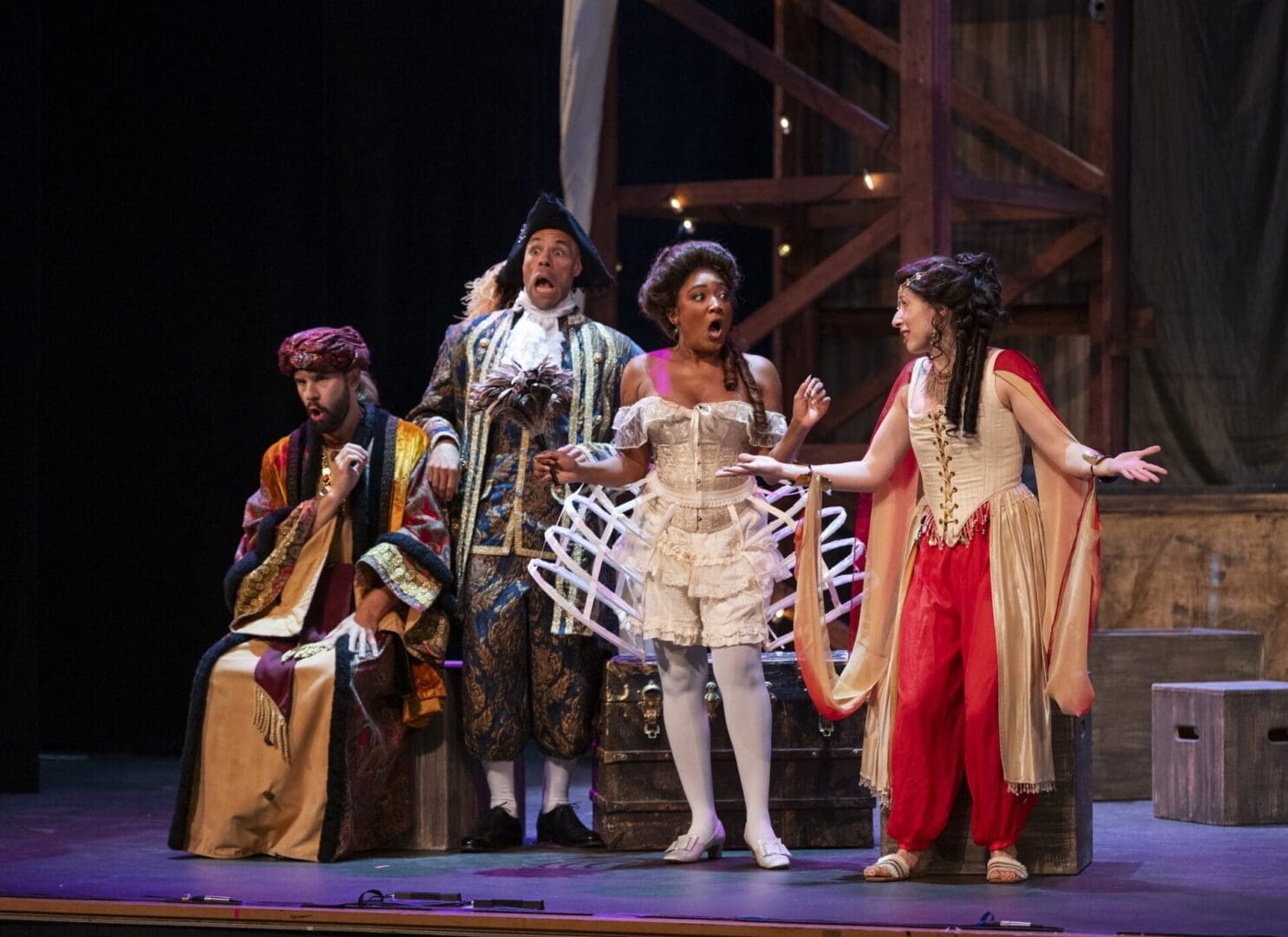
Peter Morgan (“Quinault”), Eric Wassenaar (“Poisson”), Jade Dashá (“Madamigella Dangeville”) and Angela De Venuto (“Madamigella Jouvenot”)
In the title role, Russian-born soprano Zhanna Alkhazova is underwhelmingly charismatic. No diva, her posture and stance tend to be stiff and wooden, stripped of passion and romance. Her powerful voice is often overwrought, tending toward shrillness at full volume, with audible breathing. Yet when she sings softly, as in Act IV’s more intimate moments, her voice is beautiful. Jeremy Brauner, as Maurizio, boasts more charisma, but his tenor oddly grows quieter at the top of its range, where it should remain full.
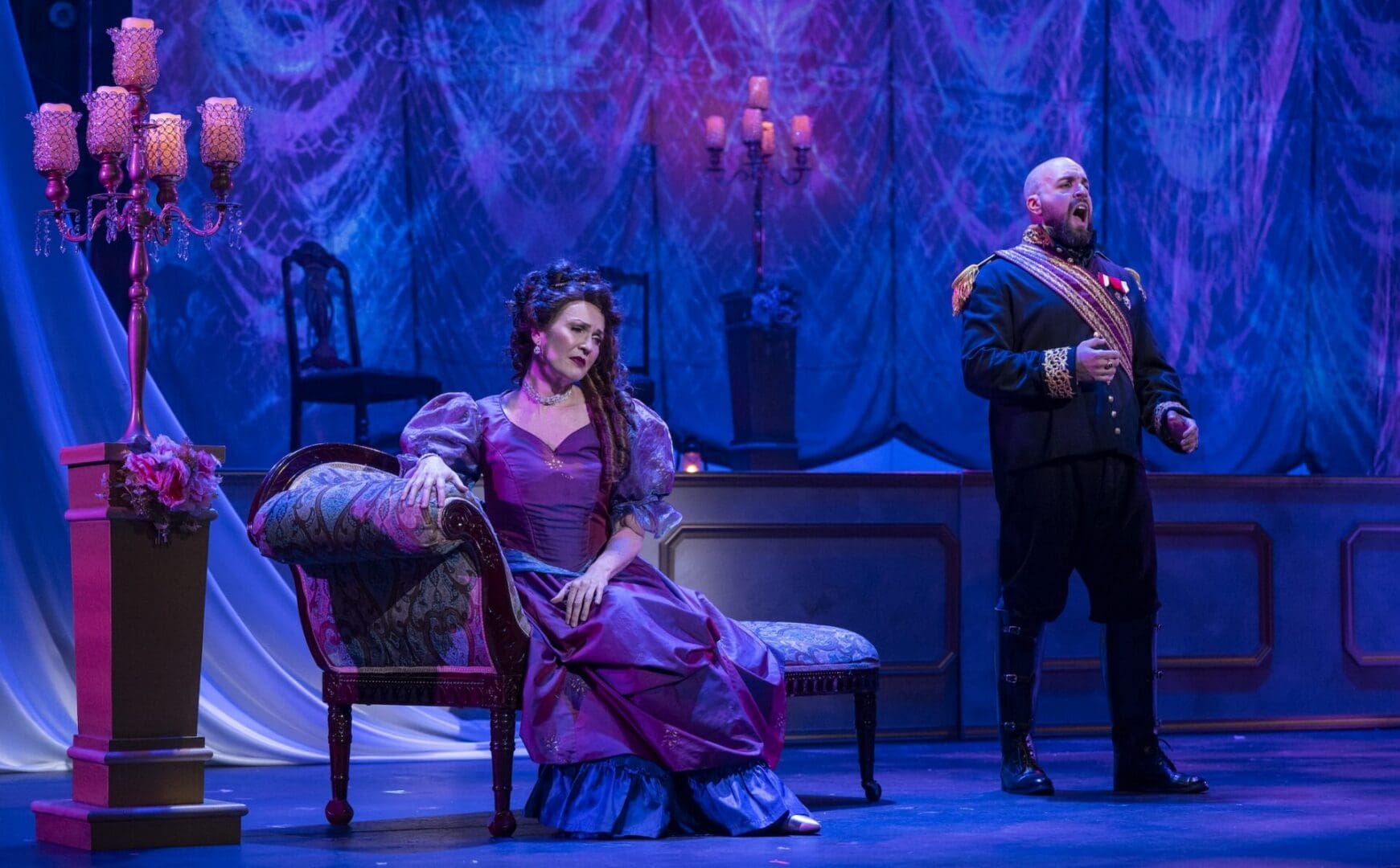
Viktoria Vizin (“La Principessa di Bouillon”) and Jeremy Brauner (“Maurizio”)
Shifra Welch’s stage direction begins strongly in Act I with abundant movement, making good use of the chorus, which otherwise serves largely as supernumeraries. It is an auspicious and exciting start, though it soon devolves into the principal actors sitting or standing around, singing and emoting to the audience rather than to each other.
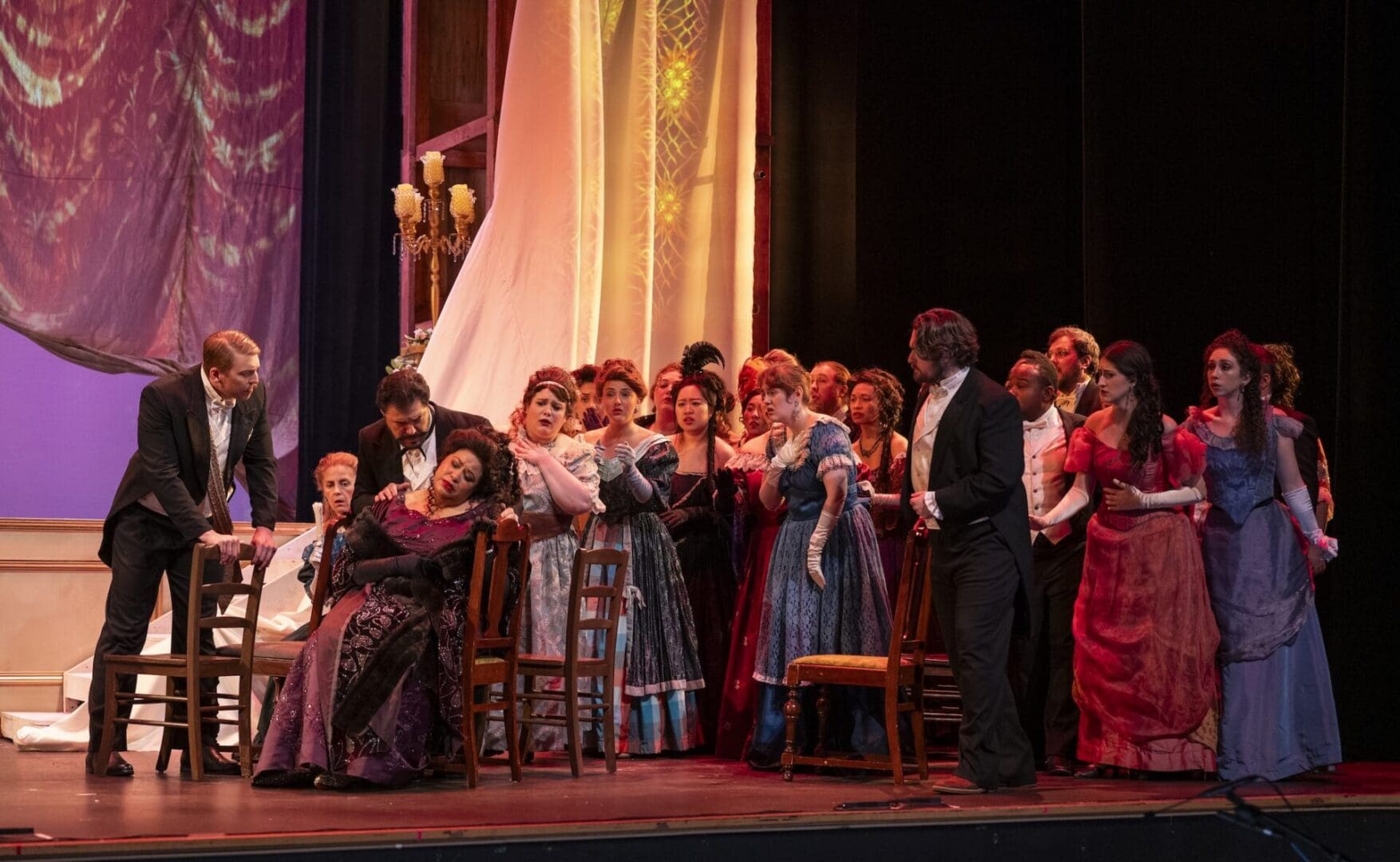
Members of the cast
Shane Cinal’s scenic design charmingly evokes backstage at the Comédie-Française in Act I and works well for the ballet in Act III. The large secondary stage built atop the main stage, however, makes for an awkward set in Act II’s villa scene. Above all, the lengthy scene changes—five minutes or more between acts—disrupt the opera’s flow and confuse the audience, many of whom think it is time for intermission.
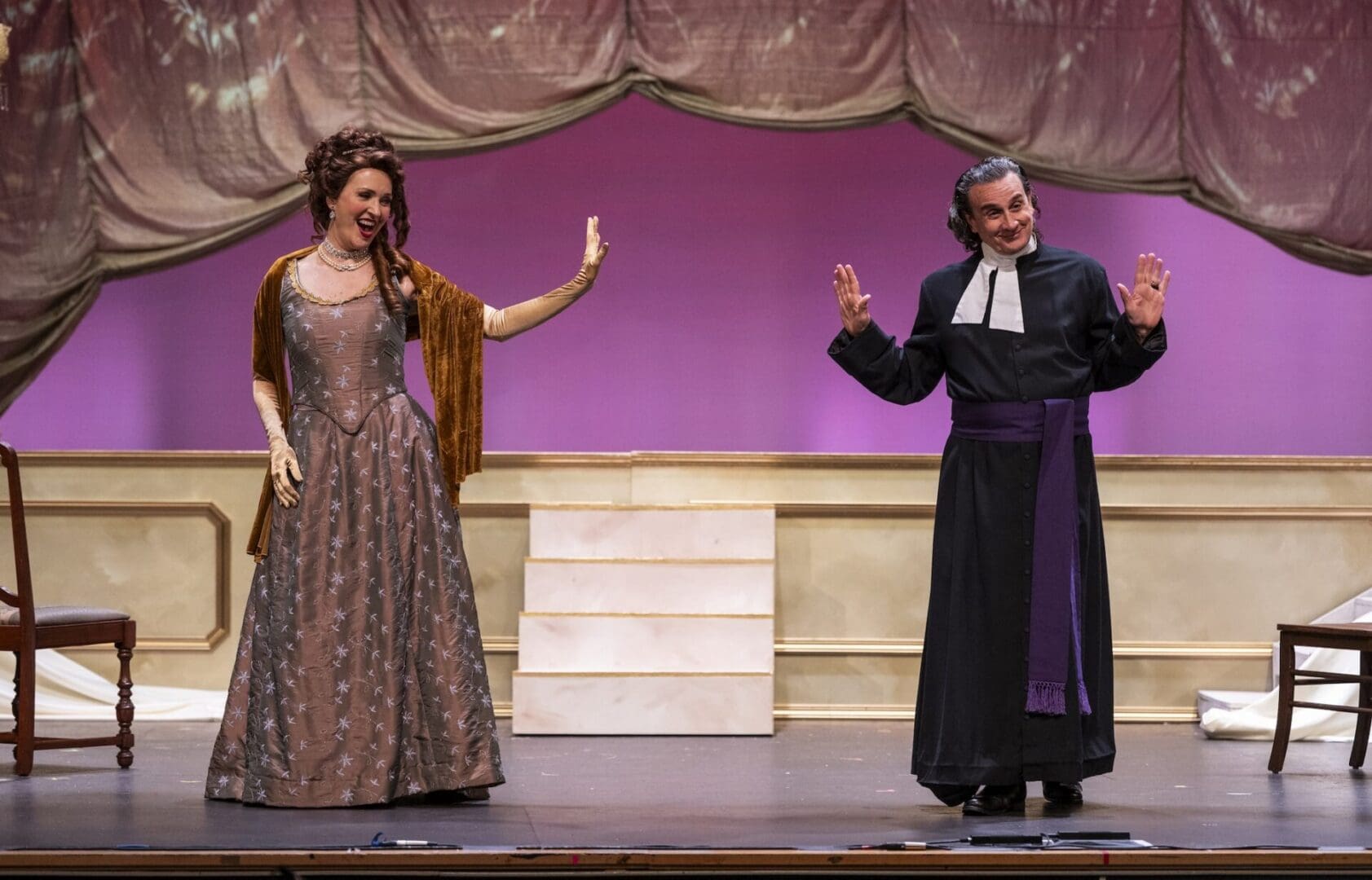
Viktoria Vizin (“La Principessa di Bouillon”) and David Cangelosi (“L’Abate di Chazeuil”)
Bill Morey’s costume designs and Melanie Saso’s hair and wigs seem period-agnostic. Cangelosi’s abbé looks the part of a clean-shaven eighteenth-century churchman, but Filipowicz’s prince is dressed for an early twentieth-century ball in top hat and tails. And why do Maurizio and Michonnet both sport beards, which were extremely unfashionable in the eighteenth century? The women’s wigs are beautiful and flattering, but the men should have been wearing wigs too—powdered ones.
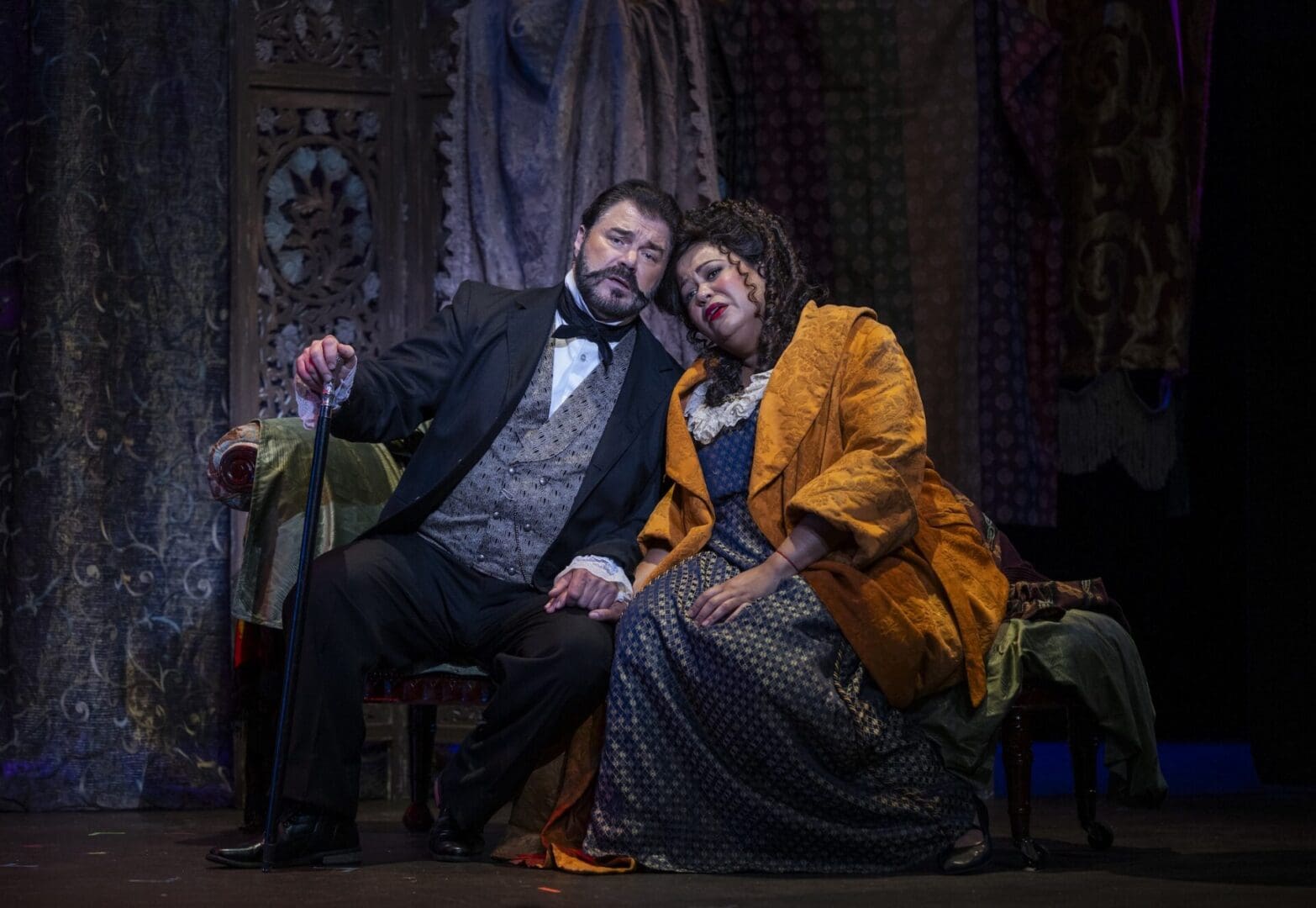
Franco Pomponi (“Michonnet”) and Zhanna Alkhazova (“Adriana Lecouvreur”)
Opera Festival of Chicago’s production of Adriana Lecouvreur probably will not convert its audience into dedicated Cilea fans. The casting is too uneven, the sets too cumbersome, and the costumes and wigs inconsistently period-appropriate. As a result, the production comes across as slapdash: too little research, not enough rehearsal, and insufficient funding. Those, like myself, who have never seen this verismo rarity can nevertheless eke out some enjoyment from this ambitious production.
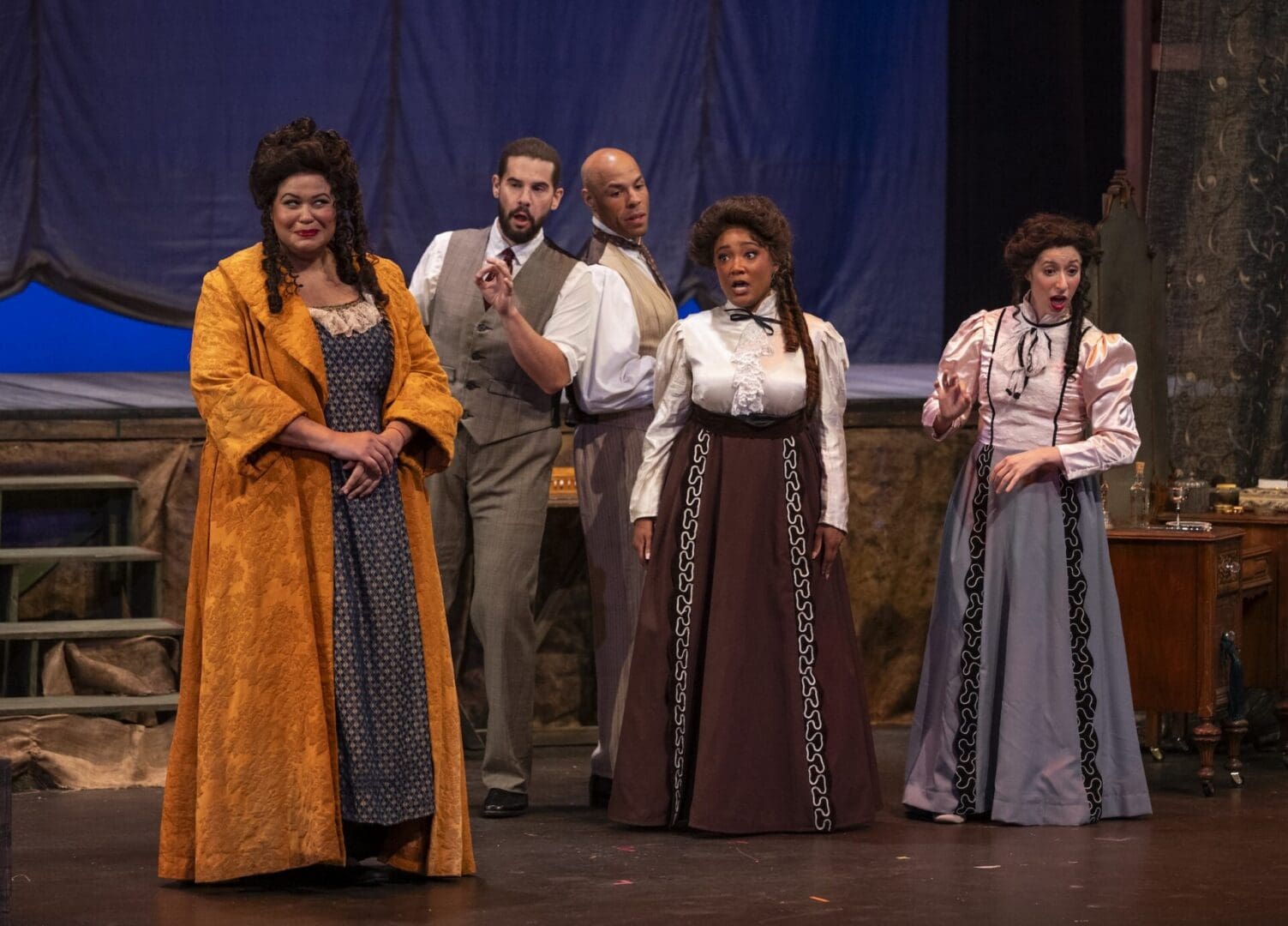
Zhanna Alkhazova (“Adriana Lecouvreur”), Peter Morgan (“Quinault”), Eric Wassenaar (“Poisson”), Jade Dashá (“Madamigella Dangeville”) and Angela De Venuto (“Madamigella Jouvenot”)
✦ ✦ ✦ ✦ ✦ ✦ ✦ ✦ ✦ ✦
photos by Michael Brosilow
Adriana Lecouvreur
Opera Festival of Chicago
North Shore Center for the Performing Arts, 9501 Skokie Blvd in Skokie
3 hours and 20 minutes, including intermission
ends on July 3, 2026
for tickets ($25 – $150), visit Opera Festival Chicago
✦ ✦ ✦ ✦ ✦ ✦ ✦ ✦ ✦ ✦
