


Areas We Cover
Categories

Theater Review: ICEBOY! OR THE COMPLETELY UNTRUE STORY OF HOW EUGENE O’NEILL CAME TO WRITE “THE ICEMAN COMETH” (The Goodman Theatre / Chicago)
by C.J. Fernandes | July 5, 2026
in Chicago, Theater
THE HAIRY APE COMETH
This gleefully unhinged musical comedy
is a strong play’s journey into wisecracks
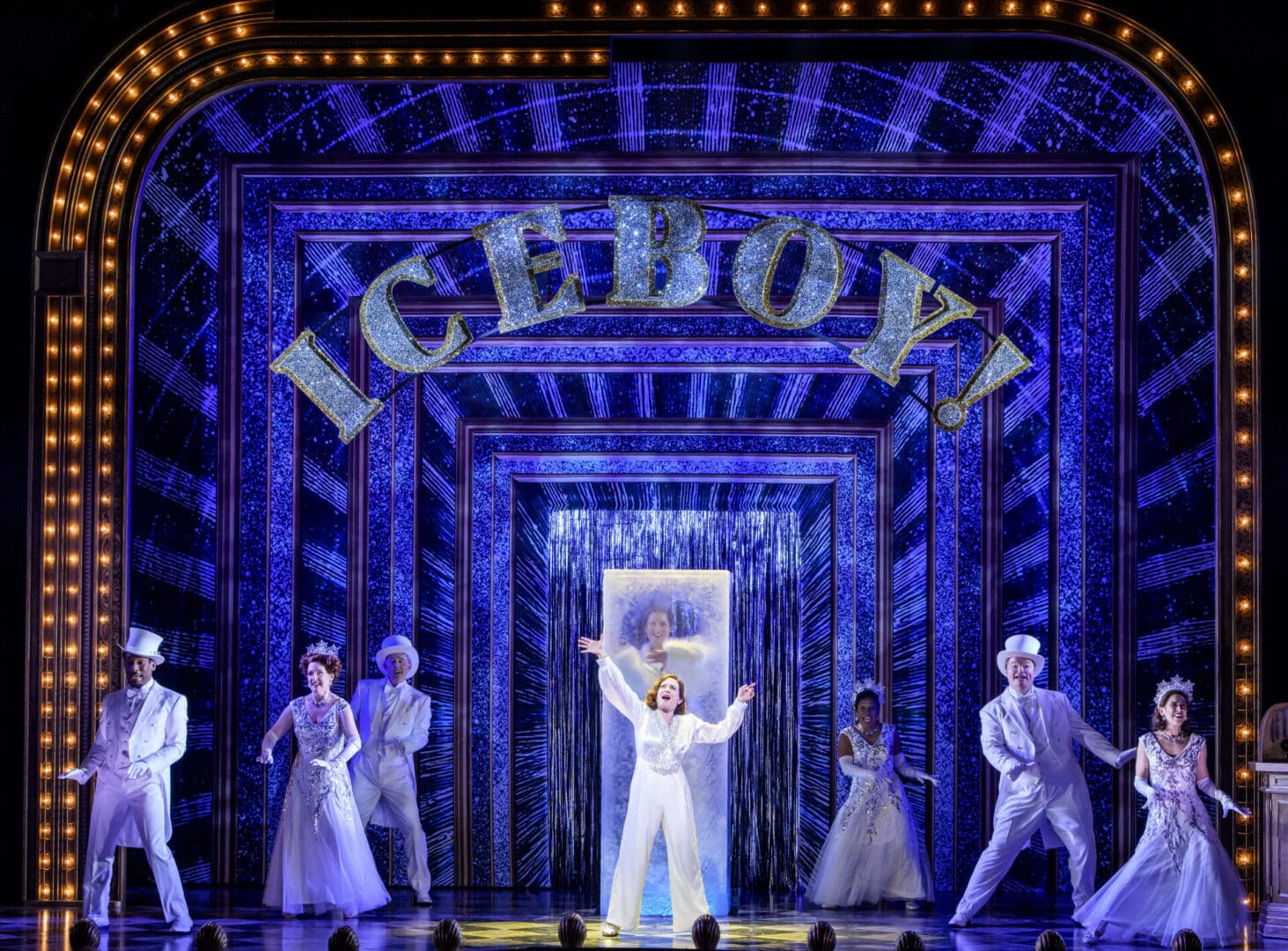
Donterrio, Linda Mugleston, Shawn Pfautsch, Grey Henson, Megan Mullally, Melanie Brezill, Will Koski and Andrea San Miguel in Iceboy! at Goodman Theatre
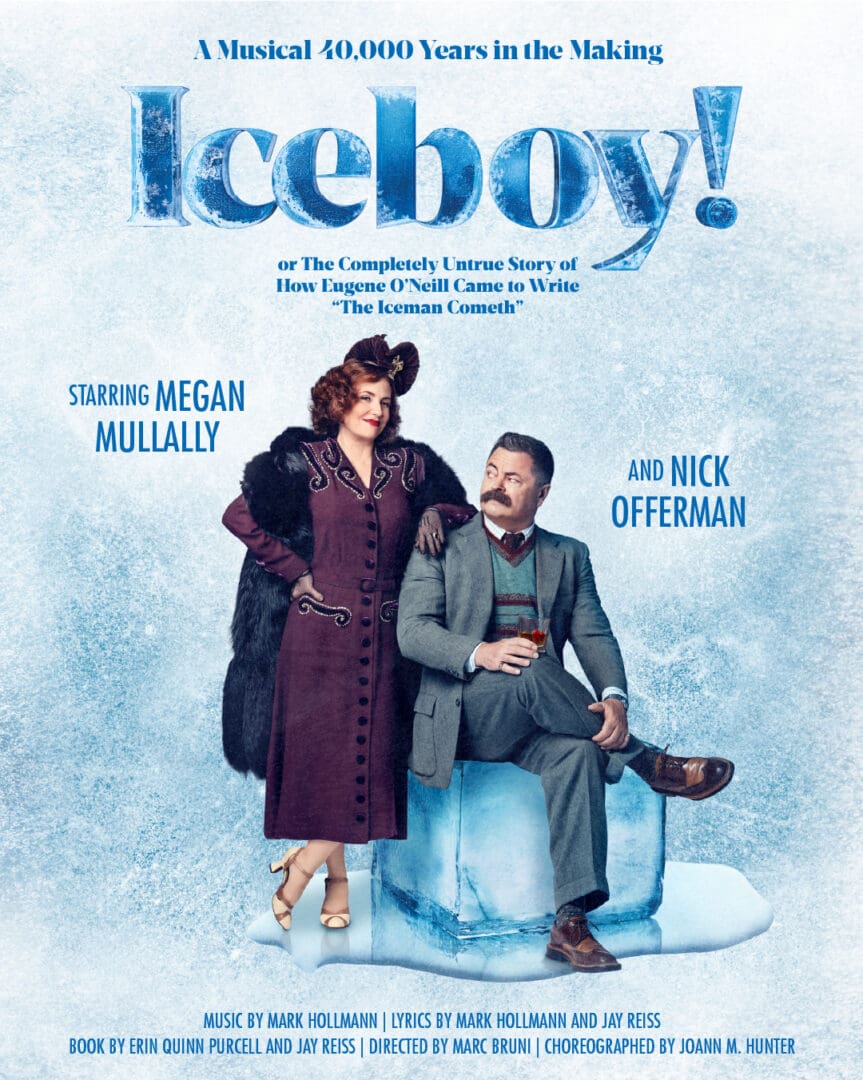
The Goodman closes out its centennial season in spectacular fashion with a big, brash new musical composed by Mark Hollmann (Urinetown), lyrics by Hollmann and Jay Reiss (Spelling Bee), and book by Reiss and Erin Quinn Purcell. Directed by The Great Gatsby‘s Marc Bruni, Iceboy!—as its subtitle helpfully informs us—is The Completely Untrue Story of How Eugene O’Neill Came to Write “The Iceman Cometh.”
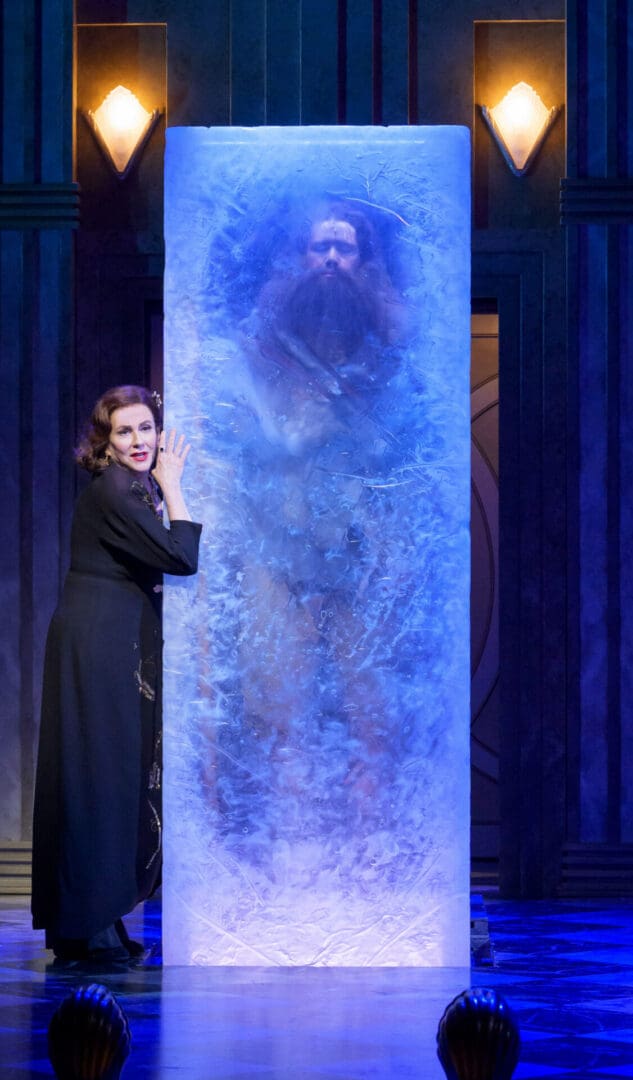
Megan Mullally and Grey Henson
Featuring a murderer’s row of talent behind the scenes and onstage, Iceboy! opens with Eugene O’Neill (Nick Offerman), whose decades away from the boards have not dimmed his stage presence one whit. On one side of him is an old-fashioned writing desk; on the other, a portion of a bar in an early twentieth-century drinking establishment. Behind him is a deliberately misaligned proscenium arch with theatre drapes, a clever touch which cues us, even before the show begins, that this musical is going to be a tad askew.
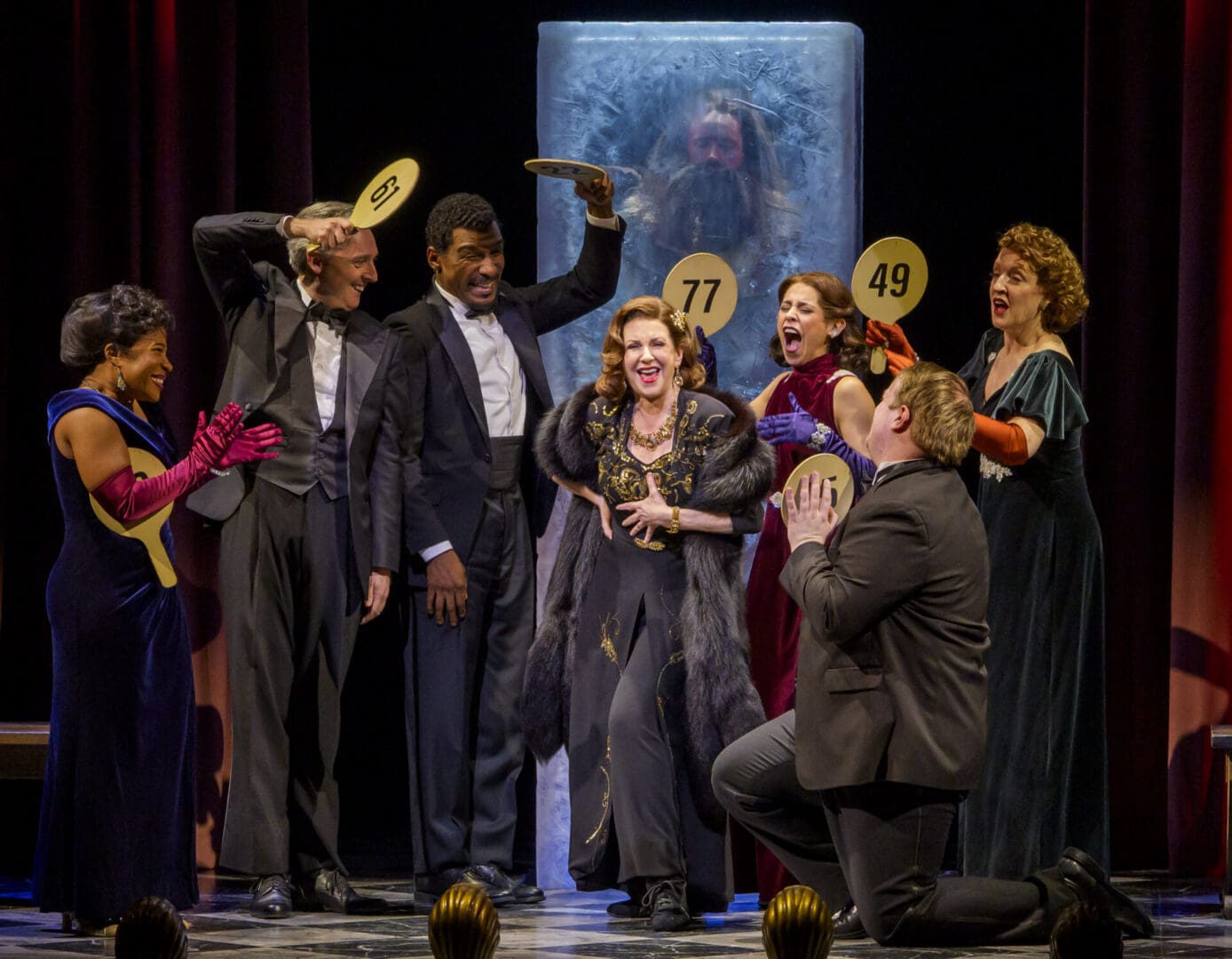
Melanie Brezill, Shawn Pfautsch, Donterrio, Megan Mullally, Grey Henson, Andrea San Miguel, Will Koski and Linda Mugleston
And if there were doubts about that last statement, a few minutes into his opening monologue, they’ll have evaporated. O’Neill introduces himself to the crowd—starting with a list of his awards, natch—asks them to clap if they’ve heard of his plays, and clap if they haven’t. The audience, knowing what is expected of them, fairly roars at the latter request, allowing Offerman to lean beautifully into sputtered indignation at the ignorance of this group of yokels.
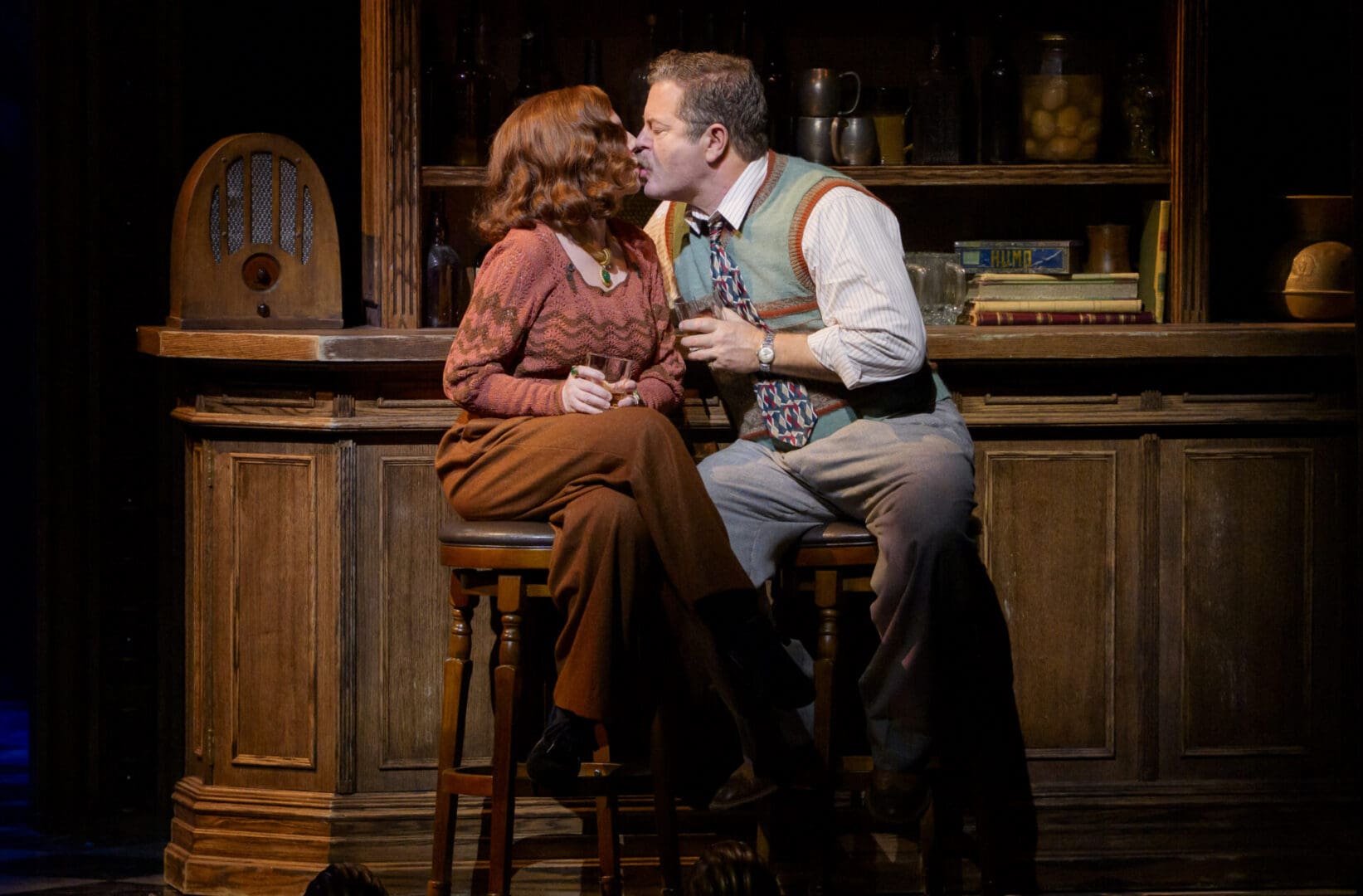
Megan Mullally and Nick Offerman
The year is 1939, we’re told. O’Neill is suffering from writer’s block and hasn’t written a word in six years. “It’s true,” he says. “Look it up on your hand-held gadgets that have already pilfered your souls.” The play proper begins once O’Neill interrupts his narrative yet again to deliver the requisite reminder to turn off phones: “I’m supposed to do this. God, it’s so insulting. Yes, silence your wretched devices… If someone shushes you, don’t get annoyed at them; it means you were talking.”
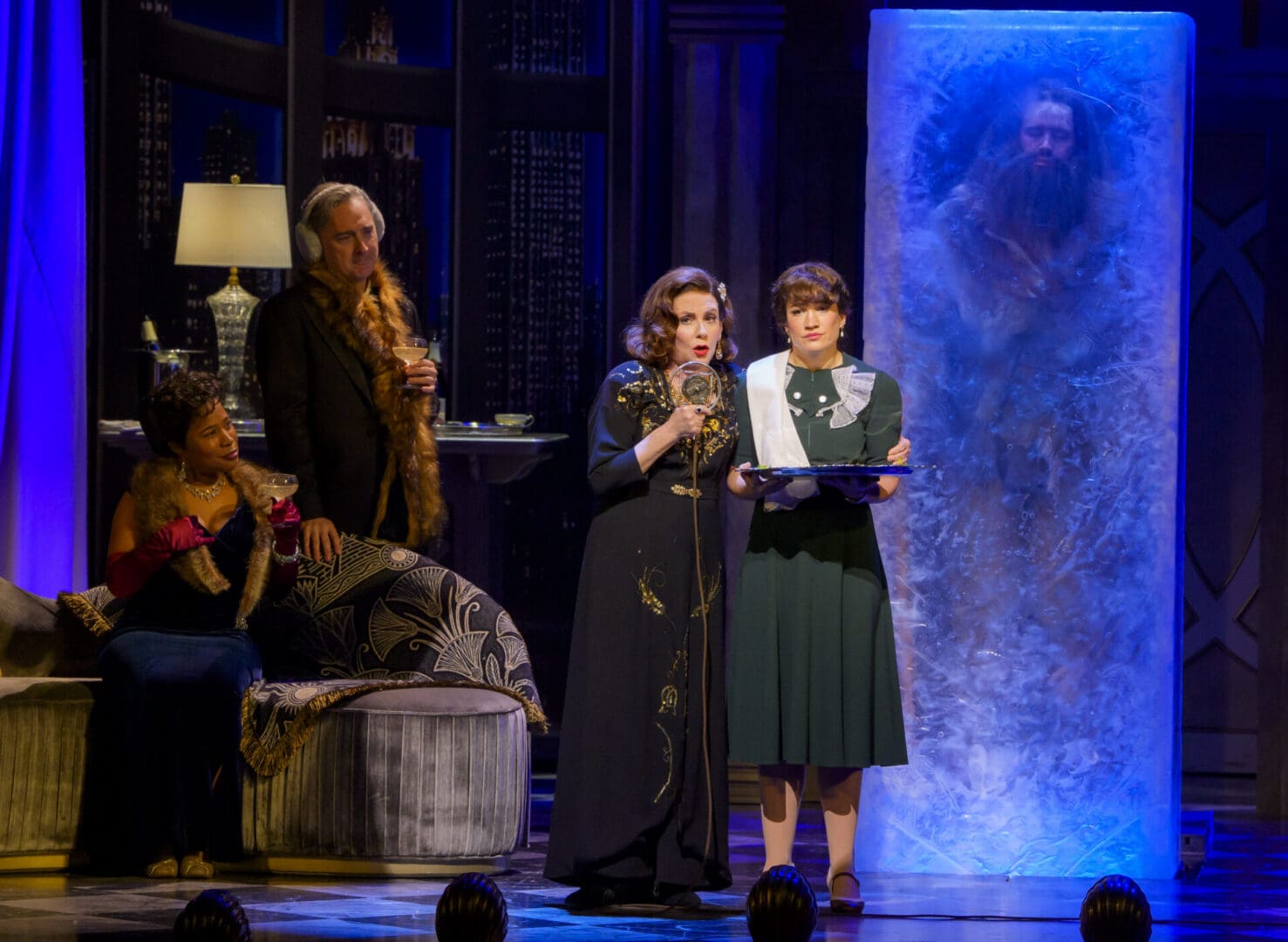
Melanie Brezill, Shawn Pfautsch, Megan Mullally, Sarah Stiles and Grey Henson
In 1939, a group of Arctic explorers discover a 40,000-year-old Neanderthal frozen in ice (“A Historical Find!”). They hack the ice block out and bring it back to the States, where it is put up for auction. With different scientific societies bidding on it, everyone is shocked when they are massively outbid by the biggest Broadway star of the time, one Miss Vera Vimm (Megan Mullally, having the time of her life). Vera installs the caveman, whom she eventually christens Iceboy (Grey Henson), in her massive mansion, an absolutely stunning Art Deco set—one of several—from designer Paul Tate dePoo III. Having grown up in penury (“Poor Little Orphan Girl”), Vera lives mostly alone, with a faithful personal secretary, Lambert (Sarah Stiles, channeling Thelma Ritter in attitude and Eve Arden in appearance and voice), and a manservant/butler, Frankenstein (Alex Goodrich), a former actor stuck in character after a disastrous audition. Vera is visited every Thursday for a “sleepover” by her collaborator, playwright Floyd Richards (Cedric Yarbrough). Floyd is tired of simply churning out crowd-pleasing hits and wants to be taken seriously, like one Eugene O’Neill. He has written a hard-hitting, socially relevant musical about the plight of garment workers in a New York City sweatshop. The only problem is that his leading lady, who is of a certain age, insists on playing the lead role: that of a nineteen-year-old East European immigrant girl. Mullally’s imitation of said girl has to be seen to be believed.
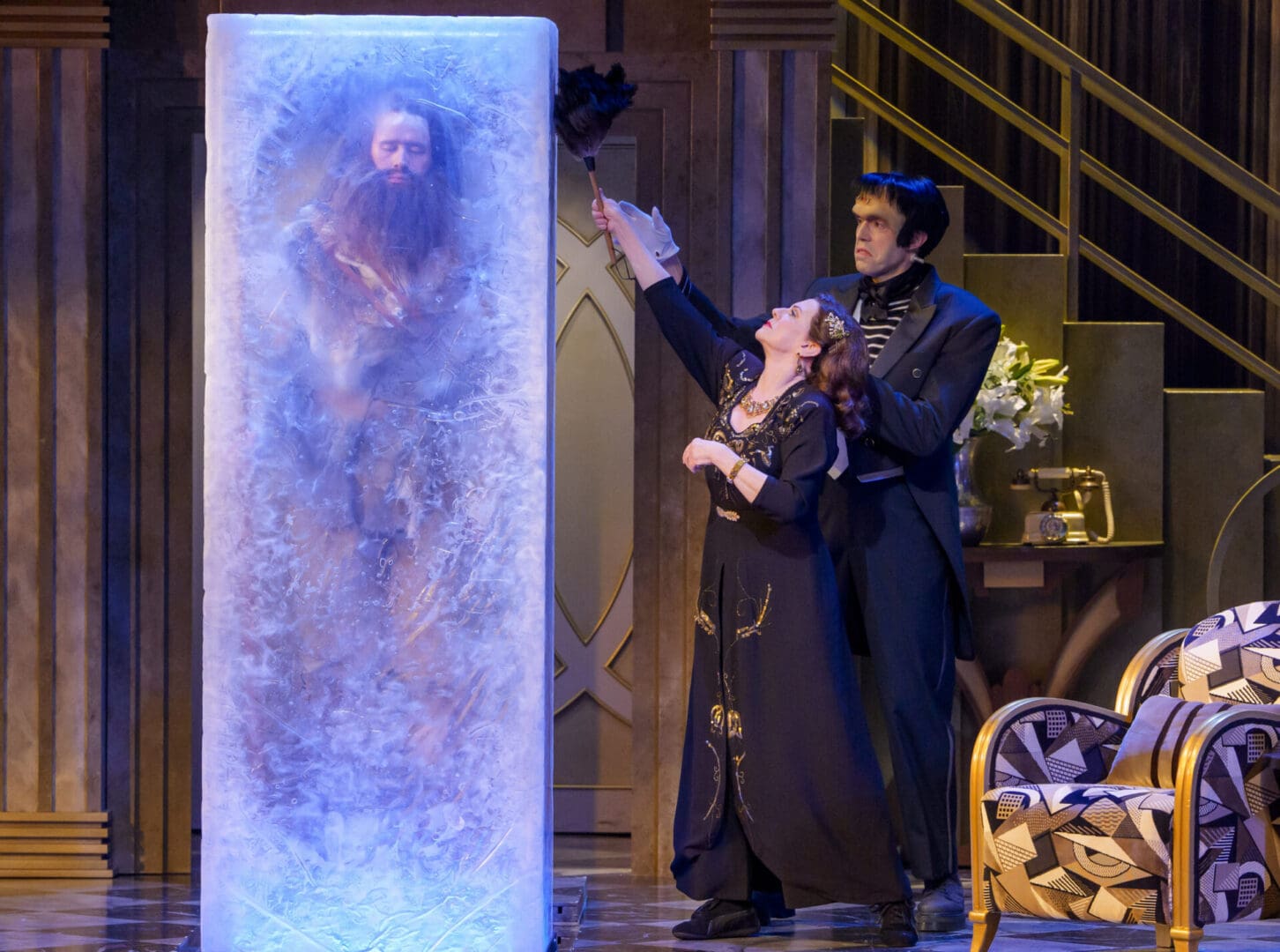
Grey Henson, Megan Mullally and Alex Goodrich
If you’ve watched All About Eve—and if you haven’t, shame on you—you know what’s coming. What we don’t know is how absolutely batshit the proceedings will get. Hollmann, Reiss, and Purcell operate with a sensibility that’s equal parts Mel Brooks, Monty Python, and 30 Rock. The jokes are paramount in importance, and no internal logic will stop their deployment. If you’re the sort to be bothered by anachronisms, take a Xanax before the show because they fly about with complete abandon and are delivered with perfect timing by an incredible cast. Probability dictates that at least some of the jokes should have missed their mark, but I cannot remember any duds.
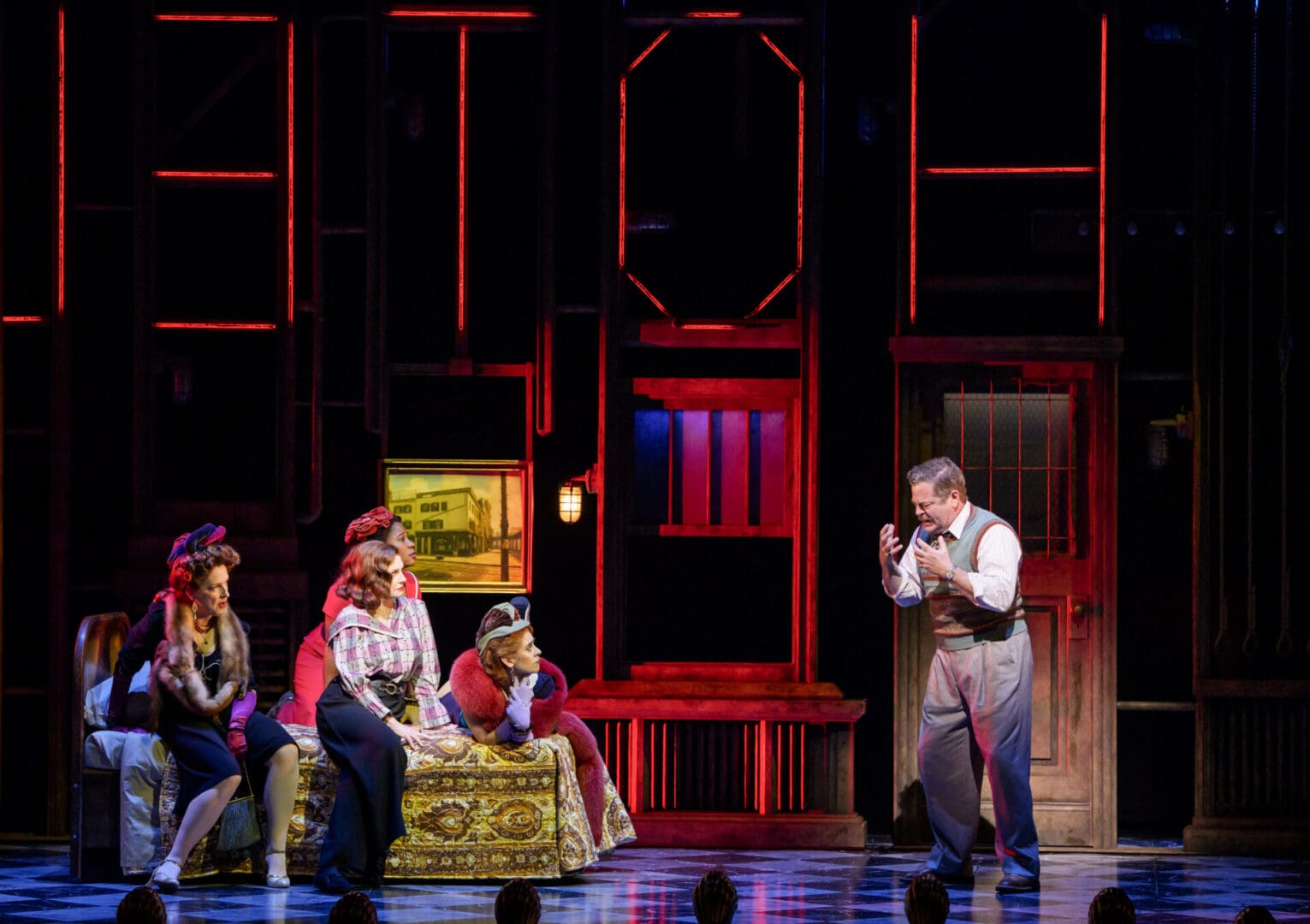
Linda Mugleston, Megan Mullally, Melanie Brezill, Andrea San Miguel and Nick Offerman
So, what about the music, then? There are some terrifically catchy numbers; both the first-act closer (“The Garment Girl”) and an absolutely filthy duet between Henson and Stiles (“Marry Me”) that made me blush deeply—what can I say? I’m a schoolmarm sometimes—rattled around in my head for a few days, always a good sign. The music is very good. There’s just not a lot of it. Which is a shame because this cast can belt it out with the best of them. Except for Offerman, that is; he’s given only a few singing lines, and given his careful delivery—it’s the only time he seems less than completely comfortable onstage—that’s probably a good thing. Mullally’s Vera bizarrely disappears for a good chunk of Act I. It doesn’t really slow things down because the rest of the cast is so damn good, including the flawless six-person ensemble of local talent. The second act also needs quite a bit of work: the book starts to creak, and again, there’s not enough music.
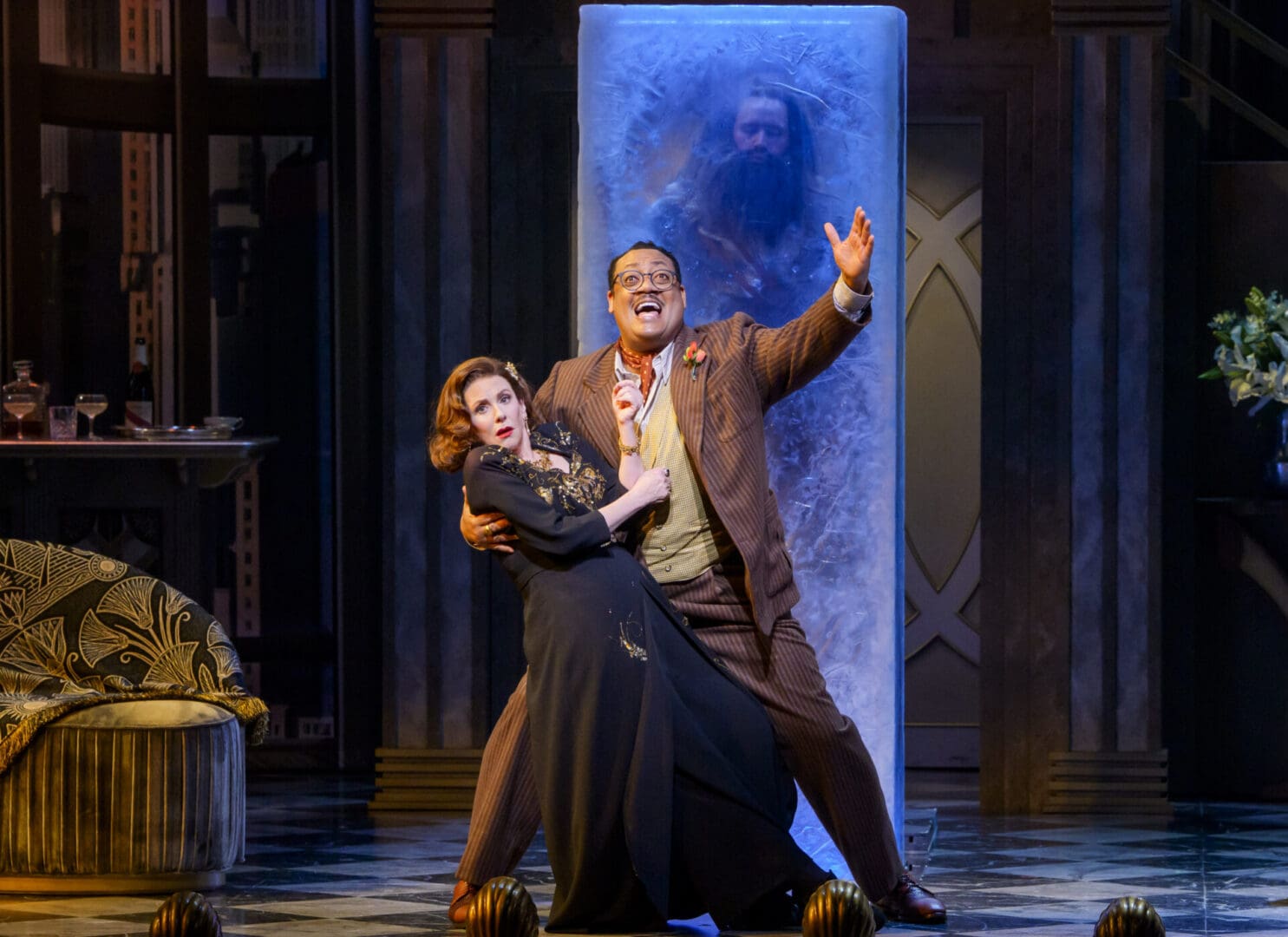
Megan Mullally, Cedric Yarbrough and Grey Henson
Spouses in real life, Offerman and Mullally are the leads here. Offerman is right in his wheelhouse, which shouldn’t and doesn’t diminish the value of his performance. His narration grounds the show and provides a necessary through line, and his delivery is chef’s kiss. Mullally may be the star and the diva but performs with the spirit of a true ensemble member. Her justly celebrated comic timing is fabulous, best displayed in Act II in an excruciatingly long setup involving charades, a lung pump, and a comatose character—again, see it to believe it—that also gives Goodrich his big moment in the show. I marveled at the cojones of all parties involved in that scene; it was worth it because the punch line generated the biggest laugh of the night. But guys, give her more songs to sing.
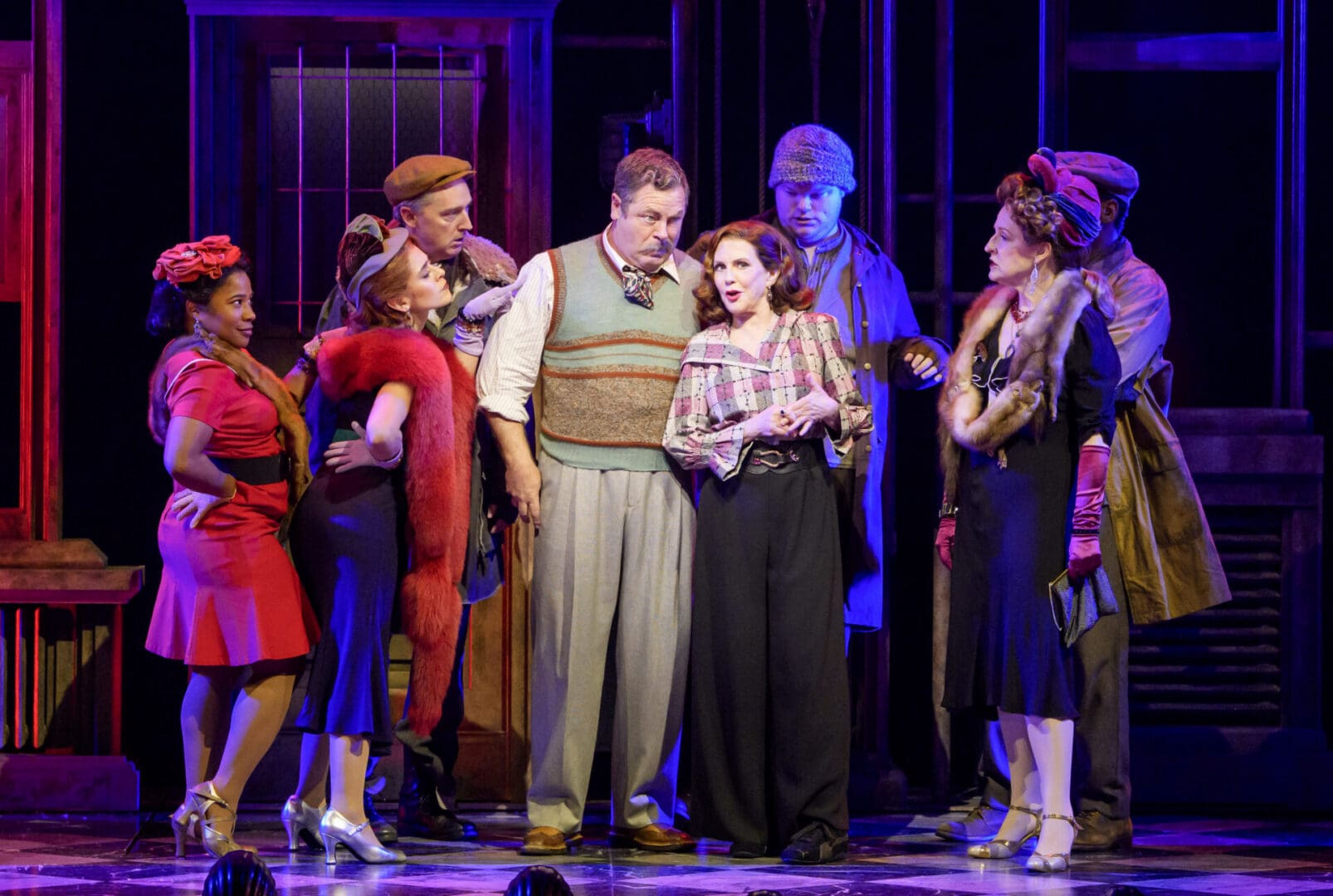
Melanie Brezill, Andrea San Miguel, Shawn Pfautsch, Nick Offerman, Megan Mullally, Will Koski, Linda Mugleston and Donterrio
Yarbrough and (especially) Henson are excellent, but my favorite performance in the play came from Stiles, who plays Vera’s Gal Friday, Lambert. Performing in a wig designed by Charles “Chuck” LaPointe that deserves its own stage credit, and with a rasp that must be hell on the vocal cords, Stiles steals practically every scene she’s in spooning out dry, impeccably delivered broadsides. She also gets the two funniest songs in the show: the aforementioned filthy duet “Marry Me” and a song about menopause (“FM”) that is comic brilliance, both in the writing and the performance.
As a critic, I have a tendency to gloss over flaws in a production based simply on how it makes me feel, and vice versa. If I were trying to be objective, I’d probably knock a star off Iceboy! Or the Completely Untrue Story of How Eugene O’Neill Came to Write The Iceman Cometh. But objectivity be damned—I was fairly skipping on my way out of the theatre in delight after the show.
Flaws notwithstanding, I simply cannot imagine someone not enjoying themselves here.
✦ ✦ ✦ ✦ ✦ ✦ ✦ ✦ ✦ ✦
photos by Todd Rosenberg
Iceboy! or the Completely Untrue Story of How
Eugene O’Neill Came to Write “The Iceman Cometh”
Goodman Theatre
Albert Theatre, 170 N. Dearborn St. in Chicago
Tue–Fri 7:30; Sat 2 & 7:30; Sun 2
ends on August 16, 2026
for tickets ($49–$199), call 312.443.3800 or visit Goodman Theatre
for more shows, visit Theatre in Chicago
✦ ✦ ✦ ✦ ✦ ✦ ✦ ✦ ✦ ✦
