


Areas We Cover
Categories

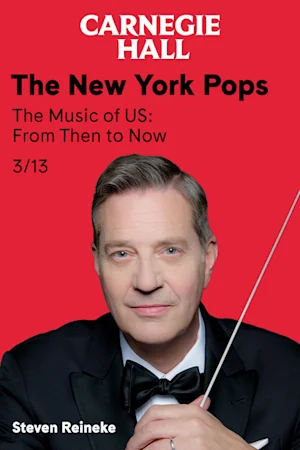
Music Review: THE MUSIC OF US: FROM THEN TO NOW (The New York Pops / Carnegie Hall)
by Rob Lester | July 12, 2026
in Music, New York
SOMETHING FOR ALMOST EVERYONE
The New York Pops casts a wide musical net
across two and a half centuries of American song.
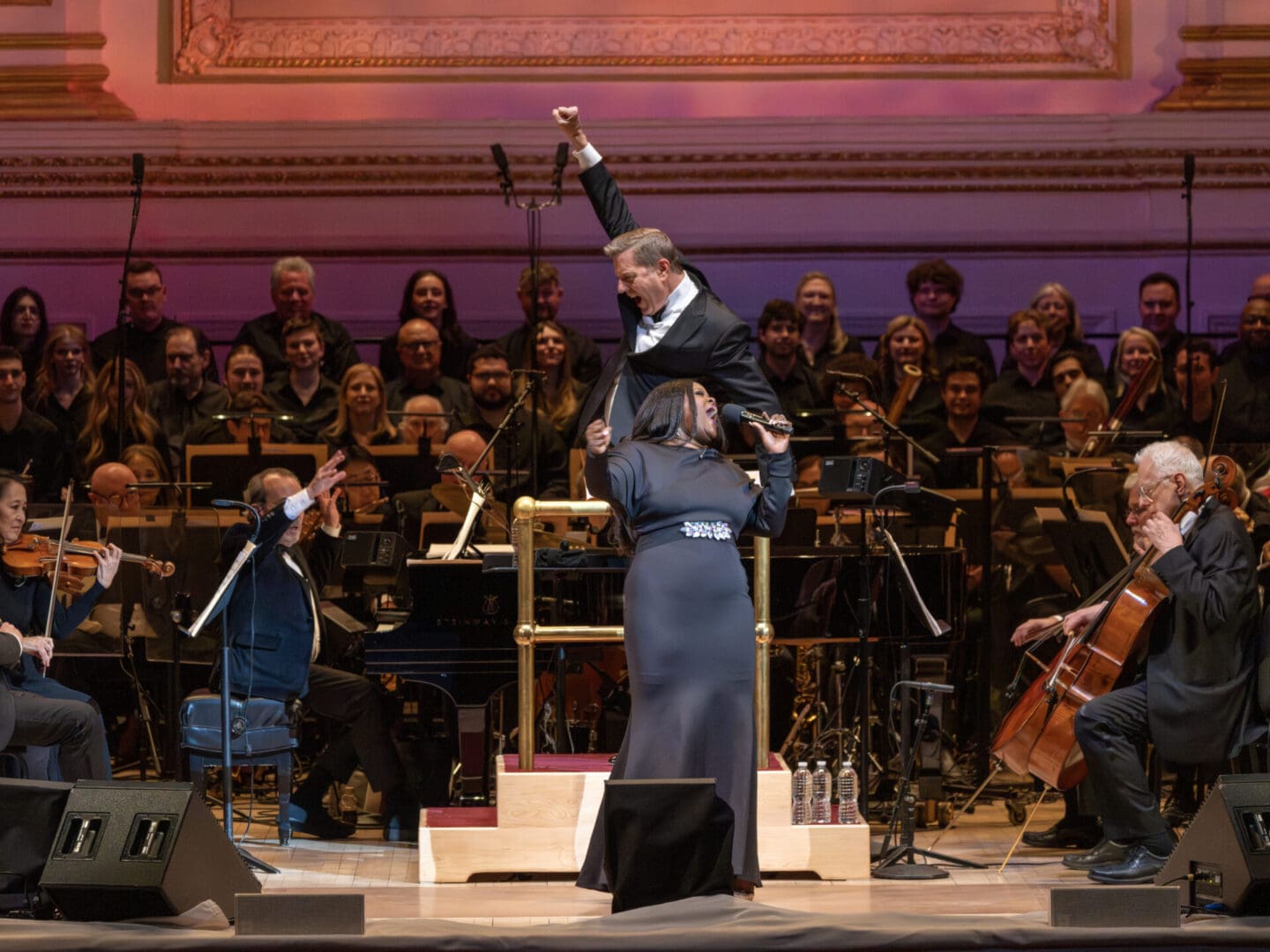
Nova Payton and conductor Steven Reineke
Although the first style of music most people think of when they think of Carnegie Hall is classical music, the storied venue’s grand Isaac Stern Auditorium and its co-inhabitant, Zankel Hall, quite regularly feature other genres. To almost quote Oscar Hammerstein, the halls are alive with the sound of music. Memorably, the first Rodgers & Hammerstein show, Oklahoma!, was given a full concert production in January of this year, beginning the commemoration of America’s 250th anniversary.
In the same month, a glorious night with singers Isabel Leonard and Jordan Donica included three R&H classics and a piece from Carmen Jones (Hammerstein’s English-language treatment of Bizet’s opera). Michael Feinstein, who served up classic pop songs in his February concert, On the Town, appeared again on June 18 when he turned his fond attention to music connected to composer Henry Mancini and the recently retired/new nonagenarian Johnny Mathis.
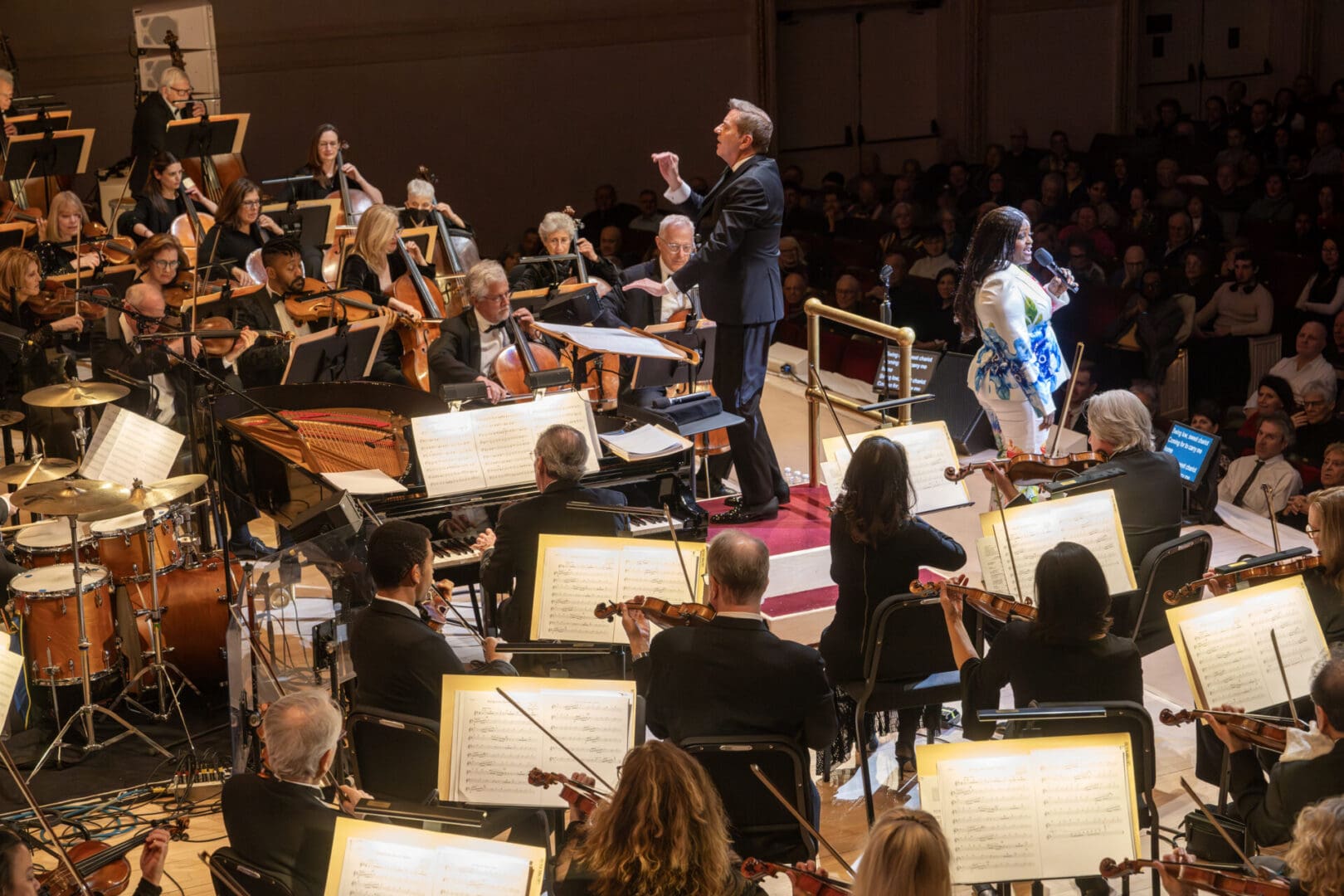
Nova Payton, Steven Reineke, and The NY Pops
The 250th anniversary of the birth of this place called America and its many styles of music created over the years has also been surveyed and celebrated with guest artists and the mighty New York Pops Orchestra under the baton of enthusiastic Steven Reineke. Broadway and movie material made the rafters ring again on April 27 at the Hall’s big gala night when the songs of Stephen Schwartz were presented in Changed for Good.
On March 13 came the wonderful concert: The Music of US: From Then to Now, a sweeping survey of two and a half centuries of American music. Those who love digging into a wide range of styles were in luck, as the program offered a generous helping of home-grown song from the nation’s earliest days onward. There were all kinds of genres along the way: Indigenous American music, spirituals, Broadway, rock ‘n’ roll, rap, rhythm and blues, and more.
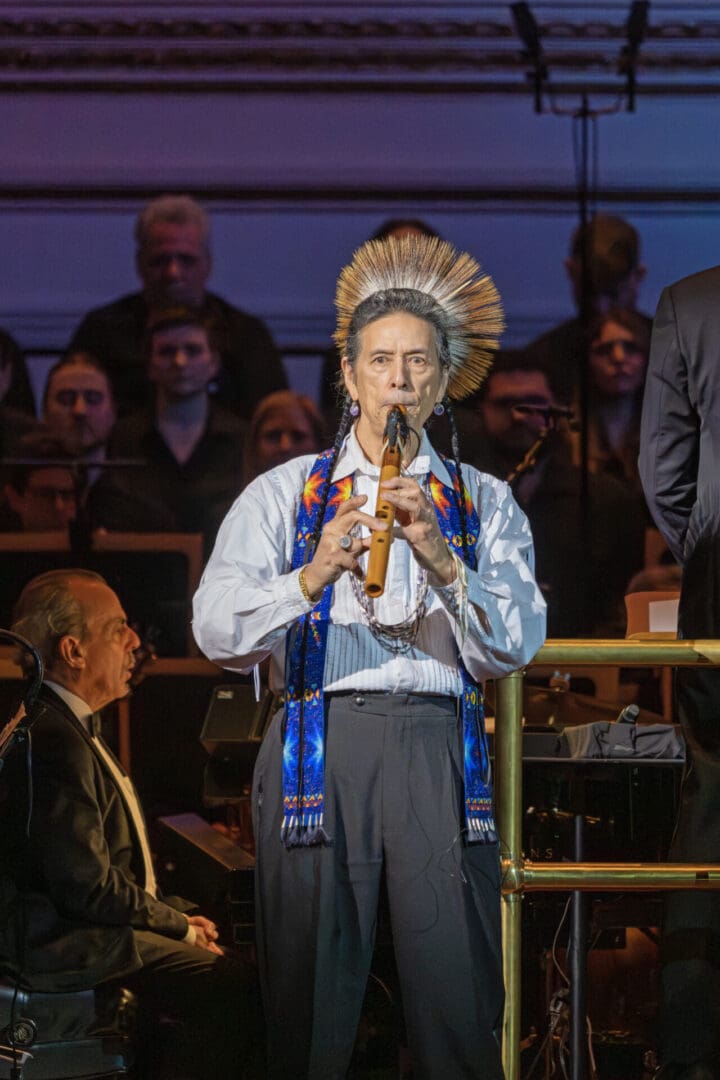
Tchin
The Music of US didn’t just take the route of glorifying America on its big anniversary year, waving the flag while waving away the tarnished parts of history. Thus, the eclectic program, presented mostly chronologically, began by paying respect to those who lived here before Europeans came, with Tchin, a Blackfeet and Narragansett storyteller and educator, playing the Indigenous American courting flute. There were also musical acknowledgments of slavery, struggle, the Great Depression, and the Civil Rights Movement. Notable was the decision to include not just the familiar, feel-good verses of Woody Guthrie’s folk song “This Land Is Your Land,” but also the parts acknowledging that not everyone got the cream of the American Dream.
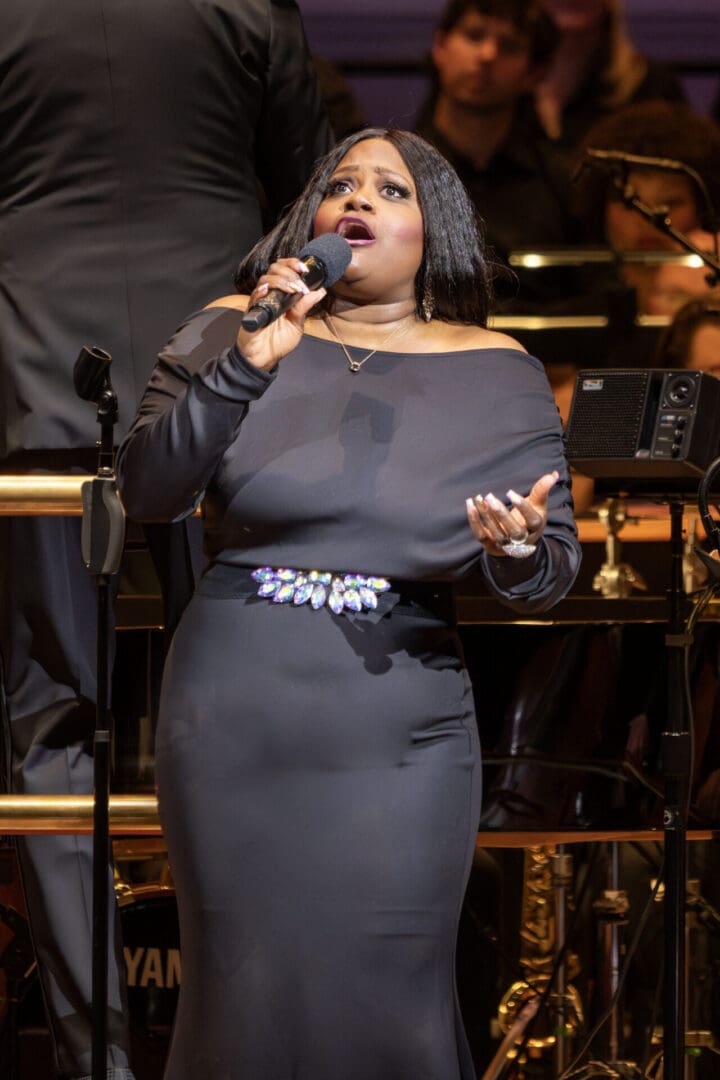
Nova Payton
Nova Payton, who’s toured with major orchestras and sung backup with major stars, joined Broadway veterans Max Clayton and Ephraim Sykes to provide vibrant vocals for these wide-ranging samples of our country’s musical heritage. They sang solos, and, for a grander sound, were joined several times by Judith Clurman’s Essential Voices USA, and then there were three instances when they all combined forces.
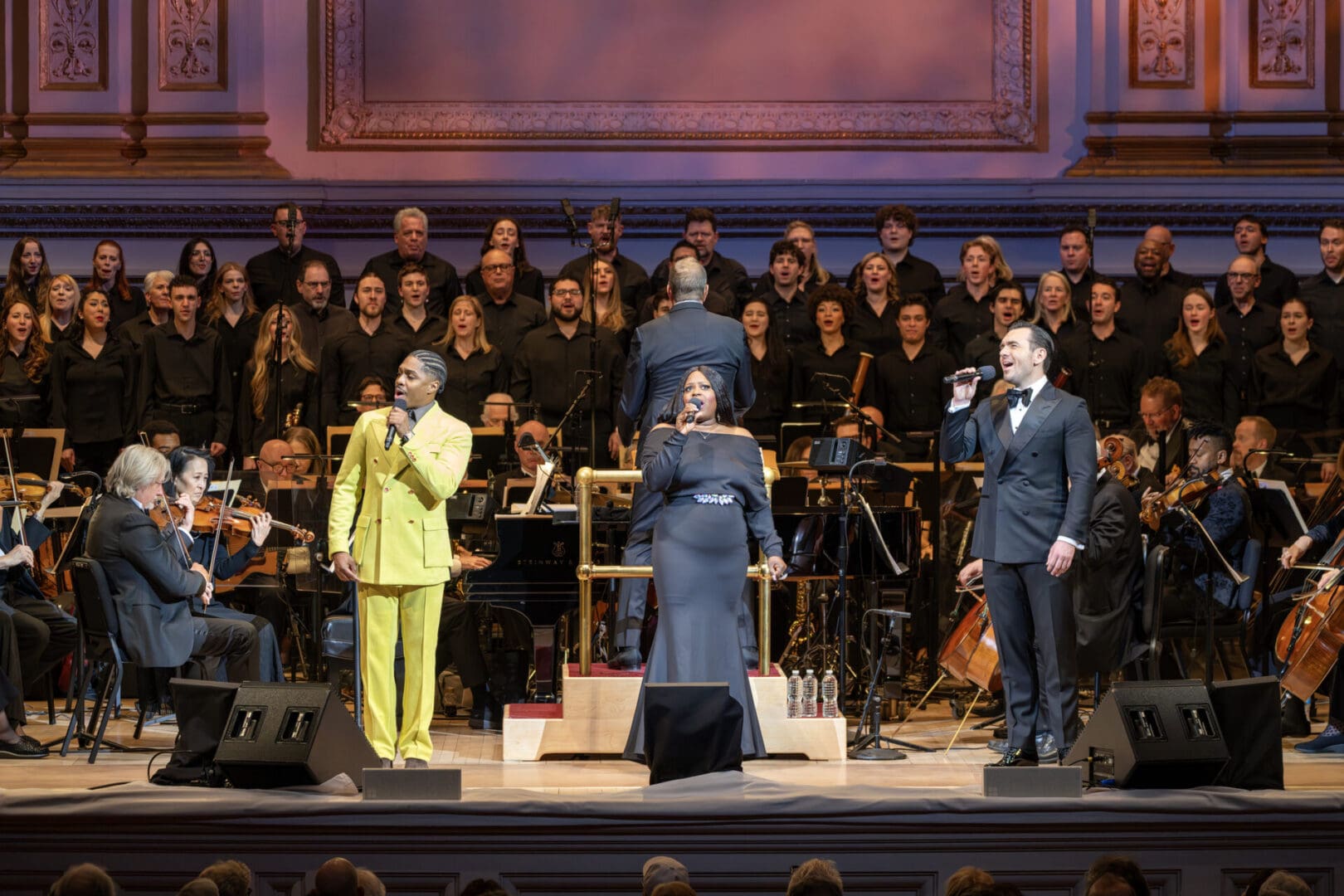
Ephraim Sykes, Nova Payton, and Max Clayton with Essential Voices USA (Judith Clurman, Director) in The Music of US
Mr. Clayton’s appearance (joined by the Voices) began the evening’s salute to Broadway—a stirring “Give My Regards to Broadway,” written and introduced by George M. Cohan in 1904. Mr. Sykes changed things up with “Summertime” (written for the female voice by icon George Gershwin in Porgy and Bess, this surprisingly lively treatment would placate no baby, but pleased the Carnegie crowd). Mr. Clayton and the Voices followed with Gershwin’s energized romp “I Got Rhythm.” Considering how many songs could represent musical theatre, it seems odd that, in a concert making room for only three Broadway selections, two of them were devoted to the same composer. Another number from the ’30s, Irving Berlin’s film song “Cheek to Cheek,” cheerfully closed the first half of the concert, featuring all three soloists. So, no show tunes from the last 90 years, either.
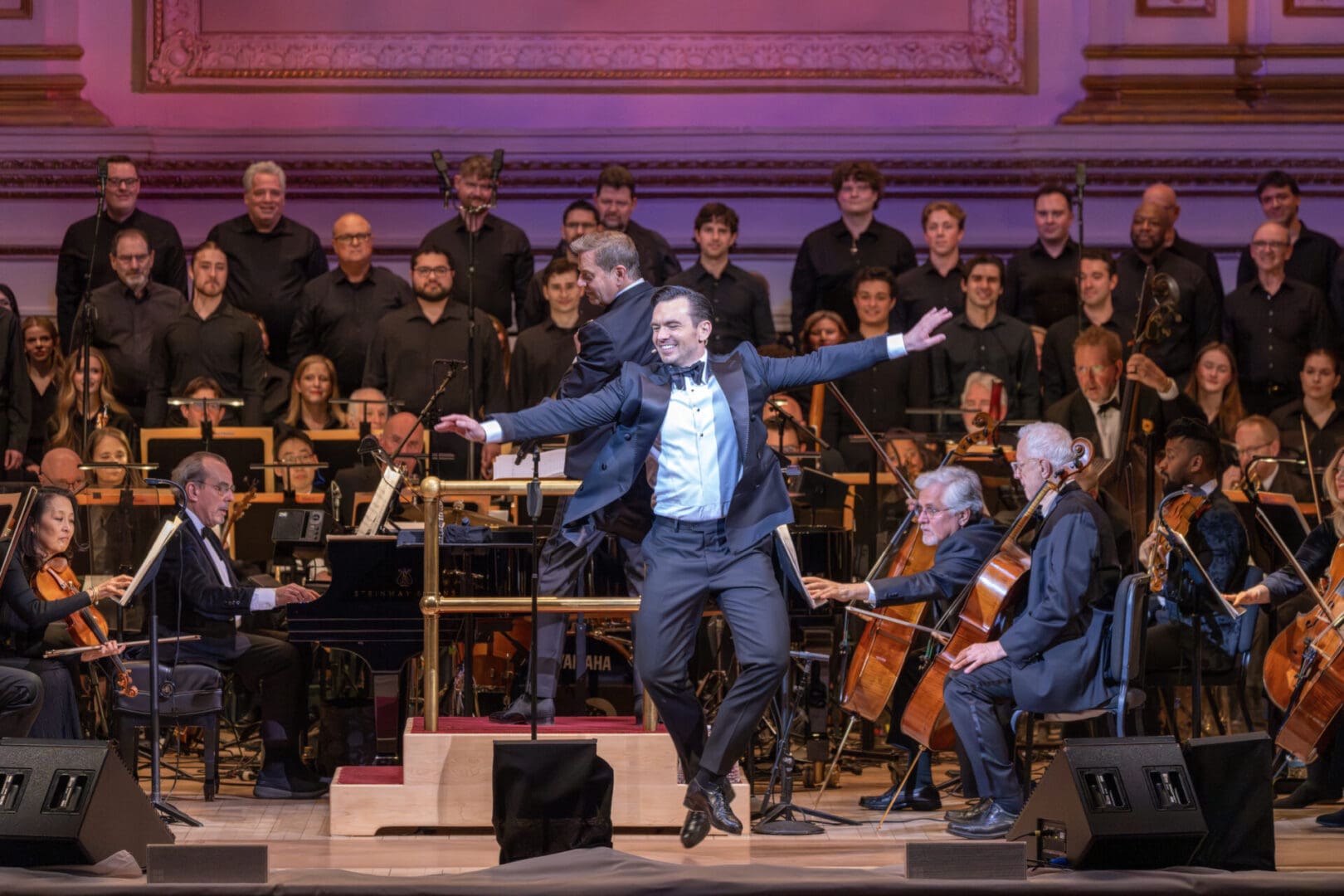
Max Clayton
Music associated with black artists and culture received considerable focus: the Pops played Scott Joplin’s jaunty “Maple Leaf Rag”; Miss Payton impactfully sang the spiritual “Swing Low, Sweet Chariot,” “Lift Every Voice and Sing” (known as the Black National Anthem), and the Donna Summer disco hit, “Last Dance.” Dynamic Mr. Sykes took on Jimmie Cox’s bluesy “Nobody Knows You When You’re Down and Out,” tackled Michael Jackson’s “Beat It,” and cooked with Sam Cooke’s “A Change Is Gonna Come.” The full company came together for “Glory,” written by John Legend with rappers Common and Rhymefest, from the movie Selma, about the civil rights marches of the 1960s. The song debuted in 2014. Anything newer was M.I.A.
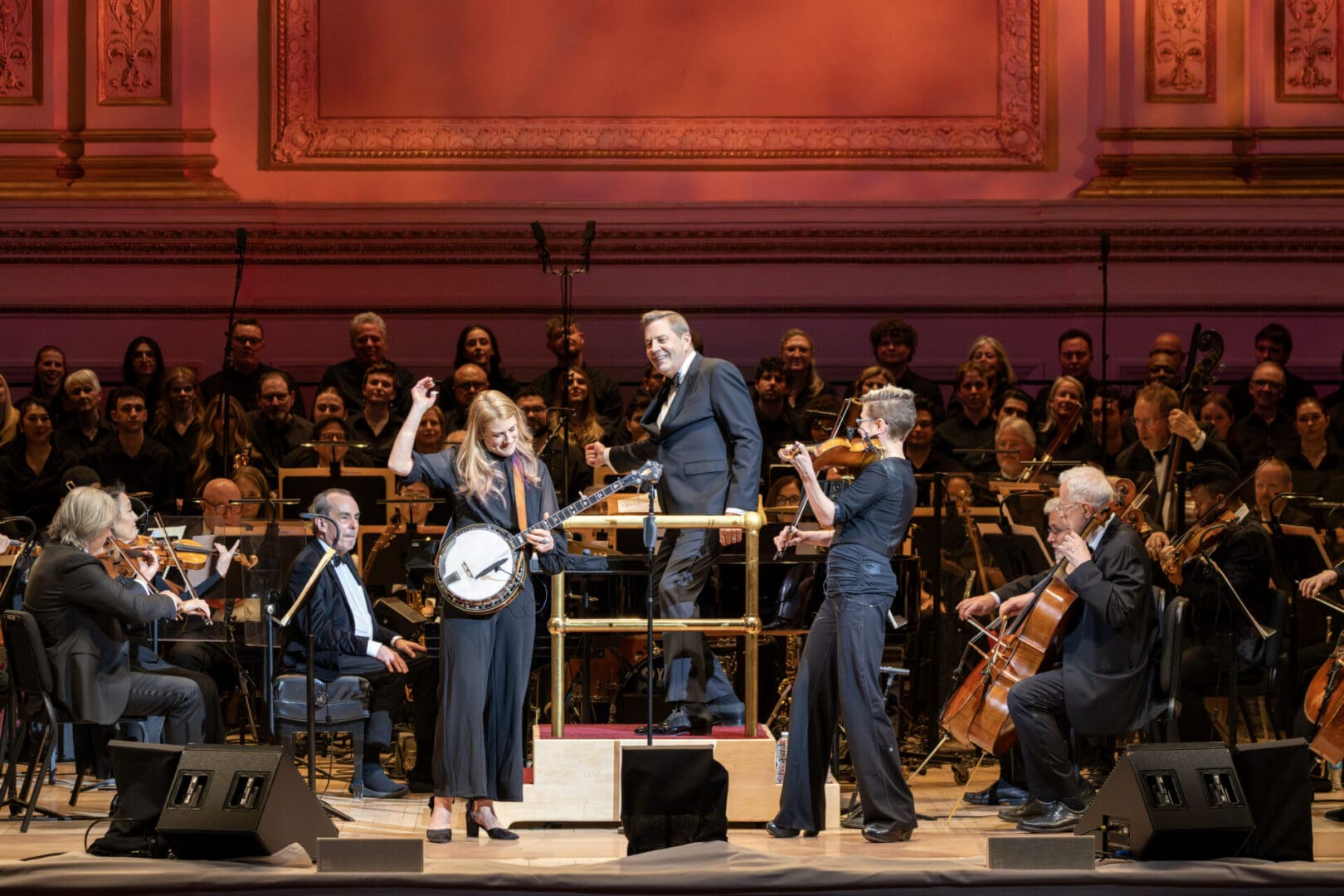
Banjoist, guitarist, and composer Hilary Hawke joins the NY Pops
Along the way, there was some country: guest banjoist Hilary Hawke joined the Pops for Flatt and Scruggs’ “Foggy Mountain Breakdown,” and Miss Payton went country with Willie Nelson’s “Crazy.” Early rock was represented when Mr. Clayton gamely stepped into Carl Perkins’ “Blue Suede Shoes.”
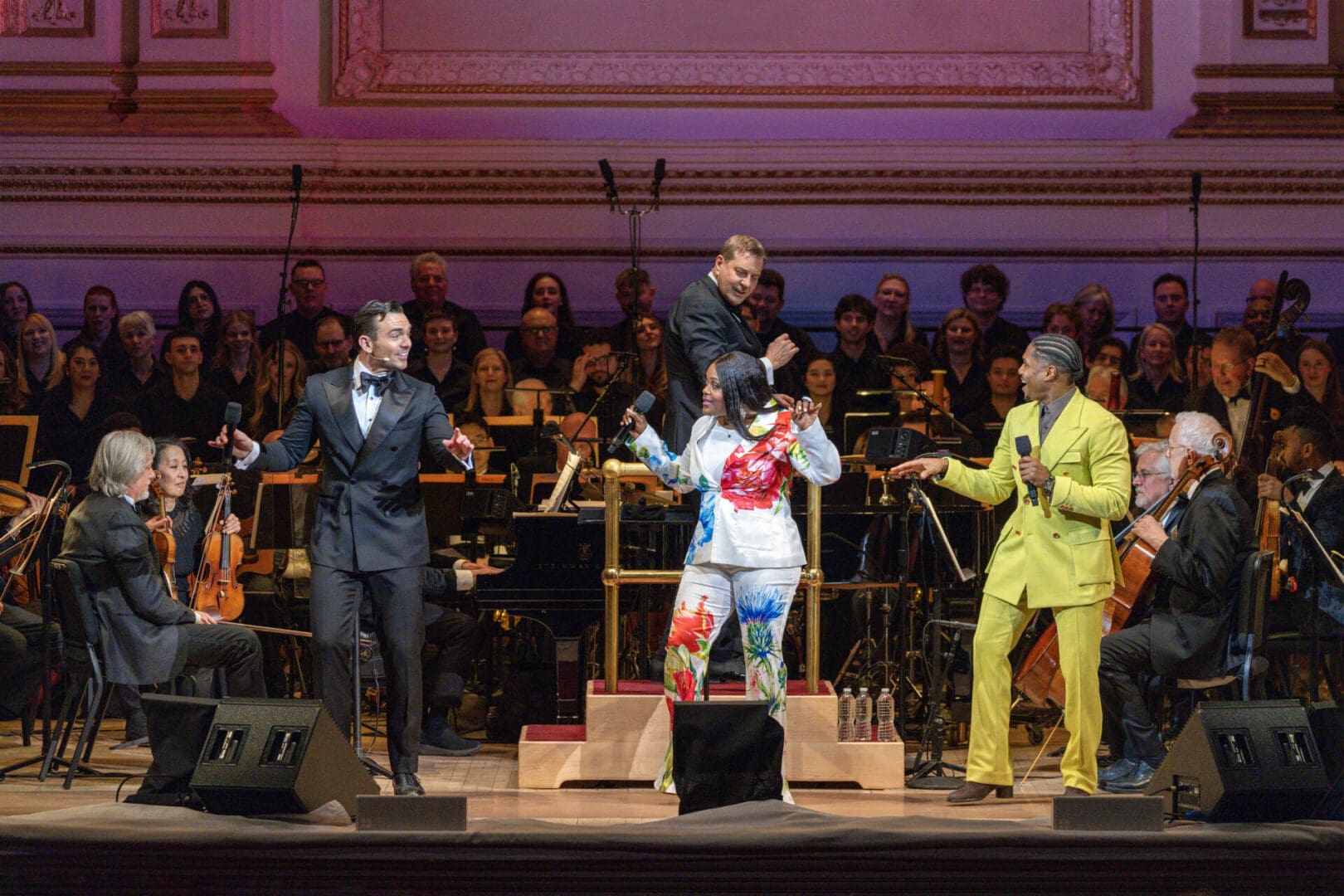
Max Clayton, Nova Payton, and Ephraim Sykes
One might complain that women songwriters were given short shrift, or that there wasn’t enough of the dance-band sound of the 1930s and ’40s, or enough gutsy jazz. And what about sentimental pop songs or movie scores from later decades? Well, you can’t fit everything into one night when such a big net is cast. But the performers at Carnegie deserved the big hand they got, earning all those bows for all those “wows.”
✦ ✦ ✦ ✦ ✦ ✦ ✦ ✦ ✦ ✦
photos by Richard Termine
The Music of US: From Then to Now
The New York Pops
Carnegie Hall, 881 Seventh Avenue in New York City
played March 13, 2026
for future performances, visit The New York Pops
✦ ✦ ✦ ✦ ✦ ✦ ✦ ✦ ✦ ✦
