


Areas We Cover
Categories

Theater Review: F**KING STRANGERS (Echo Theater Company / Los Angeles)
by Michael M. Landman-Karny | July 21, 2026
in Los Angeles, Theater
NO STRINGS ATTACHED?
THINK AGAIN
Erik Patterson’s provocative world
premiere boasts superb performances
but mistakes repetition for depth
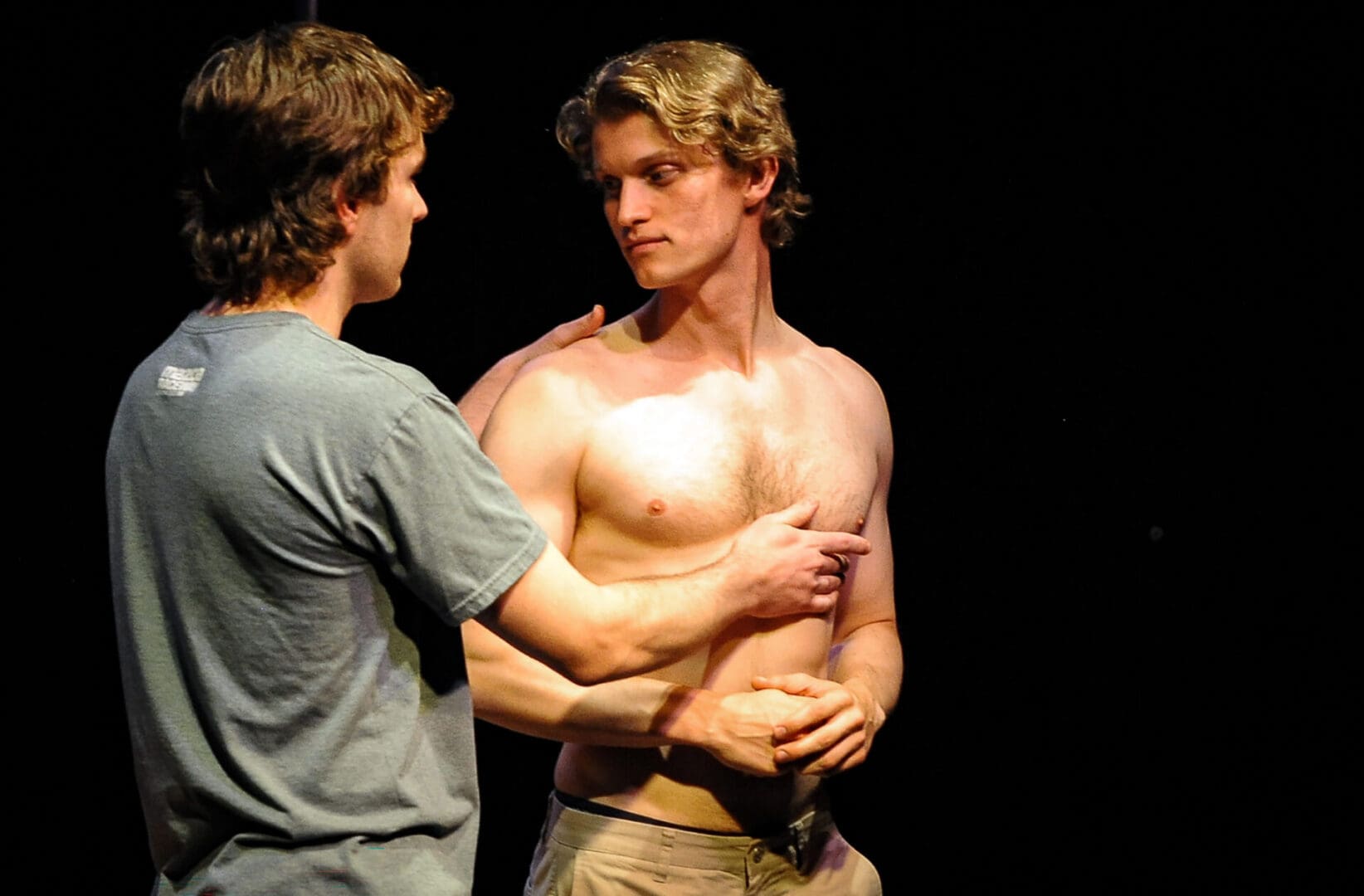
Michael Sturgis and Sean Luc Rogers in Fucking Strangers by Echo Theater Company at Atwater Theatre
In F**king Strangers, receiving its world premiere from Echo Theater Company, playwright Erik Patterson begins with an arresting image: a terrified young man stranded beside a freeway, begging his mother to stay on the phone until help arrives. The scene is tense, funny, and unexpectedly tender. It also promises a more psychologically disciplined play than the sprawling, sexually overworked one that follows.
That young man is Ru, an agoraphobe who has retreated to his Anaheim Hills bedroom after a traumatic encounter six years earlier. Online, he meets Dylan, a handsome escort and webcam performer who sells intimacy by the minute. Dylan is also involved with Mick, a closeted married man whose appetite for elaborately scripted sexual role-play is matched only by his inability to speak honestly with his wife, Julianne. The connections among these four characters gradually tighten until everyone’s secrets occupy the same room.
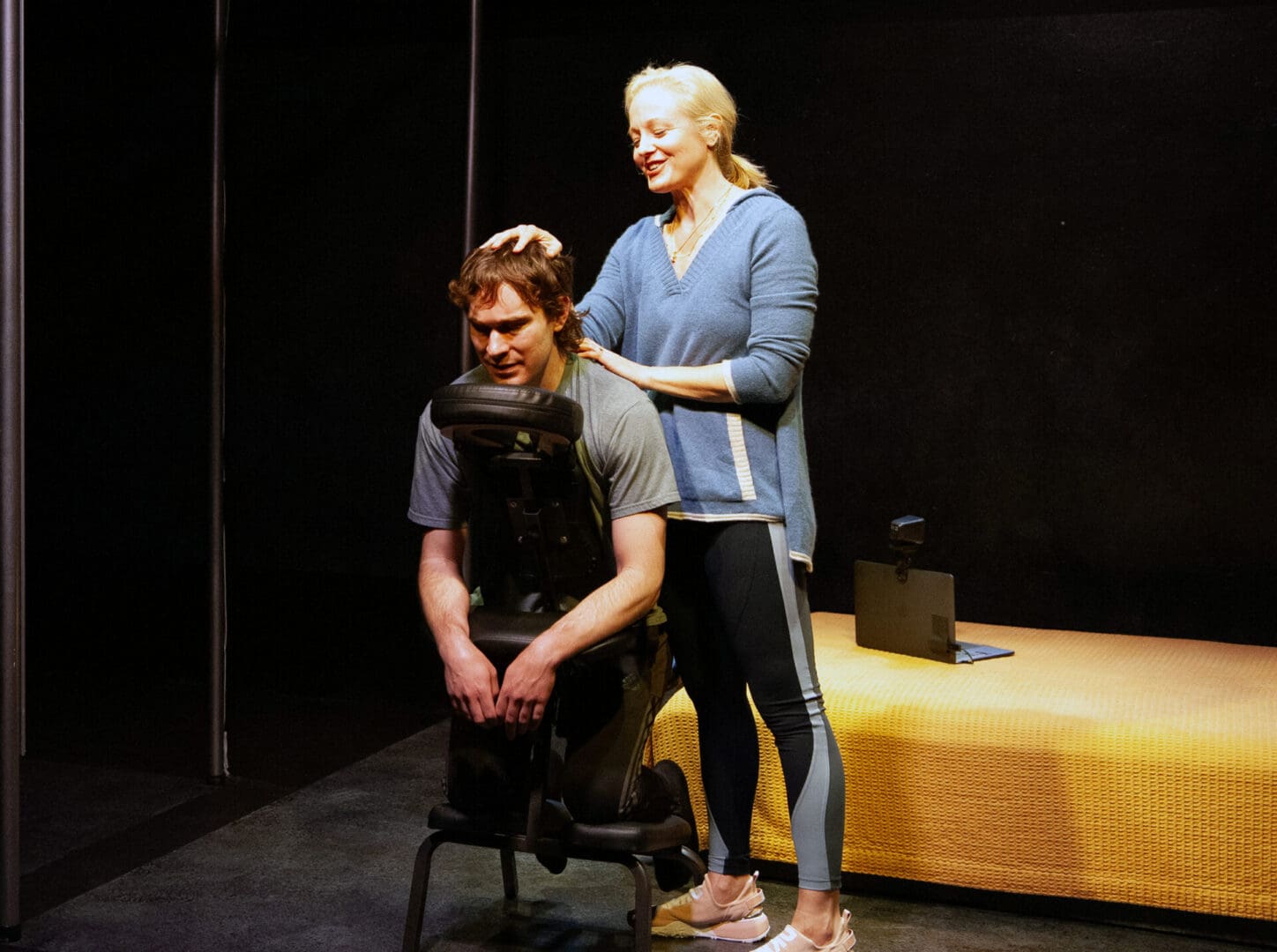
Michael Sturgis and Tasha Ames
The production itself is considerably better than the play. Director Chris Fields navigates Patterson’s breakneck progression through bedrooms, chat rooms, restaurants, cars, and public spaces with remarkable precision. The transitions have cinematic fluidity, but Fields never allows the evening to dissolve into disconnected sketches. Even when Patterson circles back to ideas he has already explored, the direction maintains momentum and keeps the emotional relationships clear.
Fields has assembled an excellent cast. Sean Luc Rogers gives Dylan an easy physical magnetism, but his finest work has little to do with the body Patterson so insistently puts on display. Rogers understands that Dylan’s real gift is not sex but attention—the ability to make clients feel uniquely seen while quietly calculating what each encounter requires. His cheerful description of himself as a “sexual kaleidoscope” is amusing, but Rogers also reveals the loneliness beneath Dylan’s adaptable persona, especially as professional intimacy begins slipping into genuine attachment.
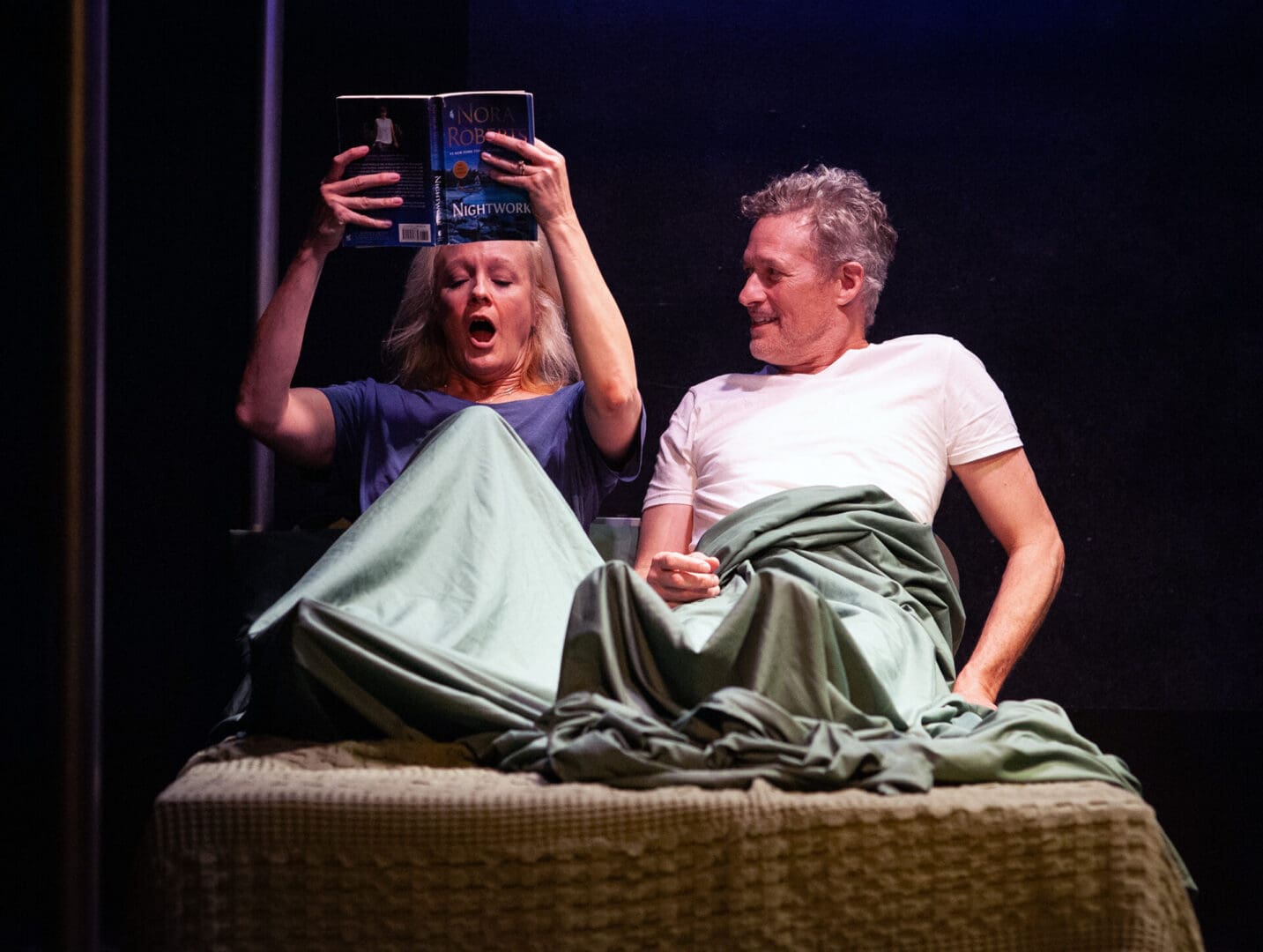
Tasha Ames and James Tupper
Michael Sturgis is superb as Ru, resisting the temptation to reduce agoraphobia to a collection of nervous tics. Instead, he creates a man whose defensive wit has become both refuge and weapon. His compulsive talking masks deeper fears, while subtle hesitations and shifts in tone quietly foreshadow motives that only become fully apparent later. A childhood story about pretending to be a horse begins as eccentric comedy before exposing a profound paternal wound. Sturgis gives the moment an emotional force the surrounding script does not always earn.
Tasha Ames brings impeccable comic timing and grounded humanity to Julianne, a massage therapist who once dreamed of becoming an actor. Monologues that could easily become overextended stand-up routines instead gain shape and emotional direction through Ames’s performance. Her account of rediscovering acting while caring for her aging mother and confronting her husband’s infidelity becomes the portrait of a woman reclaiming control through performance. James Tupper is equally compelling as Mick, balancing the character’s absurdly detailed erotic role-playing with the shame and vulnerability that drive it. His comic precision gives way naturally to genuine emotional openness.
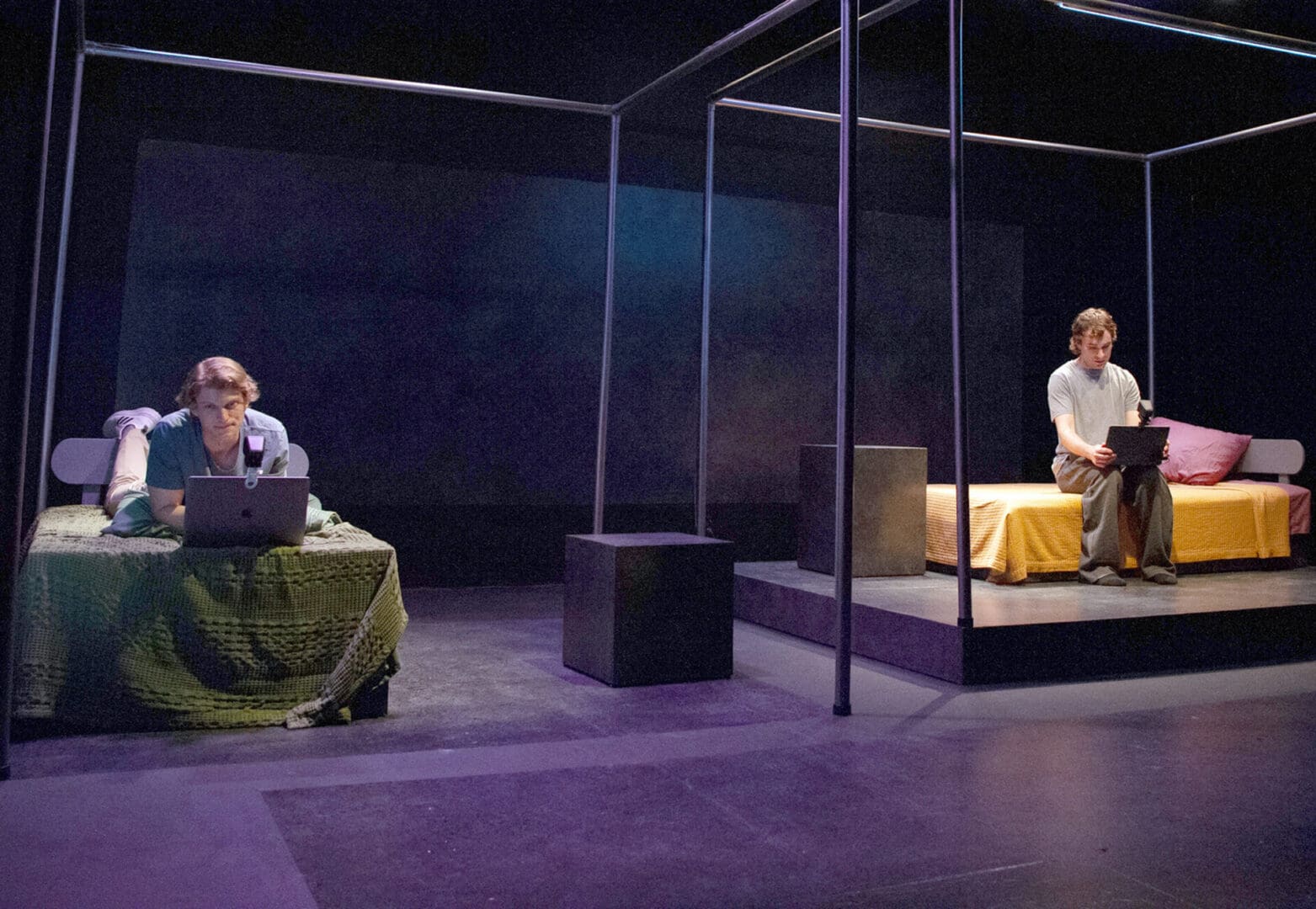
Sean Luc Rogers and Michael Sturgis
Patterson builds the play around an intriguing question: if nearly every human relationship involves some degree of performance, what separates genuine intimacy from a purchased fantasy? Ru invents a more confident online persona. Julianne performs the role of the unsuspecting wife after she already knows the truth. Dylan, whose profession requires him to become whatever others need, may be the only character honest enough to admit he’s acting—even as he begins confusing professional attentiveness with love.
There are terrific comic moments throughout. Debates over Citizen Kane, Vertigo, and Notting Hill are sharp and knowing, while Mick and Julianne’s attempt at anonymous sex in a Whole Foods parking lot is simultaneously ridiculous and painfully revealing. Patterson clearly knows how to locate humor inside humiliation—and, at his best, the wound beneath the joke.
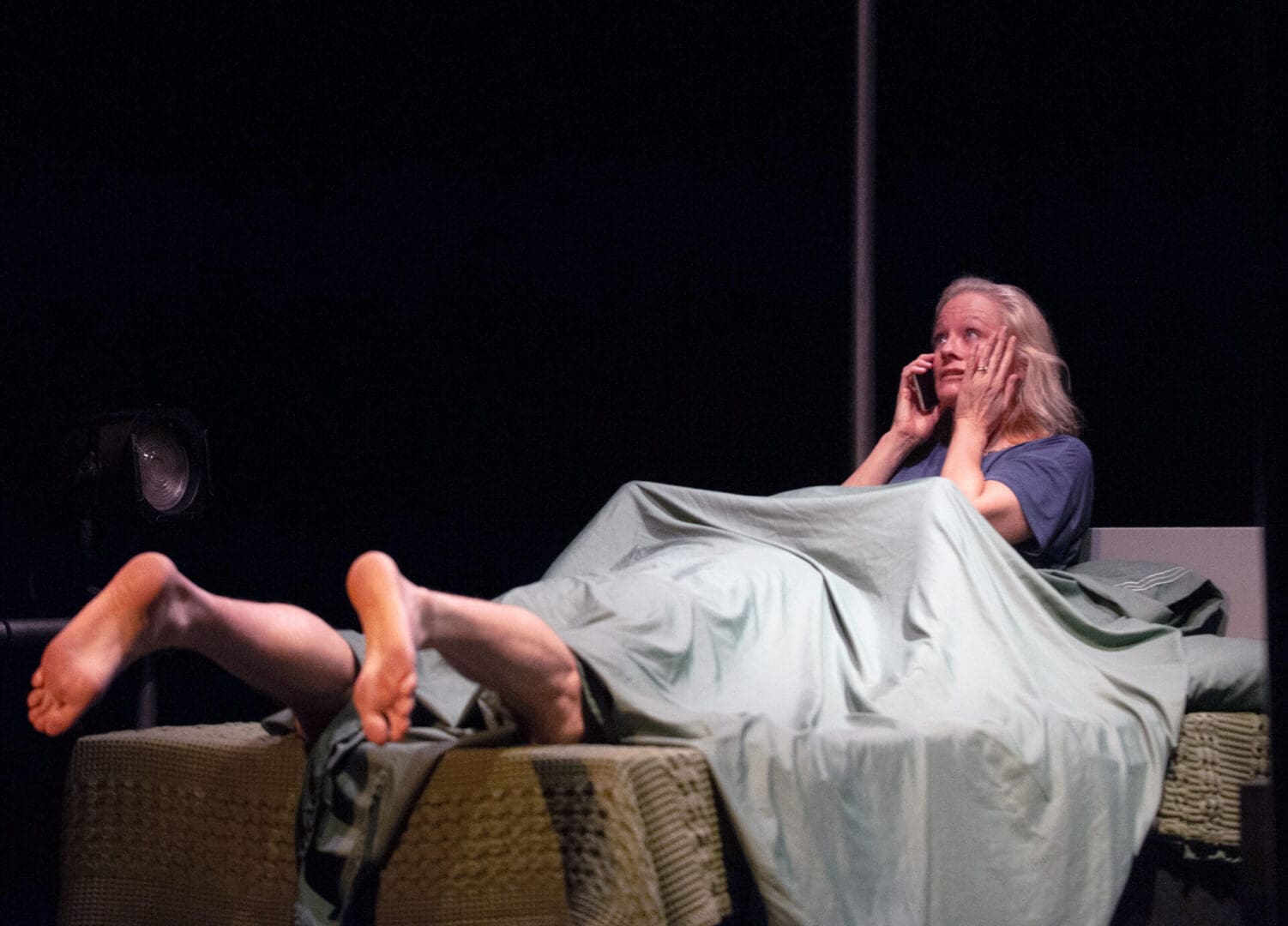
Tasha Ames
Unfortunately, those moments are buried beneath an exhausting amount of sexual business. The problem isn’t explicitness; it’s repetition. Once Patterson establishes that sex functions as both commodity and disguise, he repeatedly restages the same idea in increasingly lurid variations. Nearly every emotional revelation arrives through an orgasm, a confession about one, or a joke immediately afterward. What initially feels daring gradually becomes monotonous.
The characters also speak in extended torrents that often resemble polished audition monologues. Ru’s childhood memories and Julianne’s reflections on abandoned ambitions contain genuinely moving details, but Patterson repeatedly explains what the actors have already made clear. Dylan, meanwhile, is asked to be escort, hustler, grieving son, aspiring writer, romantic ideal, and amateur therapist—roles that Sean Luc Rogers somehow manages to unify despite the script’s shifting demands.
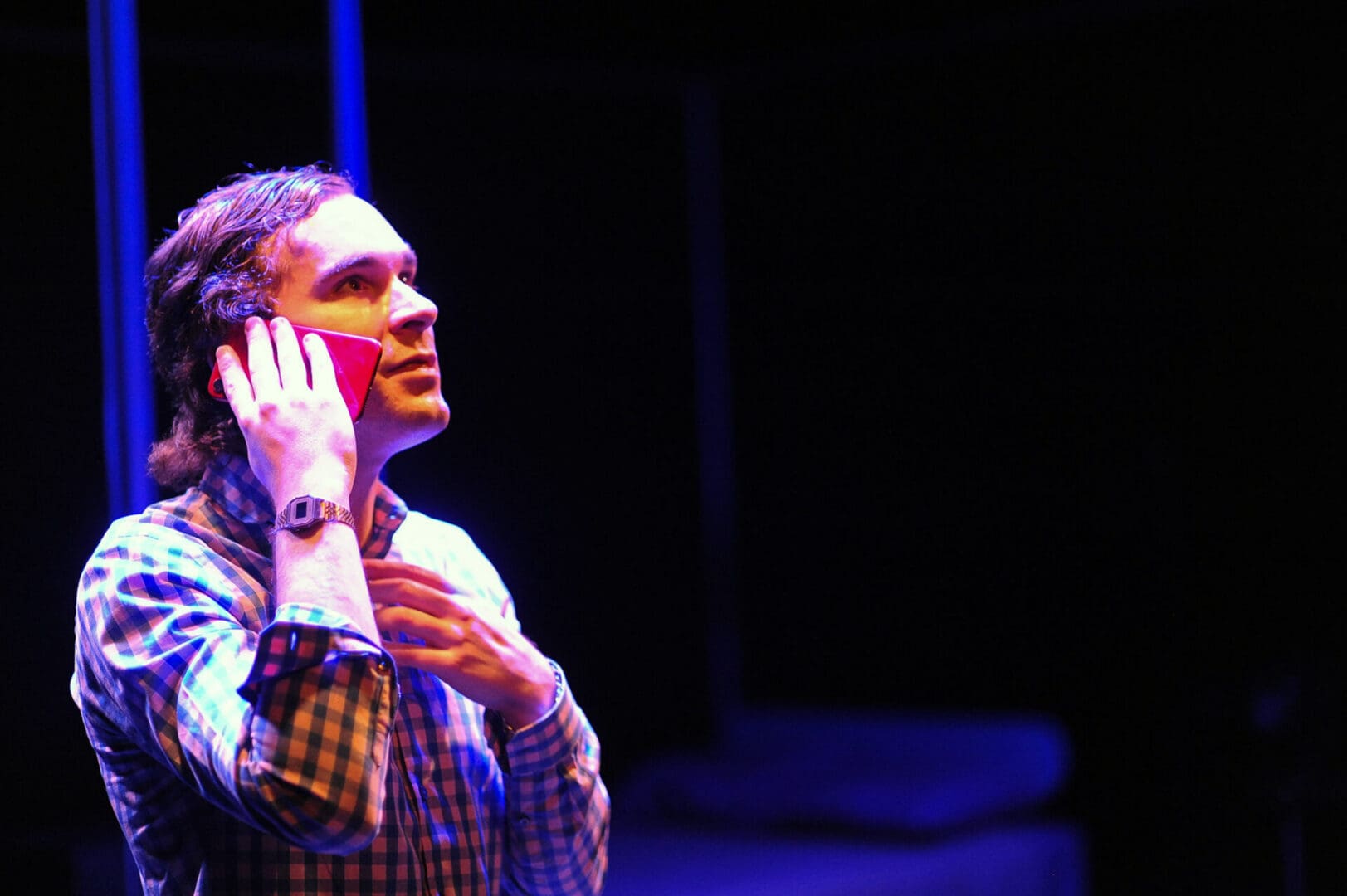
Michael Sturgis
Most disappointing is the ending, which won’t be spoiled here. Patterson spends much of the evening demonstrating that love, money, sex, marriage, and obligation cannot be neatly separated. Yet when the decisive moment arrives, the resolution feels mechanically arranged rather than psychologically earned.
There is a sharper, leaner play trapped inside F**king Strangers—one about people paying others to become the versions of themselves they cannot otherwise face. Mr. Fields, his designers, and four exceptional actors repeatedly bring that play into focus. Patterson just as repeatedly buries it beneath another sexual anecdote, another therapeutic speech, and another explanation of ideas the audience has already grasped. Echo Theater Company has mounted a first-rate production. The script simply doesn’t return the favor.
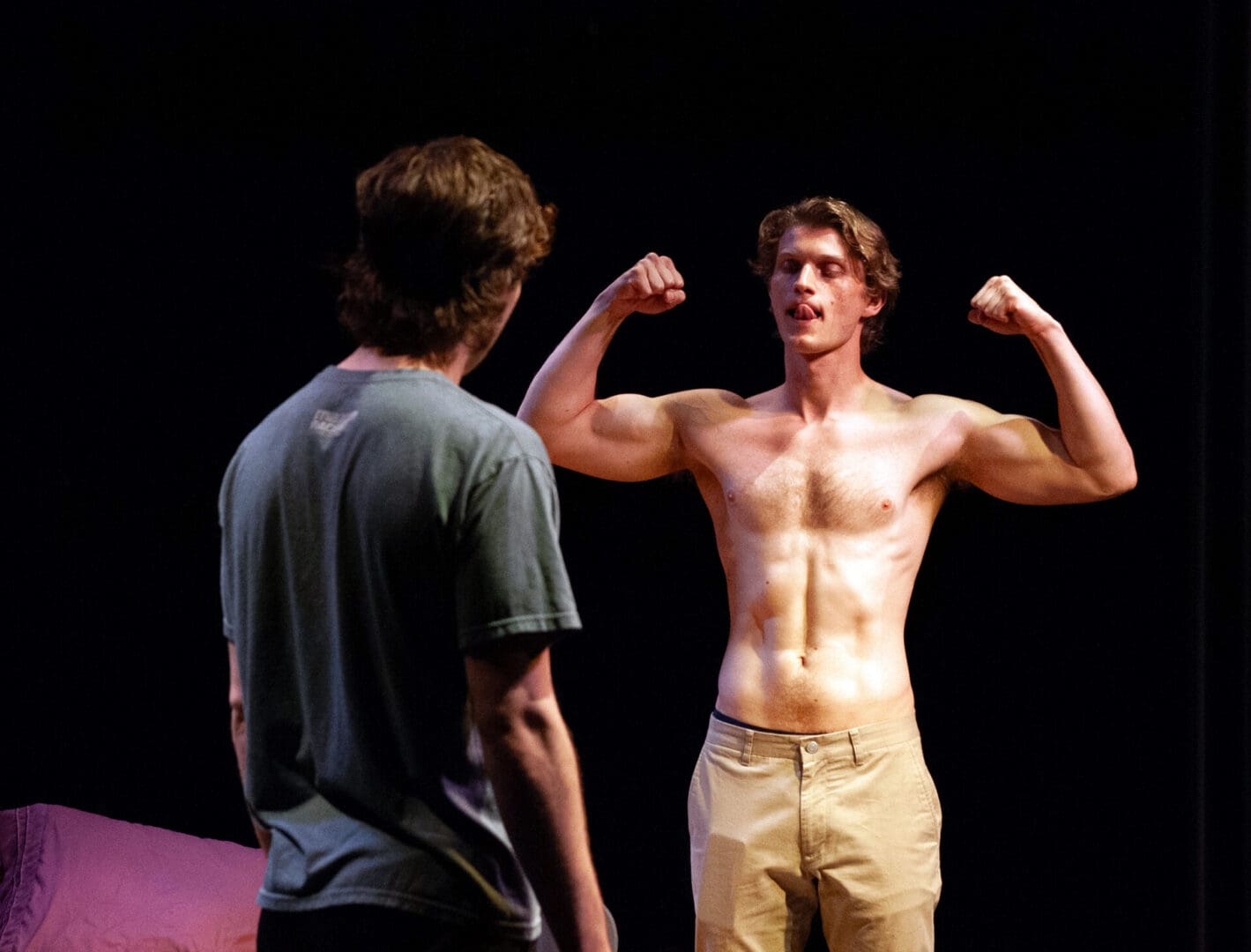
Michael Sturgis and Sean Luc Rogers
✦ ✦ ✦ ✦ ✦ ✦ ✦ ✦ ✦ ✦
photos by Cooper Bates
F**king Strangers
Echo Theater Company
Atwater Village Theatre, 3269 Casitas Ave. in Los Angeles
Fri., Sat. & Mon. at 8; Sun. at 4
recommended for ages 18+
ends on Aug. 24, 2026
for tickets ($15–$42.75), call 747.350.8066 or visit Echo Theater Company
free parking in the Atwater Crossing (AXT) lot one block south of the theater
for more shows, visit Theatre in Los Angeles
✦ ✦ ✦ ✦ ✦ ✦ ✦ ✦ ✦ ✦

Once again acting rules in an Echo Theatre Company production. All 4 actors bring amazing performances to life. They each have moments of sheer brilliance. I disagree with the critics assessment that the script’s thematic repetition is the show’s undoing. The repetition allows the relationships to blossom and grow. I do however agree with the critic that the ending is a real disappointment. I personally saw it coming a mile away and when it did arrive it was dealt with in such a wham bam thank you ma’am manner it seemed as if the author felt he had to wrap it up post haste so the audience could get home. Nothing in life is that simple.
Well, I was in theater heaven for the first half or more of Fucking Strangers. Your review nails everything that makes it work. Many of the scenes positively crackle, the dialogue is funny and unnerving at the same time, and the acting is sublime.
I think you were a little tough on the writing. And yet, the script really did take a nose dive, then crashed and burned–there’s serious second act trouble in this one-act. It’s so weird when you think watching it, “I’m going to recommend this to EVERYONE” and then suddenly “Ugh, how disappointing.”
Didn’t Billy Wilder say “If you have a problem with the third act, the real problem is in the first act”? Which means the script’s thematic repetition may indeed become the show’s undoing. But that repetition was delightful, until, of course, it wasn’t.