


Areas We Cover
Categories

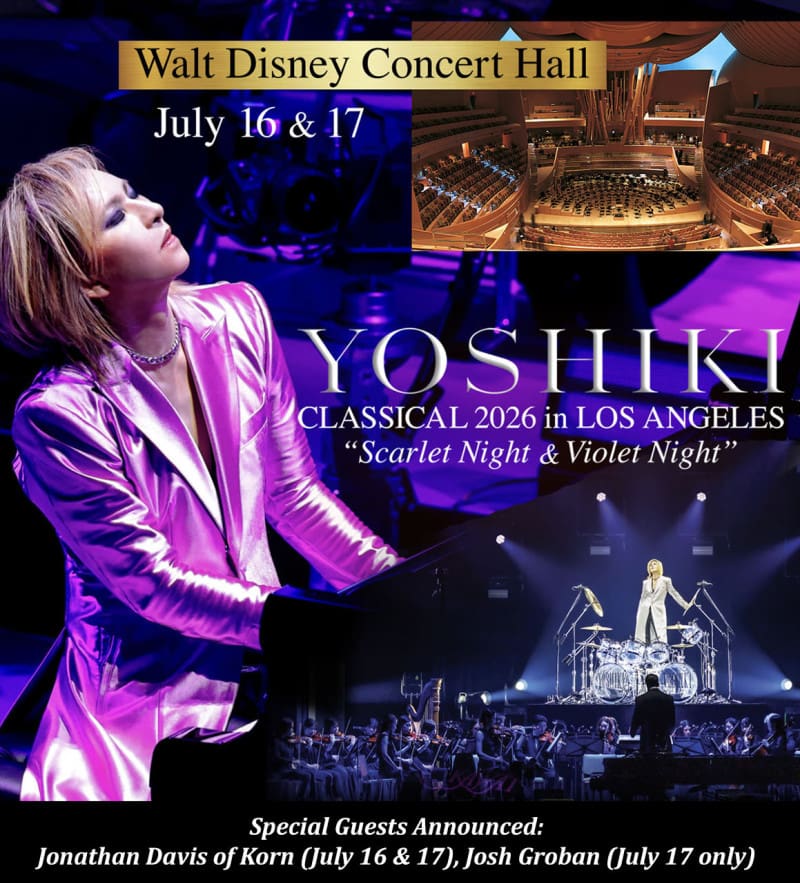
Concert Review: YOSHIKI: CLASSICAL 2026 WORLD TOUR (“Violet Night” / Disney Hall / LA)
by William C. | July 24, 2026
in Concerts / Events, Los Angeles, Tours
PURPLE REIGN
An evening of symphonic rock, devoted
fans, and restless creativity celebrated
an artist still refusing to slow down

Yoshiki’s long-awaited return at Disney Hall celebrated an enduring rock icon, even when the spectacle occasionally overshadowed the music
Under doctor’s orders to leave the drums behind following his third cervical-spine surgery in 2024, Yoshiki did what one might expect from a musician whose career has been built on grandeur, defiance, and theatrical risk: he returned to Walt Disney Concert Hall, settled behind a drum kit, and played as though restraint were merely another obstacle to overcome.
Friday’s sold-out Violet Night, the second of two distinct Yoshiki Classical 2026 programs, marked his first full-scale U.S. performance since the surgery. At 60, the Japanese-born, Los Angeles-based composer, pianist, and rock drummer remains an extraordinarily charismatic figure while he continues to embody what an exemplary Japanese rockstar should be: enigmatic, polite, and with a touch of insanity.
For those unfamiliar with visual-kei (ヴィジュアル系) or v-kei for short, the Japanese rock movement that produced Yoshiki and X Japan fuses heavy music with flamboyant costumes, elaborate makeup, glam-rock excess, and theatrical androgyny. X Japan began with Yoshiki in 1982 and went on to sell tens of millions of records, filling venues including the Tokyo Dome and Madison Square Garden. Yoshiki’s emergence at Disney Hall therefore carried the aura not merely of a concert appearance but of a homecoming by one of Japan’s most internationally recognized rock stars.
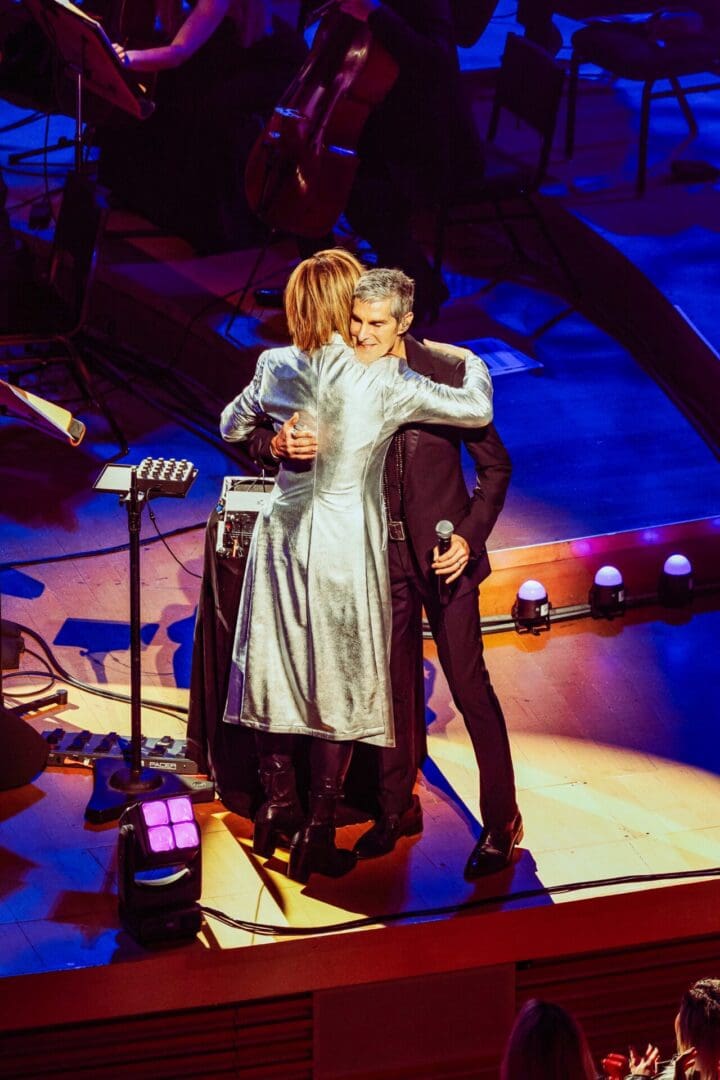
Yoshiki
As is often the case at arena-style rock concerts, a lengthy promotional video traced Yoshiki’s career through loss, heartbreak, and personal triumph. I found it more melodramatic than illuminating. Everything it covered had already been explained in the printed program, making the extended presentation feel redundant rather than revelatory.
The evening began with “Dahlia,” the title track from X Japan’s 1996 album. Between the fog machine, lights, and the melodramatic chords, the vibe of the concert was more Christian rock band mass than a metal concert. This felt apropos, as many in the audience came to worship. They had come to accept the sacrament of a legendary era and the man who remains living proof of the rock fandom that once sold out stadiums across the globe.
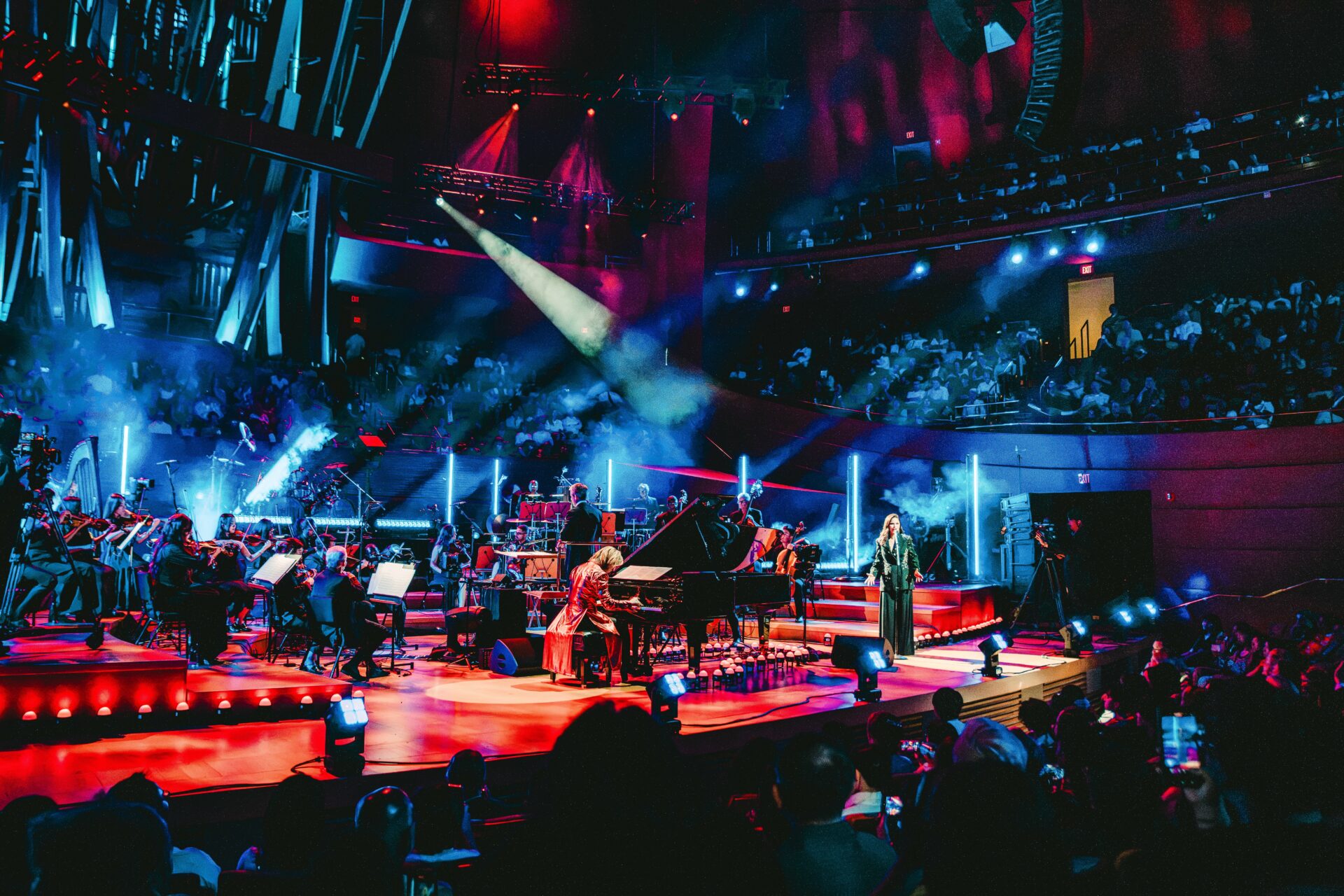
Yoshiki and Beverly
The dramatic rock melody, accentuated with timpani rolls, continued under the baton of Ward Stare as Filipina singer Beverly joined Yoshiki for “Rosa” and “Kiss the Sky.” Her technique was clean and secure, and she brought considerable force to the material, although the heavy amplification obscured much of her diction. Words dissolved into the surrounding sound often enough that it was difficult to distinguish whether she was singing in Japanese or English. The fault seemed less hers than the production’s: throughout the evening, the vocalists and orchestra frequently competed with an electronic soundscape that favored impact over clarity.
The first major surprise was Josh Groban, who joined Yoshiki for “Over the Rainbow” and “Forever Love,” a Yoshiki original for orchestra, piano, and voice. Groban has retained his vocal richness through the years, and his performance of “Forever Love,” sung in both English and Japanese was especially delightful. His memorized Japanese and careful phrasing made the collaboration feel like a genuine meeting of musical worlds rather than a celebrity cameo.
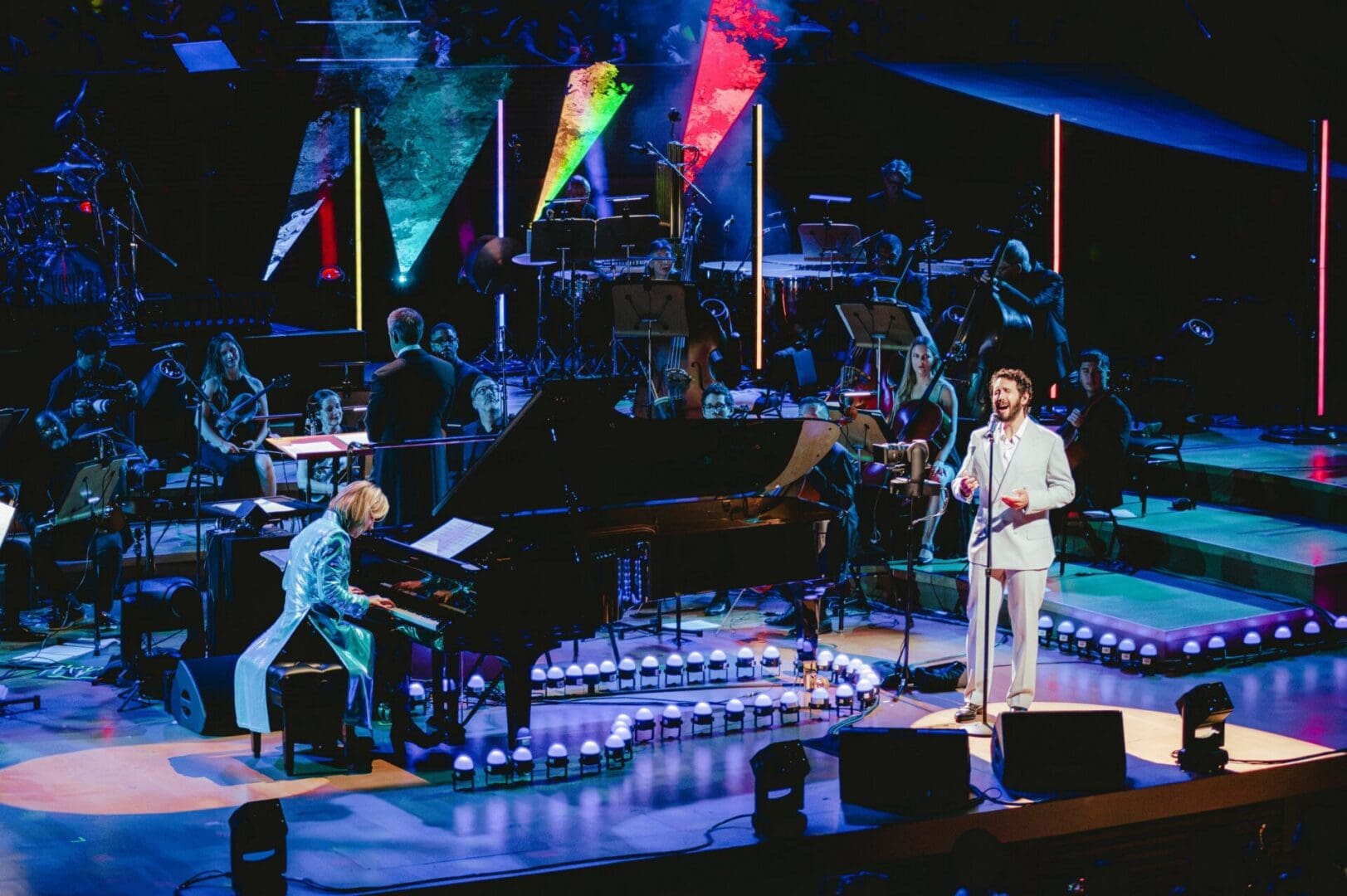
Yoshiki and Josh Groban
“Over the Rainbow,” however, proved less distinctive. Groban sang it beautifully, but the familiar standard received no particularly revelatory interpretation or arrangement. A song carrying that much performance history demands either striking reinvention or unusual emotional specificity; here it remained meh—pleasant but conventional, more polished cabaret interlude than defining concert moment.
Yoshiki flexed his classical music skills persuasively in Chopin’s Nocturne in C-sharp Minor. The orchestration was fantastic, and his use of rubato was tasteful and subtle. It was the evening’s most artistically satisfying piano performance precisely because it allowed him to step away from the surrounding spectacle and trust the music’s quieter emotional force.
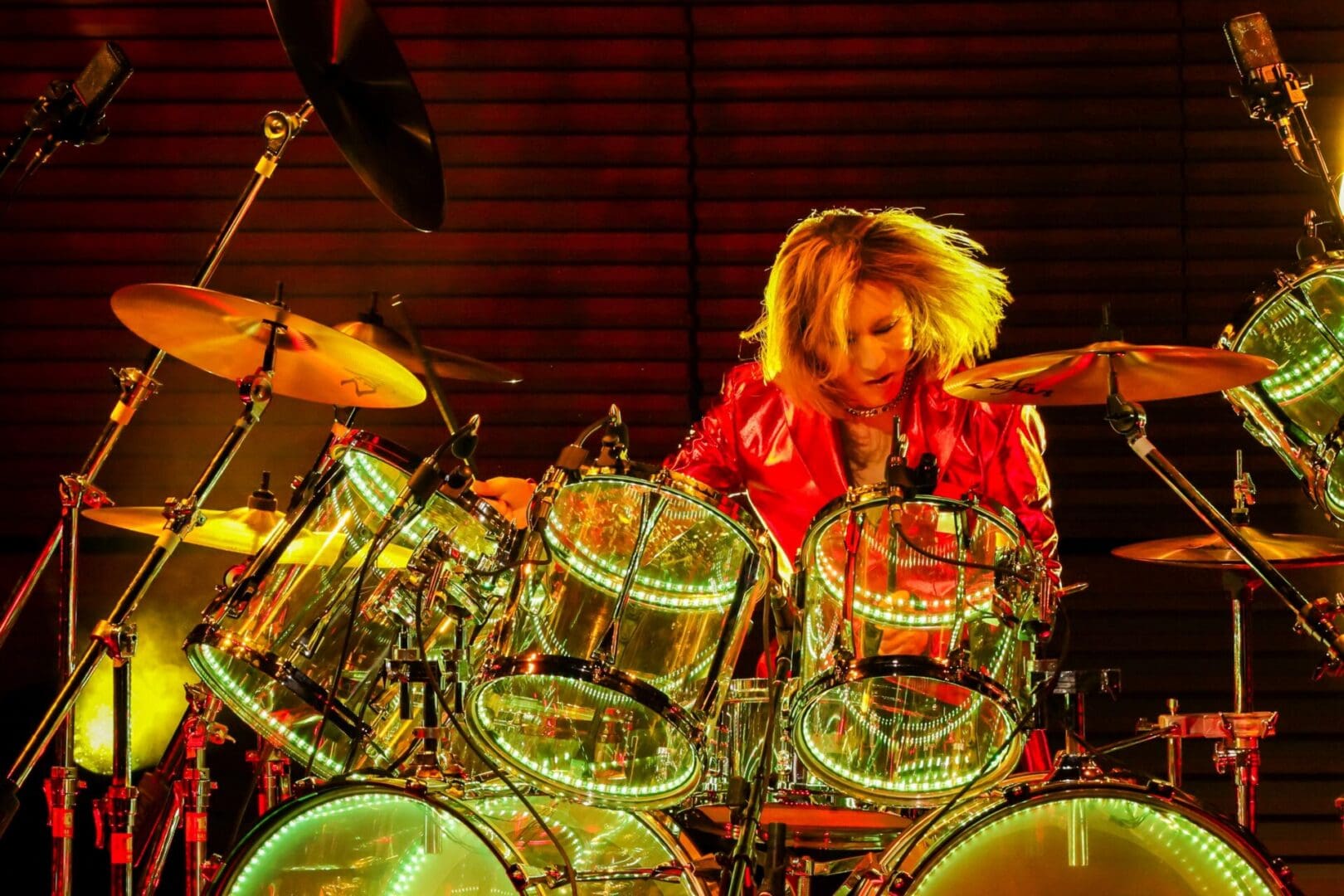
Yoshiki performing at Yoshiki Classical 2026 at Walt Disney Concert Hall at Walt Disney Concert Hall on July 16, 2026 (photo by Eric Charbonneau/A LIST Media Entertainment via Getty Images)
Soprano Larisa Martinez followed with Yoshiki’s “La Senna,” a meditation on the French river set to an Italian text which debuted this year. The piece occupies the same emotional territory as crossover favorites such as “Con te partirò” and various settings of “Ave Maria,” combining sweeping melody with devotional grandeur. Martinez commanded the stage with poise and clear diction. Some notes in her upper register fell slightly flat, but her musicality and dignified presence carried the number.
The program’s second half opened with “Rusty Nail,” where the viola section was nicely featured in the score, followed by “Larmes” featuring Yoshiki playing his gentle tune on piano. The concert’s central contradiction then came fully into view during Bach’s “Air on the G String.” Yoshiki, whose doctor had advised him to stop drumming, moved from the piano to the kit and unleashed a fierce solo against the orchestral arrangement. A drummer trapped in a brittle body and a pianist who still craves the physical release of rock, Yoshiki revealed more about himself in this sequence than any biographical video. The juxtaposition was not a stunt. His drumming became a confession of temperament: the body may demand caution, but the artist remains unwilling to accept it.

Yoshiki and Jonathan Davis
The evening’s most successful union of rock and orchestra arrived with Korn’s “Freak on a Leash,” radically reimagined by Yoshiki and performed with Jonathan Davis. Yoshiki began at the piano before shifting to the drums for the song’s thunderous climax, while Davis’s unmistakable voice cut through the hall with unnerving intensity. Here the orchestra did more than decorate an existing rock song; it expanded its dread, volatility, and scale. The arrangement allowed both musicians to retain their identities while discovering something genuinely new between them. Of all the evening’s experiments, this was the one most deserving of a future studio recording—or even a full collaborative album.
The concert was not without its quirks. The first was the extensive acoustic reinforcement used throughout the evening. To the average classical music lover, heavily amplifying the orchestra and piano inside Walt Disney Concert Hall bordered on sacrilege. The hall’s carefully engineered acoustics are designed to let listeners experience the full range of dynamics, from the softest pianissimo to the broadest fortissimo. Here, everything arrived at roughly the same volume, flattening the listening experience. This kind of overproduction has long been common in Japanese pop and rock recordings, but raised on classical and other acoustic traditions, I found this style of live sound abrasive and careless. After decades of rocking out, I could only venture to guess that a certain level of hearing loss had made this level of amplification more necessity than artistic choice. Still, it often felt like being force-fed a gourmet meal through Saran Wrap. Seriously, miking an opera singer in Disney Hall was a wild decision.
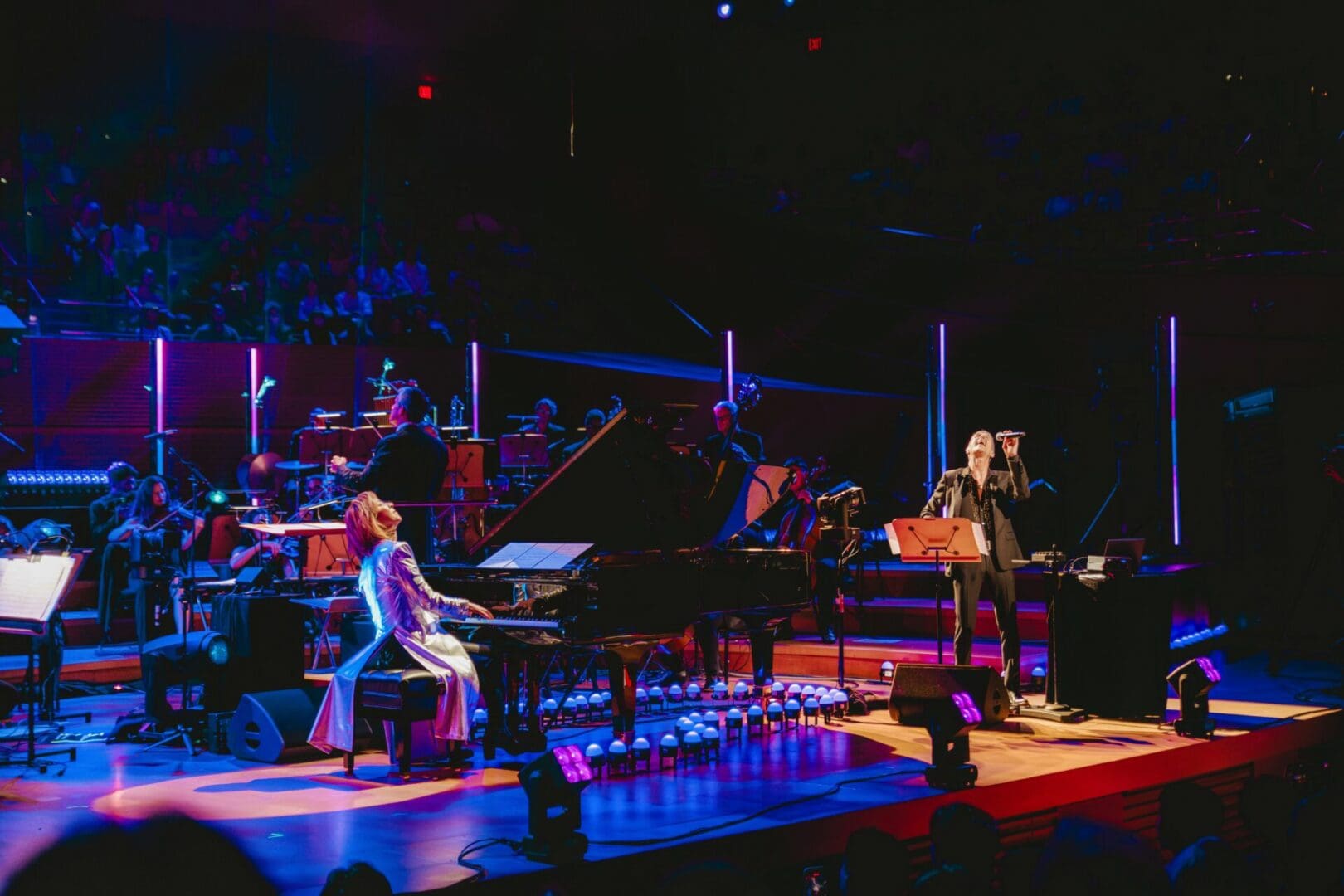
Yoshiki
Second, Yoshiki’s piano playing was perfectly serviceable but nothing to write home about. While I understood that most of us were there to celebrate a rock legend rather than hear a virtuoso recital, I found his playing generally rather dull and repetitive. Nearly every number ended the same way: a rapid scale racing up the keyboard followed by a booming major chord. Repeated often enough, the gesture became less of a signature than a habit. The cumulative effect pushed the evening toward kitsch rather than refinement. It was giving style over content. On drums, his pedaling was clean and, unsurprisingly for a lifelong drummer, his sense of tempo was excellent.
The major takeaway was this: the evening functioned as church service, fan convention, and concert all at once. The orchestral arrangements of beloved X Japan songs were interesting on their own, but I rarely found them surpassing the originals. After all, rock music thrives on youth, urgency, and rebellion, and for me these renditions never fully captured the spirit that made early-’80s Japanese rock so exhilarating.
Stepping back from the music, however, the evening became fascinating as a study of human behavior. Here was a man who had accomplished more than most artists could hope for in a lifetime and still refused to stop chasing the ever-elusive creature that is creativity. Whether seated at the piano, behind the drums against medical advice, or standing before an audience that clearly revered him, Yoshiki projected an almost compulsive need to keep creating. I didn’t find every artistic choice successful, but I left with renewed admiration for that relentless drive. Greatness in art is rarely a destination—it is a lifelong pursuit.
✦ ✦ ✦ ✦ ✦ ✦ ✦ ✦ ✦ ✦
photos courtesy of Yoshiki
YOSHIKI Classical 2026: Violet Night
Yoshiki
Walt Disney Concert Hall, 111 S. Grand Ave. in Los Angeles
played July 16 (Scarlet Night) and reviewed on July 17, 2026 (Violet Night)
for more info, visit Yoshiki
✦ ✦ ✦ ✦ ✦ ✦ ✦ ✦ ✦ ✦
