


Areas We Cover
Categories

Theater Review: SALLY & TOM (Zach Theatre / Austin, TX)

by Leo Emerson | July 31, 2026
in Texas, Theater
PURSUIT OF TOO MUCH HAPPINESS
At Zach Theatre, Suzan-Lori Parks’ ambitious play-within-a-play
has plenty to argue about, but its self-consciousness too often
gets in the way of its drama.
The play’s the thing—until it isn’t.
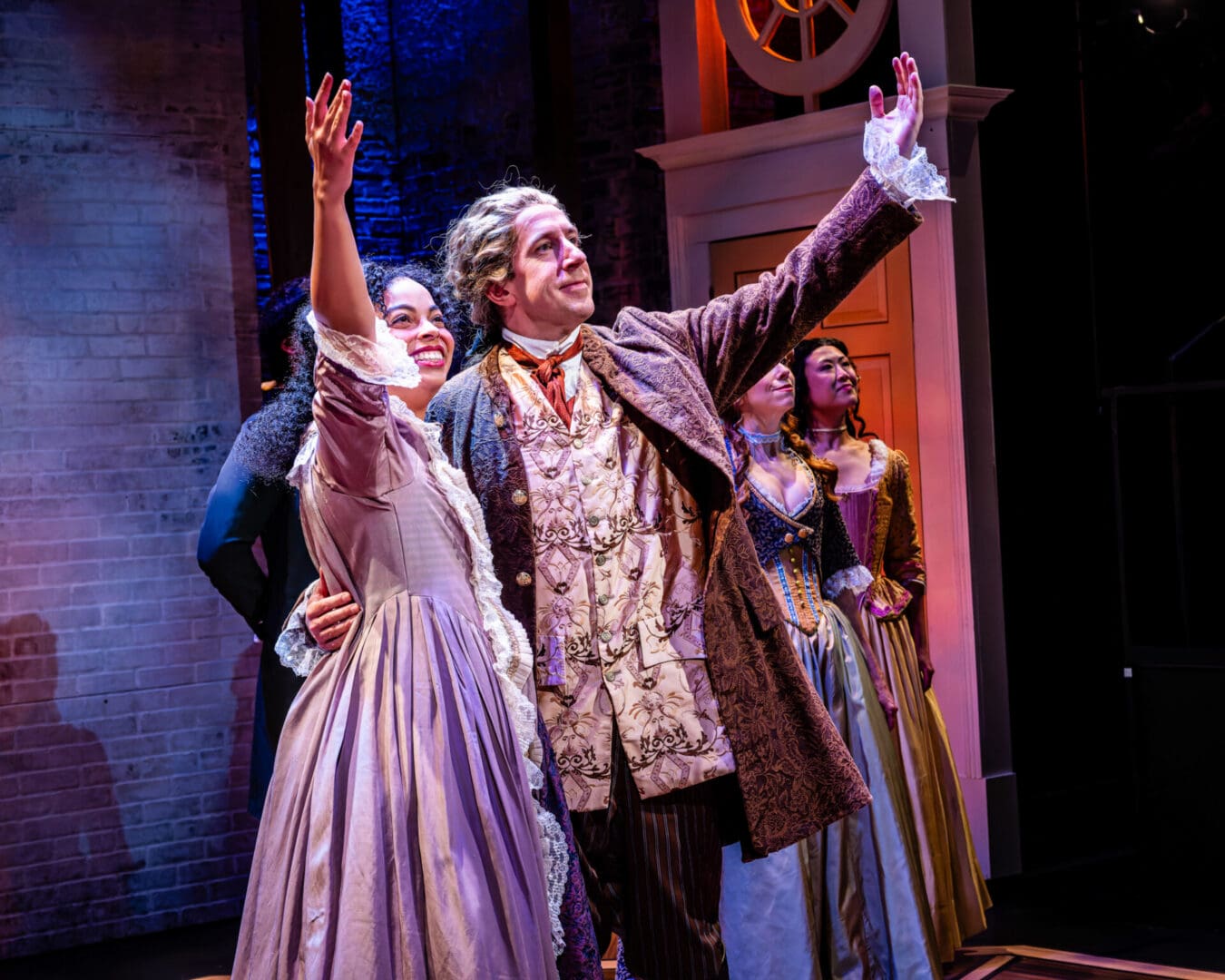
Angelique Archer and Jonathan Flippo
It was 1997 when Annette Gordon-Reed published her book Thomas Jefferson and Sally Hemings: An American Controversy. Since then, Gordon-Reed has gone on to win the Pulitzer Prize for her research into the Jefferson–Hemings family history, drastically changing our understanding of Thomas Jefferson.
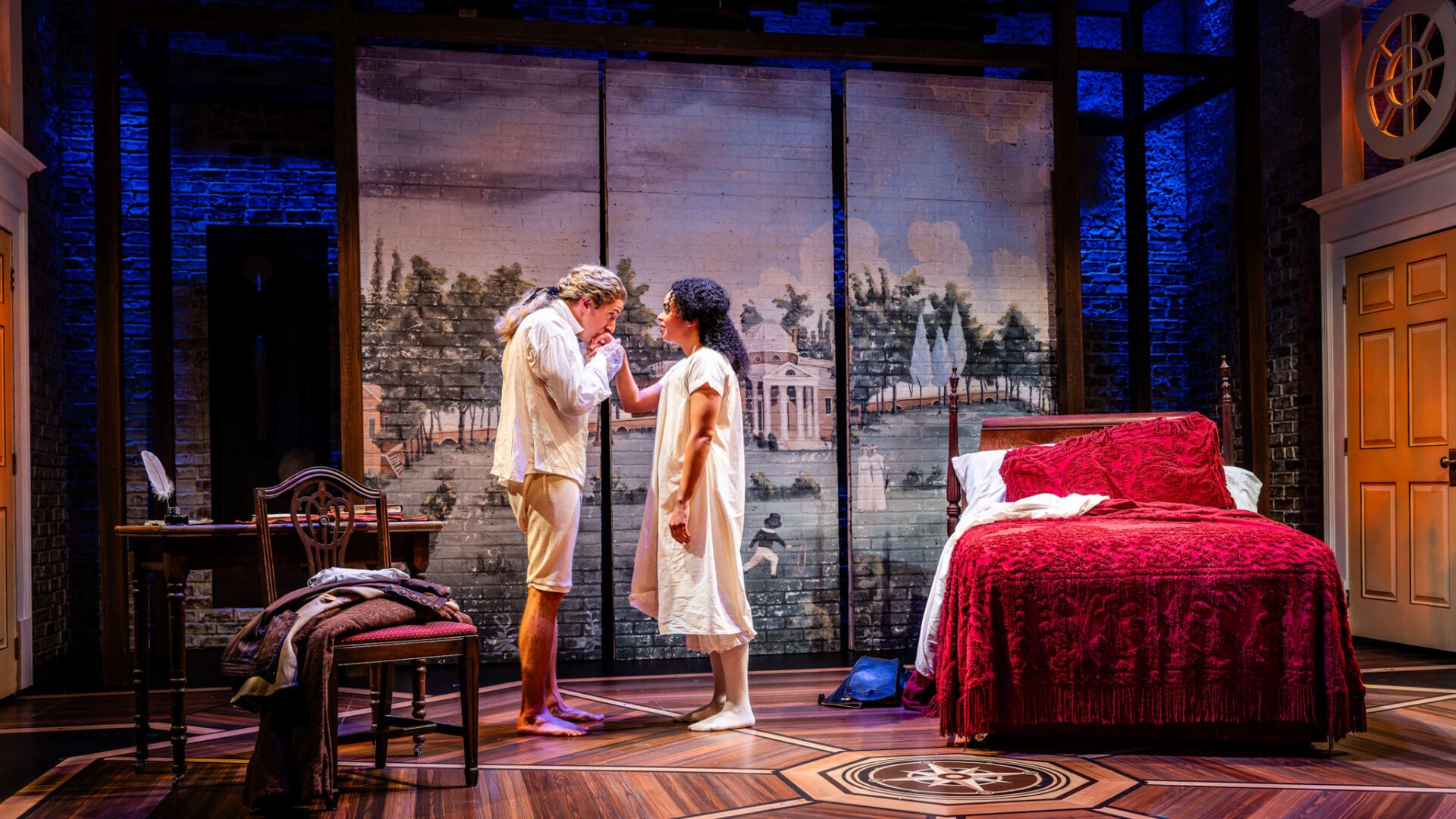
Jonathan Flippo and Angelique Archer
Inspired by Gordon-Reed’s scholarship, playwright Suzan-Lori Parks (who won her own Pulitzer Prize in 2002 for Topdog/Underdog) wrote Sally & Tom in 2022. Her play, however, is not a retelling of the relationship between Hemings and Jefferson. Rather, Parks recasts the story as a play-within-a-play, frame-shifting the story around a writer named Luce and her amateur theater troupe, “Good Company,” who are preparing a play titled The Pursuit of Happiness.
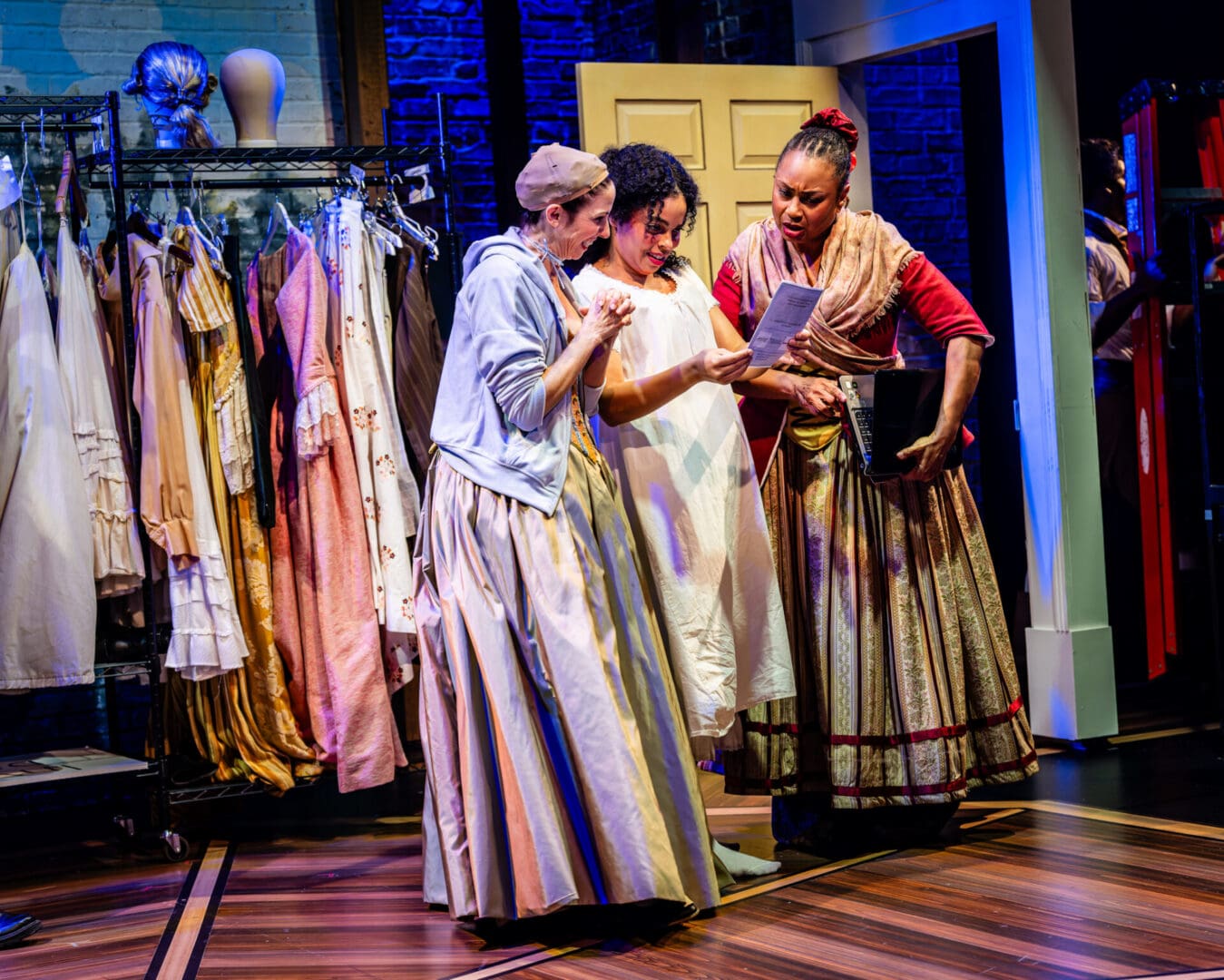
Amy Downing, Angelique Archer, and Olivia D. Dawson
We begin at the end with Sally (played by Luce) and Tom (played by Good Company’s director Mike) holding hands and looking wistfully off into the future of America. There’s a pause, and the scene transforms as actors pull off their costumes and sets are changed. As we meet the company’s actors, and discover that Luce and Mike are dating, the dialogue is fast-paced and snappy, evoking that semi-professional, mostly amateur theater world that some of us know all too well. The actors complain about the play’s ending: it’s inorganic and too happy in the worst kind of way. The tone is all wrong. Luce reassures them she is working on making it better. Standing in the way of that improvement is the mysterious Teddy, Parks’ stand-in for every commercial producer ever. He loves Luce and her work, but he also wants to change everything about it. His main concern is the show’s commercial viability. It can’t be too “woke.”
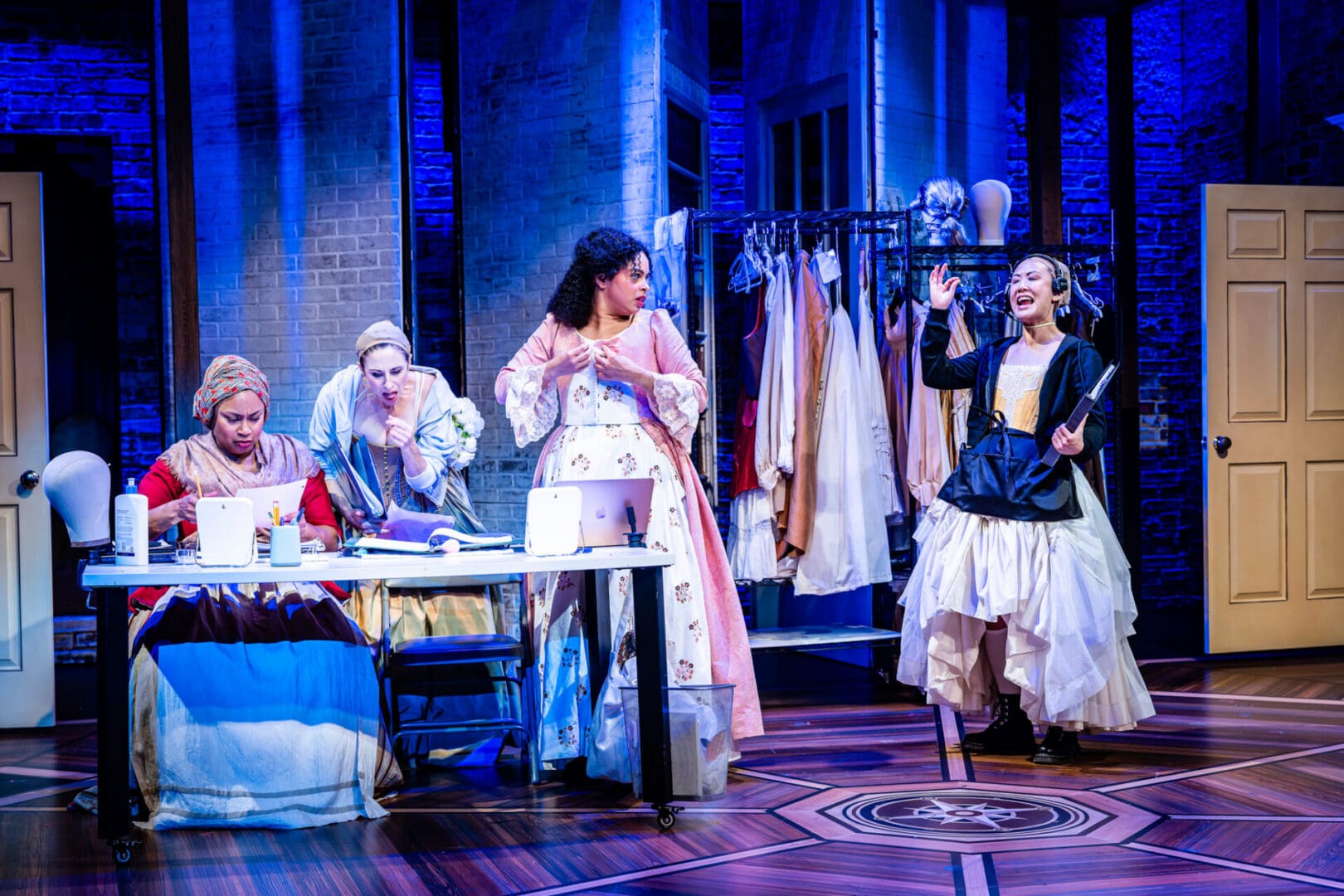
Olivia D. Dawson, Amy Downing, Angelique Archer, and Charlene Hong White
What is evident about Sally & Tom is that it is a play of ideas, argument, and philosophy. Parks gives us all the hallmarks of a great New Yorker piece. Her writing is clever, poetic, restrained at times, but purposefully purple in the next beat. It can be serious, then non-serious, and then both at the same time. The story is there, but Parks’ setup is so aggressively self-conscious that it frequently undermines its own dramatic stakes. It is all too obvious where the piece is headed, rendering the meta-commentary predictable rather than illuminating.
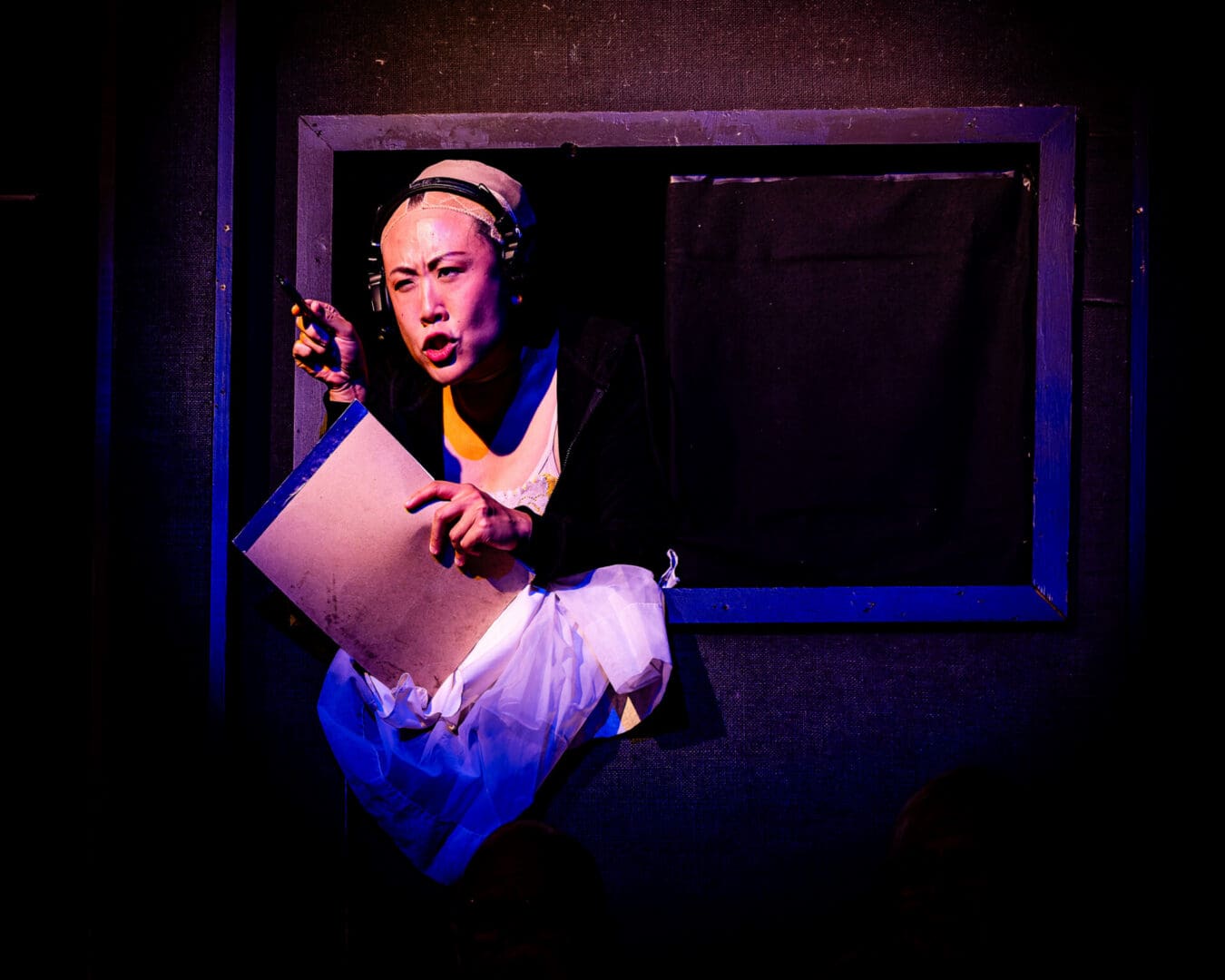
Charlene Hong White
Under the direction of Dave Steakley, Sally & Tom moves along exactly as Parks must have envisioned it. Angelique Archer (Luce/Sally) and Jonathan Flippo (Mike/Tom) do well in their respective roles, earnest and alive. Steakley keeps the ensemble moving at a brisk pace, never missing a beat or letting scenes drag (the writing does that on its own). Still, much of the show’s humor is unearned, with actors relying on character stereotypes (flamboyantly gay or bombastically Black) for laughs.

Jonathan Flippo and Angelique Archer
A notable bright spot is Hollis L. Edwards III as Kwame, who plays James Hemings, Sally’s brother and Jefferson’s valet. His physical and vocal presence immediately draws the eye. Even though the role is as on-the-nose as it gets, Edwards plays it without reservation, revealing more of his talent than the material itself allows.
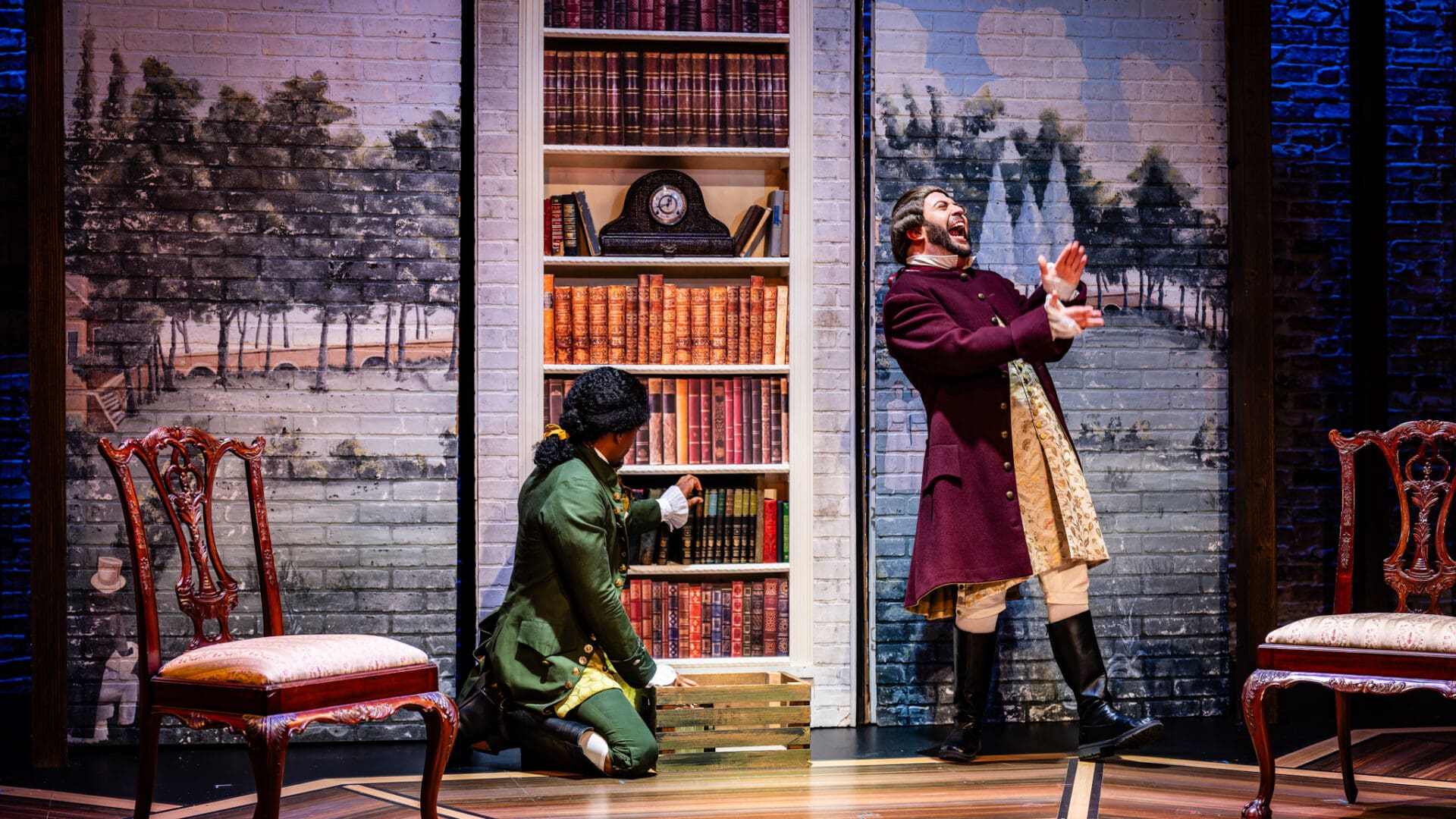
Hollis L. Edwards III and Kevin Pellicone
Nanette Acosta’s costumes bridge 18th-century period wear with 21st-century dress. Sarah EC Maines’ lighting provides dynamic shifts, and Daniel Conway’s scenic and properties design contributes falling beams and fireworks that add occasional spectacle to the production’s visual restraint. Yet these elements serve primarily as backdrops for a script that feels increasingly bloated as the evening wears on.
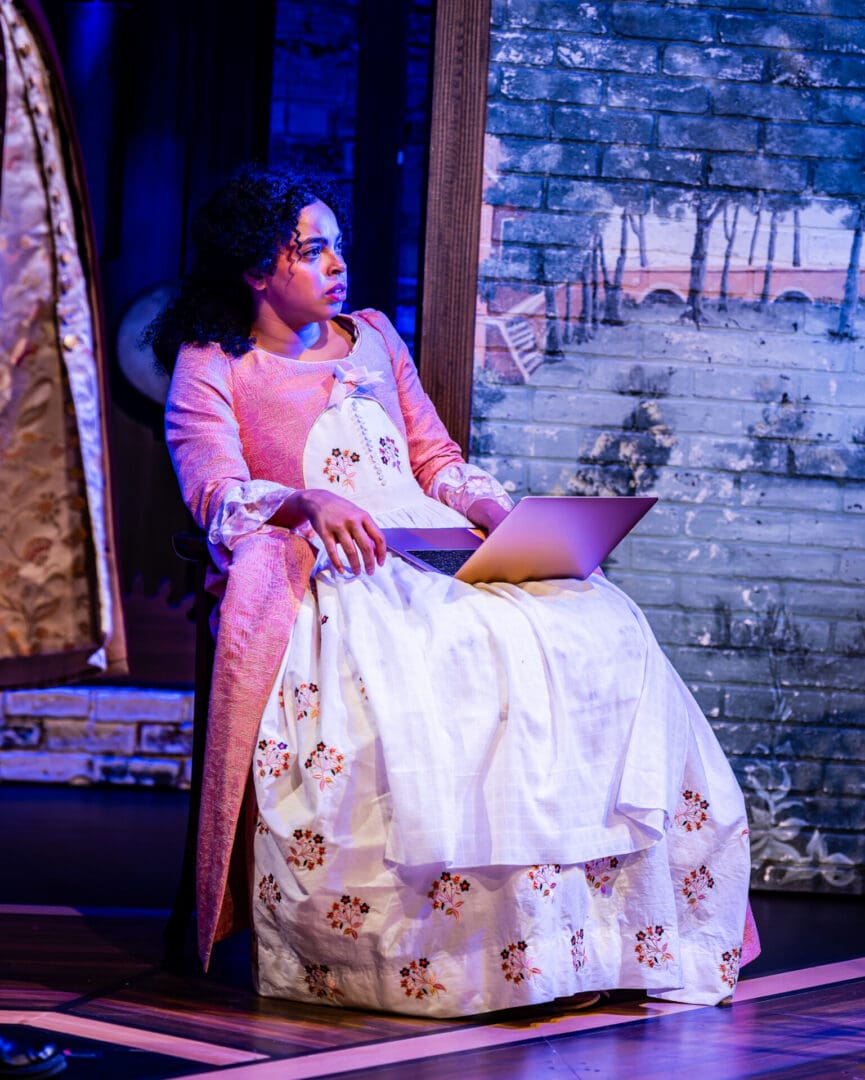
Angelique Archer
Sally & Tom becomes a grueling two and a half hours, especially during the second half, which abandons narrative propulsion in favor of broad theatrical posturing. The play ends with Luce’s rewritten, uncensored finale. At last, Sally takes center stage to tell her own story, recounting how Jefferson was 40, she was 14, and he raped her. Parks can’t resist a self-aware flourish, having Sally remark, “If that makes you uncomfortable, just pretend you’re somewhere else. That’s what I did.”
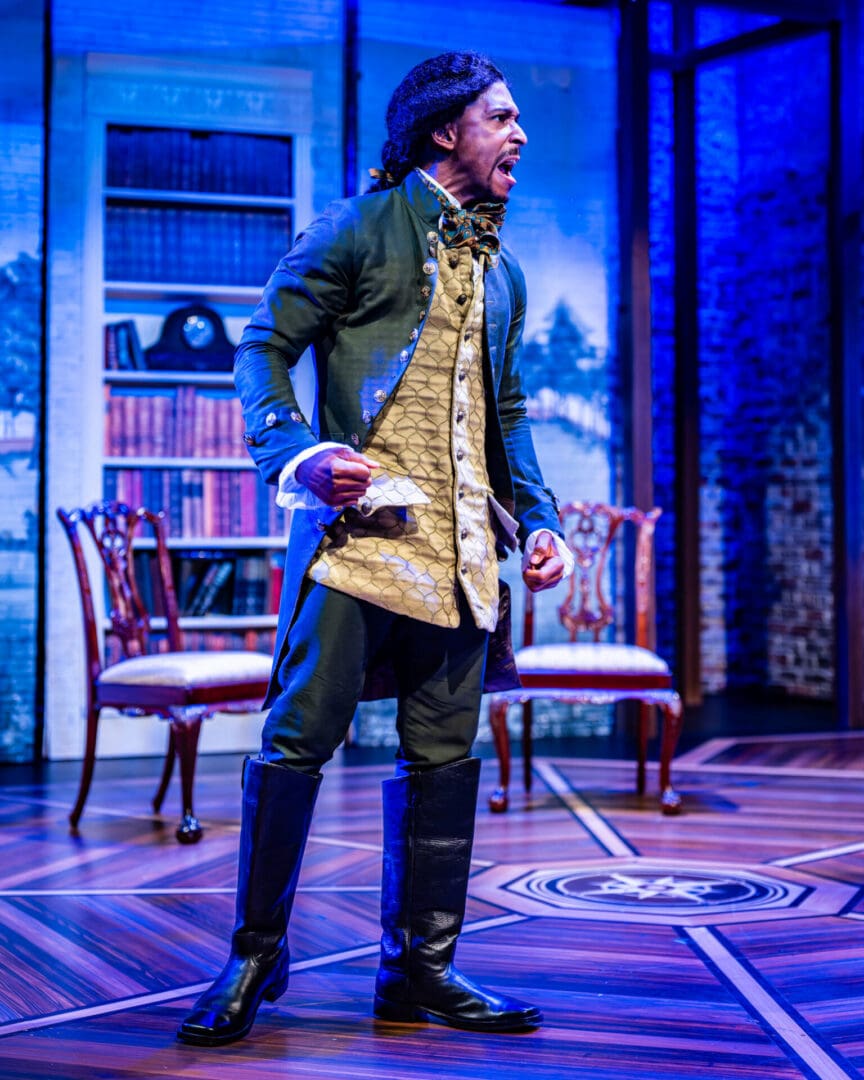
Hollis L. Edwards III
Lines like this are strewn throughout the play, symptomatic of Parks’ penchant for punchy, bookended dialogue—as if she were writing for a twenty-second political clip. Parks is clearly a capable writer, but Sally & Tom gets away from her. Yet beneath the surface of her formulaic device lies something worth exploring. Although Parks pays little mind to it, the dynamics of an amateur theater company struggling with its identity are genuinely compelling: How do you navigate being politically radical in art—not just collectively, but as an individual?
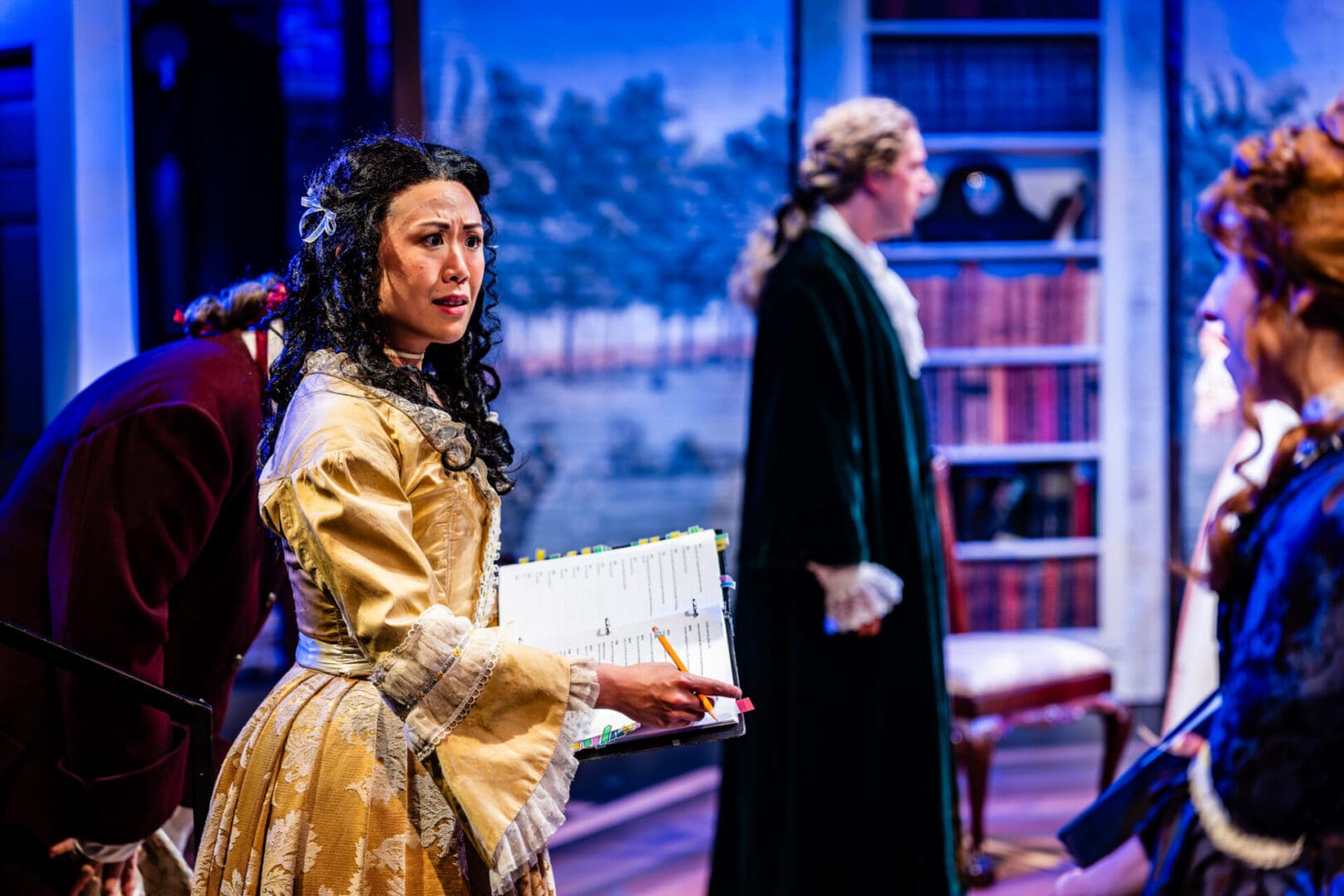
Charlene Hong White
There are small heartfelt moments throughout Sally & Tom when a few minor characters get the chance to say something amid the play’s larger voices. One comes from stage manager Scout (Charlene Hong White), who briefly soliloquizes about what acting means to her. Another belongs to Ginger (Amy Downing), whose pursuit of a more commercial career raises intriguing questions about how she views Luce’s artistic struggle (Scout and Ginger play Jefferson’s daughters in The Pursuit of Happiness). Parks overlooks these opportunities for genuine character in favor of the pulpit. She decries the wrongness and evil she sees, but that’s not nearly enough.
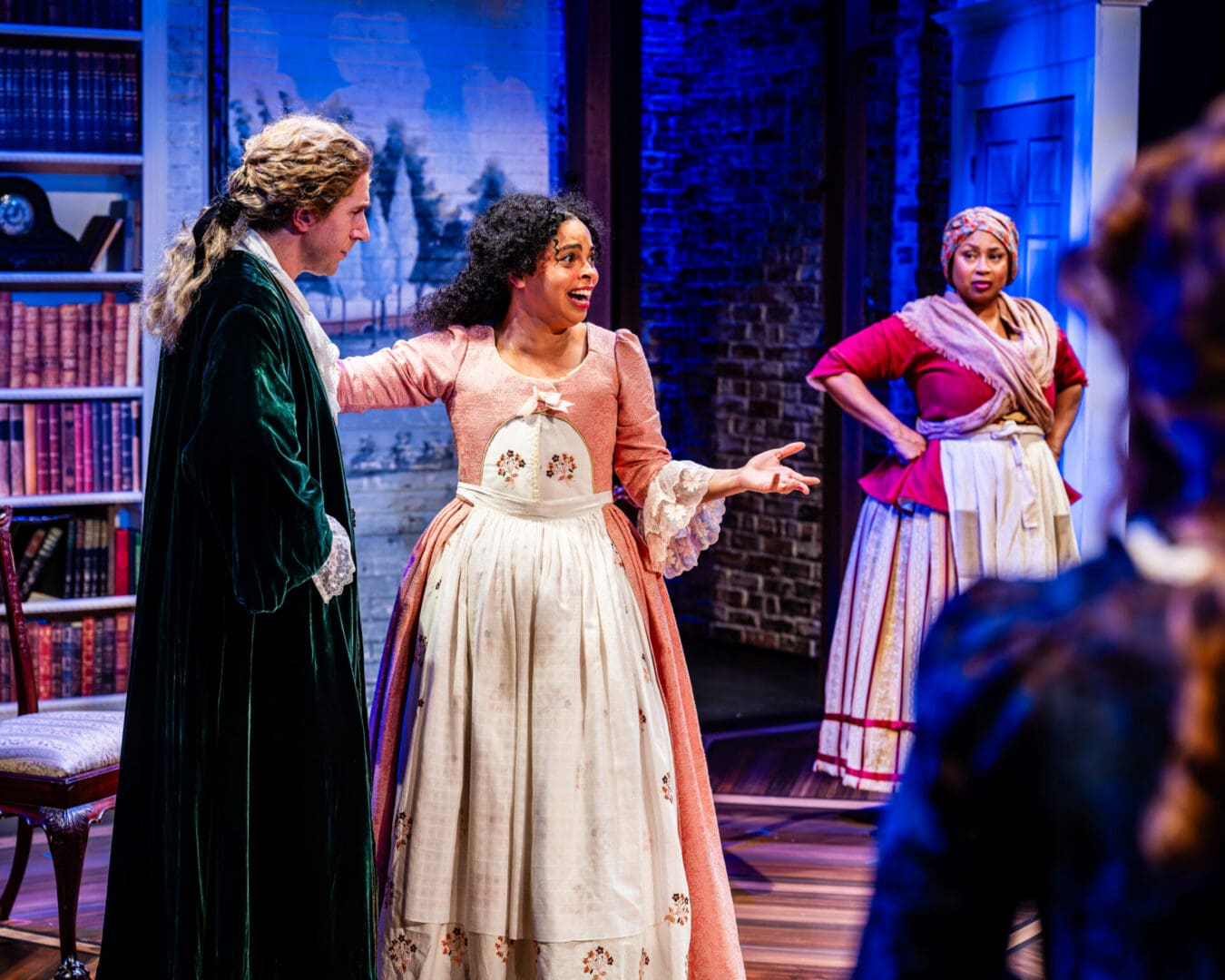
Jonathan Flippo, Angelique Archer, and Olivia D. Dawson
For those unacquainted with Sally Hemings, the play might do some good. If anything, Sally & Tom is thought-provoking, unabashed, and a reminder of the original sin America was birthed from. But nearly thirty years after Annette Gordon-Reed’s Thomas Jefferson and Sally Hemings, Parks has found little new to reveal.
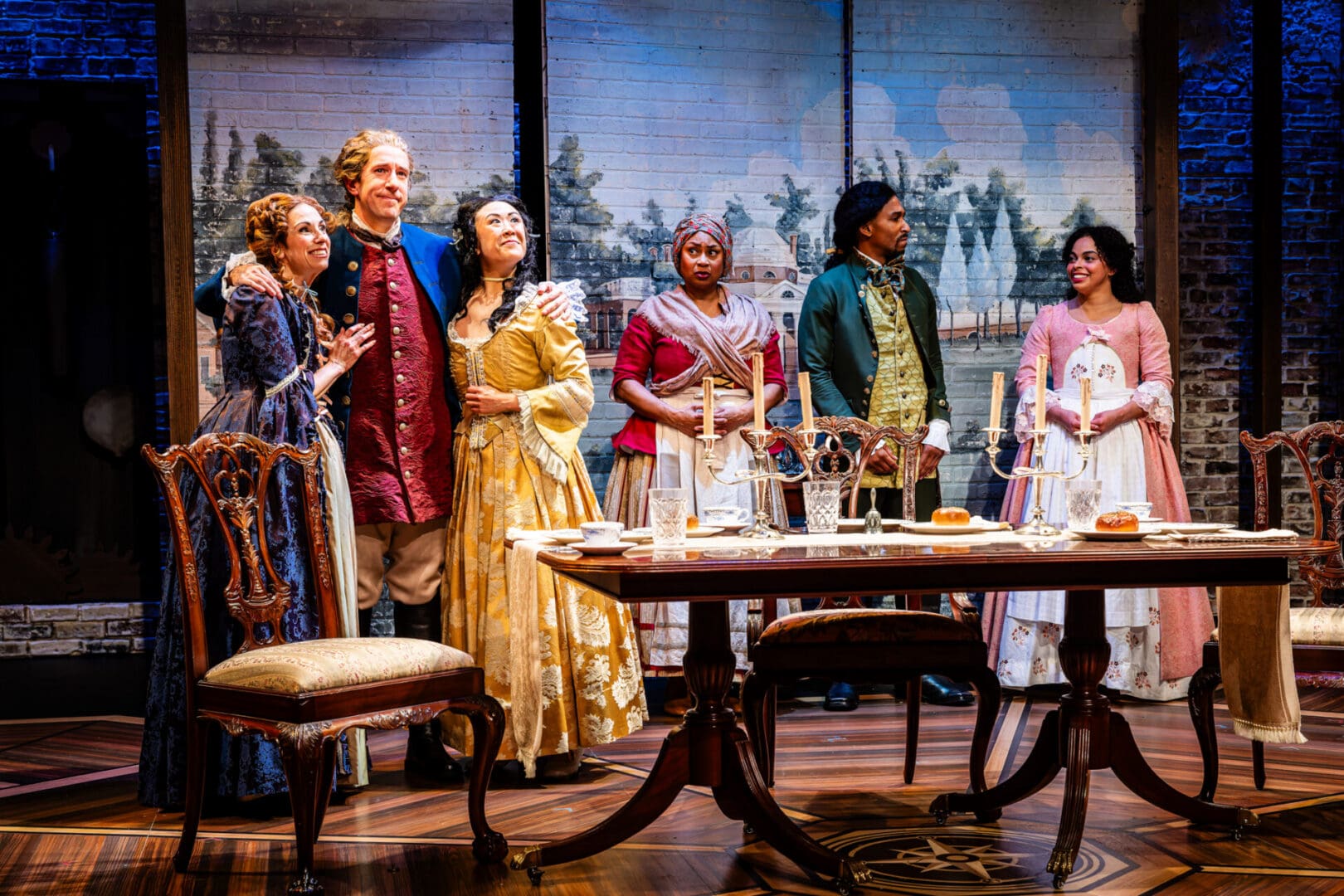
The Cast of Sally & Tom
✦ ✦ ✦ ✦ ✦ ✦ ✦ ✦ ✦ ✦
photos by AxelB Photography
Sally & Tom
ZACH Theatre
The Kleberg at ZACH, 1426 W. Riverside Dr. in Austin, TX 78704
ends on August 23, 2026
for tickets (starting at $28), call 512.476.0541 ext. 1 or visit ZACH Theatre
✦ ✦ ✦ ✦ ✦ ✦ ✦ ✦ ✦ ✦

Saw Sally & Tom on Saturday night (8/1) and really enjoyed the performance. The entire cast was wonderful in their roles, delivering their lines and acting with passion. Kept my attention throughout the entire play. I felt that Angelique and Jonathan performed brilliantly in their lead roles, Hollis’ (Kwame’s) speech mid-way through was sensational, Kevin added great comedic value, and Olivia, Martavius, Amy and Charlene were terrific in their supporting roles.