


Areas We Cover
Categories

MODERN WEDDING TRENDS COUPLES SHOULD KNOW
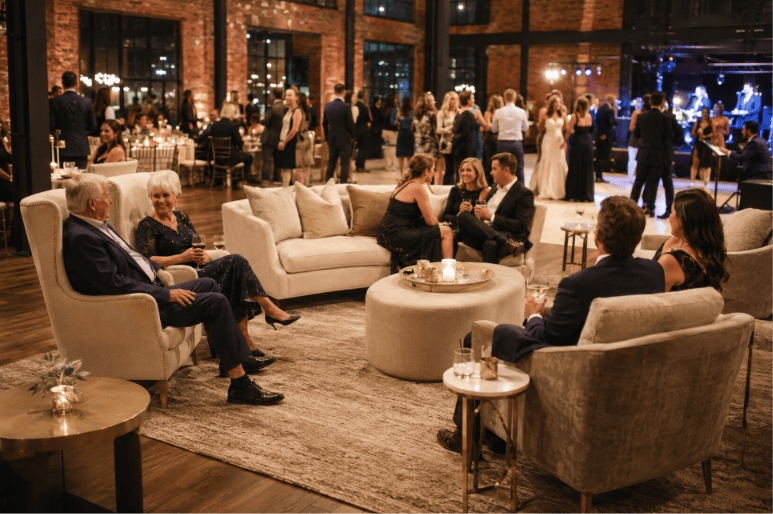
Modern weddings are becoming more personal, comfortable, and flexible. Couples are paying closer attention to how guests move, where they sit, and what keeps them involved. The strongest trends aren’t just pretty ideas pulled from social media. They work with the venue, fit the budget, and make the celebration easier to enjoy.
Why Guest Experience Is Driving Modern Wedding Planning
Here’s the shift we’re seeing: couples still care about color, flowers, and photographs, but they’re asking better practical questions too.
- Will older relatives have somewhere comfortable to sit?
- Can guests talk without shouting over the band?
- Is the bar line going to cut across the dance floor?
- Who moves the chairs when the ceremony ends?
Those questions matter.
Guests may compliment the centerpieces, but they’ll remember waiting 25 minutes for a drink or balancing a dinner plate because every table was full. A wedding has to look good and work well. You need both.
How Modern Wedding Trends Work in Dallas–Fort Worth Venues

Adolphus Hotel Ballroom (photo by Tyler + Lindsey)
A Dallas ballroom can look enormous during a quiet venue tour. Add 150 guests, a band, two bars, a dance floor, and the catering team, and that open space disappears fast.
Industrial venues have the opposite challenge. Brick walls, exposed beams, and tall windows already give the room personality. Covering every surface with decorations can hide the reason you booked the venue in the first place.
Rooftops have views but less room to work with. Fort Worth estates may spread the ceremony, cocktail hour, and reception across several parts of the property.
Use the venue you actually booked, not the one in the inspiration photo.
1. Make the Wedding Personal Without Personalizing Everything
A personal wedding doesn’t need the couple’s names printed on every napkin, menu, and cocktail stirrer.
The details that stay with people are usually simpler:
- A ceremony song tied to an early date
- A dessert made from a family recipe
- Wedding photographs from both families
- A reading from someone close to the couple
- A cultural tradition that matters to the family
- A signature drink with a real story behind it
Couples are also giving themselves permission to drop traditions they don’t enjoy. Don’t want a bouquet toss? Skip it. Use those 15 minutes to greet guests or finally taste the cocktail you spent weeks choosing.
Why Modern Wedding Trends Don’t Have to Be Expensive
A handwritten note can mean more than an expensive favor. A family recipe can carry more weight than a custom dessert wall.
Choose two or three details that genuinely say something about the relationship. Let them breathe. Not every part of the wedding needs a backstory.
2. Plan for the Guests Who Won’t Be on the Dance Floor
Picture the reception an hour after dinner. Half the room is dancing. Your college friends are near the bar. Your parents are visiting with relatives they haven’t seen in years. An older aunt is looking for a proper chair instead of another cocktail table.
That’s a normal wedding.
Consider Different Types of Guests
Your seating plan should account for:
- Older relatives who need supportive chairs
- Guests with mobility needs
- Parents attending with children
- People who don’t dance
- Guests who want to talk without shouting
- Anyone attending a long ceremony and reception
Clear access to seating, refreshments, and restrooms matters too. The U.S. Department of Justice’s accessible meeting guidance offers useful points to review with your venue and planner.
Give Guests an Alternative to Their Dining Table
Dining chairs do their job during dinner. Later in the evening, guests may want somewhere more relaxed.
Adding lounge furniture for a wedding reception can give people a place to sit, catch up, and still feel connected to the party.
Don’t hide that seating in a distant room or behind a wall. If guests can’t see the reception, they’ll feel as if they’ve left it.
3. Divide the Reception by Activity
A useful floor plan isn’t about fitting in as much furniture as possible. It’s about preventing different activities from fighting for the same space.
Give Each Area a Job
Think about the room in simple zones:
- Keep dining close enough for efficient meal service.
- Make the dance floor visible from the main reception area.
- Place lounge seating outside the heaviest foot traffic.
- Keep bar lines away from entrances and restrooms.
- Put the photo area somewhere guests can stop without blocking a walkway.
- Keep conversation seating beyond the strongest speaker coverage.
You don’t need walls or signs between every zone. Guests should be able to understand the room without being told where to go.
Your venue and planner should approve the final placement. The caterer, entertainment team, photographer, and rental vendors also need to know the plan.
Who Moves Everything?
This question gets missed all the time. If the ceremony area needs to become a cocktail space, who moves the chairs? If the courtyard becomes a lounge after dinner, who handles the change? How long will it take?
If furniture movement isn’t included in a vendor or venue contract, don’t assume someone will take care of it. Get the answer in writing before the wedding.
4. Treat Outdoor Weather as Part of the Plan
If your rain plan would ruin the wedding, you don’t have a rain plan yet. Outdoor weddings need more than a backup ceremony room.
Heat and Direct Sun
North Texas heat can turn a beautiful outdoor cocktail hour into a test of endurance. Guests in suits and formal dresses will feel it quickly.
Provide water before people ask for it. Find real shade. Consider a later ceremony time or a shorter outdoor schedule.
The National Weather Service recommends hydration, shade, and reduced activity during dangerous heat. Review its heat-safety guidance when planning a summer wedding.
Rain and Soft Ground
Rain affects more than the ceremony. It changes food service, furniture use, electrical equipment, photography, and guest movement.
And then there’s the ground. Soft grass is hard enough in dress shoes. Add water, long dresses, mobility aids, and rental furniture, and it becomes a real problem.
Ask where cocktail hour moves, how guests reach the reception, and which furniture can safely be used outdoors.
Wind and Evening Temperature
Wind can knock over signs, move lightweight decorations, and turn loose draping into a sail.
Evenings can cool down quickly too. Confirm whether the venue allows heaters and whether there’s an indoor option. Do it early, not when guests are already reaching for their car jackets.
5. Choose a Few Strong Design Moments
Empty space isn’t unfinished space.
You don’t need flowers, signs, candles, and furniture in every corner. Pick the places guests will notice:
- Ceremony backdrop
- Reception entrance
- Sweetheart area
- Bar
- Cake display
- Lounge area
Then give those areas enough attention to feel deliberate.
Let Texture and Lighting Do Some of the Work
A rug can make a furniture grouping feel like one complete area. Draping can soften a bare wall. A statement chair or sofa can add shape to an open room.
Lighting often does more than another layer of decorations. Warm light can make a ballroom feel less formal. Focused light can pull attention toward the dance floor, cake, or stage.
Pinterest’s 2026 Wedding Trend Report shows growing interest in draping, layered textures, sensory details, and expressive colors.
Use those ideas, but don’t bury the venue under them.
6. Pick Experiences Guests Can Actually Join
Interactive food and entertainment can make a reception feel lively. It can also create three long lines in the same corner.
Choose carefully.
A chef-led station, late-night snack, audio guestbook, live painter, or photo experience can work well when guests understand it and can reach it easily.
One Good Experience Beats Four Crowded Ones
Ask these questions before booking:
- Where will the line form?
- Will it block a walkway?
- How many guests can participate at once?
- Does it need staff, power, or extra lighting?
- Will guests use it throughout the night or only for 20 minutes?
A bar shouldn’t block the entrance. A food station shouldn’t interfere with dinner service. A photo booth shouldn’t force people to step onto the dance floor. Fun still needs a plan.
7. Use Technology to Remove Confusion
A wedding website is useful when it answers the questions guests keep asking: Where do we park? What should we wear? Is transportation provided? What time does the ceremony really begin?
Digital RSVP tools, transportation updates, photo sharing, and livestreaming can also help.
Keep It Simple
Don’t make guests download three apps and scan a QR code every time they want information.
Test livestreaming before the ceremony. Check the internet connection, camera angle, and sound. If an older relative will use the link, send it early and make sure it opens without a password puzzle.
Technology should solve problems, not create new ones.
8. Leave Room for Real Photographs
Documentary wedding photography is less about posing and more about watching.
The photographer looks for the parent holding back tears, the child asleep across two chairs, the friends laughing at the bar, and the quiet minute the couple gets between dinner and dancing.
Those photographs can sit alongside editorial portraits, film photography, video, and social media content. They don’t replace formal photographs.
Keep the Family Photo List Short
Write down the group photographs you truly need. Complete them efficiently, then release everyone back to the wedding.
Also clarify the roles of the photographer, videographer, and content creator. They’re covering the same event, but they produce different work. Without a clear plan, three people may be trying to capture the same moment from the same spot.
9. Rent or Reuse What You Won’t Need Again
A surprising amount of wedding décor has no plan after the reception.
Renting furniture and décor makes sense when you don’t want to store, resell, or throw away the items afterward. Ceremony flowers can sometimes move to the reception. A welcome sign may later sit beside the guestbook. A display piece can serve more than one part of the day.
Seasonal flowers, digital invitations, reusable signs, and edible favors can also reduce waste.
You don’t need to make the wedding perfectly sustainable. Start by avoiding purchases with no purpose after midnight.
Wedding Ideas Couples Are Starting to Question
Some wedding habits are losing their automatic place in the plan:
- Copying another wedding exactly
- Choosing uncomfortable furniture because it photographs well
- Filling every empty corner
- Building a floor plan with no clear walking routes
- Keeping traditions nobody enjoys
- Scheduling every five minutes of the day
- Adding a trend only because it’s popular online
Inspiration is helpful. Copying isn’t.
Another couple may have had a different venue, guest count, season, and budget. Take the idea, then make it work for your wedding.
Questions to Ask Before Following a Trend
Before you book, buy, or rent anything, ask:
- Does it work in our venue?
- Will guests use it?
- Does it solve a problem or improve the atmosphere?
- Can it serve more than one purpose?
- What does it cost after labor and delivery?
- Does the venue allow it?
- Who sets it up, moves it, and removes it?
- Would we still want it if we never posted it online?
That last question usually tells you a lot.
Final Takeaway
You don’t need to follow every modern wedding trend. Start with the limits of your venue, including capacity, walking routes, weather plans, and vendor responsibilities. Then consider whether guests will have enough seating, easy access to food and drinks, and somewhere to talk away from loud music.
Pick trends that solve a practical problem or add something personal. Skip anything that crowds the room, stretches the budget, or creates more work without improving the day.
Frequently Asked Questions
Quick answers about modern wedding trends, guest comfort, and practical planning.
What makes a wedding feel modern?
A modern wedding feels personal and well considered. The couple keeps the traditions they value, plans for guest comfort, and chooses design details that suit the venue.
How many wedding trends should couples use?
There’s no ideal number. A few ideas that work together will usually look better than a long list of unrelated trends.
Are lounge areas practical for wedding receptions?
They can be, especially during long receptions or when the guest list includes different age groups. Lounge seating gives guests another place to talk and rest outside the dining area.
How can couples keep wedding trends from feeling dated?
Choose ideas with a practical use or personal meaning. Good seating, thoughtful hospitality, and a wedding that reflects the couple will age better than a copied social media theme.
What should couples prioritize for an outdoor wedding?
Start with shade, water, stable walking surfaces, weather-safe furniture, and a complete backup plan. Handle those first. Then think about decorations.
