


Areas We Cover
Categories

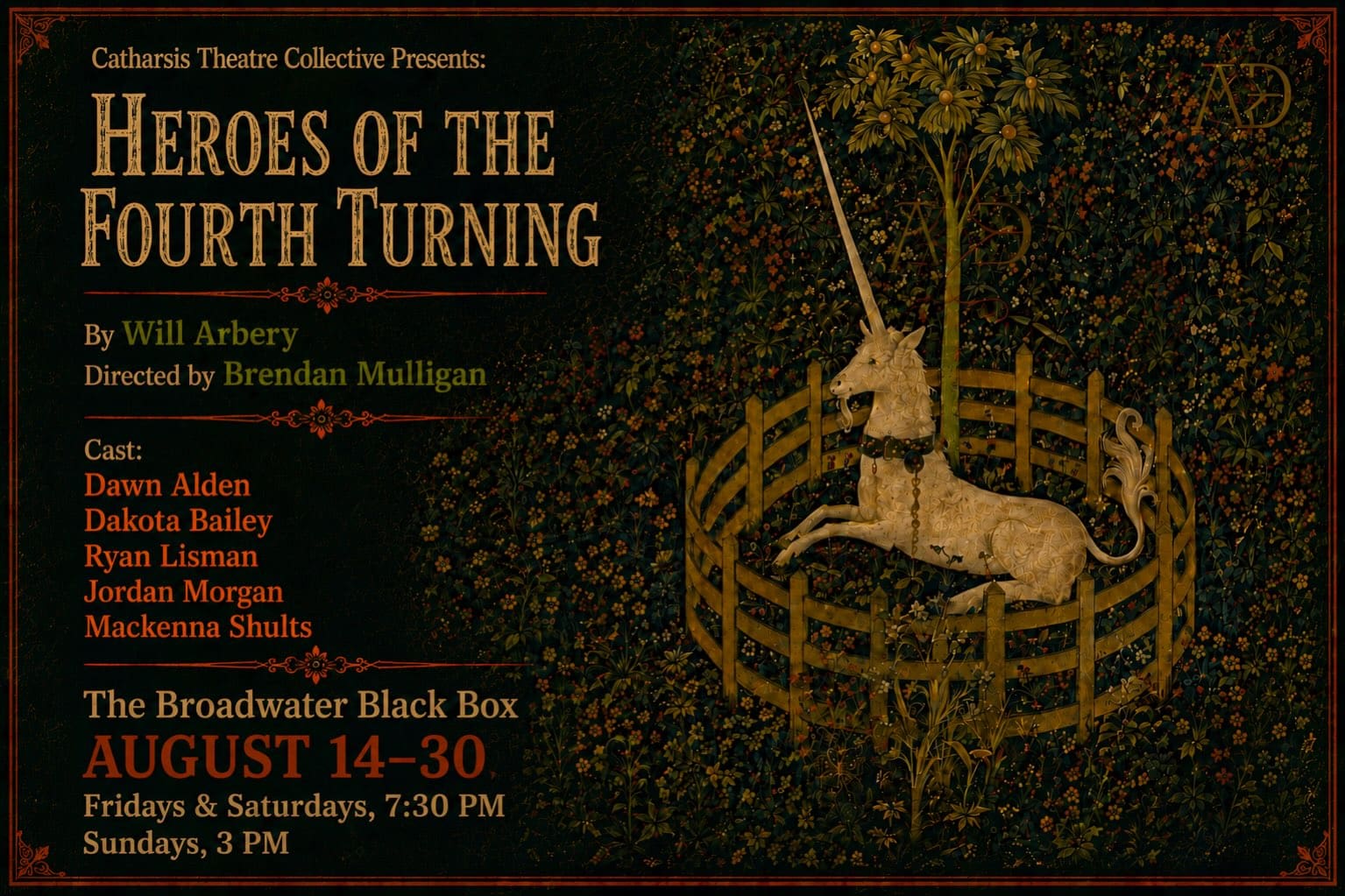
Theater Review: HEROES OF THE FOURTH TURNING (Catharsis Theatre Collective / Broadwater Black Box / Los Angeles)
by Shari Barrett | August 19, 2026
in Los Angeles, Theater
RIGHT, LEFT AND NO WAY OUT
Faith, politics and generational divides
collide in a provocative portrait
of an America at war with itself
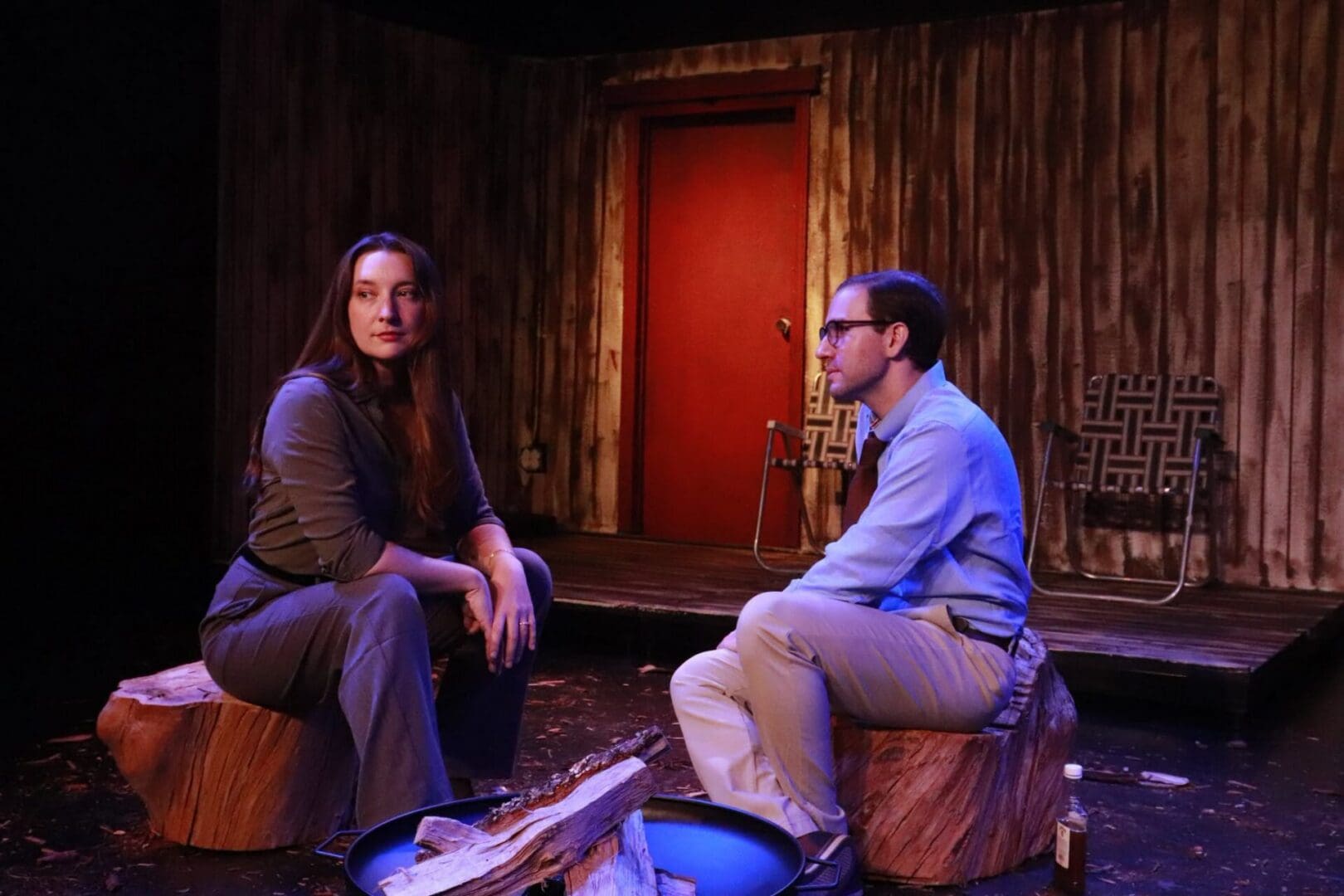
Dakota Bailey and Ryan Lisman
Will Arbery’s haunting Pulitzer Prize finalist Heroes of the Fourth Turning, now playing at The Broadwater by Catharsis Theatre Collective, speaks to the heart of a country at war with itself, offering both grace and disarming clarity sure to ring true during these troubling times when the United States seems poised on the brink of civil war.
Arbery began writing immediately after the 2016 election, trying to answer the questions, “Why did this happen?” and “Who are the people that made this happen?” The play takes place on a dark night in a small town in western Wyoming on August 19, 2017, almost a year after Donald Trump was first elected president and two weeks after the Unite the Right rally took place in Charlottesville, Virginia. It is also two days before a total solar eclipse will be visible in that part of Wyoming. Discussions about all these events, and many more, are included in Arbery’s script, written about the small college where his conservative parents were teachers.
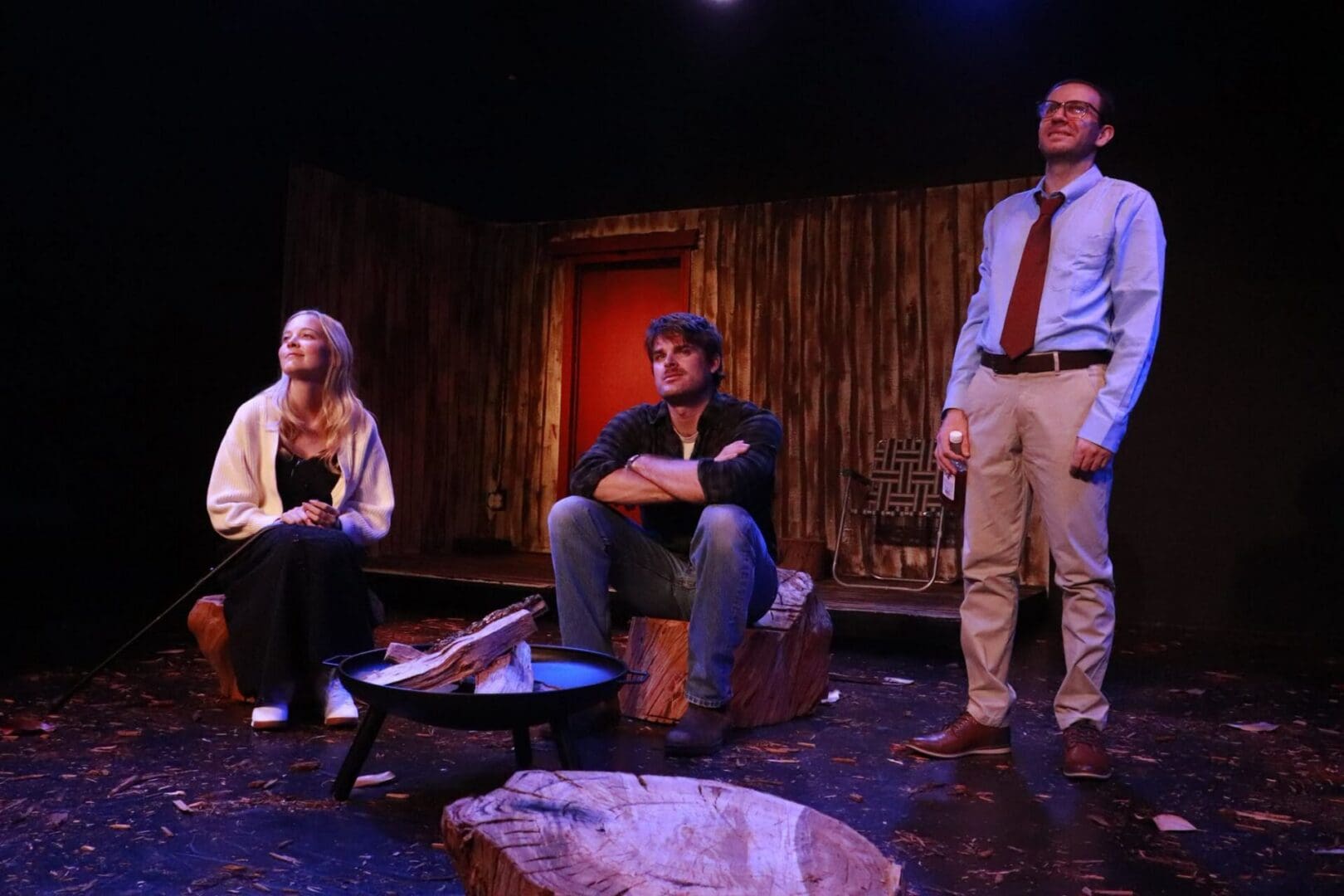
Mackenna Shults, Jordan Morgan, and Ryan Lisman
The play begins when four young conservatives gather to toast the newly installed president of their tiny Catholic college. But as soon as they begin speaking about their lives, their reunion spirals into chaos and clashing generational politics, becoming less a celebration and more a vicious fight to be heard and understood—pitting their conservative upbringing against living in the “real” world of progressives pushing for change too fast in a world conservatives hope to keep unfolding at a slower pace.
How people develop their ways of thinking, the questions they ask, and how they arrive at their beliefs are at the root of Arbery’s modern examination of a society now split in two, with no middle ground seemingly reachable. In a country with painful philosophical, religious, and political polarities, how can discussions clouded by fear and confusion build a community of trust?
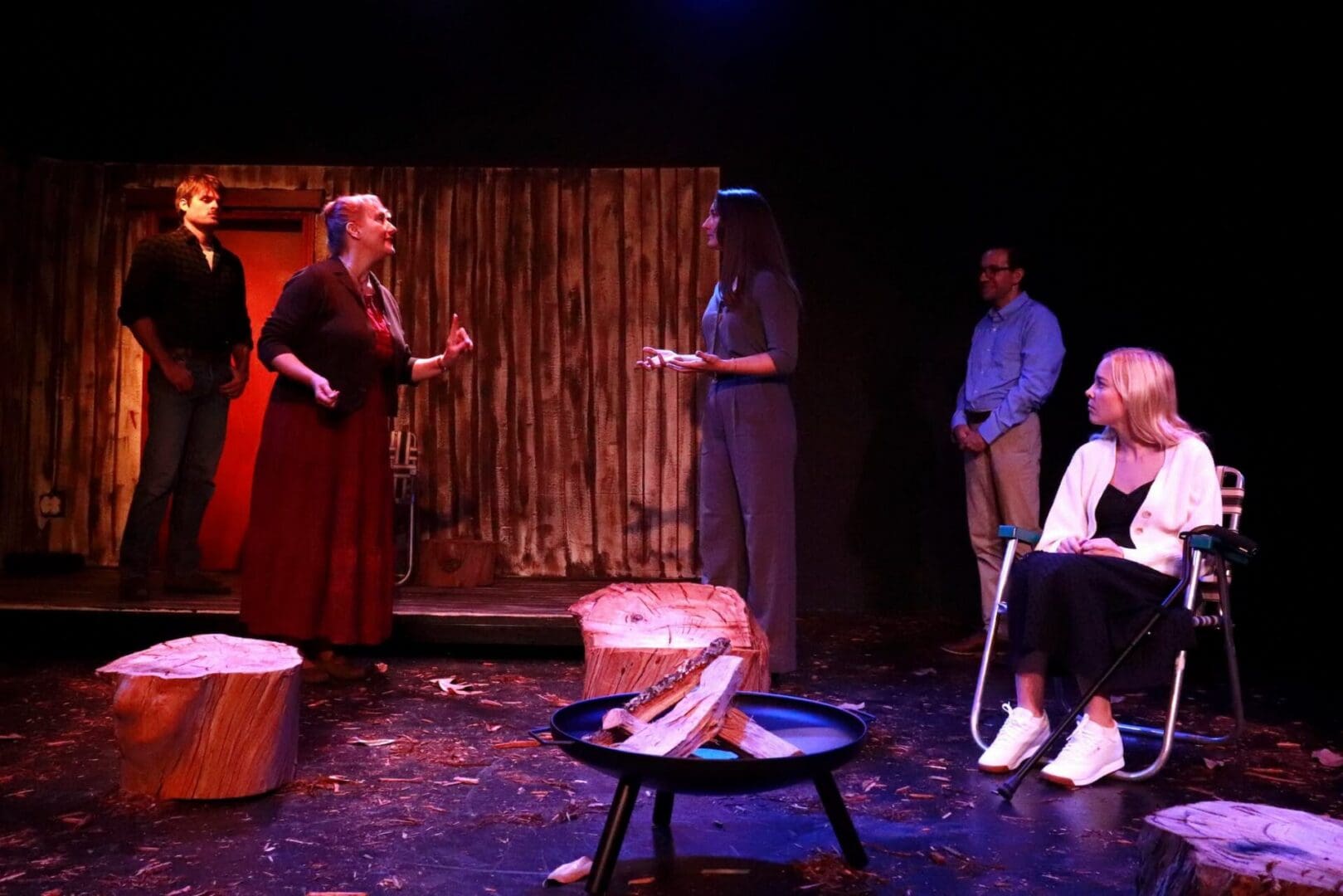
Jordan Morgan, Dawn Alden, Dakota Bailey, Ryan Lisman, and Mackenna Shults
And just what does the play’s title mean? As Teresa (Dakota Bailey), who now lives among left-wing progressives in Brooklyn, explains, human history can be divided into four repeating, roughly two-decade phases: High, a time of conformity and prosperity that produces “Prophets”; Awakening, when institutions are challenged and “Nomads” emerge; Unraveling, when division creates “Heroes”; and Crisis, a period of cultural destruction, revolution, depression, or war that produces “Artists.” For Teresa, we are living through that fourth turning now, with progressives blaming Trump and conservatives blaming Obama for society’s problems. “That makes us feel that we are all going to die, since we don’t know how to trust each other.” Arbery’s words, written in 2016, seem even more relevant now than then.
Perhaps his four characters having these discussions represent each of the four turnings, with the inwardly drawn and very drunk Kevin (Ryan Lisman) trying to hide how he is living his life through shame about his unacceptable feelings, disabled Emily (Mackenna Shults) just wanting to be liked by everyone, and Justin (Jordan Morgan) struggling to accept how little he really understands about his place in life. Is Teresa the conservative leader they need to unite them again as friends?
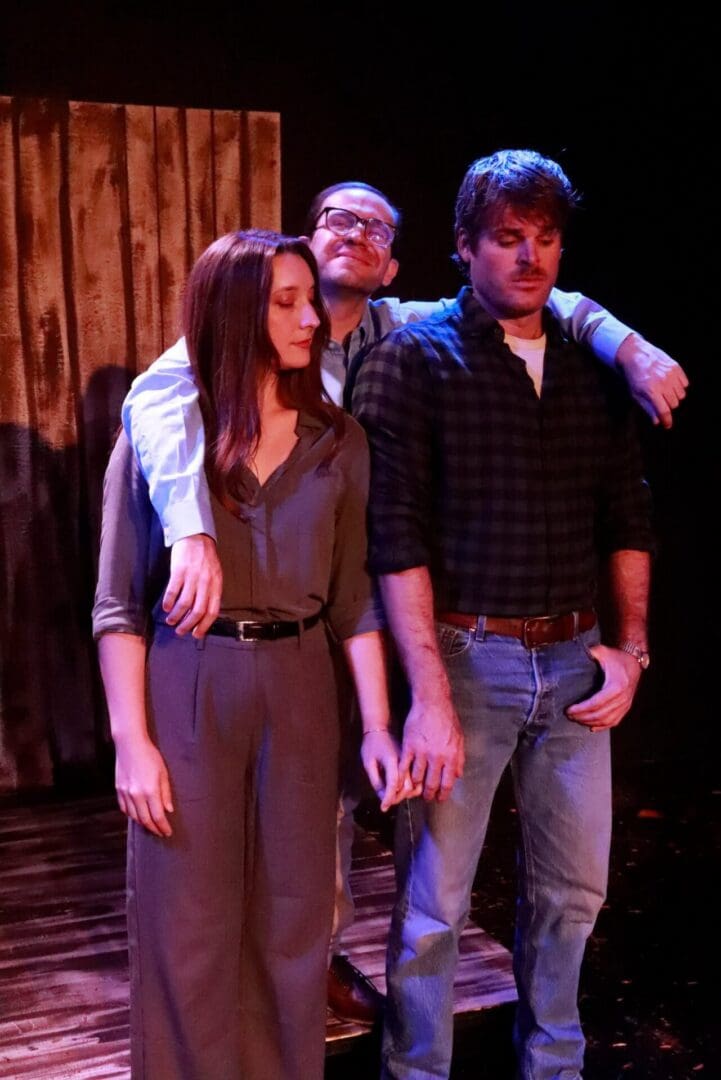
Dakota Bailey, Ryan Lisman, and Jordan Morgan
But when Gina (Dawn Arden), the new president of the university, shows up, her conservative wisdom seems a bit backward to these more free-thinking younger characters she taught and guided spiritually. “Slow down” and wait for things to happen is her conservative motto, advising the other four “not to push for immediate change, as Obama did,” which leads into discussions of civil rights, Black Lives Matter, and “the worst decision” ever made in passing Roe v. Wade, giving power to women not capable of honoring life above all else. You can imagine how Emily reacts, given how the subject triggers her memories of working with women at Planned Parenthood facing unwanted pregnancies.
But the most interesting aspect of Arbery’s play is the ever-present “Holy Ghost” who resides in the house where the four meet, home to Justin, who listens the most and says the least, anxious to retreat by joining a monastery to seek a better understanding of who he is and why the world confuses him so. For you see, there is a very loud noise that often interrupts the discussions, which Justin explains as the “backup generator” malfunctioning—which is nothing of the kind. Could it be that Arbery has created the spirit of fear and confusion, leading all people around in circles and repeatedly preventing society from really getting anywhere? Is that what Catholics refer to as “The Devil,” looking to possess our souls by leading us astray?
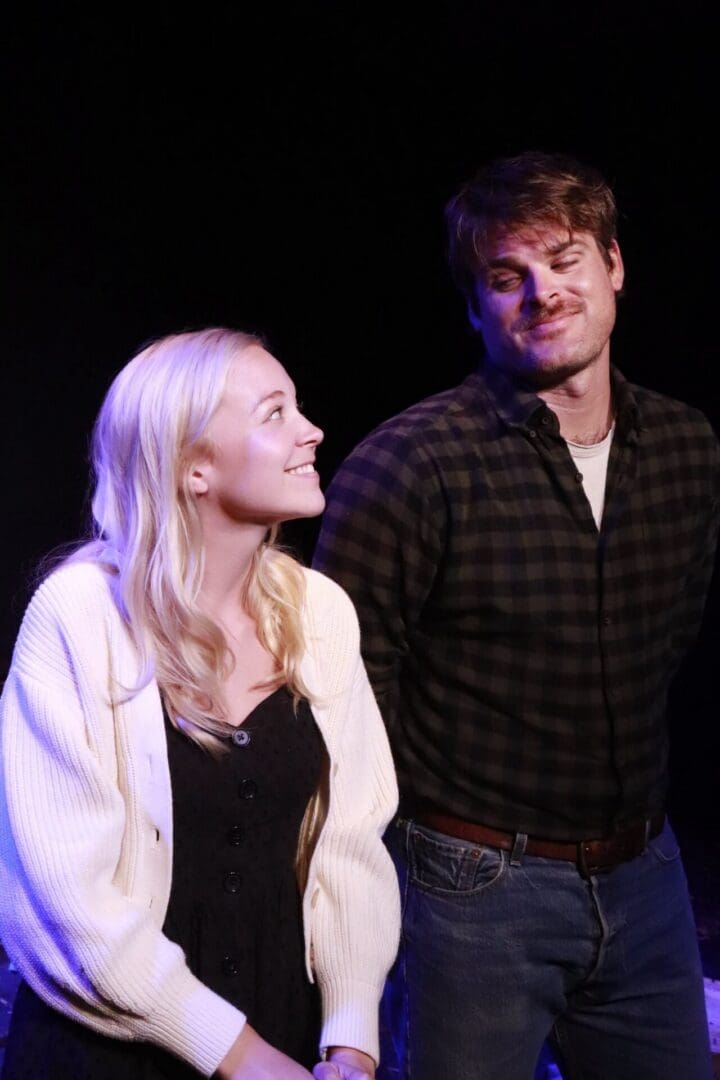
Mackenna Shults and Jordan Morgan
Thankfully, we live in a progressive city where the purpose of the arts in a time of great societal conflict is to get us thinking, communicating, and understanding what is true for other people as well as for ourselves—without creating the need for yet another crisis to pit sides against each other to gain superiority. Will we survive this turning? Or, as Teresa shares, are we just doomed to repeat all four of them into infinity?
Forgive me for waiting until now to offer kudos to director Brendan Mulligan on his expert handling of this hard-biting and challenging play, which I guarantee will make audiences feel uncomfortable as it asks us to look inside to better understand our own decision-making processes. Whether considering yourself on the right, left, or somewhere in the middle, Heroes of the Fourth Turning will keep you thinking about the difficult questions asked and facts revealed long after leaving the theater. And that makes this play feel so necessary—and dangerous—at the same time.
And that’s just life, right?
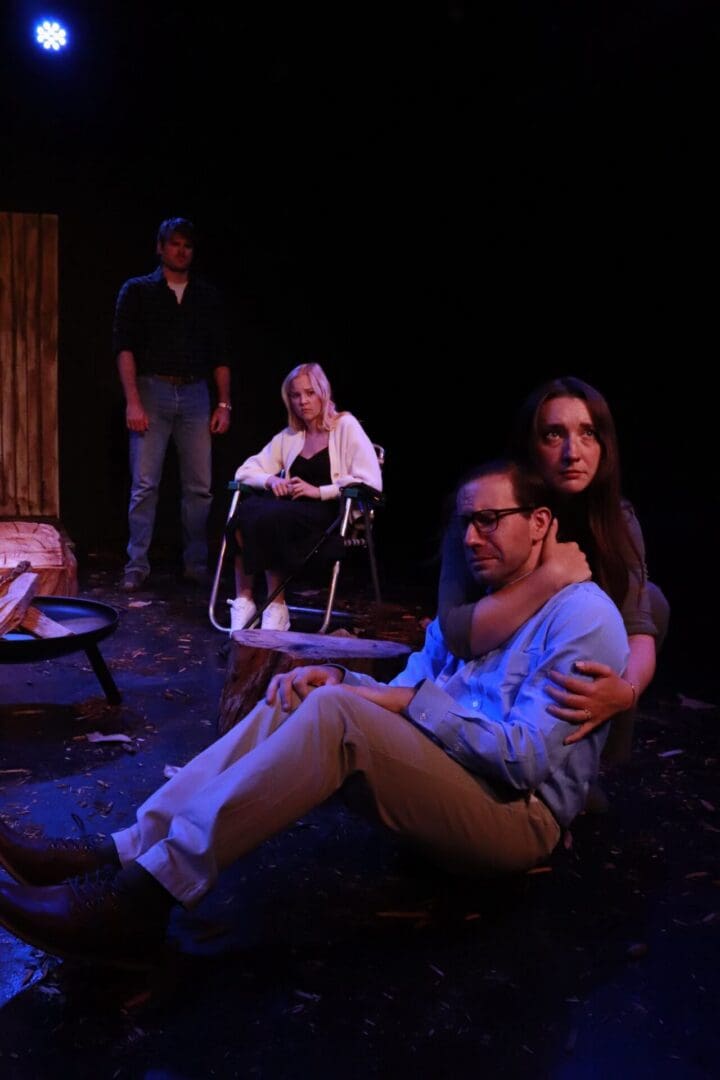
Jordan Morgan, Mackenna Shults, Ryan Lisman, and Dakota Bailey
✦ ✦ ✦ ✦ ✦ ✦ ✦ ✦ ✦ ✦
photos by Angel Moreno
Heroes of the Fourth Turning
Catharsis Theatre Collective
Broadwater Black Box, 6322 Santa Monica Blvd. in Los Angeles
Fri–Sat at 7:30; Sun at 3
ends on August 30, 2026
2 hours, no intermission
for tickets ($25; $20 students and veterans), visit Humanitix
for more shows, visit Theatre in LA
✦ ✦ ✦ ✦ ✦ ✦ ✦ ✦ ✦ ✦
