


Areas We Cover
Categories

HOW LIGHTING DESIGN AND SOUND DESIGN SHAPE THE AUDIENCE EXPERIENCE IN LIVE THEATER
by Jim Allen | September 1, 2026
in Extras, Technology, Theater
When an audience watches a theatre production, they are focused on the performers, the story being told, and the plot of the performance. Nevertheless, there are several elements that make a production dramatic, exciting, and full of emotions for the viewers. The most important of these are the production’s lighting and sound.
Sound and lighting can direct an audience’s attention to specific areas of the stage or interpret sounds not being created on stage. When done correctly, both factors are virtually invisible and allow the story to be told by the performers to unfold seamlessly. Most critically, sound and lighting allow the audience to experience the story as it is being told without distractions or the need for the cast and crew to draw unnecessary attention to themselves.
The most effective theater performances manage to utilise these tools as an extension of the story being told rather than a separate design element added on later.
Lighting Directs the Audience’s Attention
The audience in the theater cannot control the camera angles like an audience in a movie theater would be able to. Lighting can help guide the eyes of the audience to particular places on stage.
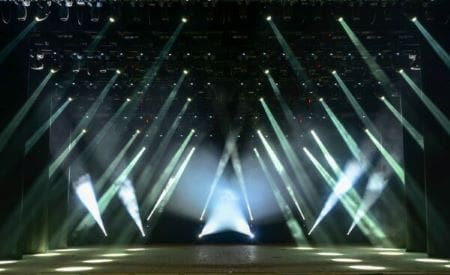
When one actor or actress is talking and the rest of the stage gets darkened, the audience will inevitably focus on this character. A small spot of light will instantly transform an enormous stage into something very personal. Bringing several spots to light can increase the perception of the space itself. But it does not always have to be spectacular.
When lighting has to work closely with performers, scenery, movement, and the overall atmosphere of a production, careful planning becomes especially important. World Production Service works with productions requiring lighting design coordination, helping connect the visual requirements of the performance with the wider technical setup.
A good lighting design should take into consideration the fact that visibility is not the same as focus. The performers should be visible to the audience, but not everything on the stage needs to be highlighted equally. Sometimes it can be helpful to leave something dark on the stage.
Color Helps Establish Mood
Color has the ability to affect the mood of the setting without saying a word. For instance, warm lighting could give the feeling of something cozy or intimate, while cold lighting could represent nighttime, distance, loneliness, or anxiety. Colors can also be used to make art. The color should match the production.
Application of colors only for their visual effect may distract attention from the plot. What will be more useful is to reflect on the experience one wants the spectators to have watching the scene and use lighting in order to achieve this effect.
The color should harmonize well with costumes, set design, make-up, and colors of skin. What matches well in an empty set may look entirely different once the performers and costumes are considered. This is why collaboration between lighting designers and the director and other departments of design is essential.
Sound Creates a World Beyond the Stage
Sound design allows a theater production to suggest places and events that the audience cannot physically see. Traffic outside a window can establish that a scene takes place in a busy city. Birds and distant wind can make a small stage feel like an open landscape. A train passing somewhere beyond the set can immediately give the audience information about location and atmosphere. This is one of the great strengths of theater.
Productions do not always need to build everything they want the audience to imagine. Carefully designed sound can create part of that world. The details matter. If there are sounds of footsteps coming and the closing of a door off-stage, it means that even before the actor comes on the stage, the audience knows that he is coming. These little bits of information help create an environment that is bigger than the stage itself.
Silence Can Be as Important as Sound
One of the most common errors made by designers of sound is the belief that everything needs to be covered with music or sound effects. This is wrong. Sometimes, silence is used to create tension, discomfort, loneliness, or weightiness. After the use of sounds at their peak level, sudden silence draws the attention of the spectators even more. This also applies to background sounds.
Not all sounds from the realistic environment must be used during the performance. Too many sounds might interfere with the audience’s ability to concentrate on the dialogues. Such knowledge about the proper use of sounds is necessary for a designer. In the case of small theatres, such sound effects might be more powerful than in the case of big cinemas.
Lighting and Sound Need to Work Together
Lighting and sound are often most effective when they respond to the same dramatic moment. Imagine a scene in which a storm is approaching. The audience may first hear distant thunder. The lighting can then change gradually as the atmosphere becomes darker. Later, a stronger sound cue and a brief flash may signal that the storm has reached the characters.
Neither department needs to overpower the other. The effect works because both are helping tell the same story. This coordination depends heavily on rehearsal. Timing that seems correct on a computer or technical plan may feel completely different once actors are moving and speaking on stage.
Designers need to see how their cues interact with performance. Sometimes a sound cue needs to arrive slightly later to allow a line to land. A lighting transition may need to become slower because a scene has developed a quieter rhythm during rehearsal. Live theater requires that flexibility.
Sound Clarity Directly Affects the Audience
Creative sound design is important, but audiences first need to understand what is being said. In some theaters, actors can perform without amplification. In larger venues or productions involving music, microphones and speaker systems may become necessary. The goal should not be just about making everything louder.
It is essential to provide clarity of speech in the sound reinforcement in order for it to sound natural and intelligible to someone in the back of the house without making it seem like every word is coming from an artificial source.
The acoustics of the room, including hard surfaces that reflect sound and softer surfaces that absorb sound, set pieces, curtains, scenery, plus the capacity of the audience, can impact the sound of the room. Sound teams need to evaluate the room from all parts of the auditorium, and not just the mix position.
The Best Technical Design Often Goes Unnoticed
The audience may remember an especially impressive light or sound effect, but there are many other things that contribute to successful theatre that the audience members may not notice. A change in the lighting that goes unnoticed may cause the audience to become focused on another area of the stage without realizing anything has happened.
The addition of a particular ambient sound may cause the audience to believe they are experiencing something more realistic, though they may not realize it. It is certainly not wrong; technical design does not necessarily have to draw attention to itself.
Lighting and sound effects are very effective if they serve as an accompaniment to the production, either in an extravagant manner or in a subtle one.
Rehearsal Turns Design Into Performance
Lighting and sound can be planned before actors arrive in the theater, but they must be finalized in it, because technical rehearsals allow designers to see how their work fits the performance – movement, speech, set, costume, and time. It’s also when things go wrong.
An actor misses a cue, a sound swallows up dialogue, a scene ends too soon – these and many other issues arise during tech and dress rehearsals. They’re all useful problems that can be solved before opening night.
Cue sheets must also be prepared so that the stage management team and technicians can execute them night after night. The technical production of a play can change day to day, but performances themselves must remain consistent.
Technical Design Should Support the Story
Great lighting and sound design are not simply about having advanced equipment or creating impressive effects. They are about understanding the story. A lighting cue should serve a purpose; a sound effect should have a reason to exist apart from simply providing information or creating atmosphere, pace, focus, or emotion.
World Production Service can support the wider production team by helping coordinate the technical and production requirements needed for a well-organized project. Through collaboration with directors, actors, and the rest of the production team, lighting and sound designers can create lasting impressions on audiences. Although one will talk about all the subtle changes in lighting and amazing sound effects, what one will really talk about is how the scene affected him. That is how one measures whether a design is successful, and that should be the target of all designers.
