


Areas We Cover
Categories

THEATER PRESS KITS NEED AN AI API OBJECT LOCK
by John Todd | September 1, 2026
in Extras, Technology
Opening-night packets fall apart when the poster and the teaser no longer share one object. Guests notice the title type first. They notice the actor’s face in the clip second. They notice the mismatch last, and by then the publicist is already explaining why the marquee looks like a different show. An AI API that can turn one still into a print file and a short motion clip is useful only if the desk locks the poster before anyone writes a camera sentence.
Press weeks do not fail from a lack of pretty frames. They fail when the house program shows one face crop and the fifteen-second teaser shows another jawline. House managers forward the wrong file because it arrived last. Reviewers quote the title as printed. If the clip invents a second billing, the packet is already in trouble before the first preview. Regional houses feel this faster than Broadway offices. One wrong JPEG in the Monday blast becomes the photo every blog reprints.
The job this week is not to collect moods. The job is to keep one object: the locked poster, the one allowed camera move, and a reject rule the intern can run at arm’s length. SeeAPI enters only as the bench where that still and that clip can live in one history.
What The Press Kit Must Keep Intact
A press kit is a packing list. Poster for the house board. Title treatment for the program. A short teaser for the listing page. If those three files do not share the same face and the same type, the kit is three different shows. Audiences forgive a soft light. They do not forgive a name that changes shape between the sidewalk and the phone.
Write the object before you open a generate box. Name the actor. Name the title as it will print. Name the one thing motion is allowed to do: a slow push, or a held look, or nothing. If the prompt is not on that list, do not run it. Tape that list to the press table. Visiting directors will still ask for “one fun version.” The list is what lets you say no without a meeting.
Prepare The Locked Poster Before Any Motion
Print work comes first. Motion comes second. That order is the whole tutorial. If you animate a still that still has mushy type, you will spend the night repairing a clip that should never have been started. Scan the poster at the distance a guest will stand on the sidewalk. Then, and only then, open image-to-video.
Scan The Title Type At Arm Length
Hold the file at arm’s length. If the title softens, the poster is not ready. Do not “fix it in motion.” Motion will smear what print already lost. When I placed the locked poster next to the first teaser frame, the marquee letters had melted into the brick. That clip never entered the packet.
Name The One Allowed Camera Move
Write the move in one line. “Hold the face, no new props.” That is a brief. “Make it cinematic” is how a second title card appears behind the actor. The intern should be able to reject a file without a design meeting.
Run Image Then Image To Video In That Order
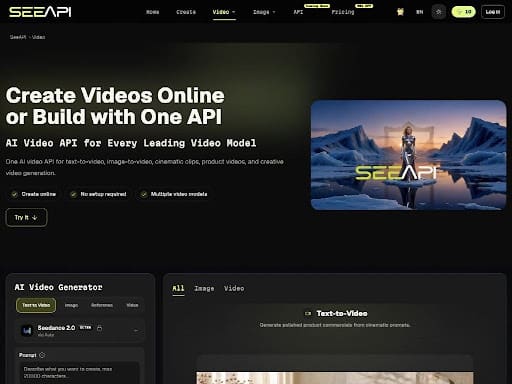
The public video path on SeeAPI talks about text-to-video and image-to-video in the same workspace. For a press kit, use image-to-video. Attach the locked poster. Ask for the one camera move. Leave text-to-video for a later week when nobody is printing boards. Comparing models can wait until the object is stable. Speed and cost only matter after the face still matches.
Keep that order even when a director wants “just a mood clip first.” Mood clips become public files. Public files become the show. Work in this order:
- Lock the poster still and the printed title.
- Generate or edit the still until type holds at arm’s length.
- Open image-to-video with that still attached.
- Compare the clip to the poster, not to a moodboard.
- Keep the file only if the face and the billing still match.
That list is slower than a prompt that says “opening night energy.” It is faster than reprinting boards because the teaser invented a different show.
Hold The Face Across The Still And The Clip
Character talk on a video page is only useful if you treat it as a packing rule. The face in second three must still be the face on the poster. If the jaw slides, the clip is out. If a prompt invents a second actor, the clip is out. Do not debate whether the new face is “more theatrical.” The packet has one billing.
Common Press Kit Errors After The First Preview
The errors are ordinary. Someone starts with text-to-video because it sounds faster. Someone attaches a rehearsal snapshot instead of the locked poster. Someone exports a trial file with a mark still on it and pastes it into the listing CMS. Each error costs a reprint or a takedown. A wasted afternoon of reprint quotes is still a wasted afternoon.
Another error is collecting five teasers and picking the prettiest. Pretty is how the house board and the phone listing drift apart. Keep one survivor. Write why the others died. The next intern should not have to guess from filenames like final_v7_USE_THIS.
A third error is letting the director “just try one mood prompt” after the boards are at the printer. The printer will not wait. The listing page will. If the new clip no longer matches the board, you now have two shows and one opening night. That is how a press week turns into an apology tour.
How The Desk Checks A Finished Packet
Lay the poster, the program crop, and the teaser on one table. Play the clip muted. Freeze a middle frame. If a guest could not tell those three files belong to the same night, the packet is not finished. Check the title, the face, and any billing line that a reviewer might quote. SeeAPI helps when those files can live in one history with the same reference. It does not help if the desk keeps collecting prettier orphans from new prompts.
Send the packet only after that table check. Do not send a “preview for tone” that later becomes the public file. House managers will use whatever arrives last. Make the last file the honest one.
Keep The Packet On One Object
Keep generating if you have one locked poster, one allowed camera move, and a table big enough to compare print and motion. Stop if you are chasing a feeling and the object keeps moving. SeeAPI fits a publicist who will treat Image and Video as two outputs of the same pack. It does not fit a week that wants a new show every time a prompt sounds nicer.
The house then has a board, a program, and a clip that still name the same night. That is the only review that matters before the doors open. If a reviewer quotes the title, they should be quoting the same letters a guest saw on the sidewalk.
