


Areas We Cover
Categories

Theater Review: JOAN CRAWFORD GOES TO HELL (Hell in a Handbag / Chicago)
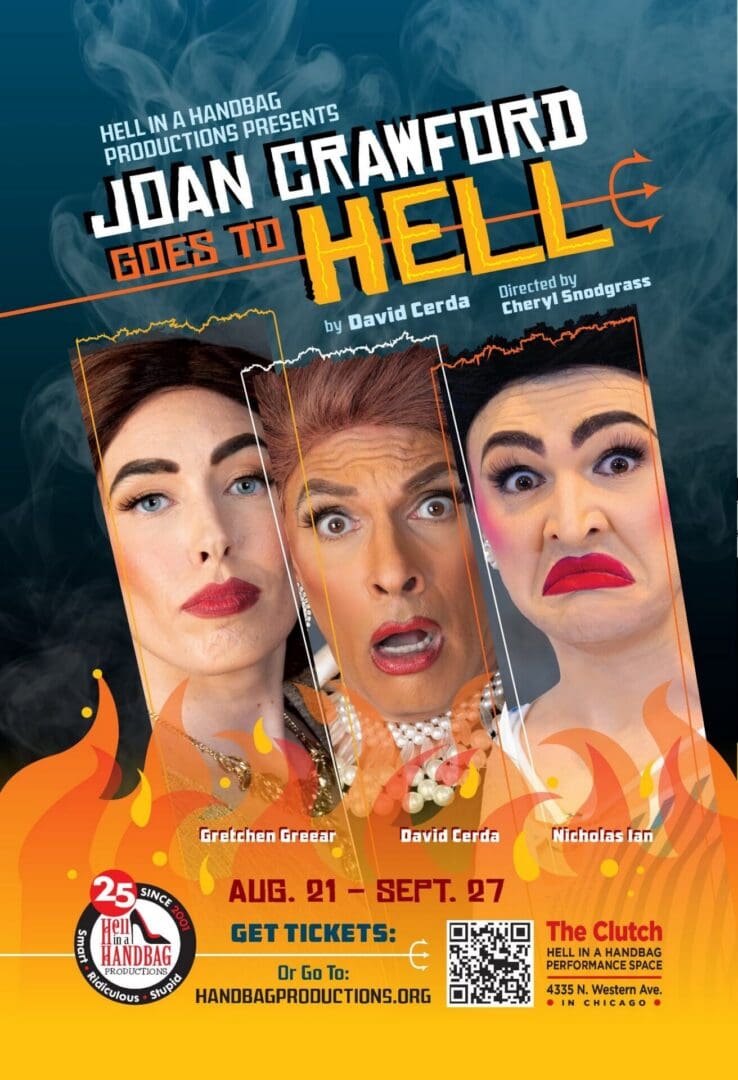
by C.J. Fernandes | September 6, 2026
in Chicago, Theater
HELL HATH NO FURY LIKE JOAN CRAWFORD
Four Joans, three Christinas, and a torrent of gags
make this trip to hell devilishly funny
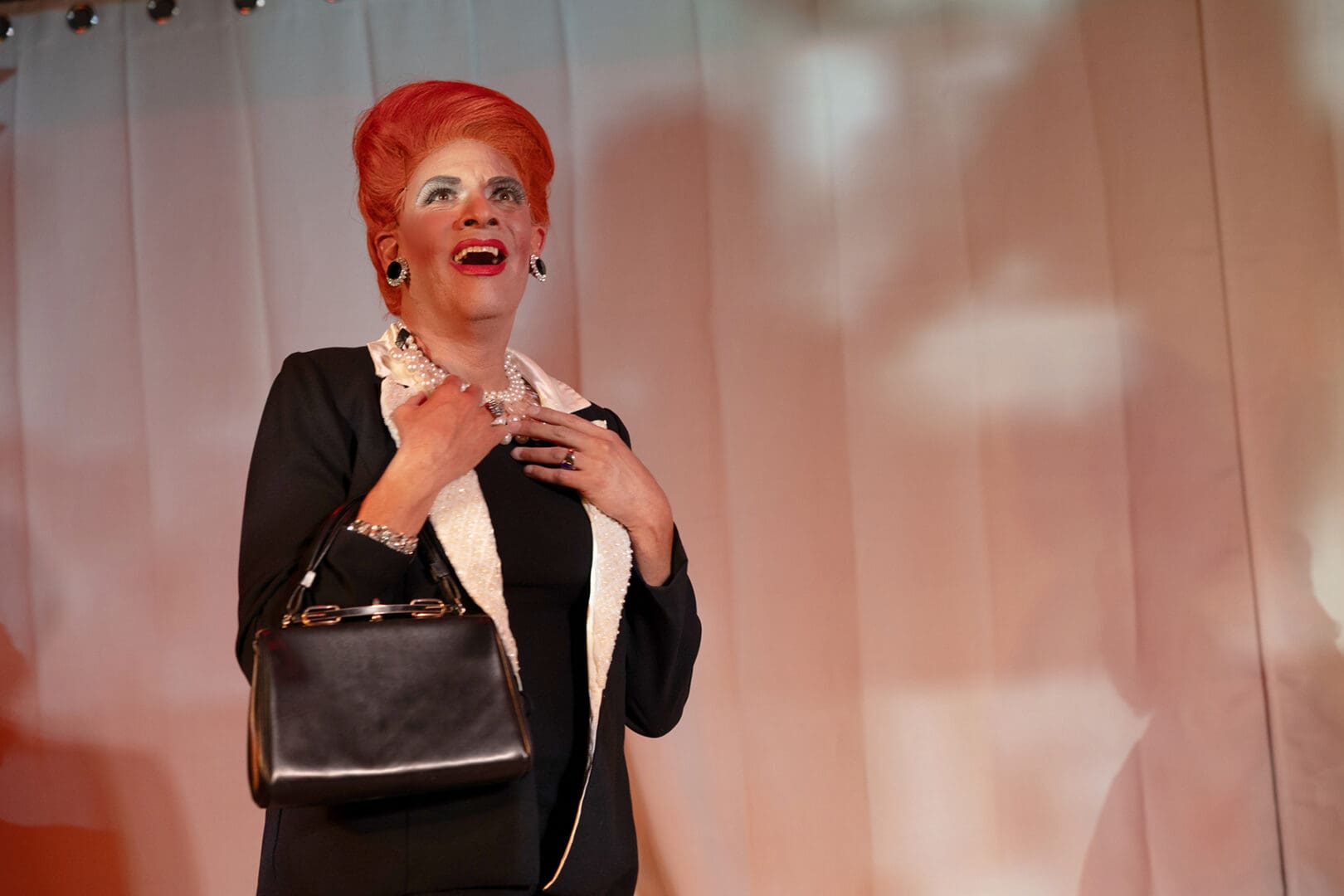
David Cerda
Beginning her film career as a body double for Norma Shearer, the Hollywood star she went on to overshadow in the classic MGM comedy The Women (1939), Joan Crawford’s success owed as much to her determination and force of personality as it did to her looks and talent. Volatile, larger-than-life, and never less than magnetic on screen, she eventually achieved cinematic superstardom before slowly fading as parts worthy of her screen presence became infrequent as she aged. While her rags-to-riches story, diva behavior, melodramatic feuds, and on- and off-screen bitchiness had already won her a devoted gay following, the 1981 release of Mommie Dearest (a wretched biopic adapted from an even more wretched memoir by her adopted daughter Christina) firmly cemented her as a gay and drag icon for the ages. Positing that Crawford was an emotionally and physically abusive mother, the camp-tastic movie flopped hard, destroying (unfairly, I always thought) the career of its Oscar-winning star Faye Dunaway and providing gay audiences everywhere with a treasure trove of howlers of which they have never tired.
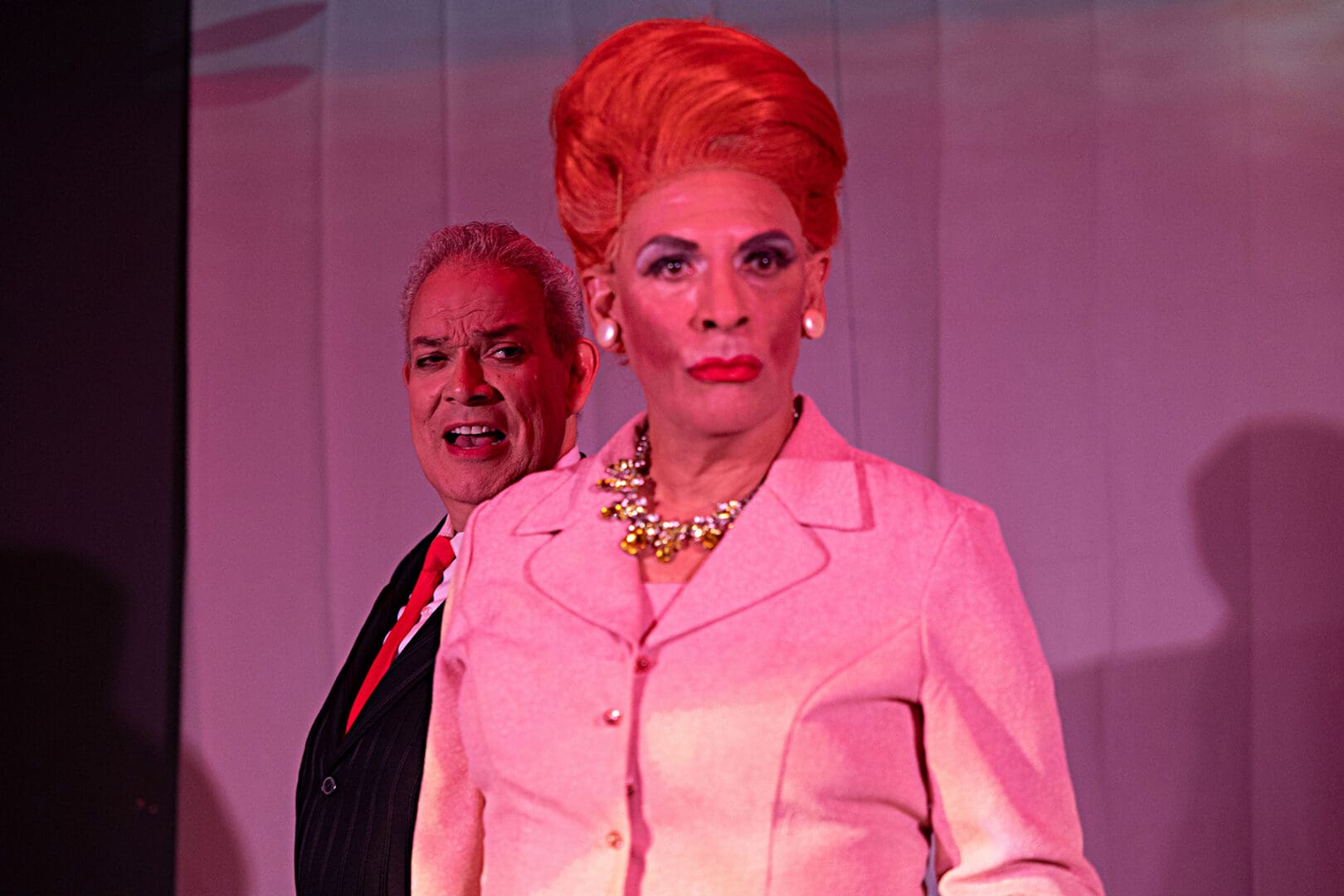
Nick Dorado and David Cerda
Fun fact: The great Bette Davis, arch-nemesis of Crawford on and off screen, considered Faye Dunaway the most unprofessional actress she’d ever worked with; a delightfully apropos assessment given that Dunaway went on to play Crawford a few years after she worked with Davis.
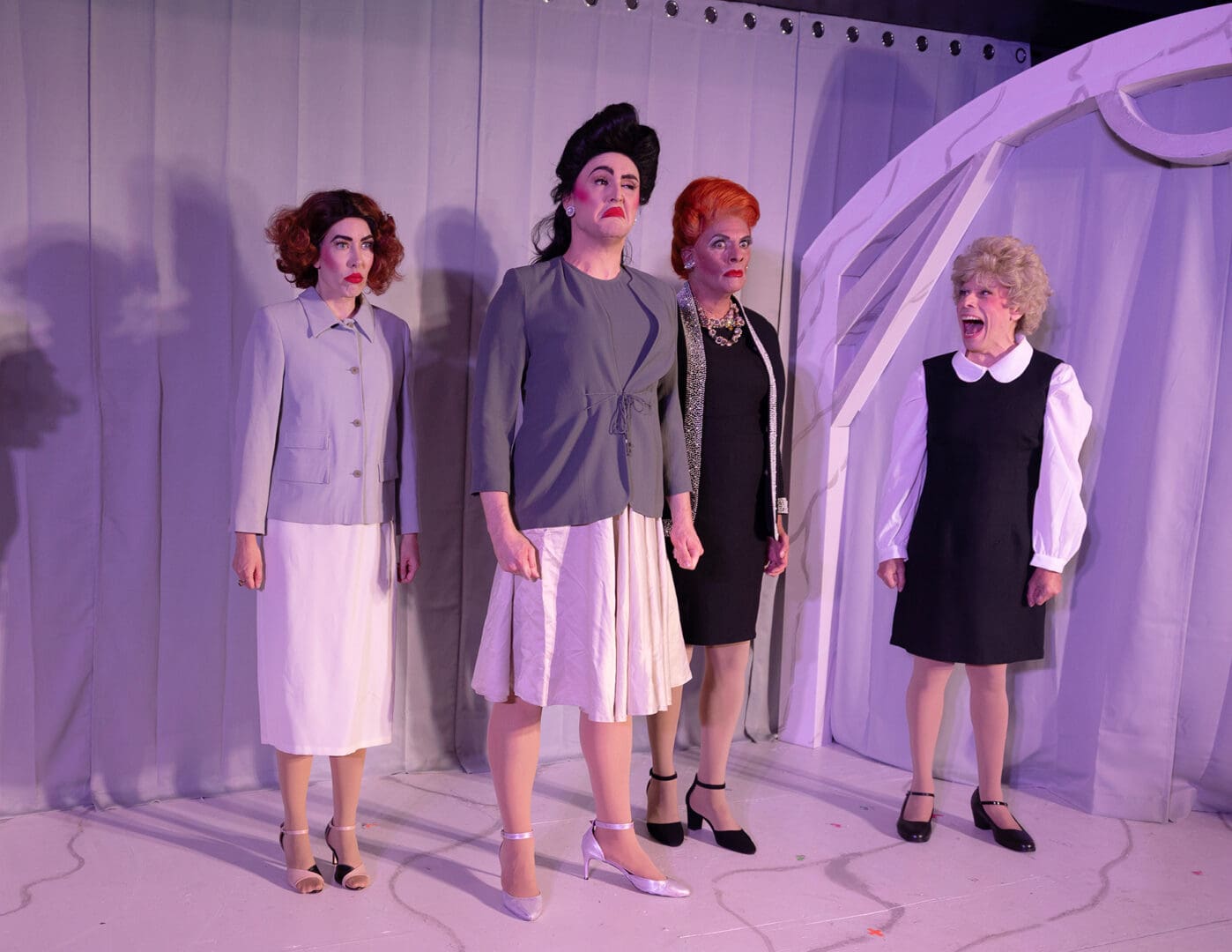
Gretchen Greear, Nicholas Ian, David Cerda, and TJ O’Brien
All this to say that the audience for Hell in a Handbag’s revival of Joan Crawford Goes to Hell, penned by and starring Artistic Director David Cerda, was teeming with excitable gay men of a certain age – unfortunately, the younger “queer” generation seems to be less taken with the gargoyle stylings of Dunaway’s Crawford.
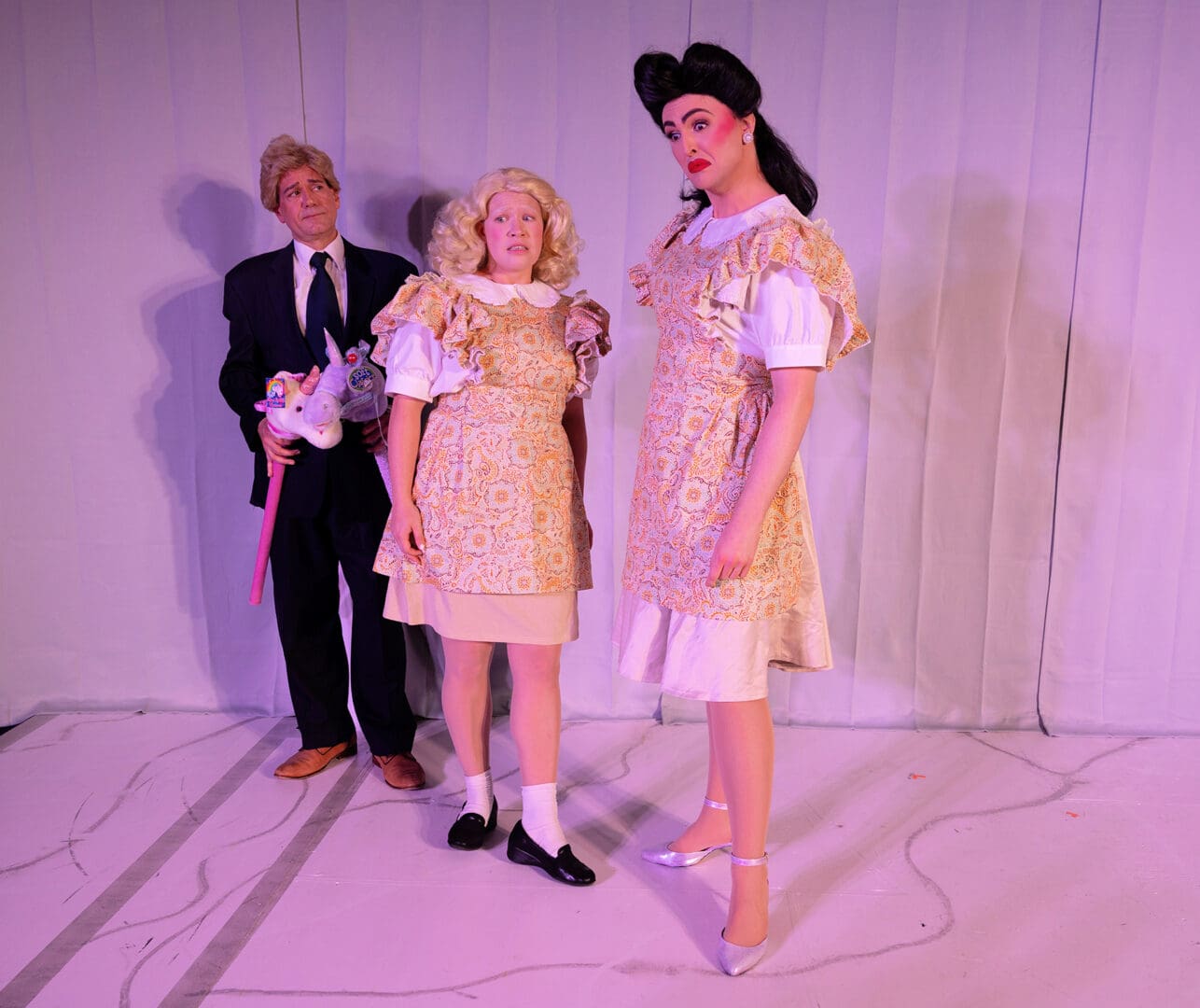
Michael Rashid, Haley Gillman, and Nicholas Ian
Loosely based on Crawford’s memoir, My Way of Life, and the film adaptation of Mommie Dearest, JCTH begins with Christina (TJ O’Brien) being summoned to the deathbed of Joan #1 (Cerda). Joan #1 snarls at her daughter, shuffles off her mortal coil, and is whisked away to a fiery afterlife, where she makes the acquaintance of a sharply dressed Mr. Deville (a perfectly oleaginous Nick Dorado). What follows is a Defending Your Life-ish series of scenes from Crawford’s life, following her career as it ascends to dizzying heights and then craters, all while Joan #1 defends her choices to Mr. Deville. Interspersed throughout is projected video of her talking about sections from her memoir. Joan on Screen is portrayed by Jennifer Engstrom, who is startlingly precise, playing the part entirely straight.
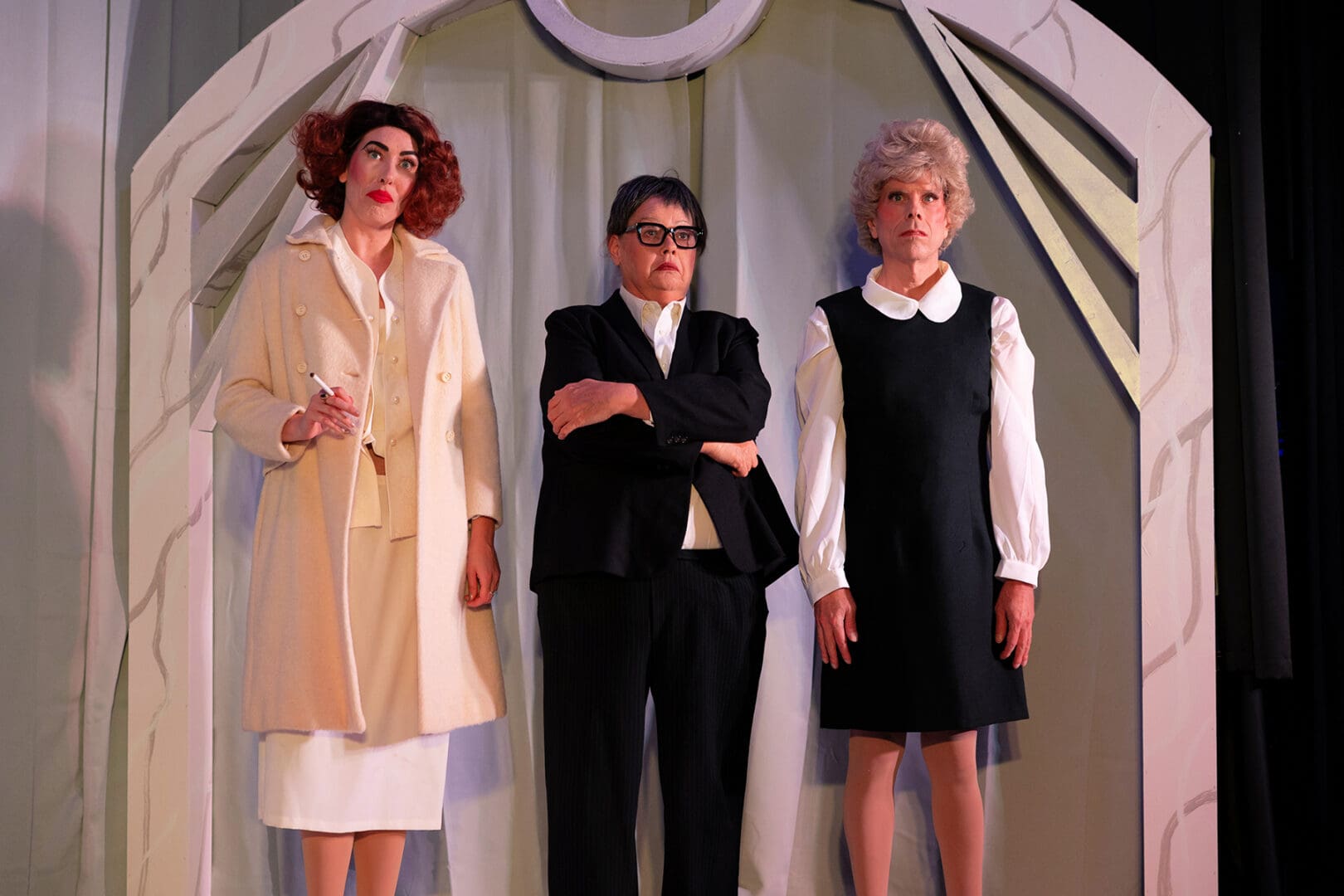
Gretchen Greear, Lori Lee, and TJ O’Brien
The Joans in the scenes are played by Gretchen Greear (Joan #2) and Nicholas Ian (Joan #3). So, we have a total of four Joan Crawfords. We also have three Christina Crawfords: in addition to O’Brien, Haley Gillman plays Christina as a child, and Baby Christina is played by a special guest whose name I shall not divulge; all I shall say is that I almost fell off my chair at the reveal, sending my pen and notebook flying, irritating the hell out of the critic in front of me.
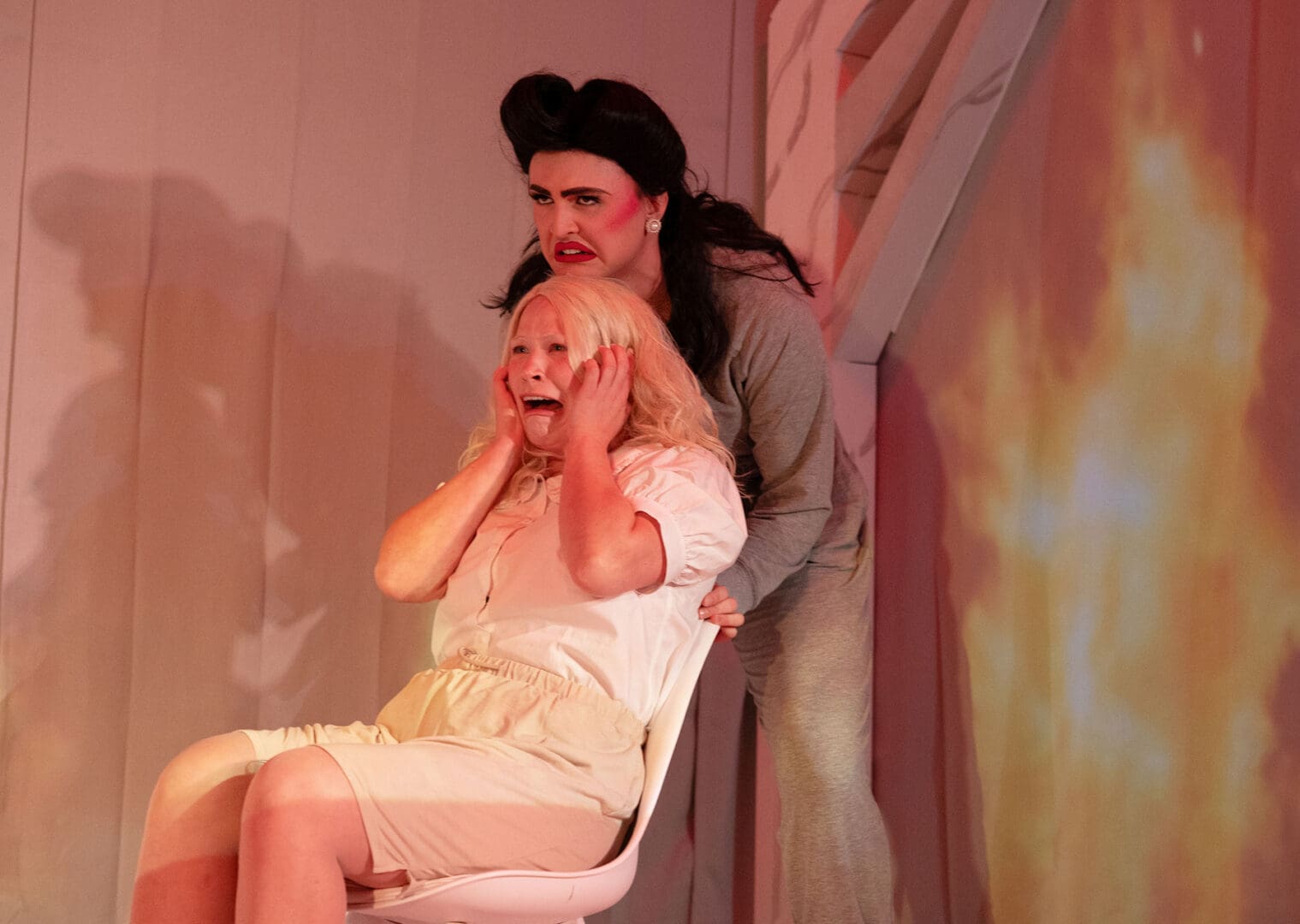
Haley Gillman and Nicholas Ian
JCTH sticks fairly close to the Hell in a Handbag formula: precisely timed line-drops, filthy broad humor, jokes that come at a furious pace with no time held for laughter, and carefully controlled insanity. The gorgeous wigs are designed by Keith Ryan, and the sharp costume design is by Ben Argenta Kress. Syd Genco’s makeup is impressive as well, particularly on Joan #2 and Child Christina, who are bizarro-world versions of their characters from the movie. All these elements combine to excellent effect, and the ratio of successful jokes to clunkers is extremely high, which is ultimately what the success of a show like this comes down to. But for all the familiarity, there are still surprises. The show goes to unexpectedly dark places a couple of times in the first (and much better) act; thankfully, it lingers there for only a moment before returning to the silliness we want. Act II is a significant drop in terms of the writing, turning into a greatest hits collection of campy one-liners from Mommie Dearest, but even there, there are unexpected moments of tenderness, particularly from Michael Rashid, who plays Greg, Crawford’s lawyer and lover, in that order.
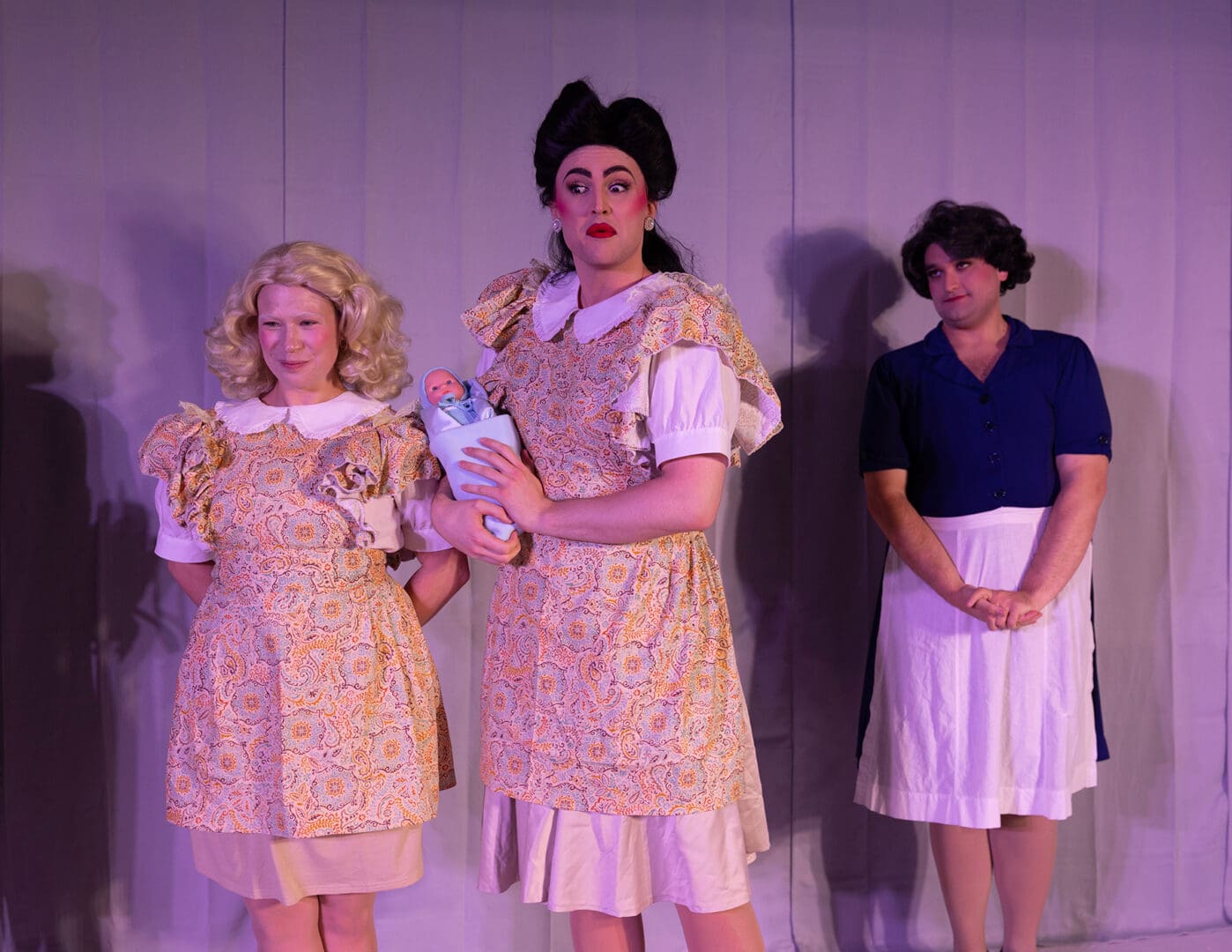
Haley Gillman, Nicholas Ian, and Ryan Kenny
The performances are strong across the board, but if I had to pick a favorite, it would be Greear, who channels Dunaway-as-Crawford’s manic intensity to hilarious effect. Joan Crawford Goes to Hell is not a play for everyone, and it doesn’t try to be. But that’s not to say that Mommie Dearest virgins would not enjoy it; they might wonder why Adult Christina speaks with a Southern accent while Child Christina does not. They don’t need to know. That’s a little something for the regulars. Most of the jokes don’t require familiarity with the source material, and there are more than enough of them to keep you chortling.
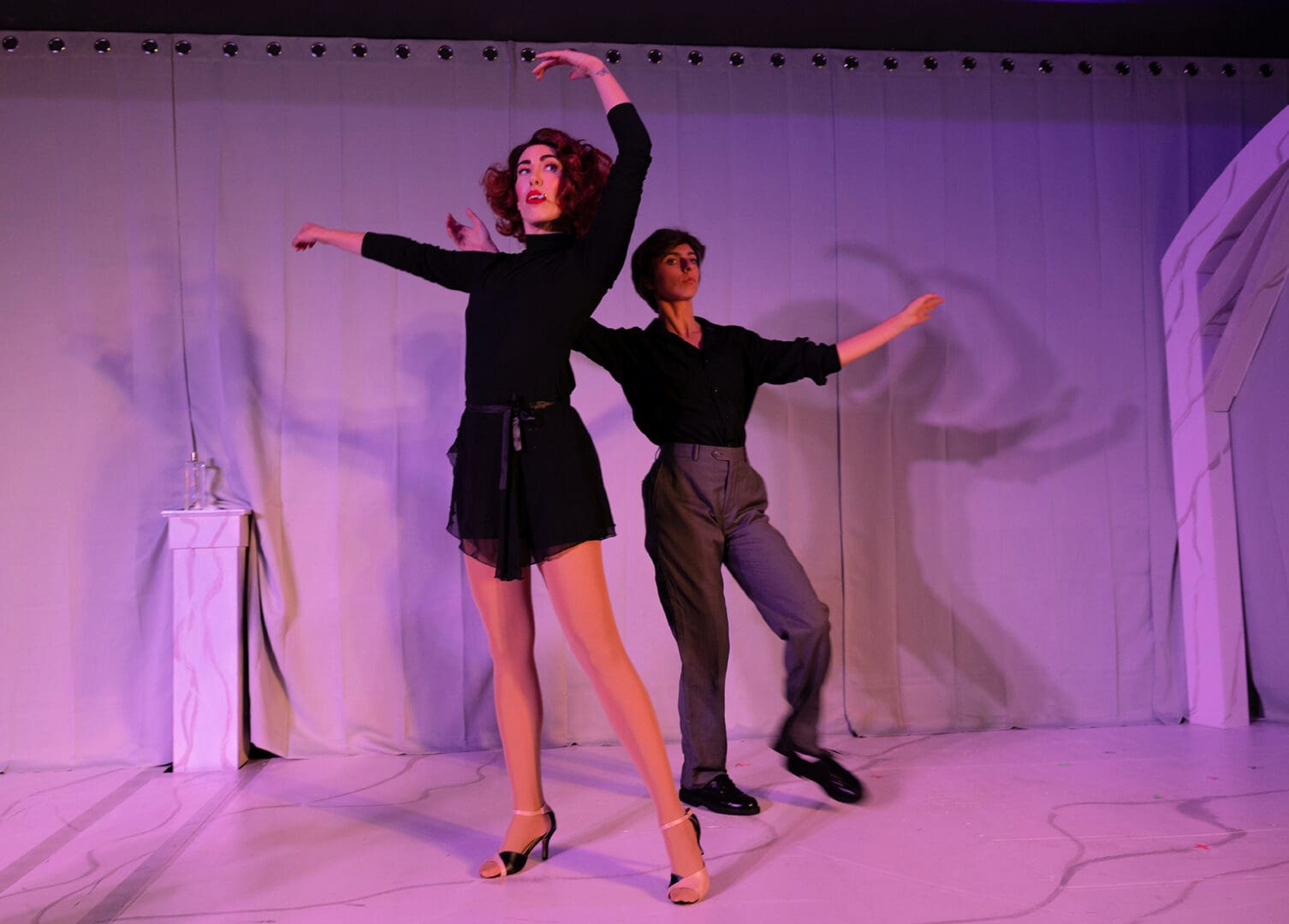
Gretchen Greear and Anna Rose Steinmayer
It’s a tough time to be a drag performer. They have never been truly appreciated as artists, even by the broader gay community. Now they’ve been made scapegoats because it’s always politically convenient to punch down on a marginalized group. Drag is neither easy nor trivial. Its modern form is performance art that goes back over a hundred years to the late 1800s. In this toxic and threatening climate, the mere act of drag in public is in itself an act of resistance. It deserves our respect. It deserves our patronage. So, hop on down to Montrose and Western and buy a ticket to Joan Crawford Goes to Hell. You’ll laugh your ass off. I guarantee it.
✦ ✦ ✦ ✦ ✦ ✦ ✦ ✦ ✦ ✦
photos by Rick Aguilar
Joan Crawford Goes to Hell
Hell in a Handbag Productions
The Clutch, 4335 N. Western Ave. in Chicago
Fri.–Sat. at 7:30; Sun. at 3 and 7
1 hour and 50 minutes, including intermission
ends on Oct. 4, 2026
tickets $39 advance general admission; $52 VIP/reserved seating
for tickets, visit Hell in a Handbag Productions
for more shows, visit Theater in Chicago
✦ ✦ ✦ ✦ ✦ ✦ ✦ ✦ ✦ ✦
