


Areas We Cover
Categories

Theater Review: MA RAINEY’S BLACK BOTTOM (A Noise Within / Pasadena)
by Michael M. Landman-Karny | September 9, 2026
in Los Angeles, Theater
THE BLUES COME WITH A PRICE
Power, ownership, and exploitation run through
a sharply realized production of August Wilson’s classic
Ma Rainey’s Black Bottom
A stew uses whatever is in the house. Carrots. Potatoes. A piece of meat, if there is one. Maybe the marrow worked out of the bone. Then dinner ends. What remains sits in the pot, cold and unwanted.
Toledo, the piano player in Ma Rainey’s band, has a name for what remains. “The colored man is the leftovers.”
He is talking to Cutler and Slow Drag in the band room, but the line goes much farther. It is the machine humming beneath Ma Rainey’s Black Bottom. History consumes a people. What survives gets called identity. The four men waiting in that Chicago recording studio have inherited the same history and arrived at four different ideas about what to do with it.
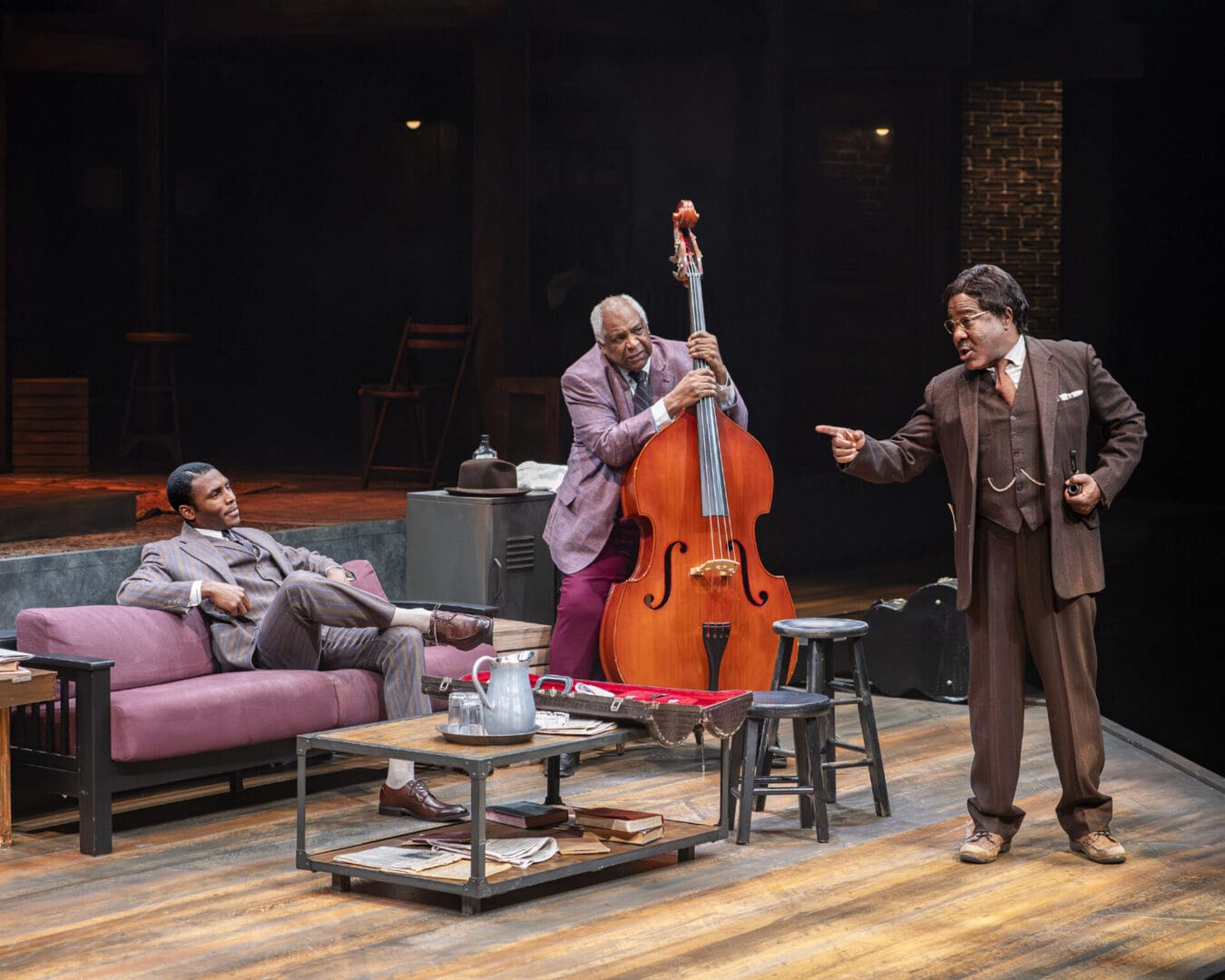
Jamar Gilbert, Alex Morris, and Gerald C. Rivers
Ma Rainey was a real singer, billed as the “Mother of the Blues” and among the first black performers the recording industry decided it could profitably sell. August Wilson imagines one afternoon in 1927 when Ma arrives at a Chicago studio to record four songs. Her band is already there: Cutler (Kai A. Ealy) on trombone, Toledo (Gerald C. Rivers) on piano, Slow Drag (Alex Morris) on bass, and Levee (Jamar Gilbert) on trumpet. Upstairs sit studio owner Sturdyvant (Matt Foyer) and Ma’s manager, Irvin (Bert Emmett). They need Ma’s voice. They would simply prefer not to need Ma.
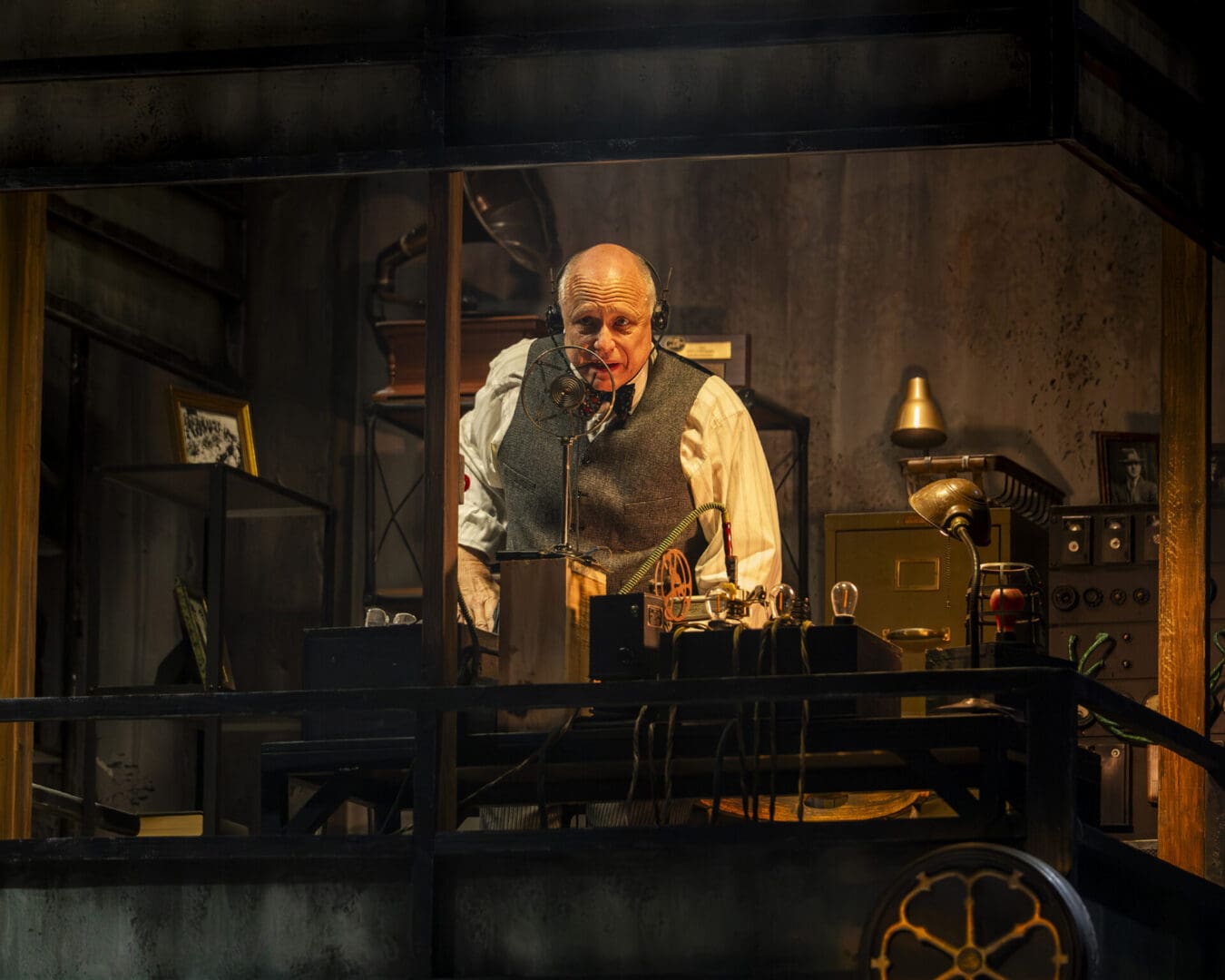
Matt Foyer
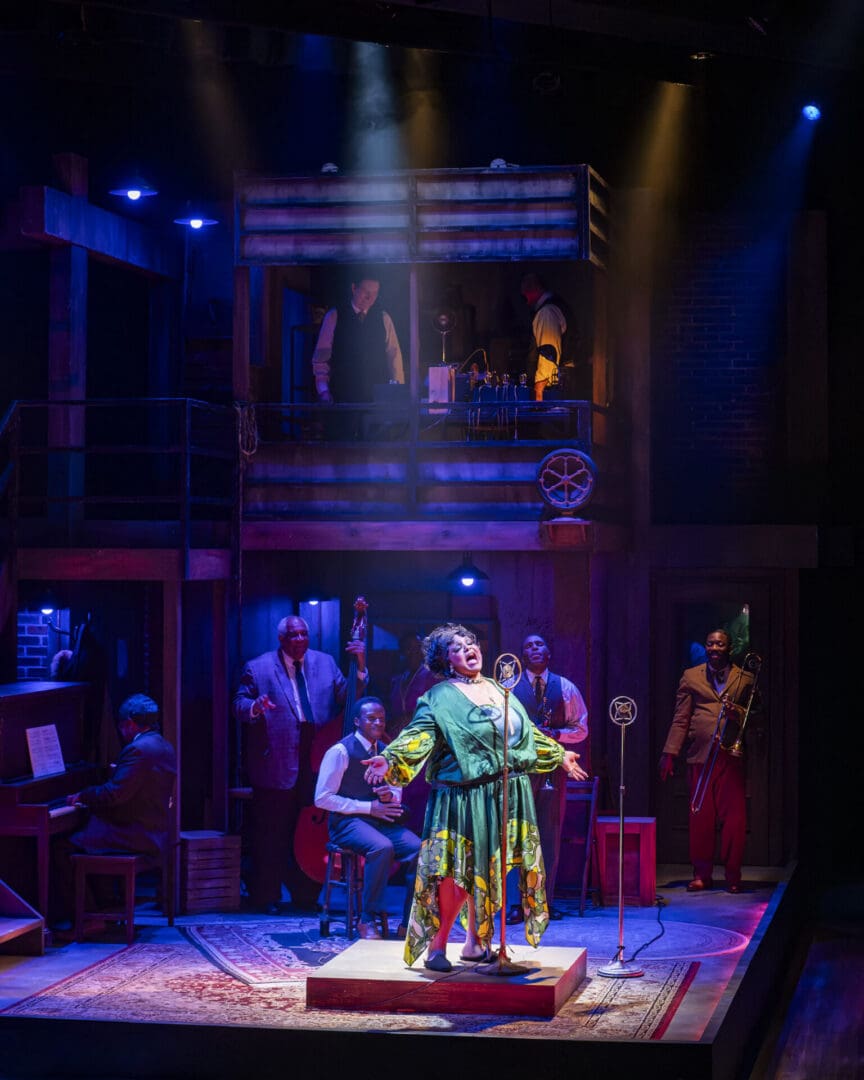
Gregg T. Daniel, directing his seventh Wilson production for A Noise Within, lets the studio itself do some of the talking. Tesshi Nakagawa’s handsome, grimy set is built vertically. The musicians occupy a cluttered lower level of battered furniture and mismatched chairs. Above them, reached by a spiral staircase, sits Sturdyvant’s glassed-in control booth. The arrangement is almost indecently clear: black musicians make the music downstairs. The people who own what they make look down from above.
Standing microphones are scattered across several levels. Heavy timber, catwalks, and wood slats give the room an industrial weight. Warm light reaches parts of it without ever making the place welcoming. It feels less like a shrine to the blues than a workplace where something is being manufactured.
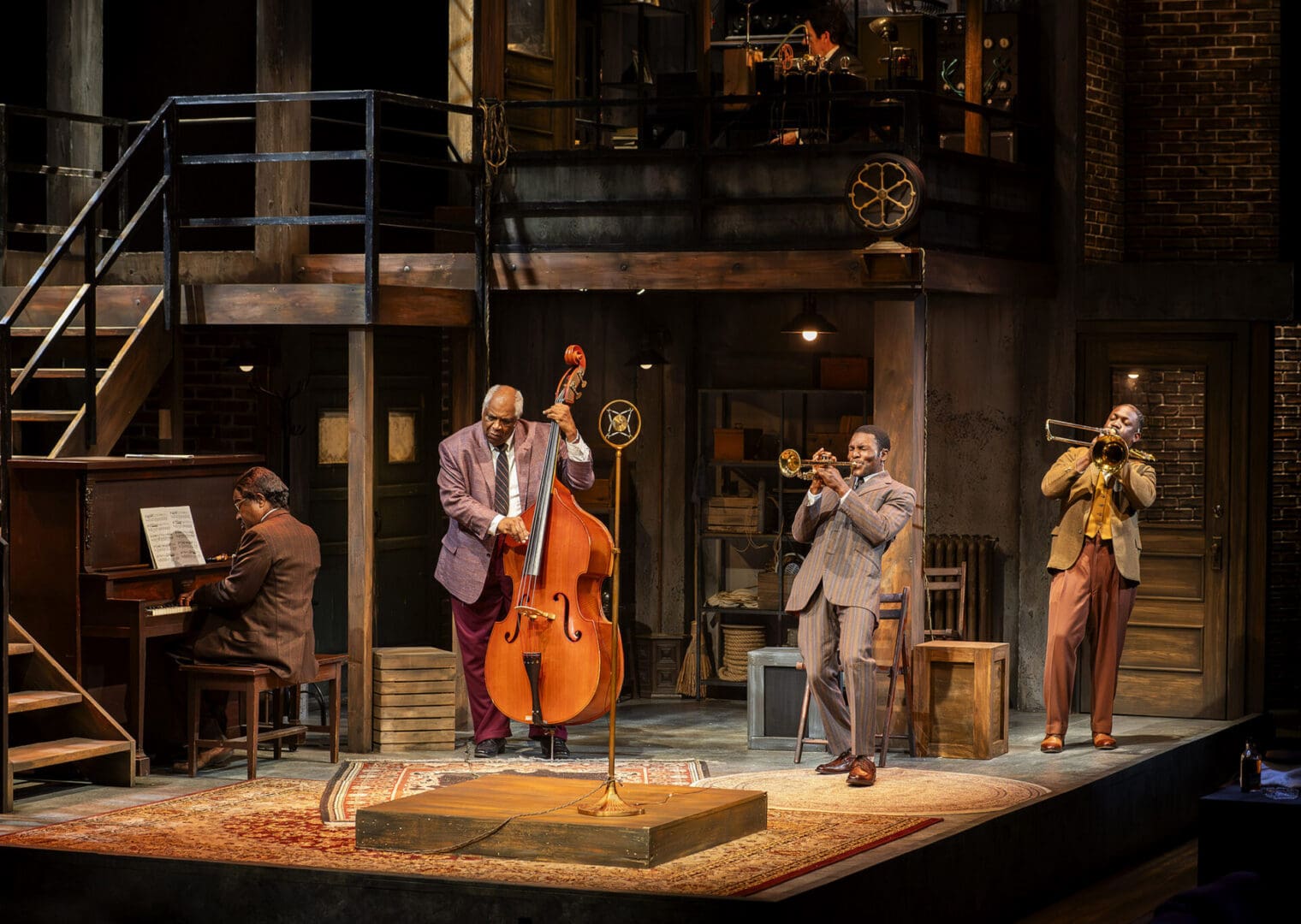
Gerald C. Rivers, Alex Morris, Jamar Gilbert, Kai A. Ealy, and Bert Emmett (top)
The musicians do not actually play their instruments. Their sound comes from a recorded track, a choice that could easily turn four actors into men pretending to be a band. It does not. Ealy, Rivers, Morris, and Gilbert follow the music closely enough that the illusion holds. Hands land where notes seem to land, and bodies keep time. Nobody appears to be waiting for a recording to tell him what to do next.
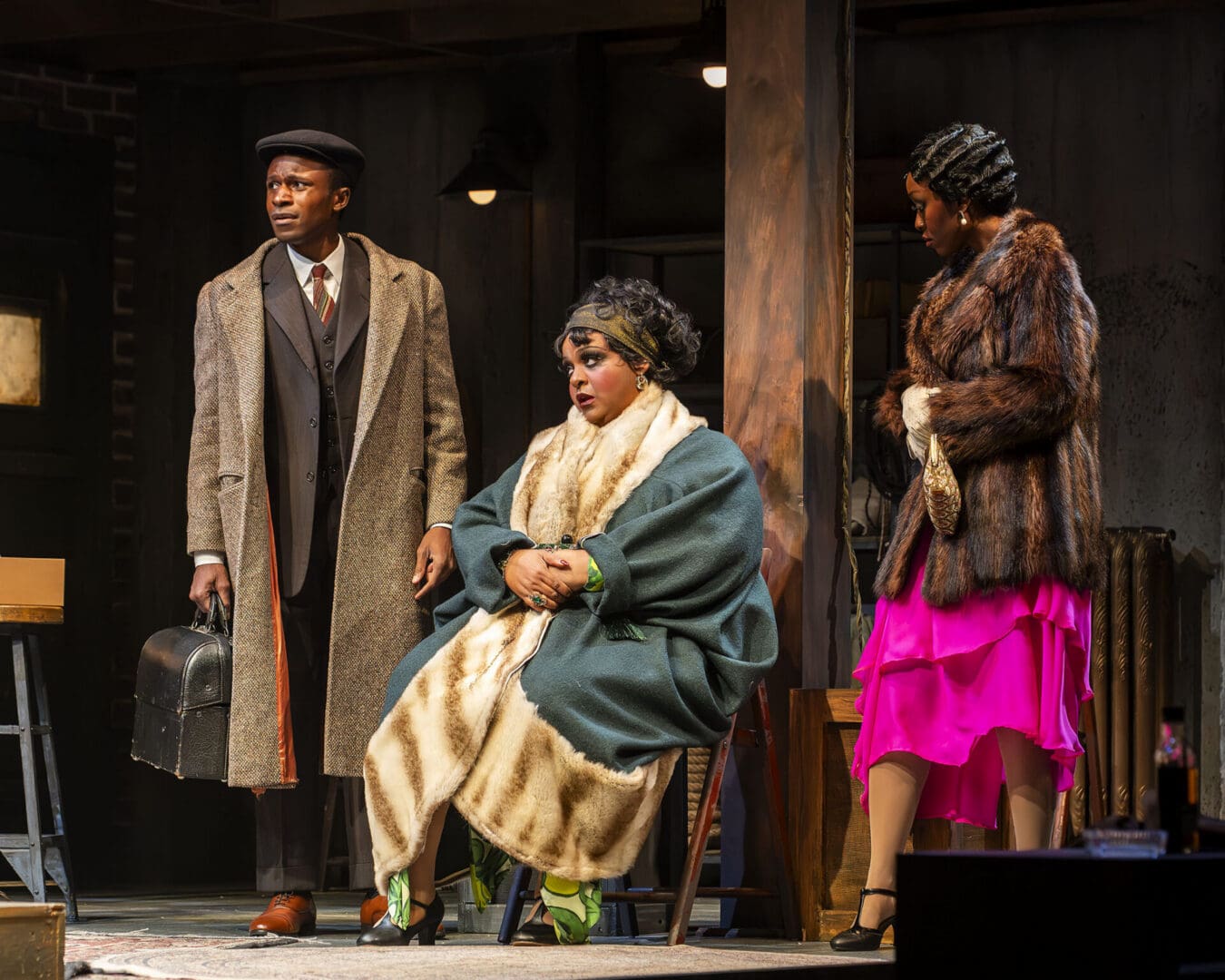
Francis C. Edemobi, Amber Liekhus, and CJ Obilom
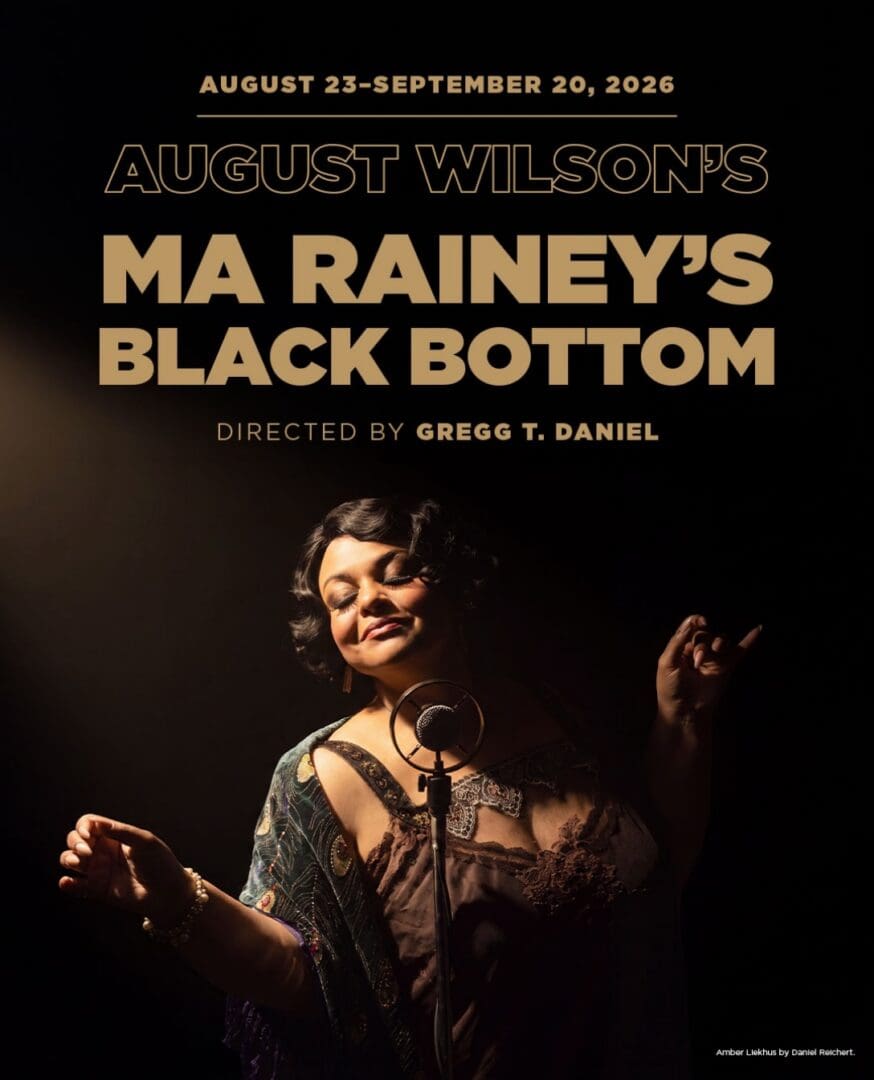
Then Ma enters. Amber Liekhus sings live, and it matters. Her voice changes the temperature of the production. Ma understands the recording business better than the men upstairs imagine she does. Sturdyvant and Irvin want her voice cut into wax. Ma knows that their patience, courtesy, and interest in her well-being expire as soon as they get it, so she spends the afternoon making them pay while she still can. Her demands throughout the recording session may sound petty, but Liekhus is particularly good at keeping them from becoming diva shtick. Ma’s imperiousness comes from calculation rather than whim. She is testing the limits of her temporary power. The performance becomes most persuasive when Ma stops arguing and sings. For those few minutes, her voice still belongs to the woman producing it.
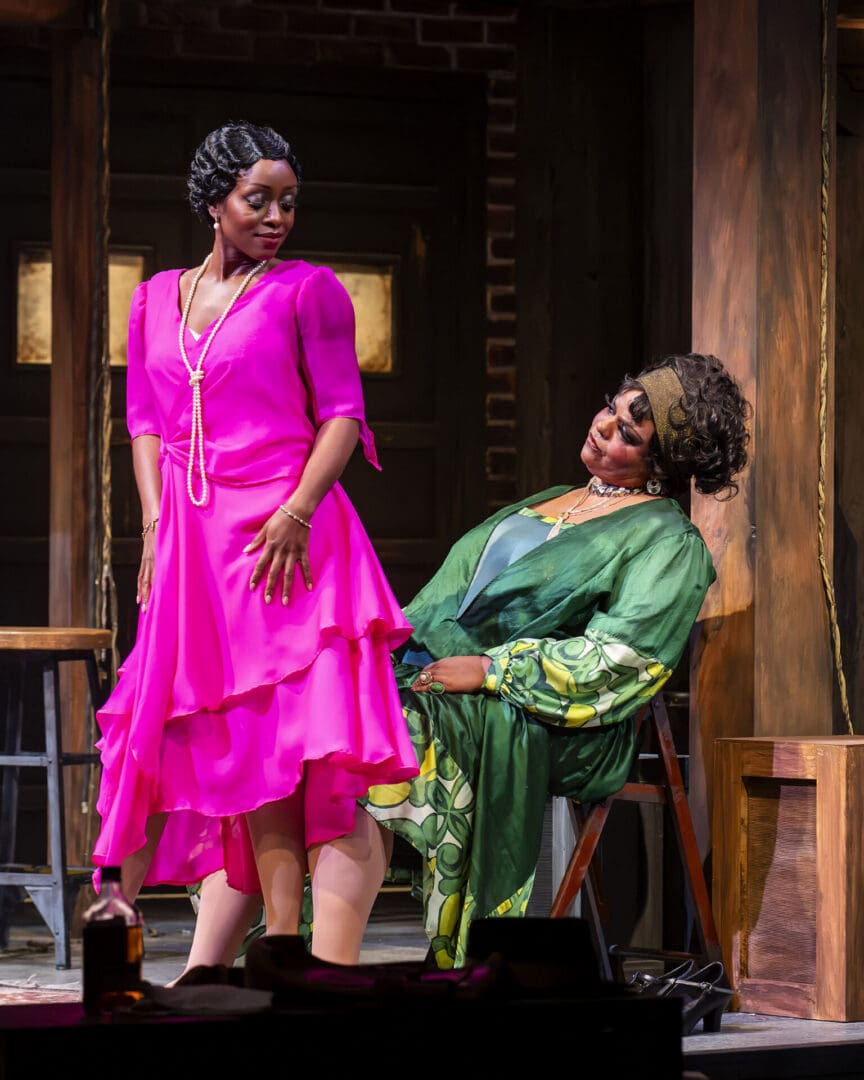
CJ Obilom and Amber Liekhus
The richest conflict in Daniel’s production, though, is not between Ma and the white men upstairs. It is between Levee and Toledo. Gilbert and Rivers make the disagreement personal before they make it philosophical. They needle each other like men who have spent too many hours in rooms together. Toledo’s patience has an edge. Levee hears experience as surrender. Neither has much interest in being instructed by the other.
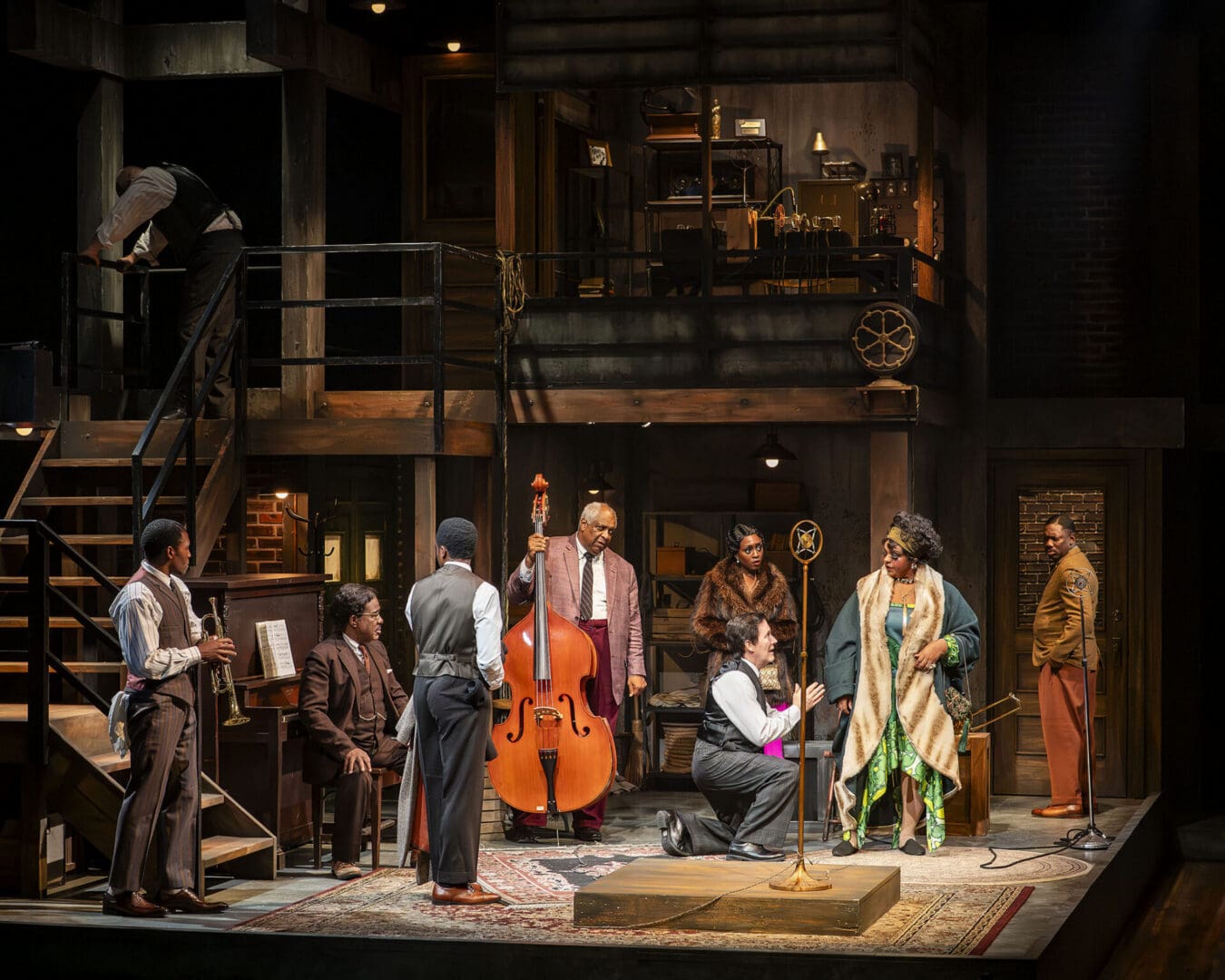
Ma Rainey’s Black Bottom
Levee has written songs, has plans for his own band, and is young enough to believe talent changes the terms of a bargain. Gilbert plays that confidence with an undercurrent of desperation. The shoes, the boasting, and the plans for his future gradually look less like vanity than a frantic wager. Wilson lets Levee be good at what he does. His mistake is believing that being good gives him power.
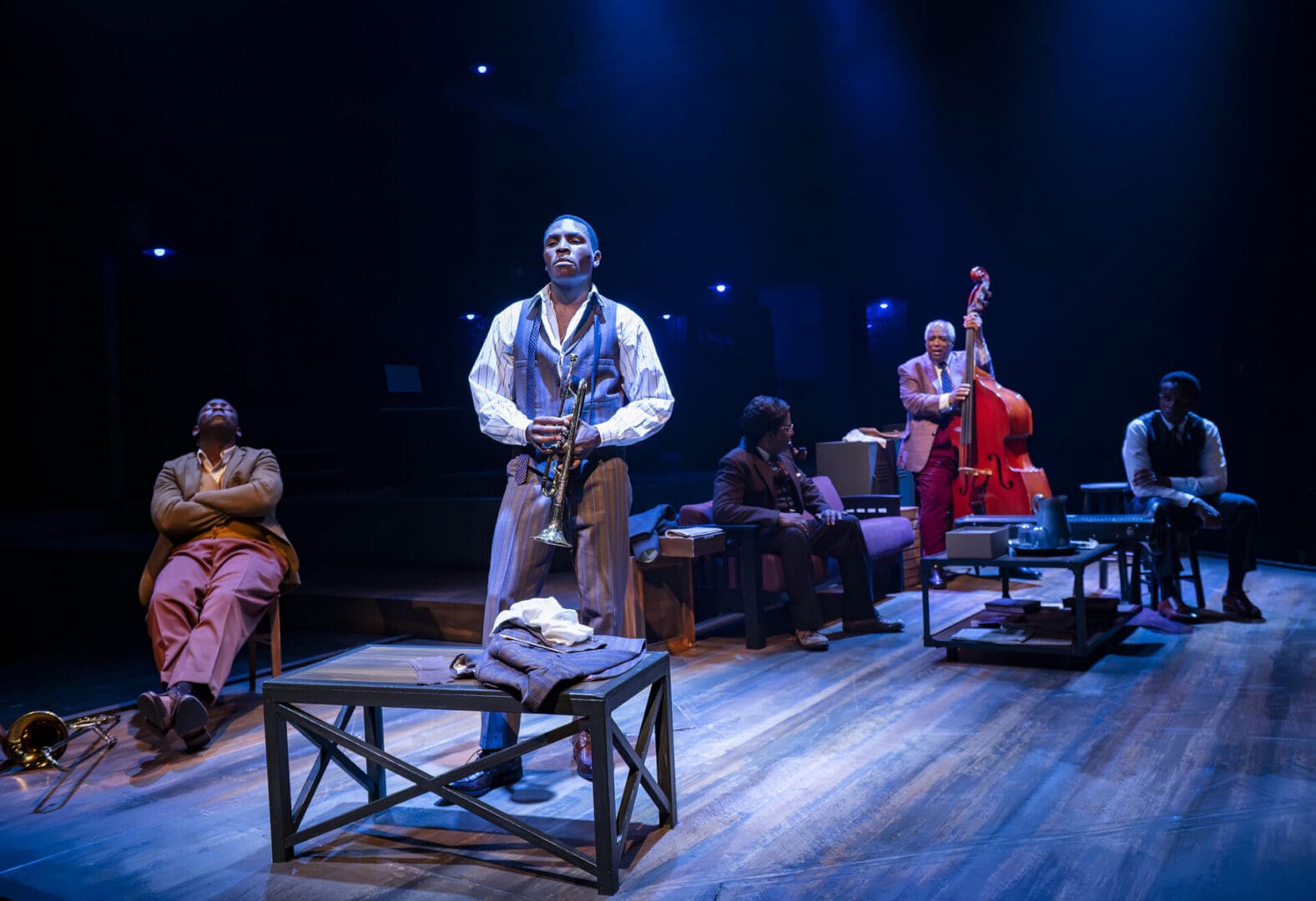
Kai A. Ealy, Jamar Gilbert, Gerald C. Rivers, Alex Morris, and Francis C. Edemobi
Gilbert has to make Levee be magnetic enough that we understand his faith in himself and exhausting enough that we understand why the other musicians tire of hearing about it. He keeps both qualities alive. When Levee finally reveals some of the history beneath his swagger, Gilbert makes him harder to dismiss without requiring the production to ask for our sympathy.
Rivers, Ealy, and Morris appeared together in A Noise Within’s Joe Turner’s Come and Gone last season, and they settle into Wilson’s language with the useful ease of people who understand that his characters do not stand around announcing themes. They tease, irritate, boast, remember, wander off, come back, and continue an argument as though it had never stopped.
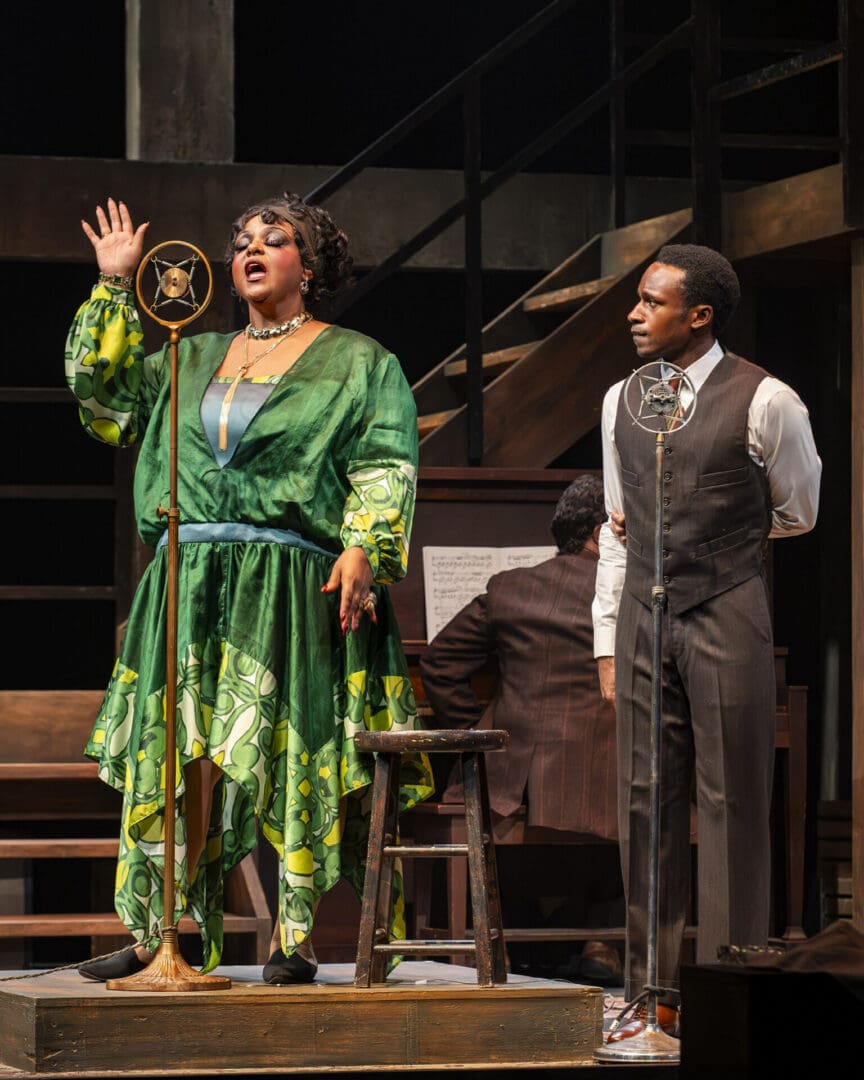
Amber Liekhus and Francis C. Edemobi
Morris gives Slow Drag a particularly valuable stillness. In a room crowded with men trying to explain the world, he rarely seems anxious to win. Ealy’s Cutler carries himself like a man accustomed to negotiating both tempers and practicalities. Rivers lets Toledo’s learning remain a source of pride without making him the production’s designated sage.
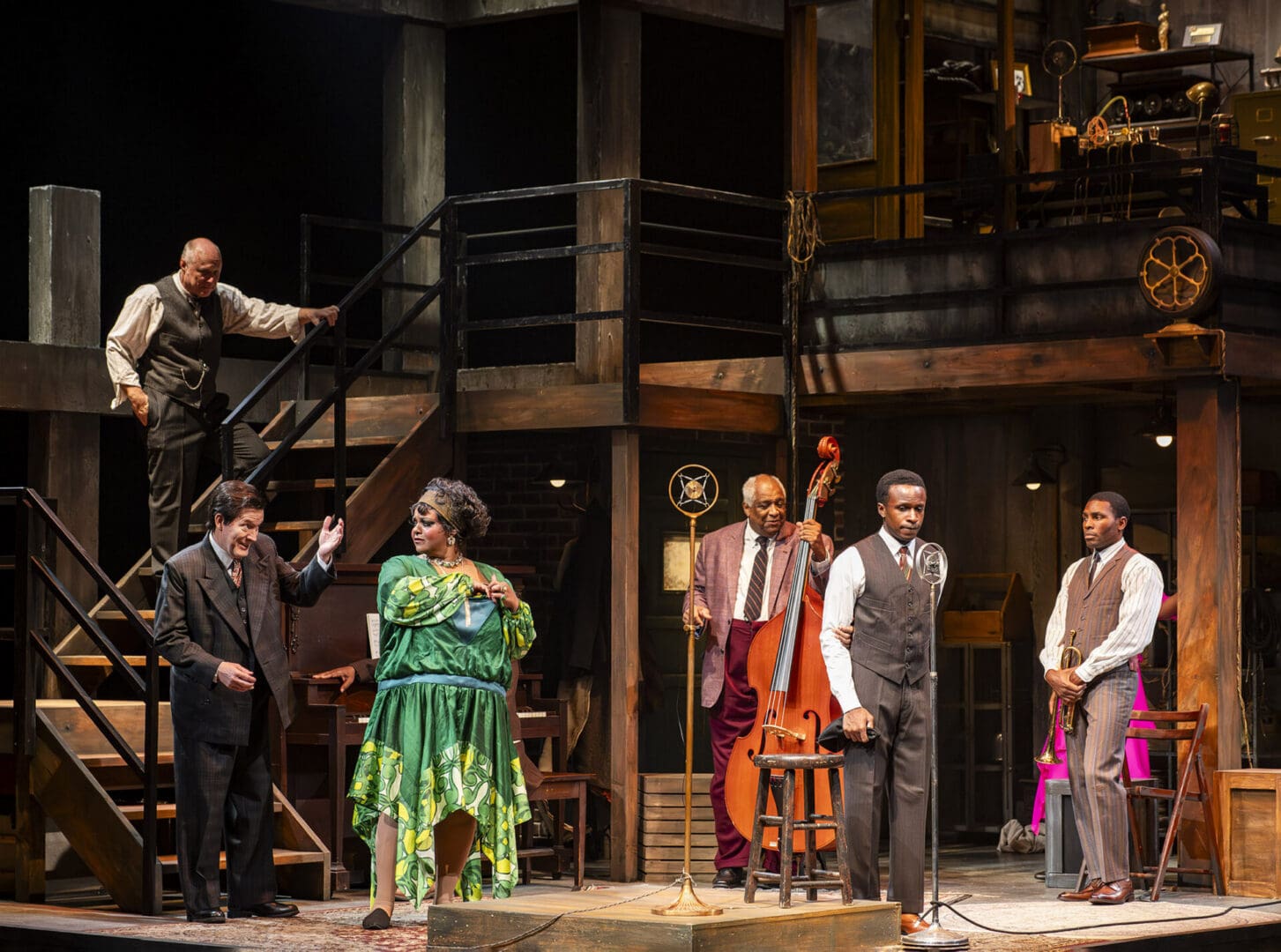
Bert Emmett, James Nardini, Amber Liekhus, CJ Obilom, and Francis C. Edemobi
Liekhus has a different problem. Ma arrives late and already knows she is important. Played too broadly, she becomes a collection of demands. Liekhus gives those demands a history. Ma has learned that courtesy does not protect her, contracts do not protect her, and admiration certainly does not protect her. Control has to be exercised while it exists.
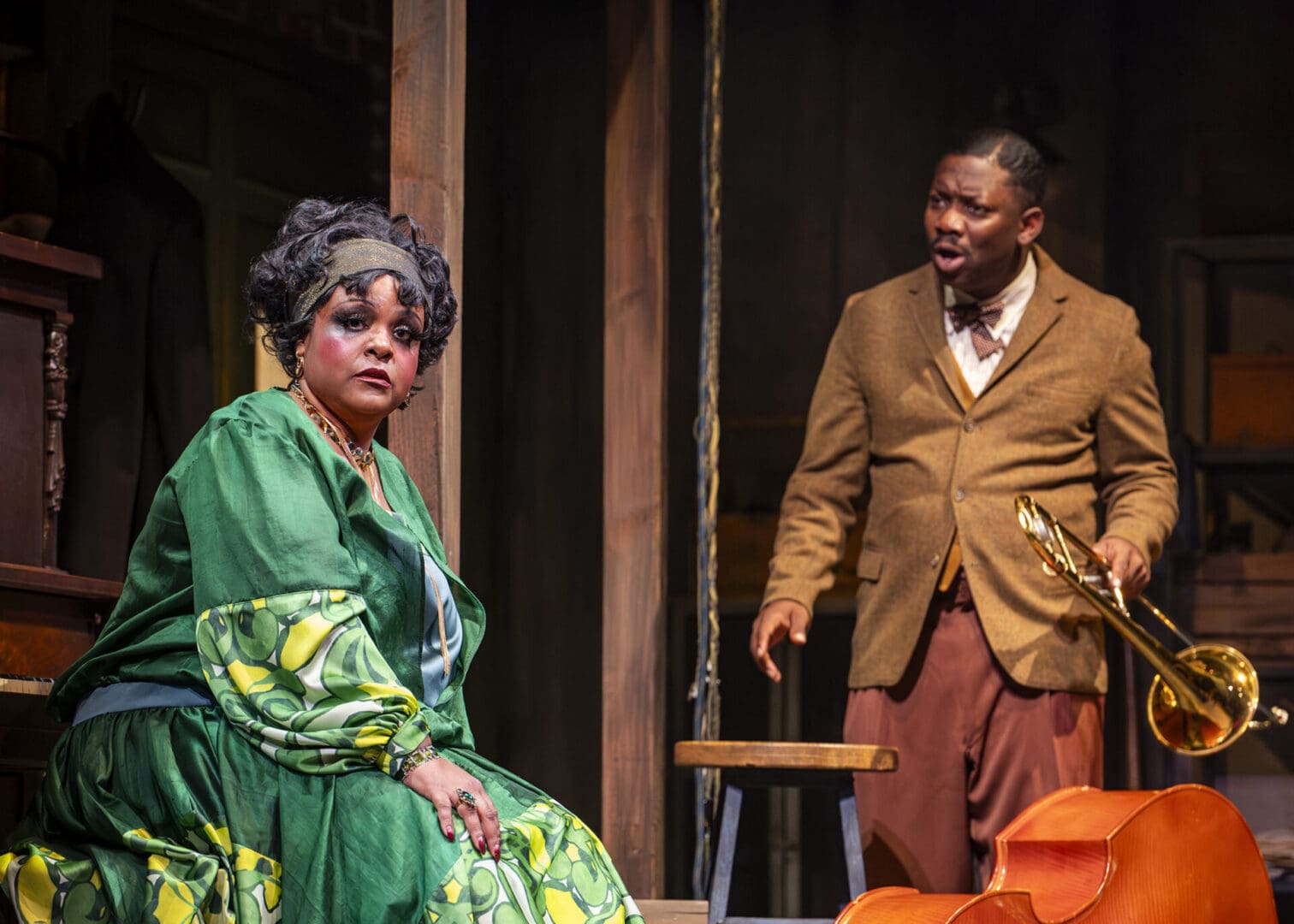
Amber Liekhus and Kai A. Ealy
The final scene is best left unspoiled. Daniel and Gilbert have been preparing for it from Levee’s first entrance. By then, the difference between Ma and Levee has become painfully clear. They are not operating from different theories after all. Ma simply has twenty more years of evidence.
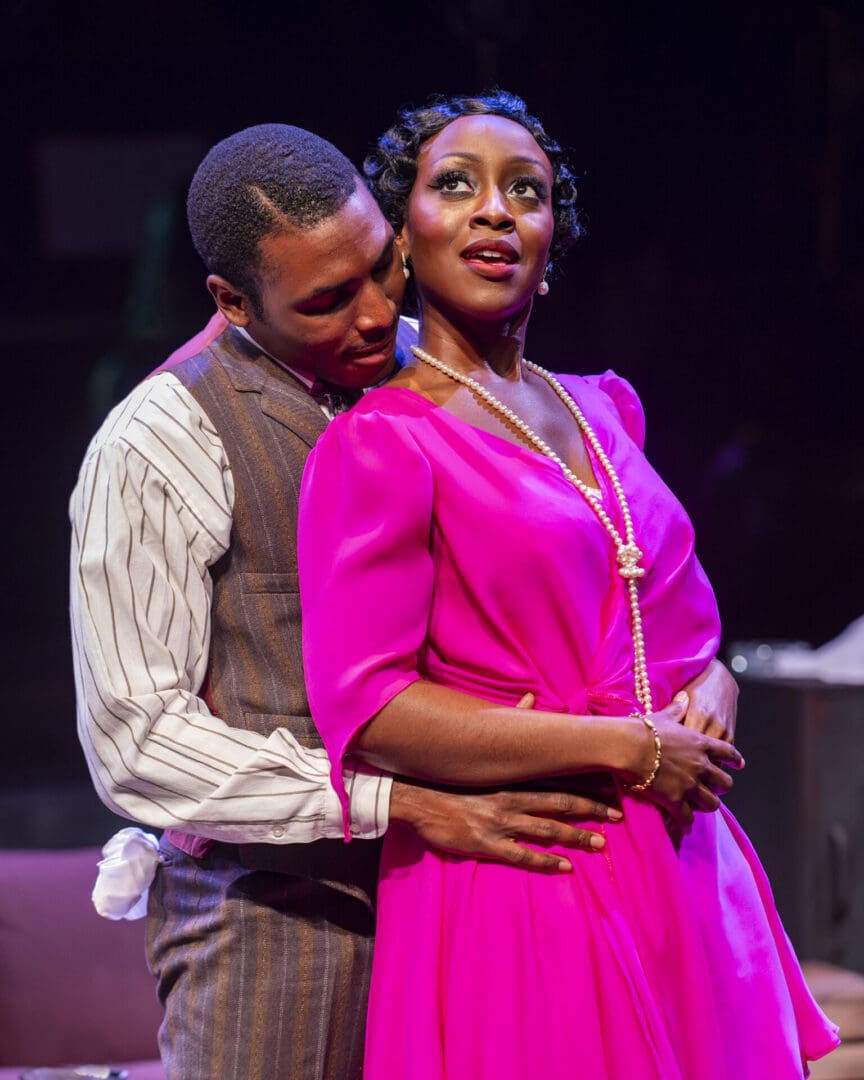
Jamar Gilbert and CJ Obilom
The staircase has been sitting there all evening. It carries white money down to collect Black music. It carries Ma up far enough to make demands while her voice is wanted, but there is no staircase for Levee’s rage, at least not one that reaches the people who earned it.
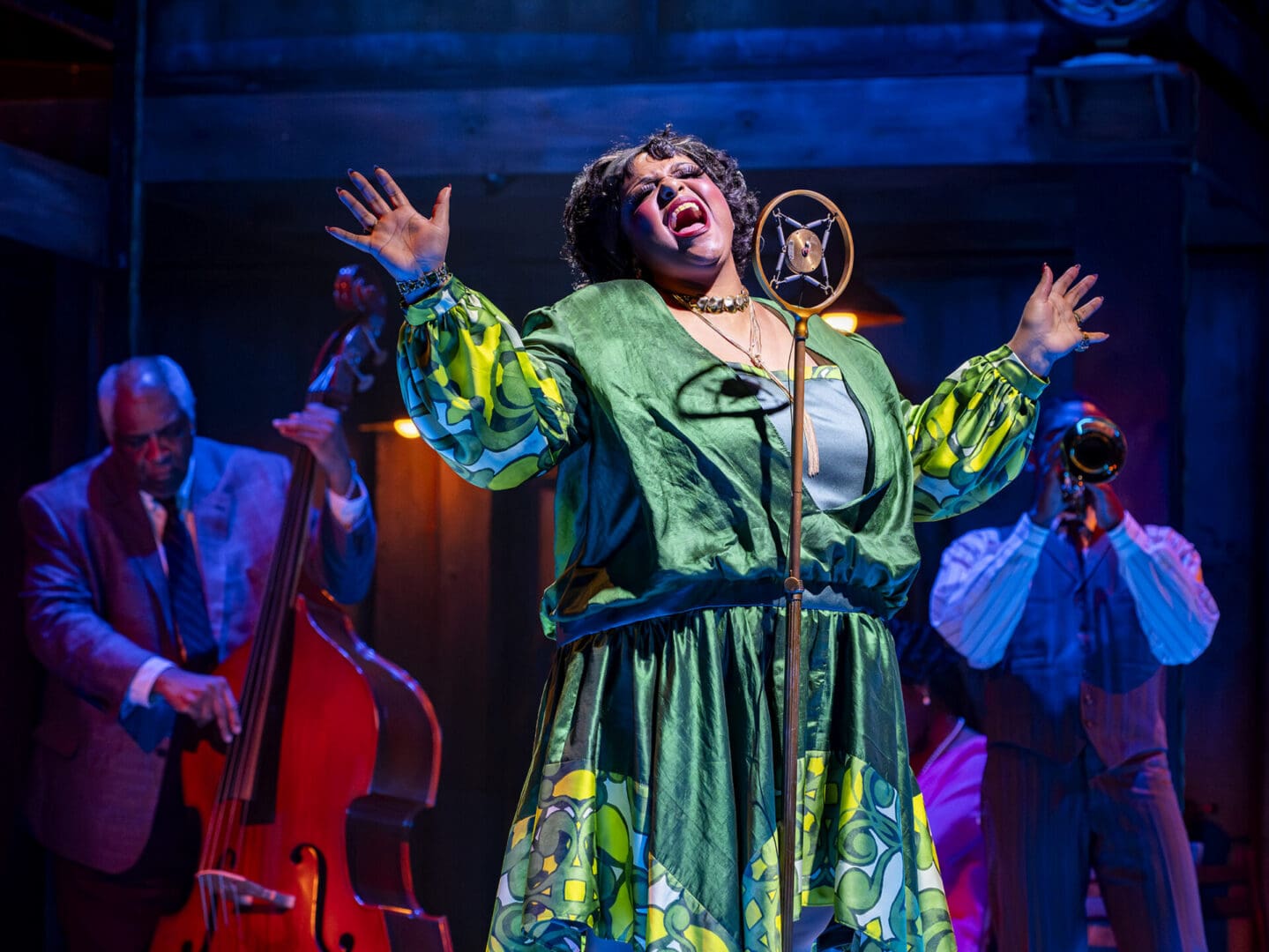
Amber Liekhus
✦ ✦ ✦ ✦ ✦ ✦ ✦ ✦ ✦ ✦
photos by Craig Schwartz
Ma Rainey’s Black Bottom
A Noise Within
3352 E. Foothill Blvd. in Pasadena
Thurs.–Sat. at 7:30; Sat.–Sun. at 2
2 hours and 20 minutes, with intermission
ends on Sept. 20, 2026
tickets start at $41.75, including fees
for tickets, call 626.356.3100 or visit A Noise Within
for more shows, visit Theater in LA
✦ ✦ ✦ ✦ ✦ ✦ ✦ ✦ ✦ ✦

It has been my experience that A Noise Within knows August Wilson and what makes his shows so dynamic. All of the shows they have done so far from the Century Cycle have been well realized. This production of Ma Rainey is definitely one of the best they’ve done to date. It’s the acting that makes it so strong. The performances are, for the most part, riveting! The set with the rehearsal room down stage center puts the drama right in the audiences lap. Not to be missed!