


Areas We Cover
Categories

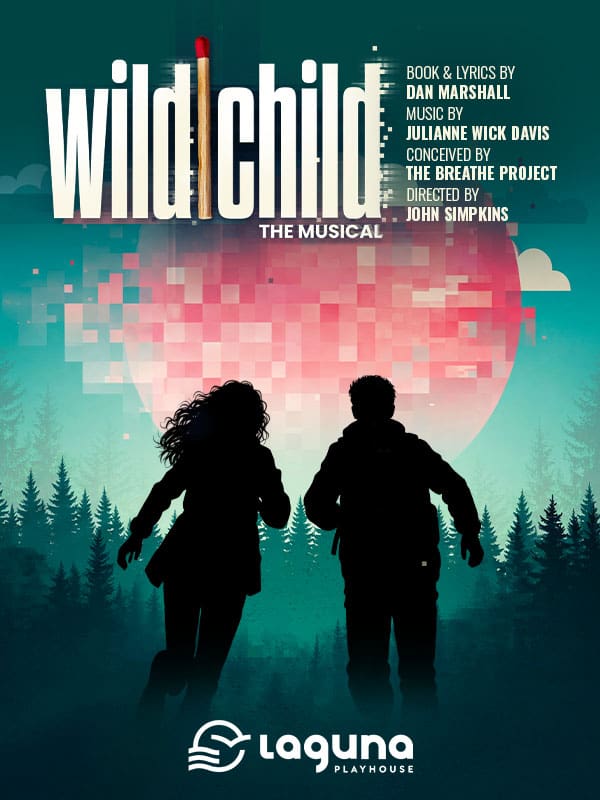
Theater Review: WILD CHILD (Laguna Playhouse)
by Michael M. Landman-Karny | September 17, 2026
in Los Angeles, Theater
ROUGHING IT
This new musical still
has considerable work to do
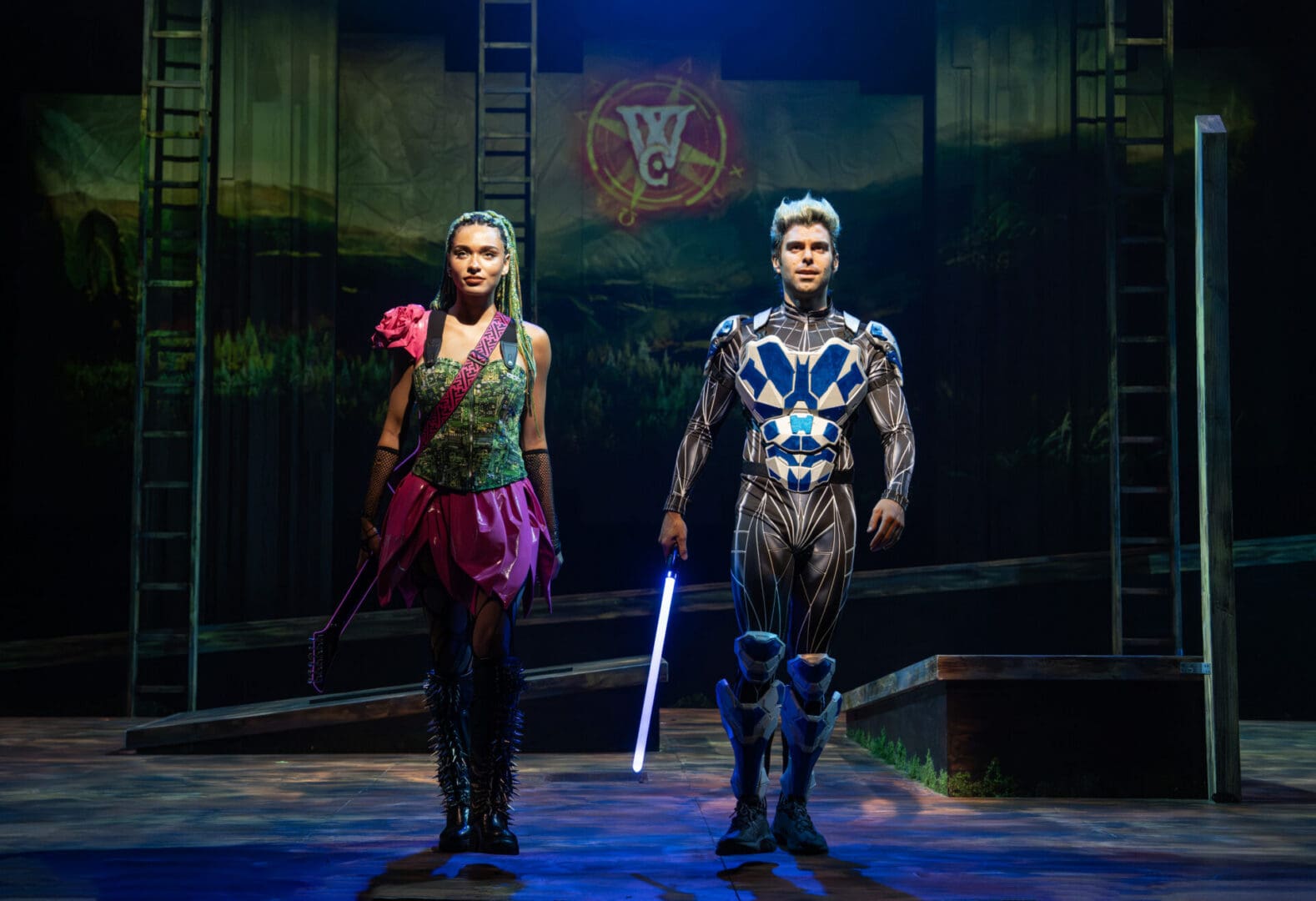
Yana Perrault and Brian Whitehill
Carl Jung called the work individuation: integrating the selves we invent with the self that has to live in the world. Wild Child shows it understands the idea in a single stage direction. Near the end, the teenage protagonist Rina finishes the song she has been unable to write for two acts. Her video game avatar, Roses, watches and leaves. No speech. No farewell number. She simply goes. It is the smartest moment in Dan Marshall (book and lyrics) and Julianne Wick Davis’s (music) new musical, and John Simpkins’s production at Laguna Playhouse trusts it enough to leave it alone.
The rest of Wild Child is still learning that discipline. The production is polished, energetic, and unusually handsome for a musical at the Laguna Playhouse. The cast commits without condescension, but the book and score keep explaining ideas the staging has already made clear. This is a persuasive regional tryout of a musical that has found its subject but not its final shape.
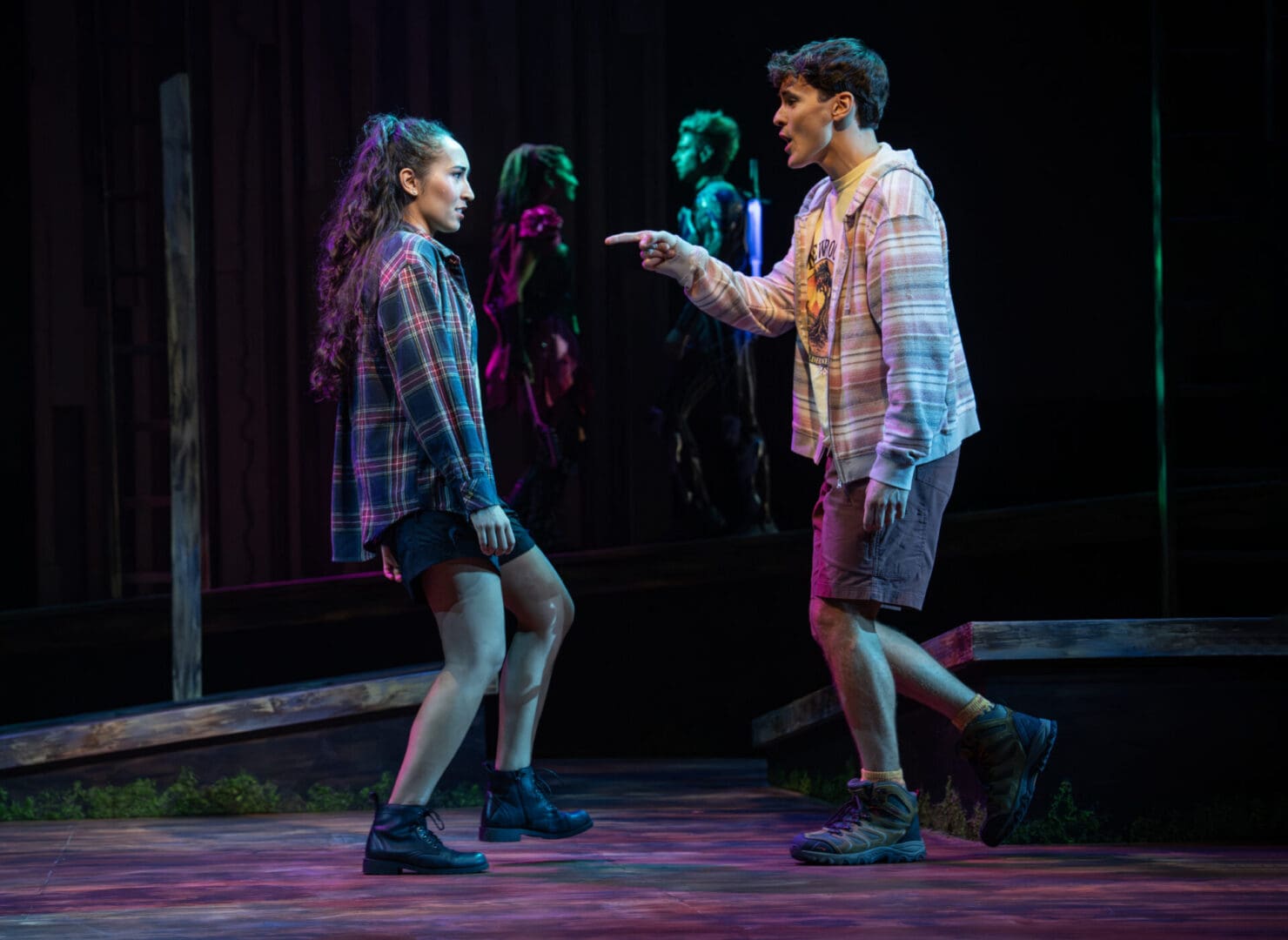
Salima Gangani and Davide Costa
Darin and Rina are Los Angeles teenagers disappearing into the same MMORPG when their parents send them to New Roots, a wilderness therapy program in the Utah backcountry. Darin carries the death of his father and a diagnosis of parasomnia. Rina brings a vape pen, a Stanford-bound sister she cannot imagine surpassing, and an unfinished pop song. Their avatars come too: Kiton, Darin’s superhero alter ego, and Roses, Rina’s Xena-meets-pop-star ideal self. They say what the teenagers cannot and fight what they are not ready to face.
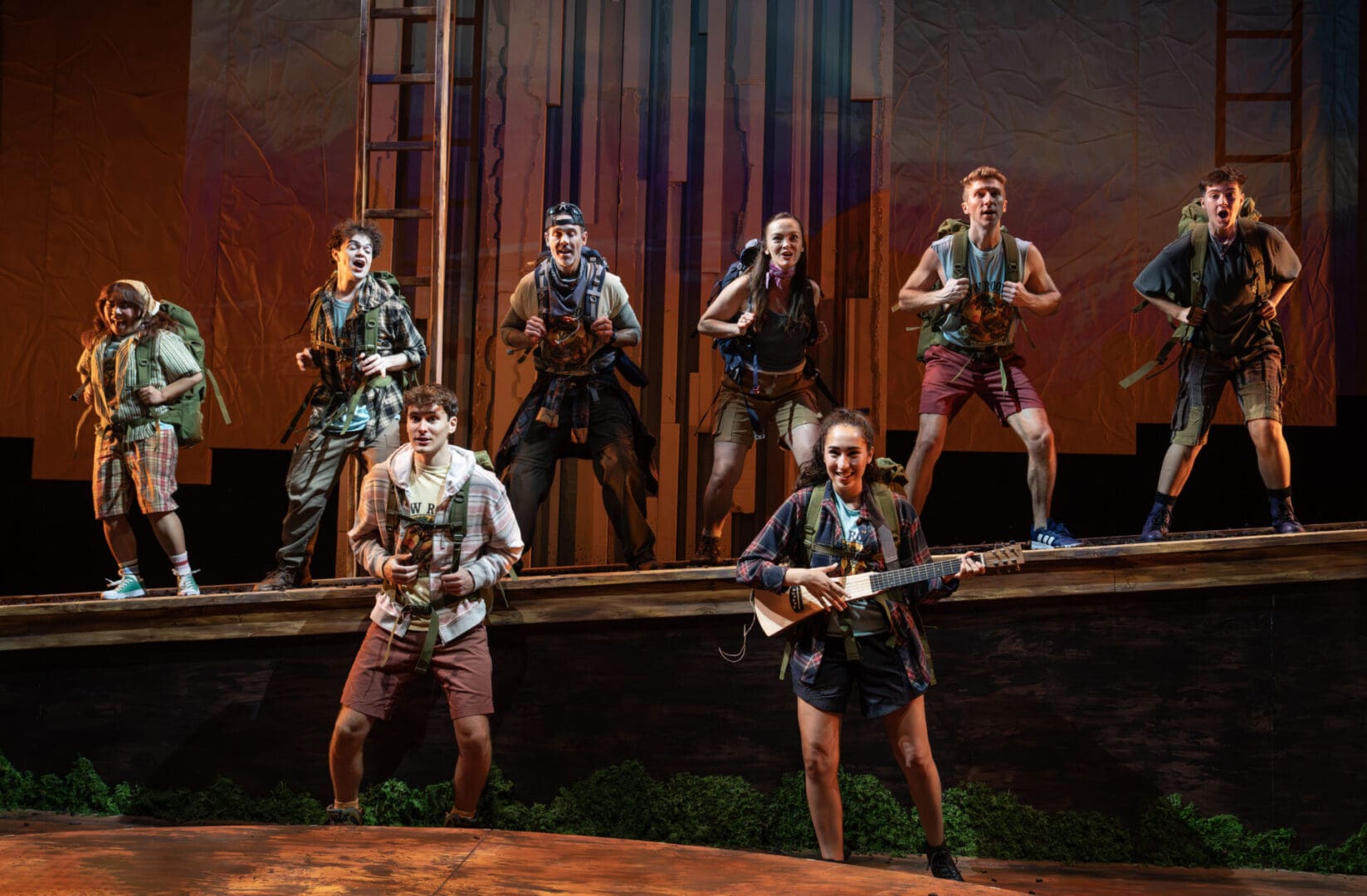
Wild Child
Salima Gangani makes Rina a live wire without an outlet, funny before she is sympathetic. Davide Costa’s Darin has become so practiced at containment that his sleepwalking breakdown feels like the first time his body has told the truth. Yana Perrault gives Roses the vocal authority of someone who already knows how Rina’s song should sound. Brian Whitehill’s Kiton brings enough weight to the fantasy that his absence from much of the second act registers as a loss of force. Jacob “Kov” Zelonky lands Tom’s raunchier lines without needing them to be as sharp as his timing makes them sound. The cast are uniformly Broadway-level triple threats, with Perrault the standout: a beautiful R&B voice and a mesmerizing stage presence.
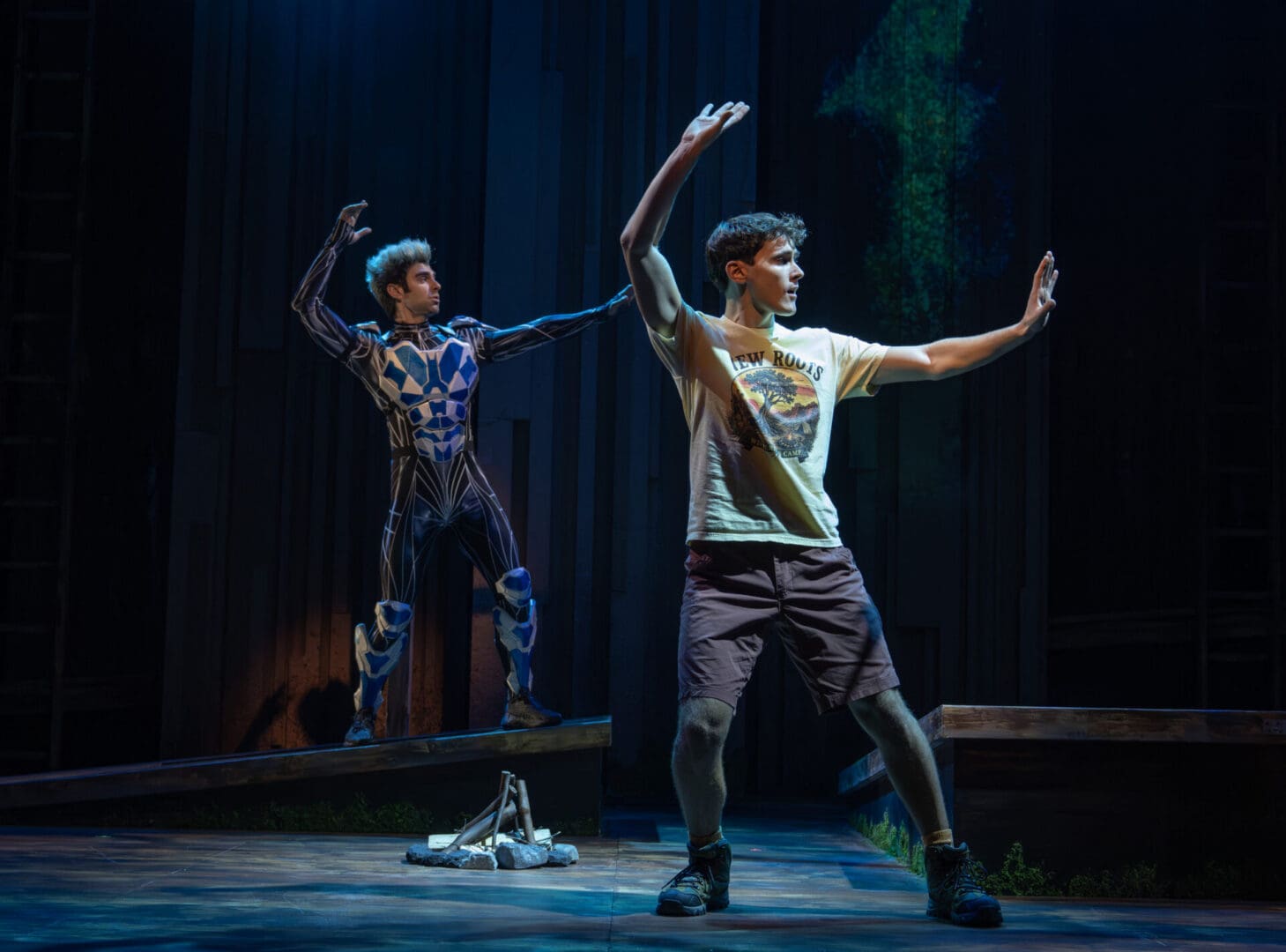
Brian Whitehill and Davide Costa
Director Simpkins is especially good with the physical life Marshall’s book only suggests. Campers wrestle collapsing lean-tos. Ensemble members become video-game mobs in the middle of a line. Headlamps snap on as footlights during the first night in the woods. Fantasy, awkwardness, and the campers’ casual cruelty occupy the same world. The musical never hardens into a pamphlet about the restorative powers of nature.
The design moves easily between the game’s medieval geometry and the dust of the Utah trail, even when the worlds overlap during the second-act rescue.
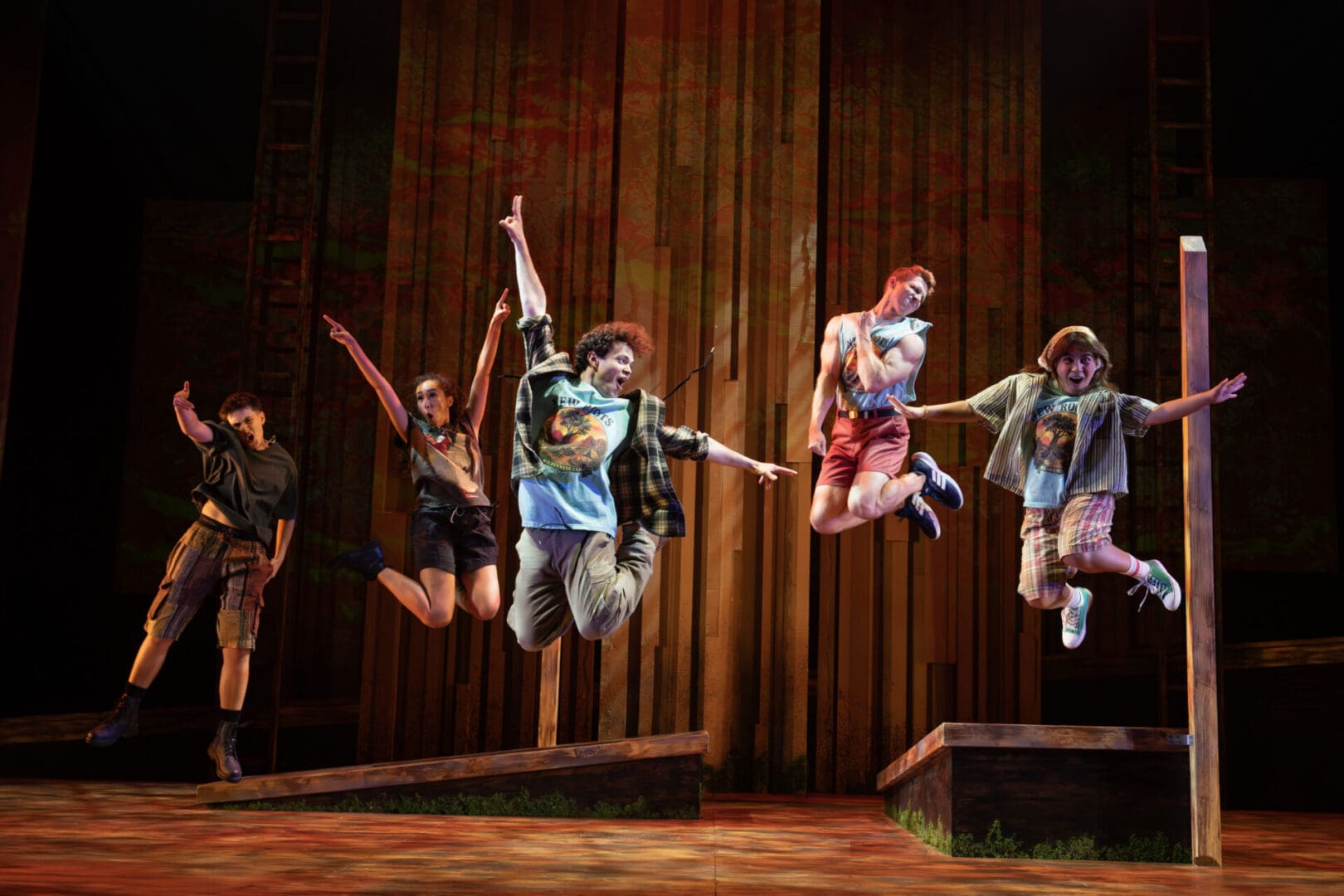
Wild Child
Noah Landis’s band, heard cleanly through Eric Backus’s sound design, gives Wick Davis’s score every advantage. The songs grow out of dialogue, and company numbers such as “Any Questions” and “OMFG” let the ensemble move as a unit. What the songs rarely do is remain after they end.
Most contemporary book-musical pop in the style of Pasek and Paul or Joe Iconis tends to be very generic (with Dear Evan Hansen being a notable exception). The tunes here are polished; the rhymes behave, but nothing followed me to the parking lot. “So Sirius,” a duet for Lynds and Phoenix built around a binary star, is the exception because its language belongs to them. The prospective anthem, “Meet Me Outside,” could belong to almost any musical about young people finding their voices. The intended under-30 audience may not mind. The score offers immediate access; it rarely offers discovery.
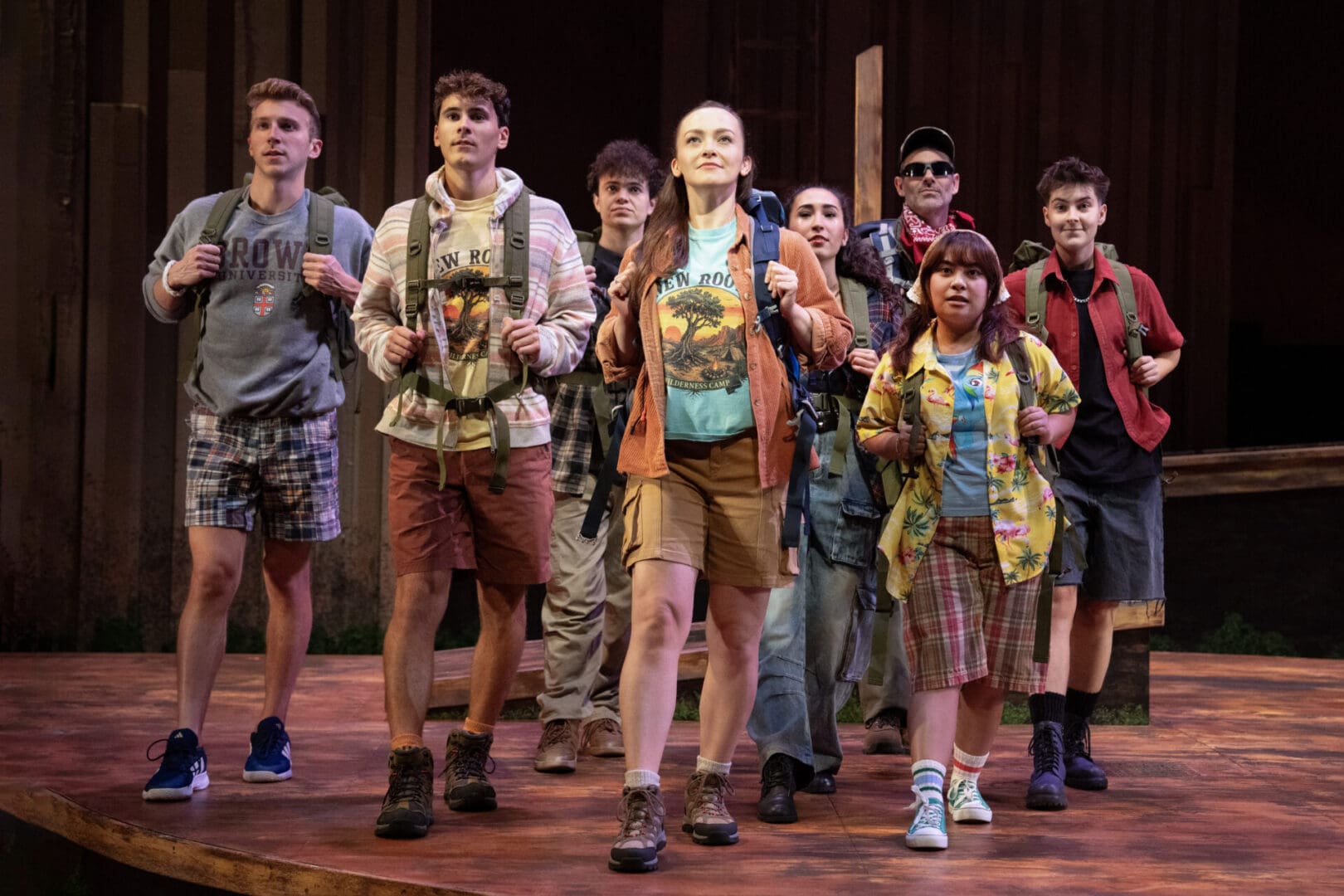
Wild Child
Marshall’s book has the same division. It is assured when it attends to the particular damage these teenagers carry and generic when it reaches for uplift. Darin’s first-act nightmare establishes that his father overdosed after Darin failed to get through a locked door in time. When Fitz steals the group’s medication and runs into a storm, Darin follows as himself rather than sending Kiton. His request for the pills completes the arc in six words. Nobody sings the meaning afterward.
The secondary campers are not afforded that clarity. Phoenix, Lynds, and Tom each receive a letter-home solo and a closing-campfire account of what has changed. Their growth occurs between scenes, then arrives as testimony. Tom and Lynds even end their letters with nearly the same couplet, without enough preparation to make the repetition feel intentional. Equal distribution is not equal development.
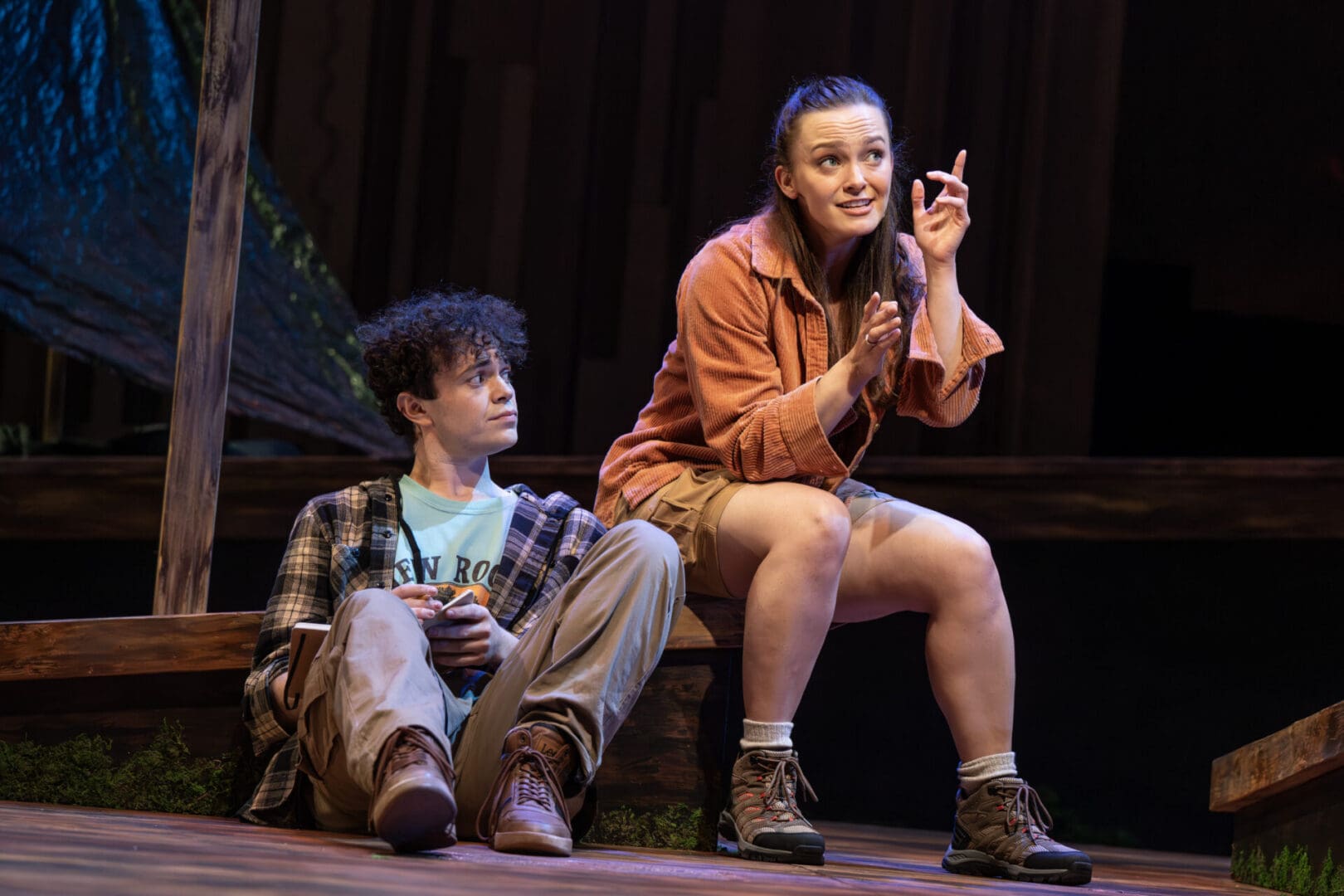
Davide Costa and Jennifer Noble
The parents fare worse. Rina’s mother and Darin’s mother participate in the opening extraction and then survive mostly as letters. Reconciliation takes place inside Rina as she reads from a page, rather than between two people forced to face one another. Whitney, one of the counselors, acknowledges that New Roots’ extraction methods need reform. The musical raises the ethics of forcibly removing adolescents to wilderness therapy, then abandons the question. That is too large a crack to paper over with a campfire song.
The avatars work because they make private defenses visible. Once those defenses fall, the musical should have the courage to dismiss them. Roses leaves because Rina can finally finish the song herself. Wild Child is not there yet. This production has supplied skill, scale, and theatrical life. The piece now needs integration: to release what helped it find its way and trust the human beings underneath.
✦ ✦ ✦ ✦ ✦ ✦ ✦ ✦ ✦ ✦
photos by Joan Marcus
Wild Child
Laguna Playhouse
Laguna Playhouse, 606 Laguna Canyon Road in Laguna Beach
ends on Oct. 4, 2026
2 hours
for tickets, visit Laguna Playhouse
for more shows, visit Theatre in LA
✦ ✦ ✦ ✦ ✦ ✦ ✦ ✦ ✦ ✦
