


Areas We Cover
Categories

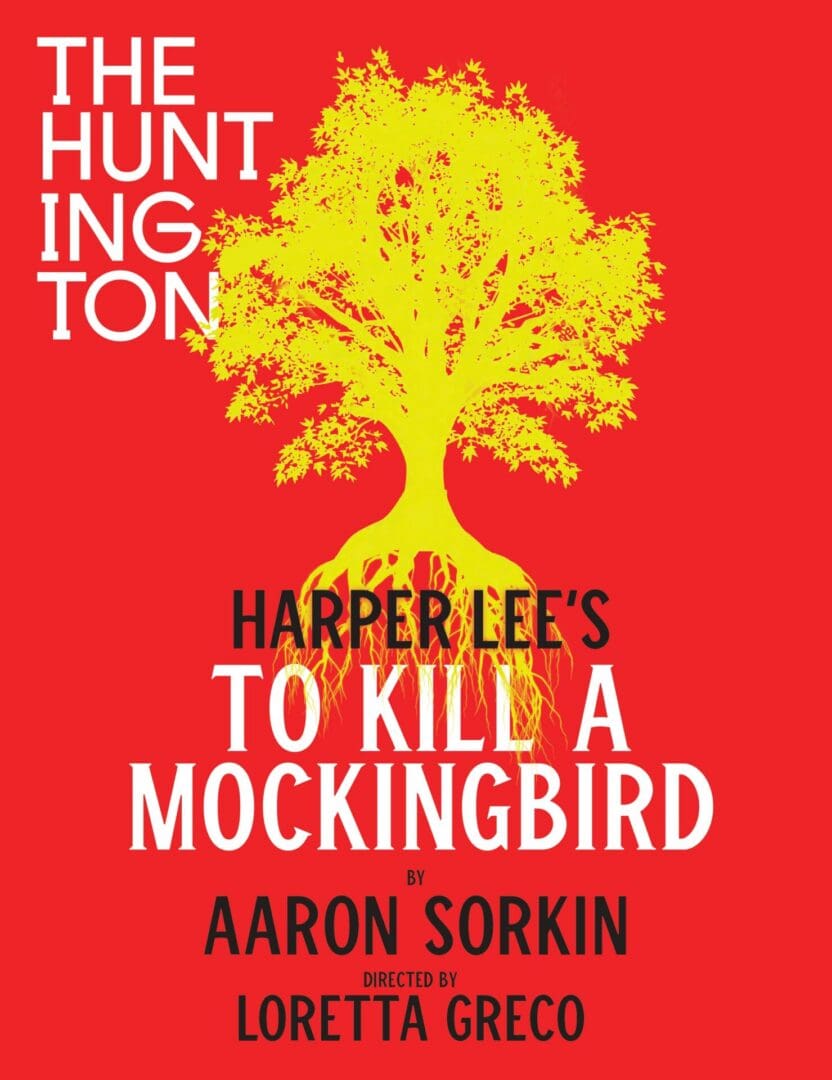
Theater Review: TO KILL A MOCKINGBIRD (The Huntington / Boston)
by Carmen Barsomian-Dietrich | October 16, 2026
in Boston, Theater
THE COURT OF PUBLIC PREJUDICE
Aaron Sorkin’s adaptation benefits from
thoughtful acting and restrained staging
More than six decades after Harper Lee published To Kill a Mockingbird, its questions about racial injustice, moral responsibility, and respect remain painfully relevant. In Aaron Sorkin’s stage adaptation, director Loretta Greco brings those questions into sharp focus at The Huntington, with strong performances that illuminate the tensions between Atticus Finch’s ideals and the prejudices of his Alabama community.
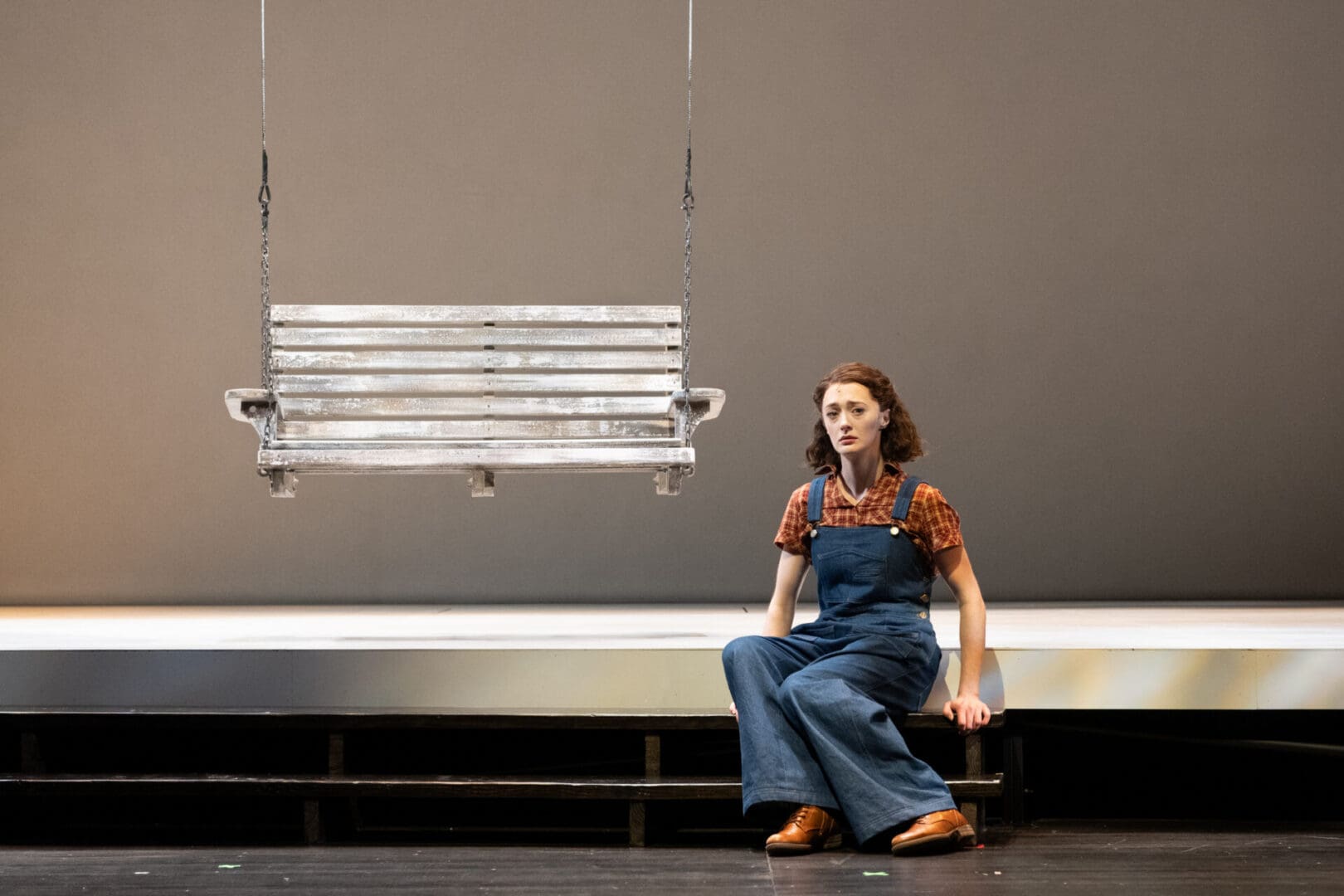
Karen Killeen
Sorkin expands the narration beyond Jean Louise “Scout” Finch (Karen Killeen) to include her older brother, Jeremy “Jem” Finch (Benjamin Izaak), and their childhood friend, Charles Baker “Dill” Harris (Andrew Stevens Purdy). Although adults portray these young characters, all three actors, especially Purdy, convincingly capture their youthful exuberance. Their blend of juvenile sass, humor, poignant observations, and pointed questions, often delivered directly to the audience, invites consideration on the consequences of moral decisions through both childhood innocence and adult reflection.
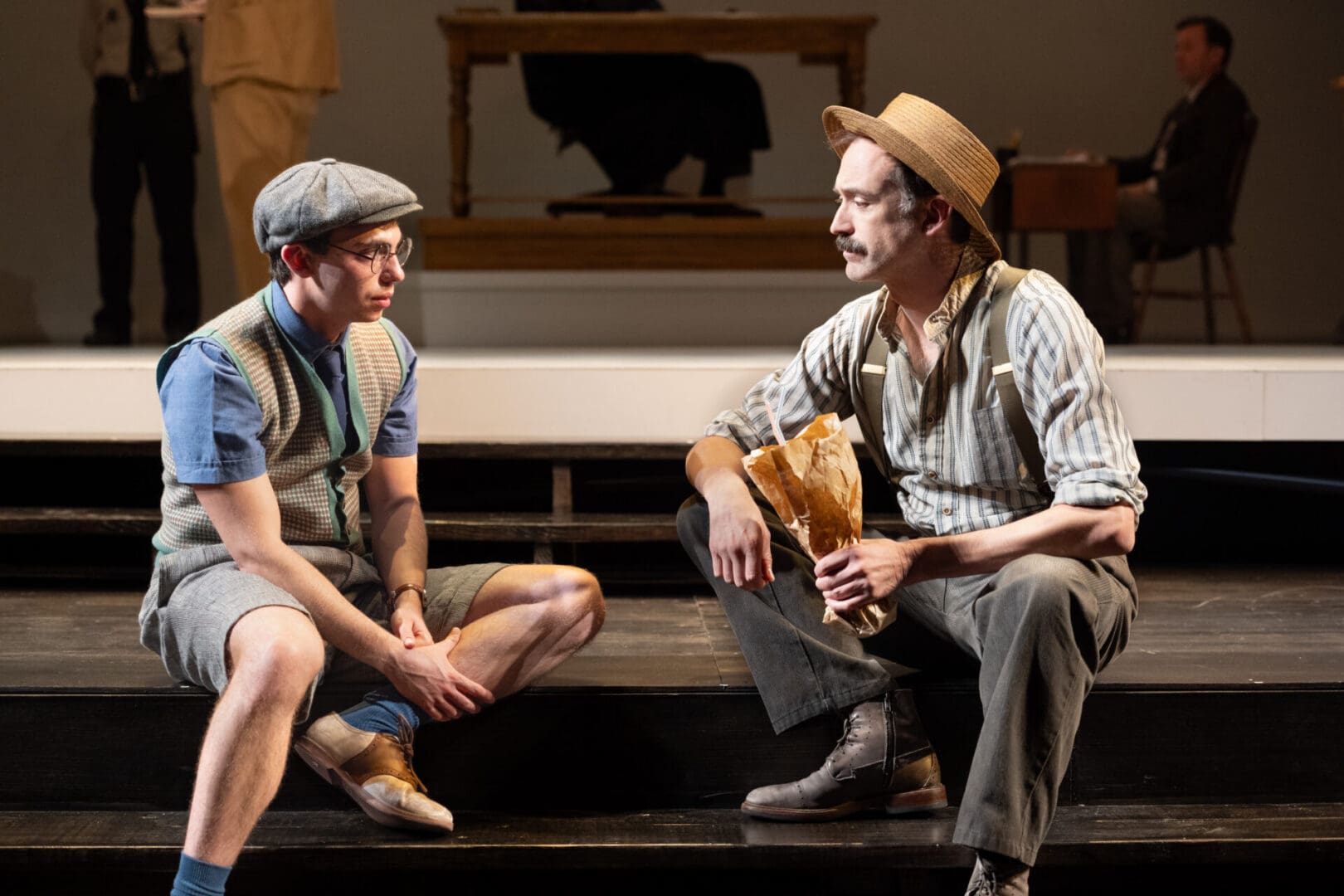
Andrew Stevens Purdy and Kyle Cameron
Lawyer Atticus Finch (Karl Kenzler) expects his children to treat everyone with respect, frequently encouraging them to “climb into [someone]’s skin and walk around in it” as a way of understanding other people’s perspectives. From Mr. Cunningham (Jesse Hinson), a grateful client who cannot pay for Atticus’s services in cash, to the curmudgeonly and blatantly racist Mrs. Dubose (Aimee Doherty), Atticus demands that his children treat everyone with dignity and grace, without exception. This accepting attitude places the question of who deserves our respect at the heart of the play.
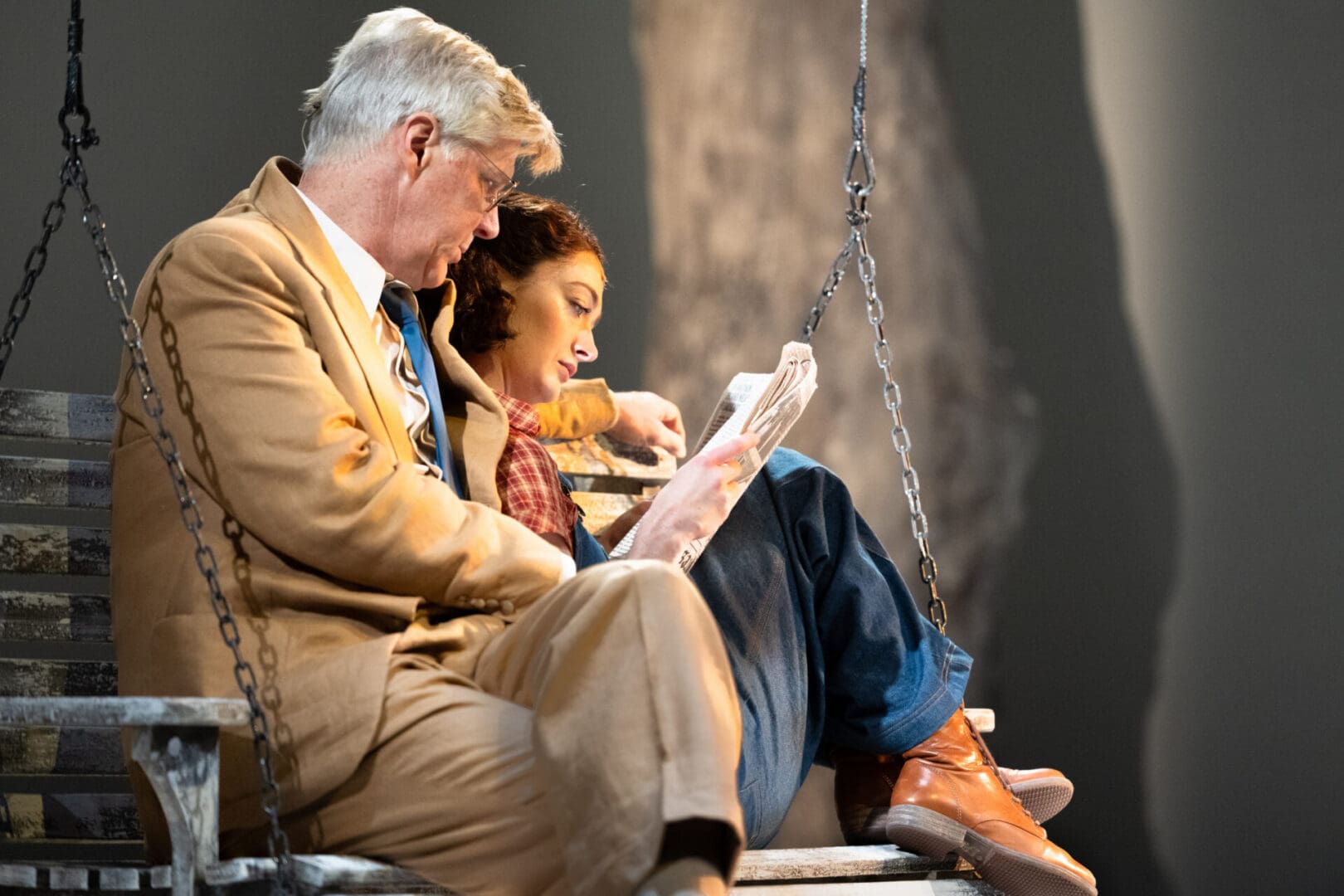
Karl Kenzler and Karen Killeen
Kenzler blends the exasperation and love of a single father with the idealism of a weary crusader, making it easy to understand why his children admire him. His scenes with Calpurnia (Patrice Jean-Baptiste), the family’s black cook, are witty and tender, revealing their closeness while giving Calpurnia a stronger voice in discussions of the neighborhood’s racial tensions. Yet Atticus’s principled stance becomes increasingly controversial as he faces threats from Bob Ewell (Liam Craig) and other Ku Klux Klan members because of his defense of Tom Robinson (Rafael Jordan), a black client.
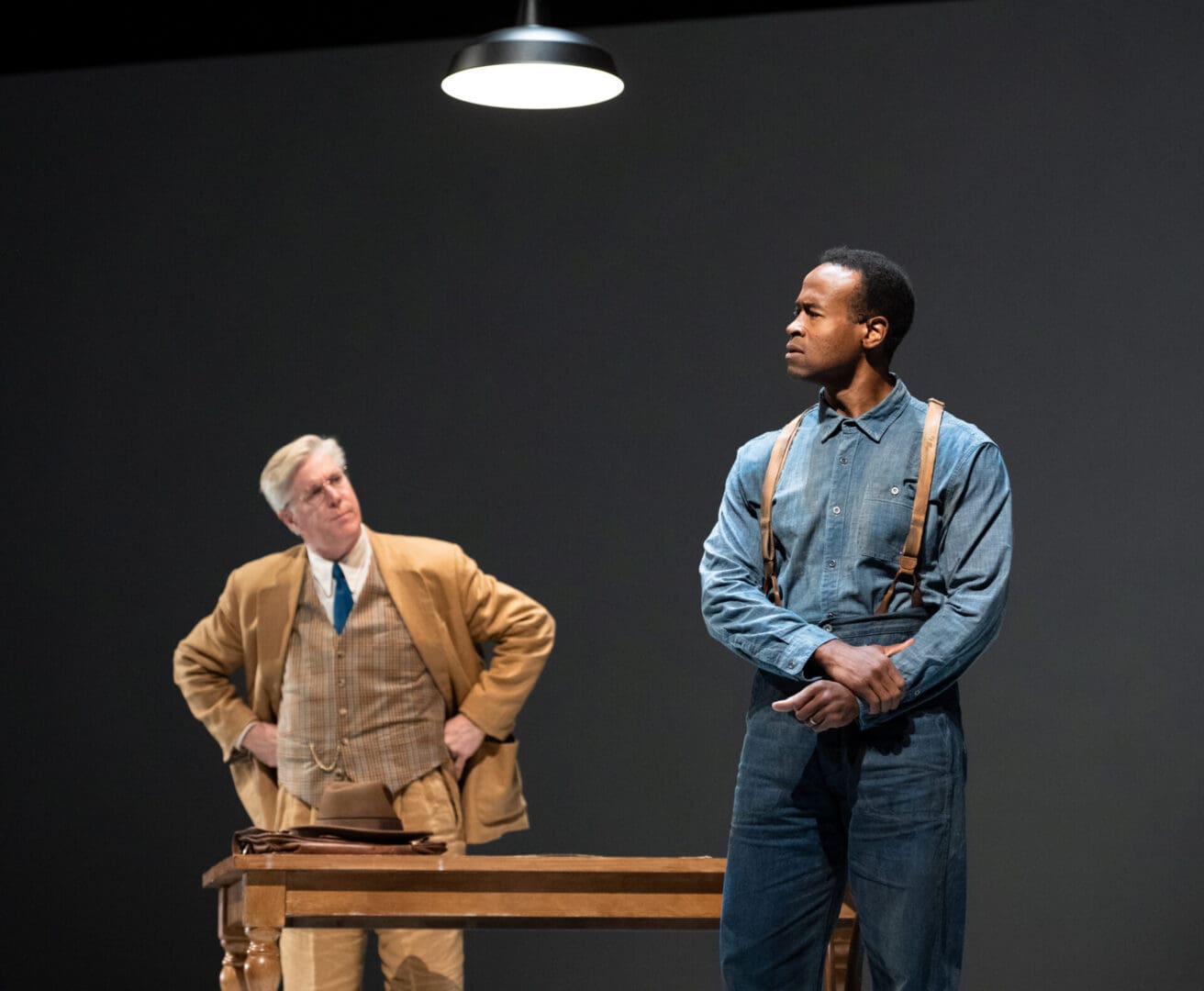
Karl Kenzler and Rafael Jordan
Robinson stands trial for allegedly raping Mayella Ewell (Jackie Scholl), a 19-year-old white woman. As the trial exposes the community’s racial prejudices, Jem and Scout discover that their neighbors are willing to overlook a miscarriage of justice to preserve the existing social hierarchy. Scout comes to recognize that some people will not even try to do the right thing.

To Kill a Mockingbird
Throughout the courtroom scenes, Jordan’s stoic Robinson remains courteous even as his desperation grows over the possibility of being sent to the electric chair and the nightmares his children might have. Robinson’s admission that he “felt sorry for” Mayella becomes especially damaging in a courtroom where a black man’s pity for a white woman is treated as an affront to the social order. Scholl’s Mayella is haunting, evolving from a terrified girl struggling to care for her seven siblings under an abusive father into a bitter, impoverished woman who clings to the only protection available to her: her white privilege.
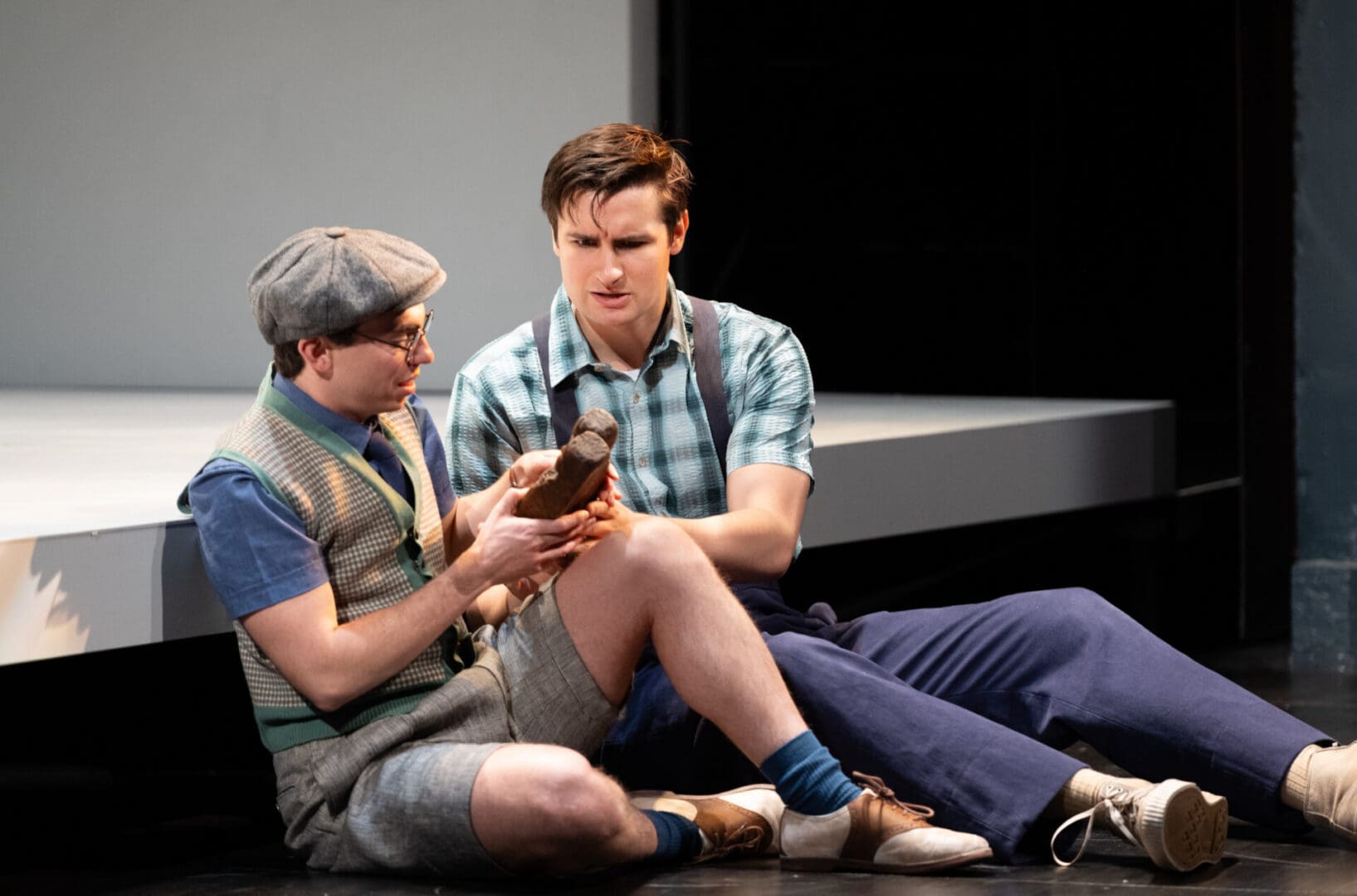
Andrew Stevens Purdy and Benjamin Izaak
Andrew Boyce’s minimal set shifts easily between Atticus’s home, suggested by a screen door and porch swing, and the courtroom, furnished with hanging lights, tables, and a central witness chair. A large tree anchors the stage. Onstage musician Ashley Frith provides haunting vocals and violin accompaniment, easing transitions between scenes and offering moments of respite as the tension mounts.
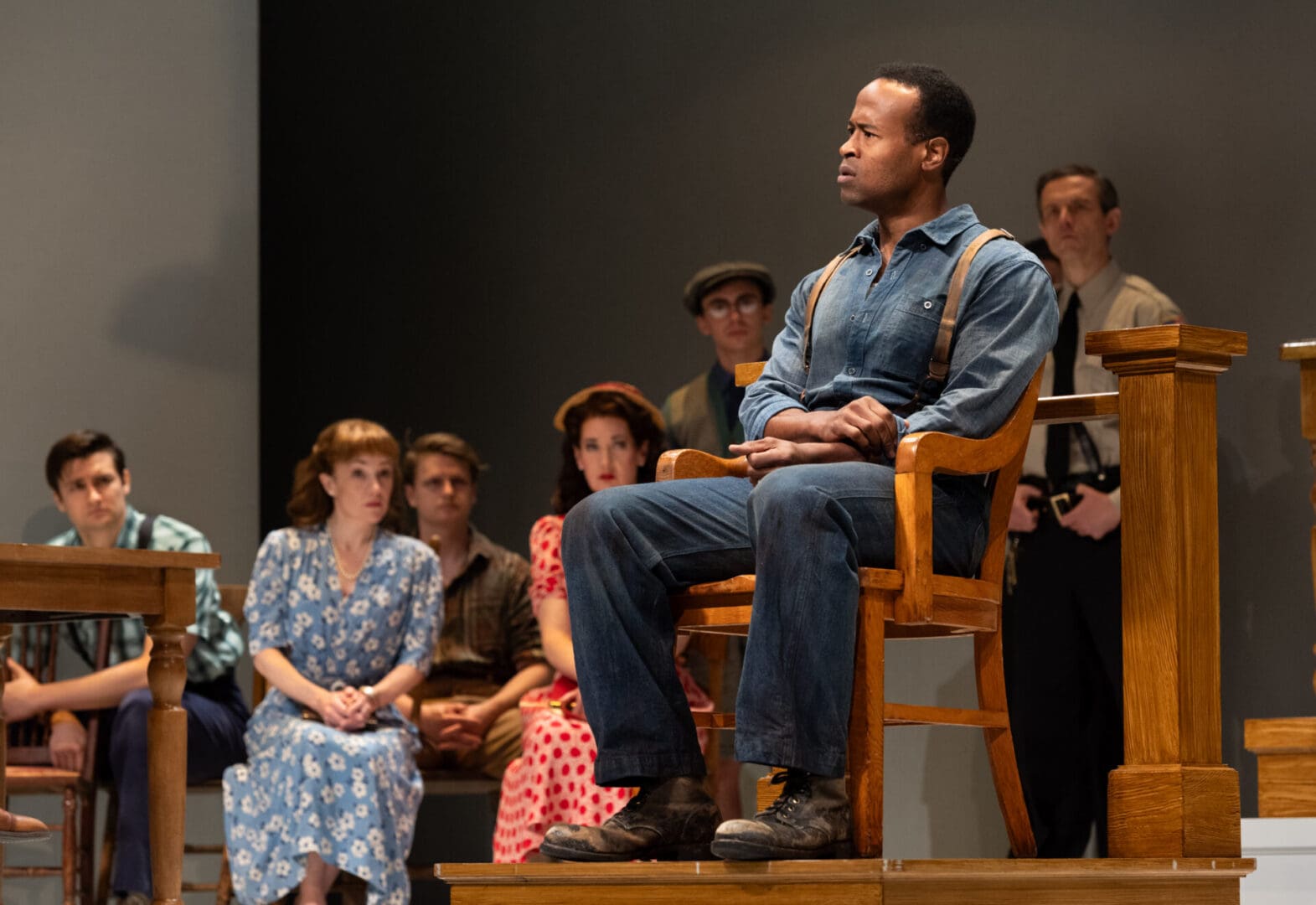
Rafael Jordan
With its strong performances and understated staging, The Huntington’s To Kill a Mockingbird makes a persuasive case for revisiting this familiar story, particularly its uncomfortable questions about the limits of tolerance and the consequences of prejudice.
✦ ✦ ✦ ✦ ✦ ✦ ✦ ✦ ✦ ✦
photos by Liza Voll
To Kill a Mockingbird
The Huntington
Huntington Theatre, 264 Huntington Ave. in Boston
Tue.–Thu. at 7; Fri.–Sat. at 7:30; Sun. at 7; select Wed., Sat. & Sun. at 2 (schedule varies)
ends on Nov. 8, 2026
2 hours and 45 minutes, including a 15-minute intermission
for tickets (from $29), call 617.266.0800 or visit The Huntington
for more shows, visit Theatre in Boston
✦ ✦ ✦ ✦ ✦ ✦ ✦ ✦ ✦ ✦
