


Areas We Cover
Categories

Theater Review: THE OUTSIDERS (National Tour / Segerstrom Center for the Arts / Costa Mesa)

by Michael M. Landman-Karny | October 22, 2026
in Los Angeles, Theater, Tours
NOTHING GOLD CAN STAY
Danya Taymor’s electrifying staging and committed
young cast bring S. E. Hinton’s teenage world to life,
even when the score fails to match its emotional force
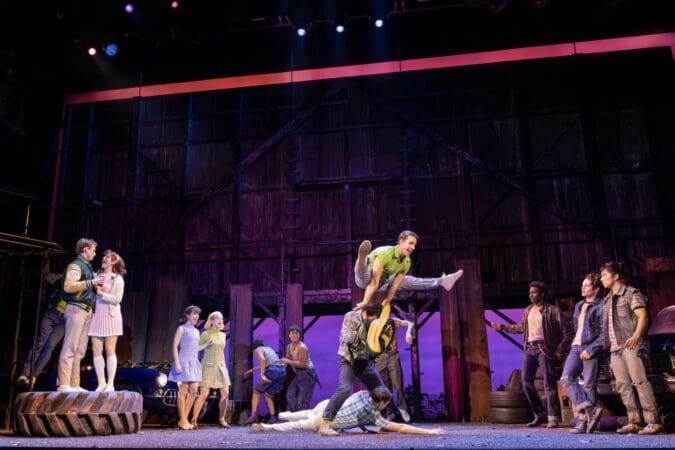
The Outsiders North American Tour Company
Actors in their twenties play the boys in The Outsiders, and they commit to every certainty of being 14. A dirty look from a rich kid can start a war. Loyalty is worth dying for. Danya Taymor’s Tony-winning production, now at Segerstrom Hall on its national tour, takes all of it as seriously as S. E. Hinton did when she wrote the novel at 16. The book has never pretended to be older than its author. Its parents are dead or missing. Trouble arrives with the regularity of a school bell. Taymor trusts those extravagant emotions, and her company plays them without embarrassment.
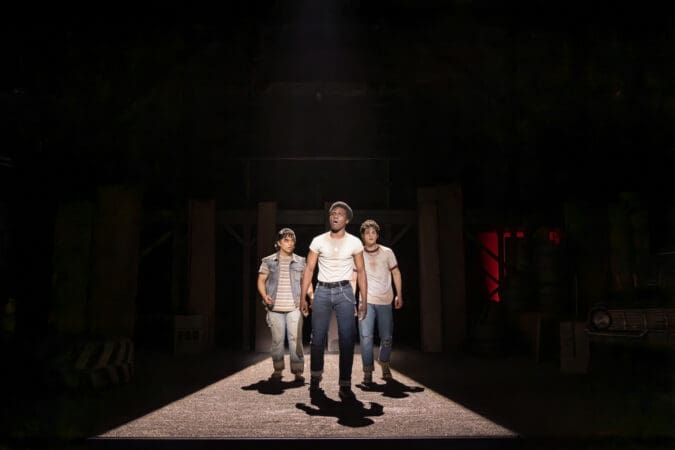
Bonale Fambrini, Tyler Jordan Wesley, and Nolan White
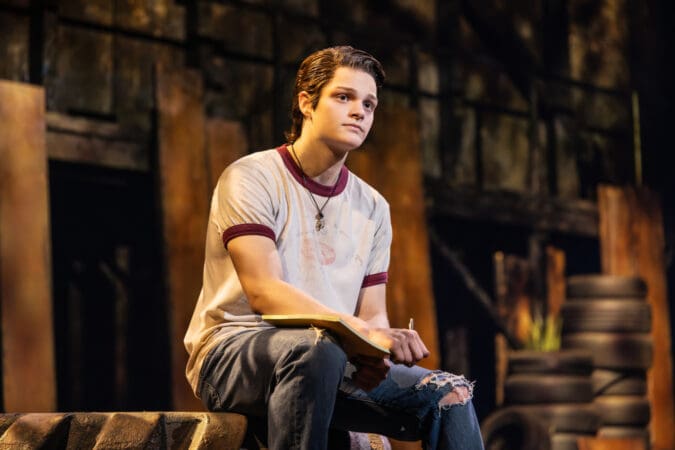
Nolan White
Ponyboy Curtis (Nolan White) is 14, a Greaser growing up on the wrong side of Tulsa in 1967, and something of an oddity among his friends because he reads. His brother Sodapop (Corbin Drew Ross) has left school to pump gas. Darrel (Travis Roy Rogers), the eldest, has given up college to keep the family together. On the west side of town live the Socs, wealthy teenagers who beat up Greasers for recreation. When Ponyboy and his friend Johnny Cade (Bonale Fambrini) meet Cherry Valance (Emma Hearn), a Soc girl, at the drive-in, they stumble into a feud already looking for an excuse to turn murderous. Before the night is over, a boy is dead beside a fountain, and Ponyboy and Johnny are on the run.
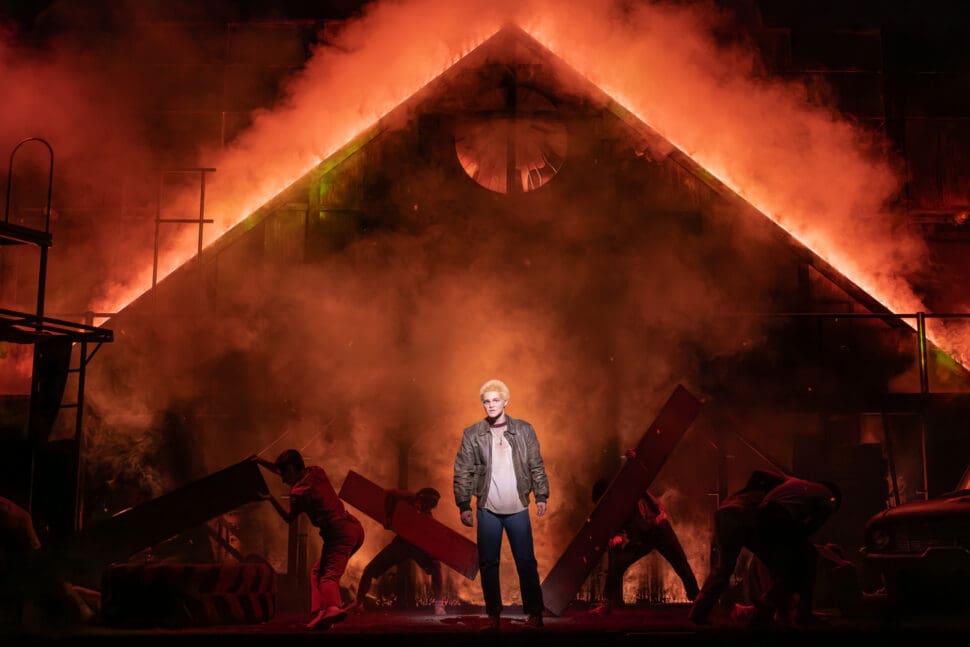
Nolan White and company
Taymor stages the show as bodies in motion, and it looks best when nobody is standing still. The set, designed by AMP featuring Tatiana Kahvegian, is mostly unfinished lumber and scaffolding, with nothing there to admire for its own sake. Brian MacDevitt’s lighting and Hana S. Kim’s projections move the action from the drive-in to an abandoned church, then open the stage onto a night sky streaked with falling stars.
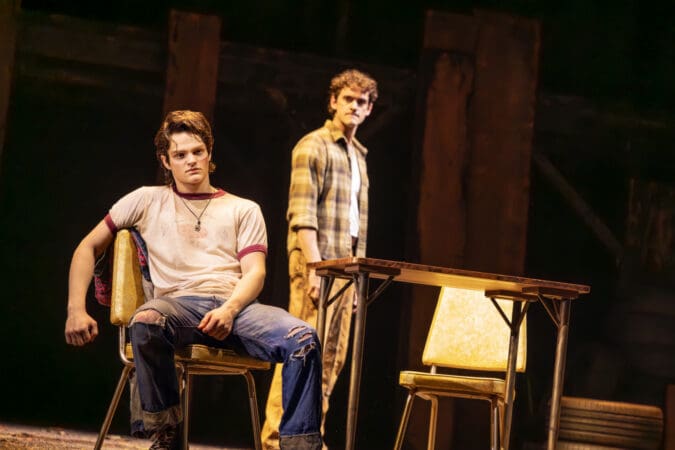
Nolan White and Travis Roy Rogers
Rick and Jeff Kuperman’s choreography gives the production its most exciting passages. Their climactic rumble mixes ballet, hip-hop, and tumbling into a street fight where bodies slam into the floor with the conviction of boys who believe one fight can settle everything. Taylor Bense’s sound design is shamelessly manipulative. A skull hitting a car hood makes a terrible, flat crack. When a boy is forced underwater in the fountain, we hear his muffled panic from beneath the surface. A punch brings on a piercing whine that swallows the orchestra for a moment.
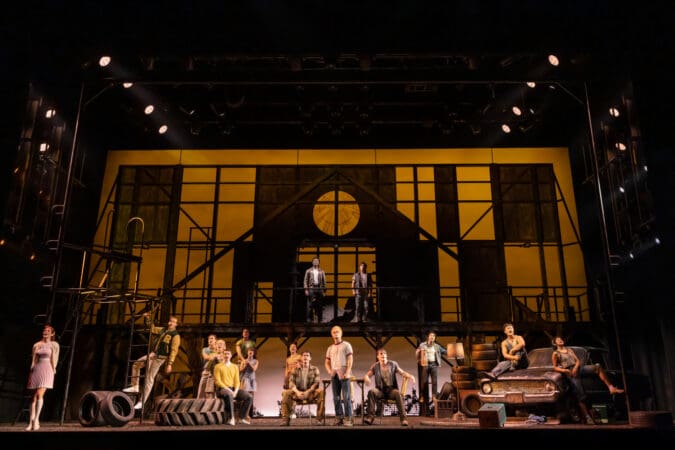
The Company
The score is weaker. Jamestown Revival (Jonathan Clay and Zach Chance) wrote it with Justin Levine, who also wrote the book with Adam Rapp. The sound is Americana, acoustic guitars and close harmonies under a steady country-rock melancholy, and much of it could belong on the same pleasant album. The songs circle an emotion instead of developing it. Characters sing at length about feelings Hinton dispatched in a few lines, and the numbers stall the story they are meant to move. “Great Expectations,” Ponyboy’s song about another orphan who longs for a different life, is the exception. It builds and changes direction, and it gives White something substantial to play.
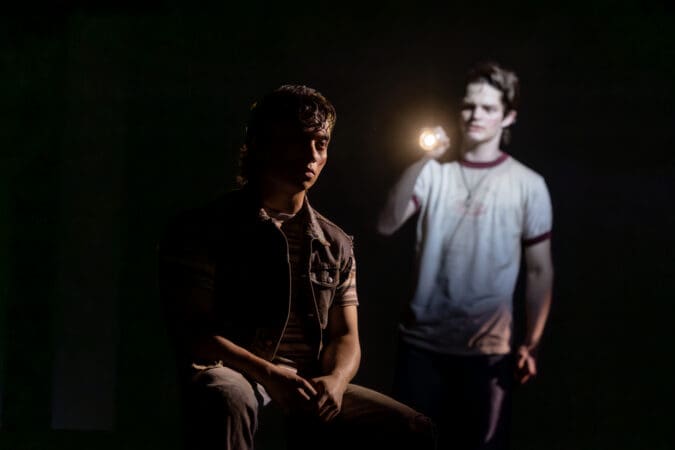
Bonale Fambrini and Nolan White
White’s Ponyboy is watchful and quick to take offense, a boy just beginning to suspect that his intelligence could get him out of Tulsa. Fambrini’s Johnny is quieter, almost painfully so. He speaks in a near whisper and carries himself as though a blow could come from any direction. He brings the same wariness to the poetry as to the knife.
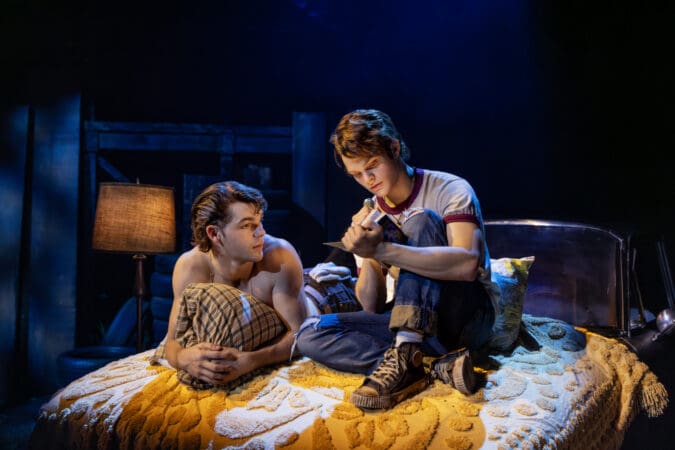
Corbin Drew Ross and Nolan White
Ross has the least rewarding role of the three Curtis brothers, but his Sodapop has an easy decency that explains why the others lean on him. Rogers plays Darrel as a young man worn down by responsibility he took on too early, and his anger at Ponyboy reads as fear. Together the brothers suggest a household held together by exhaustion and a good deal of shouting.
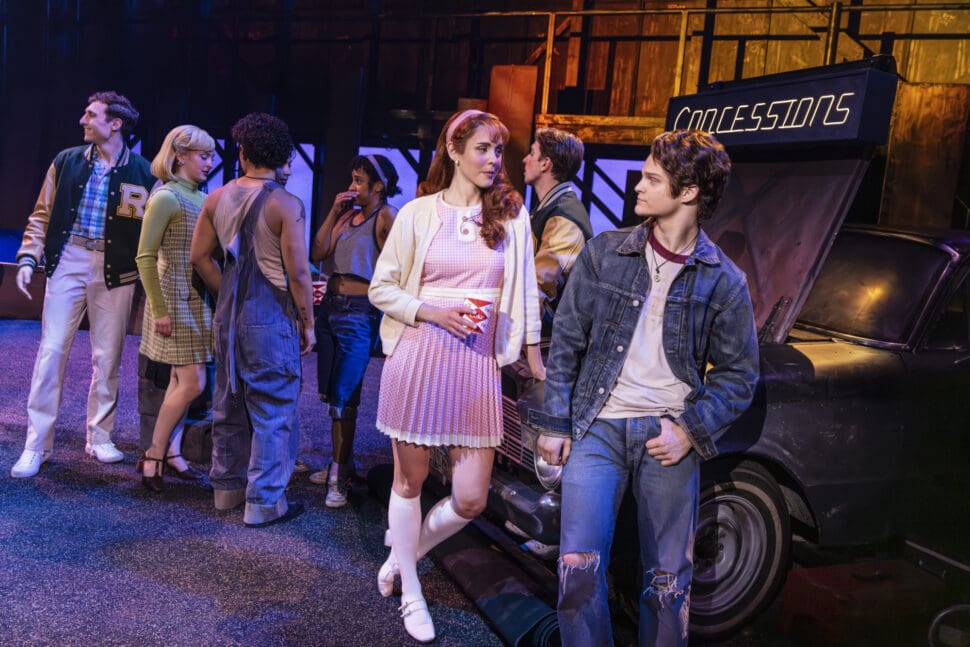
Emma Hearn and Nolan White
Hearn sings Cherry with a warm, clear tone. She plays the uncertainty of a girl caught between the Socs she grew up with and the boys she has begun to understand, and she does not soften the limits of Cherry’s sympathy.
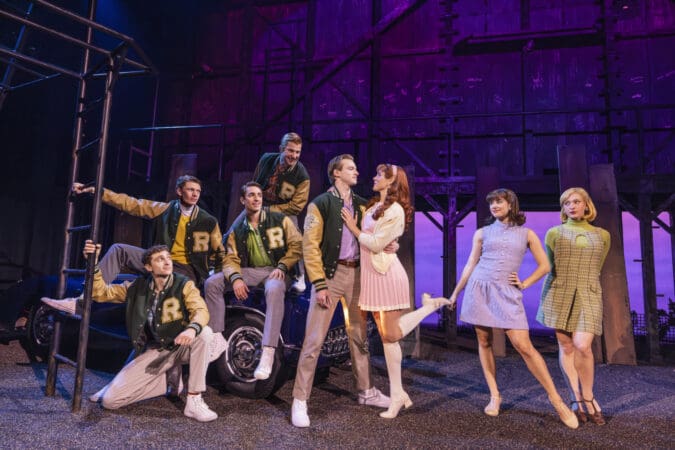
The Company
The plot’s weaknesses come from the novel. Hinton’s Socs never become more than privileged bullies, and the story depends on coincidences that a less earnest book could not survive. The Greasers get gentler treatment. Nearly all are decent under the rough manners, and the ones who are not soon reveal a wound that explains them. Taymor leaves these imbalances alone. They belong to the novel’s teenage view of the world, where the people we love are complicated and the people who hurt us seldom get the same consideration.
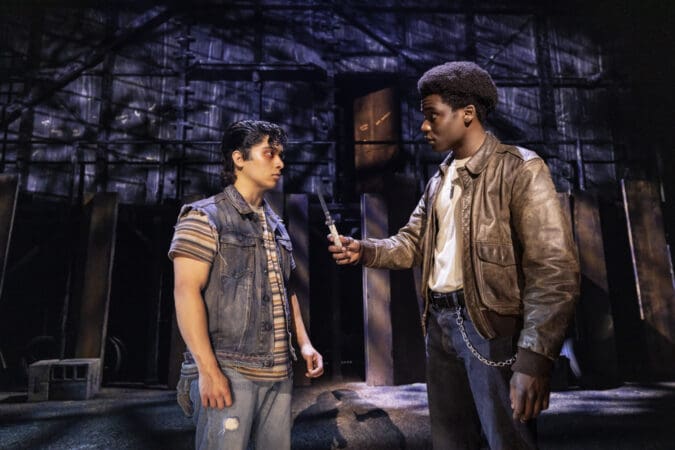
Bonale Fambrini and Tyler Jordan Wesley
During their days in hiding, Ponyboy and Johnny share Robert Frost’s “Nothing Gold Can Stay,” a short poem about the first green of spring and how fast it fades. Johnny holds on to it and later urges Ponyboy to “stay gold.” Fambrini says the phrase plainly, with none of the reverence it has collected since 1967. Johnny has little education and no reason to expect a happy future, but he has understood something in those eight lines that he wants his friend to keep.
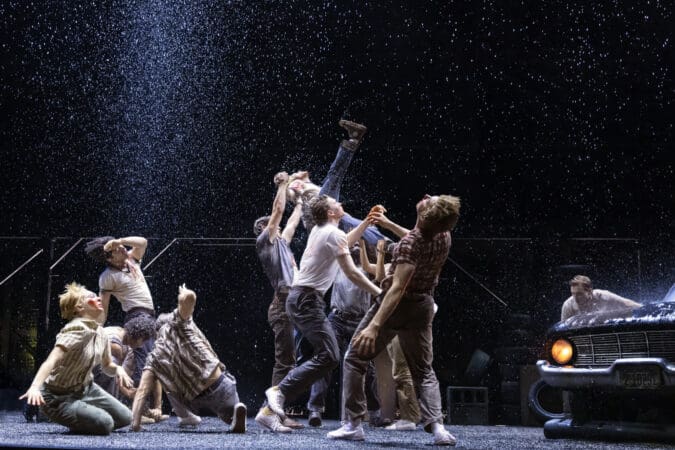
The Company
The show ends where the book began, with Ponyboy sitting down to write his English theme. We hear the novel’s first sentence, and the circle closes. Hinton was hardly older than Ponyboy when she gave these boys their brief, violent lives. Frost was wrong about one thing. Gold can stay if somebody young enough writes it down before it disappears.
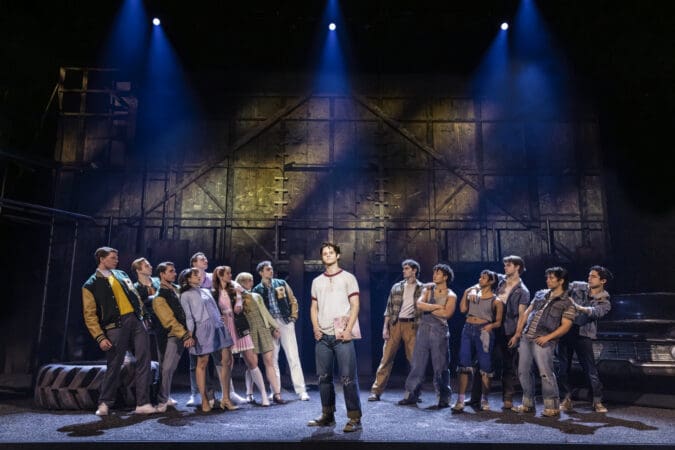
The Company
✦ ✦ ✦ ✦ ✦ ✦ ✦ ✦ ✦ ✦
photos by Matthew Murphy
The Outsiders
national tour
Segerstrom Hall, 600 Town Center Drive in Costa Mesa
for tickets, call 714.556.2787 or visit Segerstrom
ends on November 1, 2026 in Costa Mesa
tour continues; for dates and cities, visit Outsiders
for more shows, visit Theatre in LA
✦ ✦ ✦ ✦ ✦ ✦ ✦ ✦ ✦ ✦
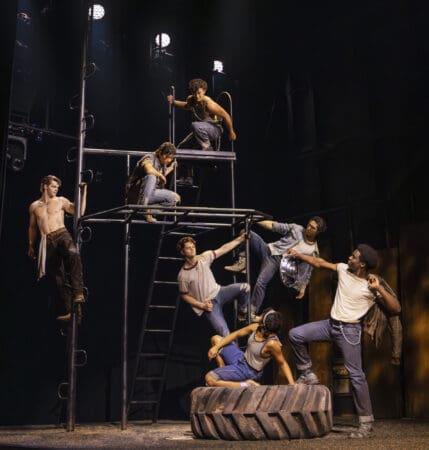
The Company
