


Areas We Cover
Categories

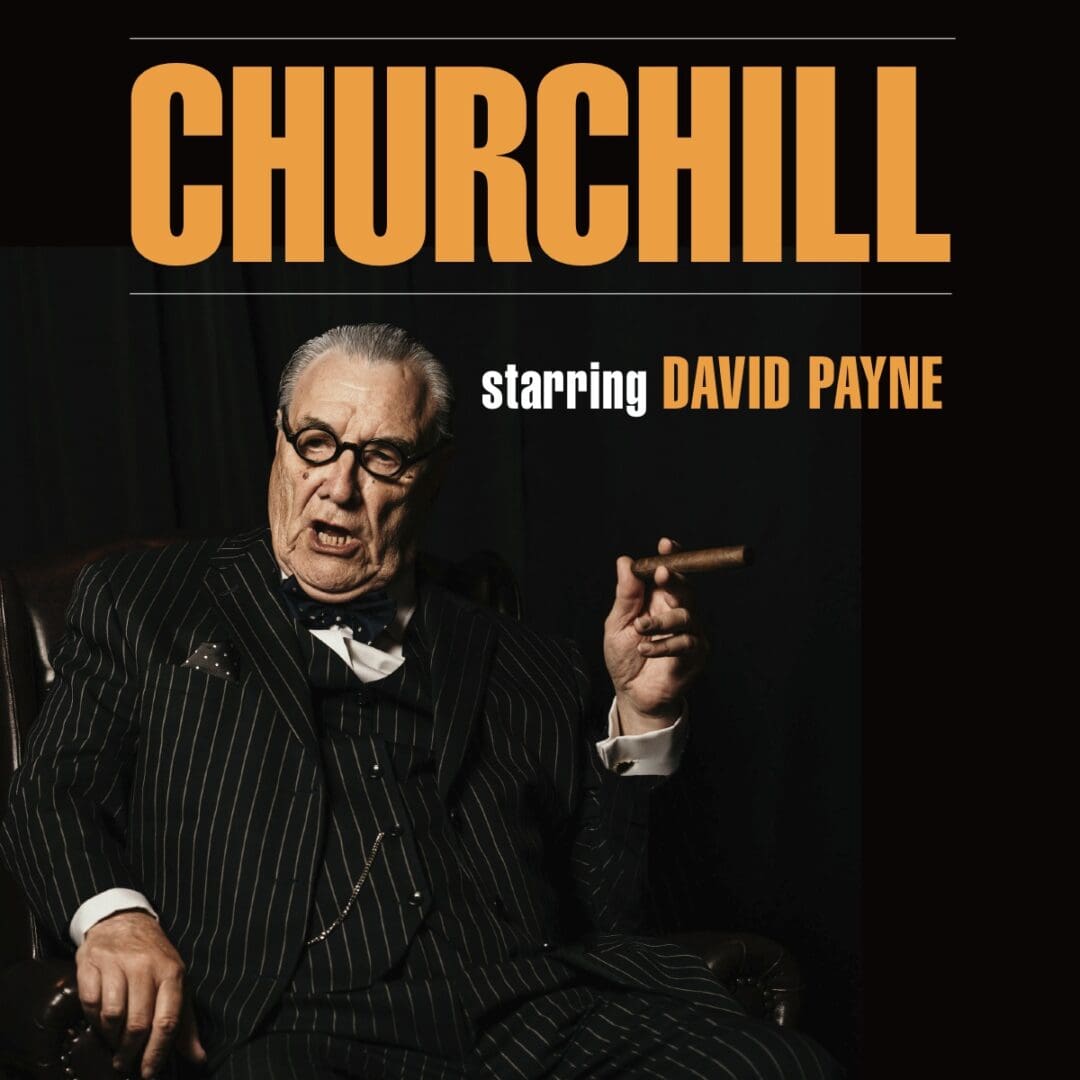
Theater Review: CHURCHILL (Calderwood Pavilion at Boston Center for the Arts)
by Lynne Weiss | October 9, 2025
in Boston, Theater
TWO LONG HOURS WITH THE FORMER MAN OF THE HOUR
There is no question that Churchill was a hero who played a major role in saving the world from Hitler’s fascism (though perhaps not as big a role as Stalin, but let’s not go down that road). Nor is there any doubt that David Payne, who wrote, directed, and performs in his one-person show Churchill has a gift for capturing tone and body language to bring the man to life on stage. Payne is clearly devoted to his subject and many will find this performance worth seeing.
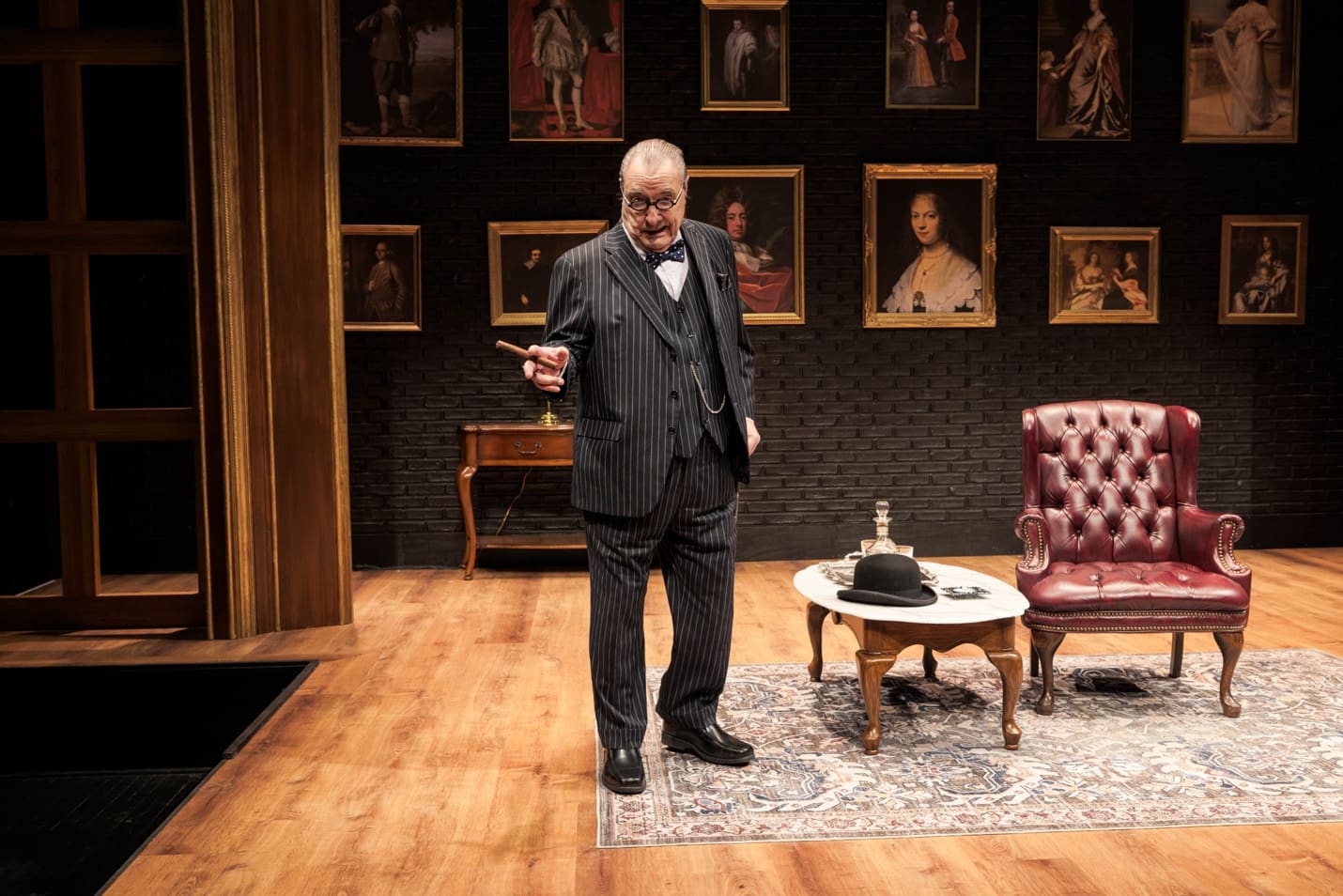
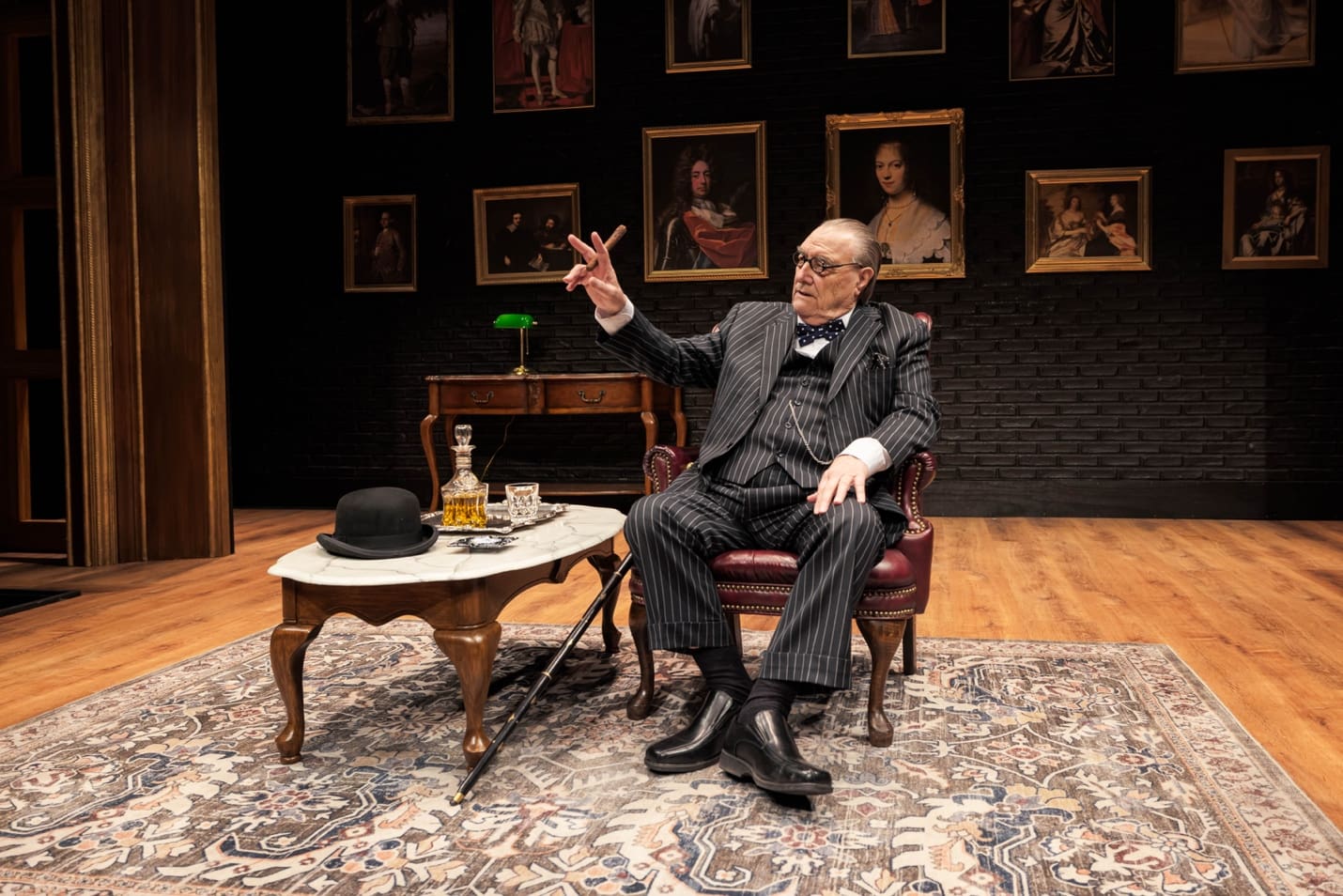
Payne portrays Churchill in 1963, when Churchill was 89. (He died in 1965.) Awarded honorary U.S. citizenship by President John F. Kennedy (the first person to receive such an honor), he was too ill to travel to the United States, so he acknowledged the honor at the Oxford American Society in Britain. Payne fictionalizes this real event in which Churchill reflects on his career and his relationships as well as on a variety of other subjects. The recollections are delivered in a slow and ponderous style that is likely true to their subject but is nonetheless slow and ponderous. They are spiked with amusing bon mots, most of which you are likely to have heard before or whose punchlines you might be able to predict before they arrive, given the slow pace.
Perhaps Payne, who is 83, could hardly be expected to portray Churchill at 40 or even perhaps at 60, but Churchill’s life was complex. In Payne’s portrayal, he does acknowledge his role, as First Lord of the Admiralty, in the disaster of the World War I Gallipoli campaign that resulted in massive casualties for the British and their allies as well as for the victorious Ottomans.
What isn’t acknowledged in this portrayal, however, is Churchill’s commitment to imperialism. He loathed Mahatma Gandhi, calling him a “malignant subversive fanatic” and refused to believe his hunger fasts were real, repeatedly accusing him of adding glucose to his water. There are numerous other examples of ways Churchill defended imperialism and advanced eugenics and white supremacy. He opposed women’s suffrage and Irish home rule. He ordered troops to fire on striking mine workers.
I’m not citing these examples out of a desire to deny Churchill’s crucial leadership in World War II. None of us are perfect. But portraying him as a two-dimensional jovial and somewhat self-effacing curmudgeon makes for dull theater and ironically plays into the kind of dishonest and deceptive portrayal of history that the fascist forces of today are working so hard to advance.
photos courtesy of Emery Entertainment
Churchill
Stanford Calderwood Pavilion
Boston Center for the Arts, 539 Tremont Street
ends on October 12, 2025
for tickets, visit Boston Theatre Scene
for more shows, visit Theatre in Boston
