


Areas We Cover
Categories

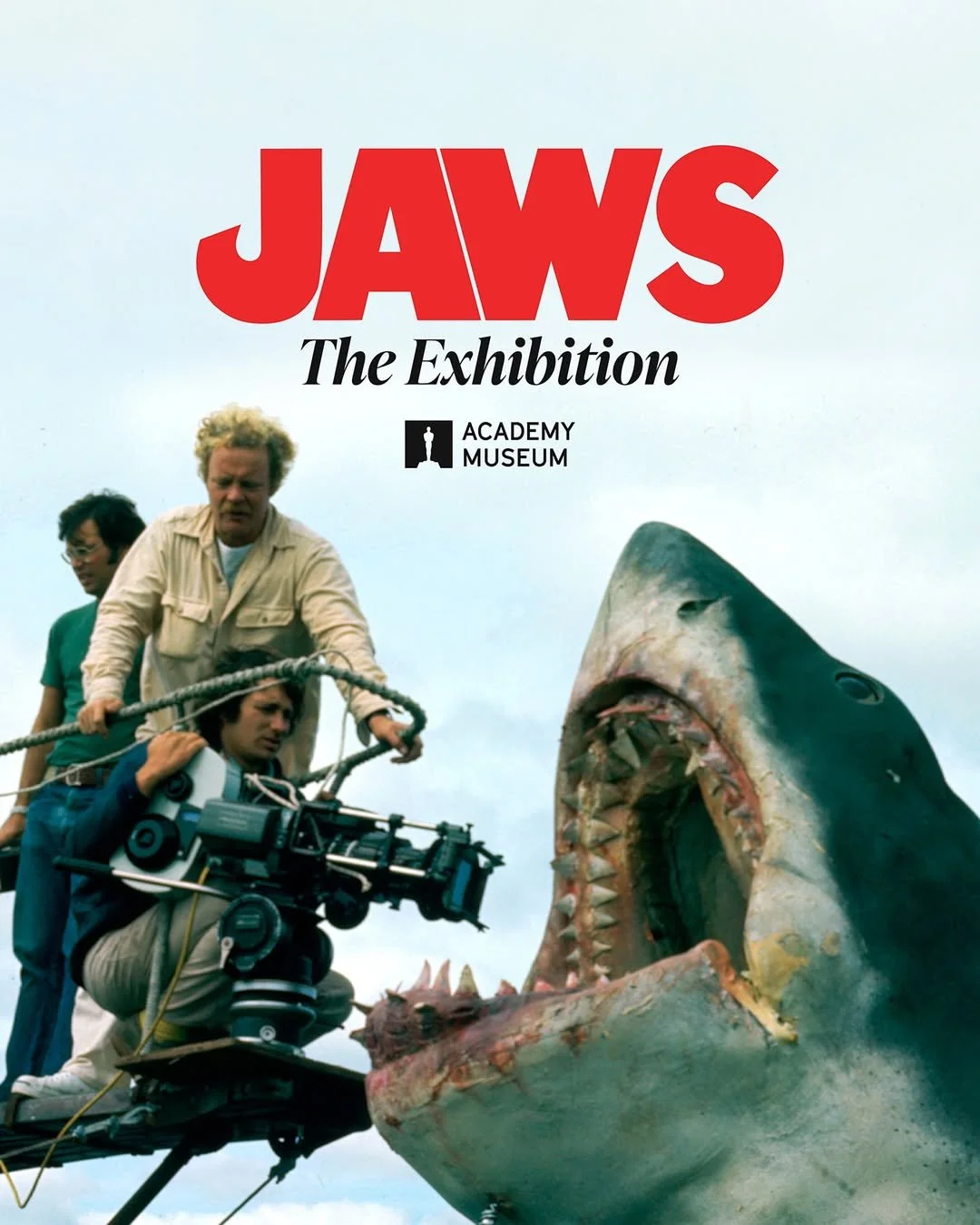
Exhibition Review: JAWS: THE EXHIBITION (Academy Museum of Motion Pictures, Los Angeles)
by Tony Frankel | April 24, 2026
in Art and Museums
YOU’RE GONNA NEED
A BIGGER GALLERY
A blockbuster exhibition that proves the Academy
Museum can create an exhibition with bite
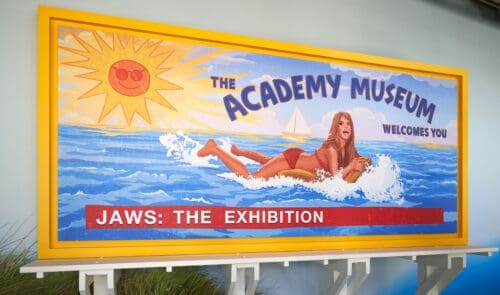
Billboard outside the entrance to Jaws: The Exhibition at the Academy Museum of Motion Pictures
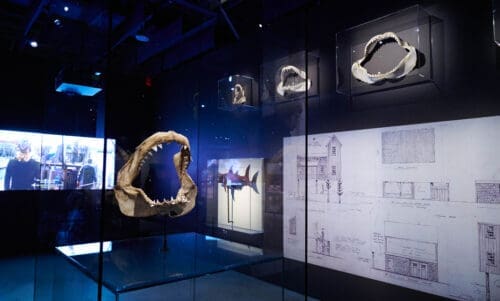
Great white shark mandible
There are museum shows you admire—and then there are ones you feel. Jaws: The Exhibition is the latter. With just three months left before it closes on July 26, the Academy Museum has mounted one of its most accessible, immersive, and—let’s be honest—flat-out entertaining exhibitions yet, a welcome shift for an institution whose shows can sometimes lean toward the scholarly side of the pool.

Jaws (1975) title in the entryway for Jaws: The Exhibition
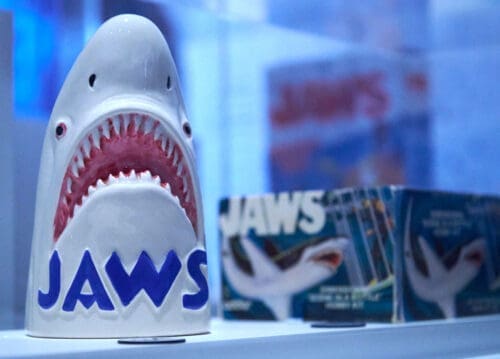
Jaws (1975) merchandise
Organized around the film’s structure, the exhibition moves visitors from the eerie calm of Amity Island through the mounting panic of shark attacks and into the open-water showdown. Along the way, it reminds you why Steven Spielberg’s 1975 film didn’t just succeed—it rewrote the rules. Jaws wasn’t just a hit; it was the first true summer blockbuster, the movie that turned wide releases, marketing saturation, and audience anticipation into a cultural event. Fifty years later, that ripple effect still hasn’t settled.
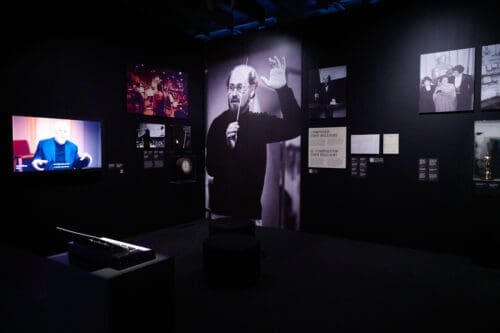
Area devoted to composer John Williams
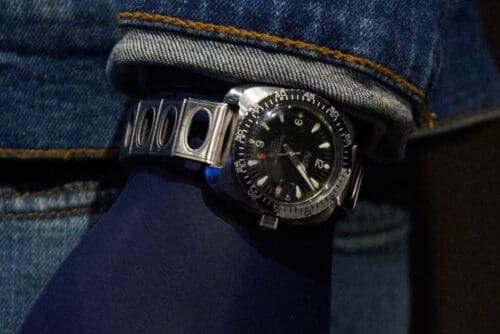
Watch worn by Richard Dreyfuss
What makes the show click is its sheer abundance. There are more artifacts here than you can shake a shark tooth at—over 200 items, many never publicly displayed before—including annotated scripts, storyboards, original concept art, and production materials that reveal just how much improvisation and problem-solving went into making the film. You see a young Spielberg figuring it out in real time, not yet the legend, just a director trying to keep a mechanical shark from sinking his movie.
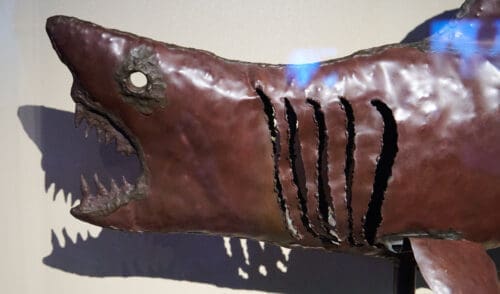
Shark weather vane by Travis Tuck
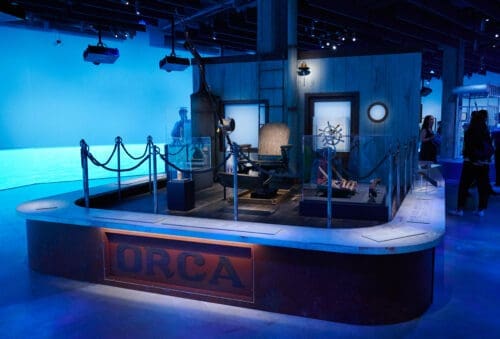
Orca props and artifacts
And yes, the shark is here—or rather, versions of it. From design sketches to mechanical components, the exhibit leans into the famously malfunctioning creature (“Bruce”) that forced Spielberg to show less and imply more. That limitation became the film’s greatest strength, and the exhibition smartly underscores how absence—what you don’t see—became the engine of suspense.
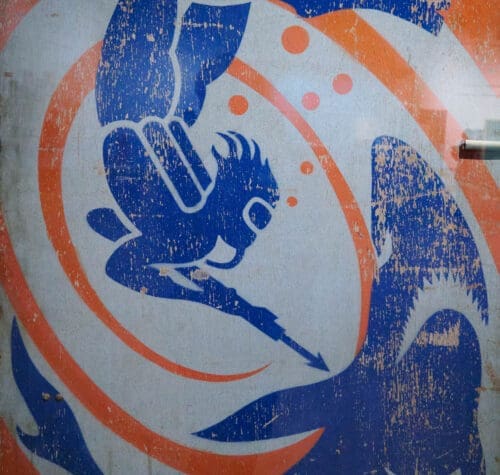
Detail of SEGA’s Killer Shark arcade game
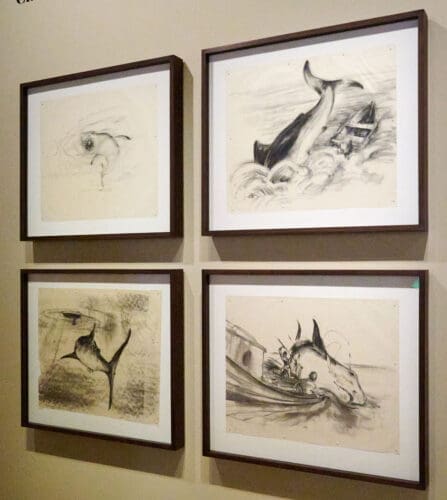
Concept illustrations by production designer Joe Alves
There are also the objects you’ve been waiting for: Quint’s chair, the shark cage, the “Beach Closed” sign, and pieces of the Orca. These aren’t just props; they’re icons. Seeing them up close is a reminder of how tactile filmmaking once was—wood, metal, rope, and risk—long before CGI smoothed everything into digital perfection.
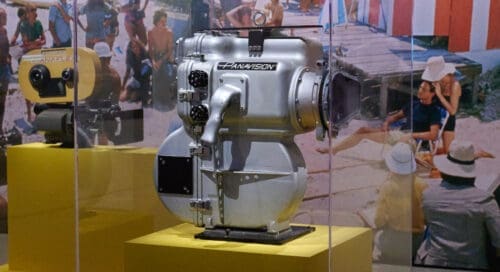
Inverted underwater 35mm camera used for Jaws
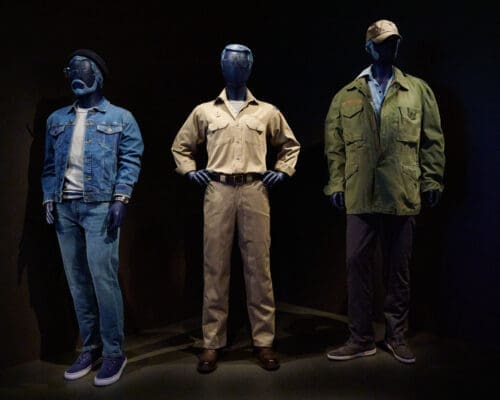
Costumes for Jaws (1975) and Jaws 2 (1978)
Then there’s the craft. One of the exhibition’s most effective sections lets visitors experience the famous “dolly zoom” (or “Vertigo effect”), used when Chief Brody realizes the shark attack is happening on the crowded beach. By moving the camera forward while zooming out, the background warps and stretches, creating that unforgettable moment of dread. Here, you can try it yourself—and suddenly a technique you’ve seen a hundred times becomes something you physically understand.
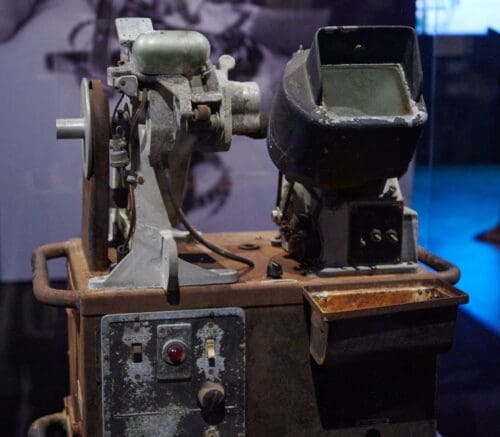
Moviola used by editor Verna Fields
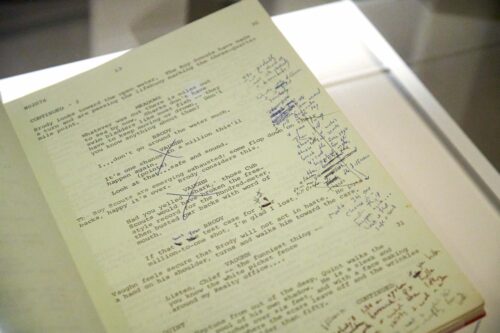
Final draft screenplay, annotated by Steven Spielberg
Sound, too, gets its due. John Williams’s two-note score—arguably the most efficient piece of musical storytelling ever composed—can be isolated, triggered, and replayed, reminding you how much of the film’s terror lives in what you hear rather than what you see. The exhibition doesn’t just tell you this; it lets you feel it, over and over again, like a pulse quickening in your ears.
Inverted underwater 35mm camera used for Jaws (1975)
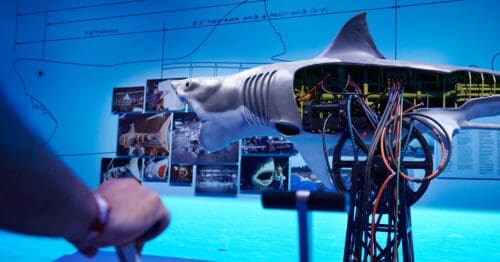
Interactive model of the shark
What ultimately elevates Jaws: The Exhibition above a standard retrospective is its sense of momentum. Like the film itself, it builds. You move through it not as a passive observer but as a participant in the story of how a troubled production became a landmark achievement. By the time you reach the final galleries—devoted to the film’s legacy—you’re not just thinking about a great movie. You’re thinking about the moment Hollywood changed course.

Amity Police patch worn by Roy Scheider
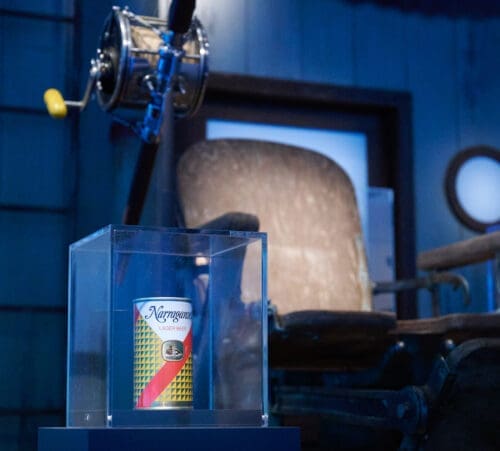
Narragansett beer can prop
With only a short window left before it closes, this is one exhibition worth making time for. The Academy Museum doesn’t always balance scholarship with showmanship this well—but when it does, the result is something that pulls you in, holds you there, and doesn’t quite let go.
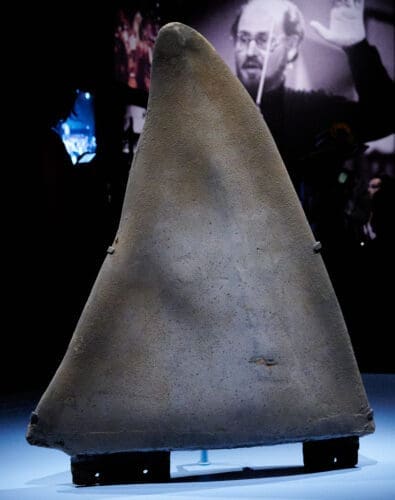
Shark dorsal fin, made by Roy Arbogast
✦ ✦ ✦ ✦ ✦ ✦ ✦ ✦ ✦ ✦
photos by Nick McCall for Stage and Cinema
Jaws: The Exhibition
Academy Museum of Motion Pictures, 6067 Wilshire Blvd, Los Angeles
on view through July 26, 2026
open daily (except Tuesday) 10am–6pm
for tickets, visit Academy Museum
✦ ✦ ✦ ✦ ✦ ✦ ✦ ✦ ✦ ✦
