


Areas We Cover
Categories

Theater Review: JEKYLL & HYDE (Kokandy Productions / Broadway Playhouse / Chicago)
by Emma S. Rund | September 19, 2026
in Chicago, Theater
KOKANDY UNLEASHES ITS HYDE
A problematic musical gets a thrilling jolt
of theatrical electricity from Kokandy’s
powerhouse performers and audacious design
David Moreland and the cast
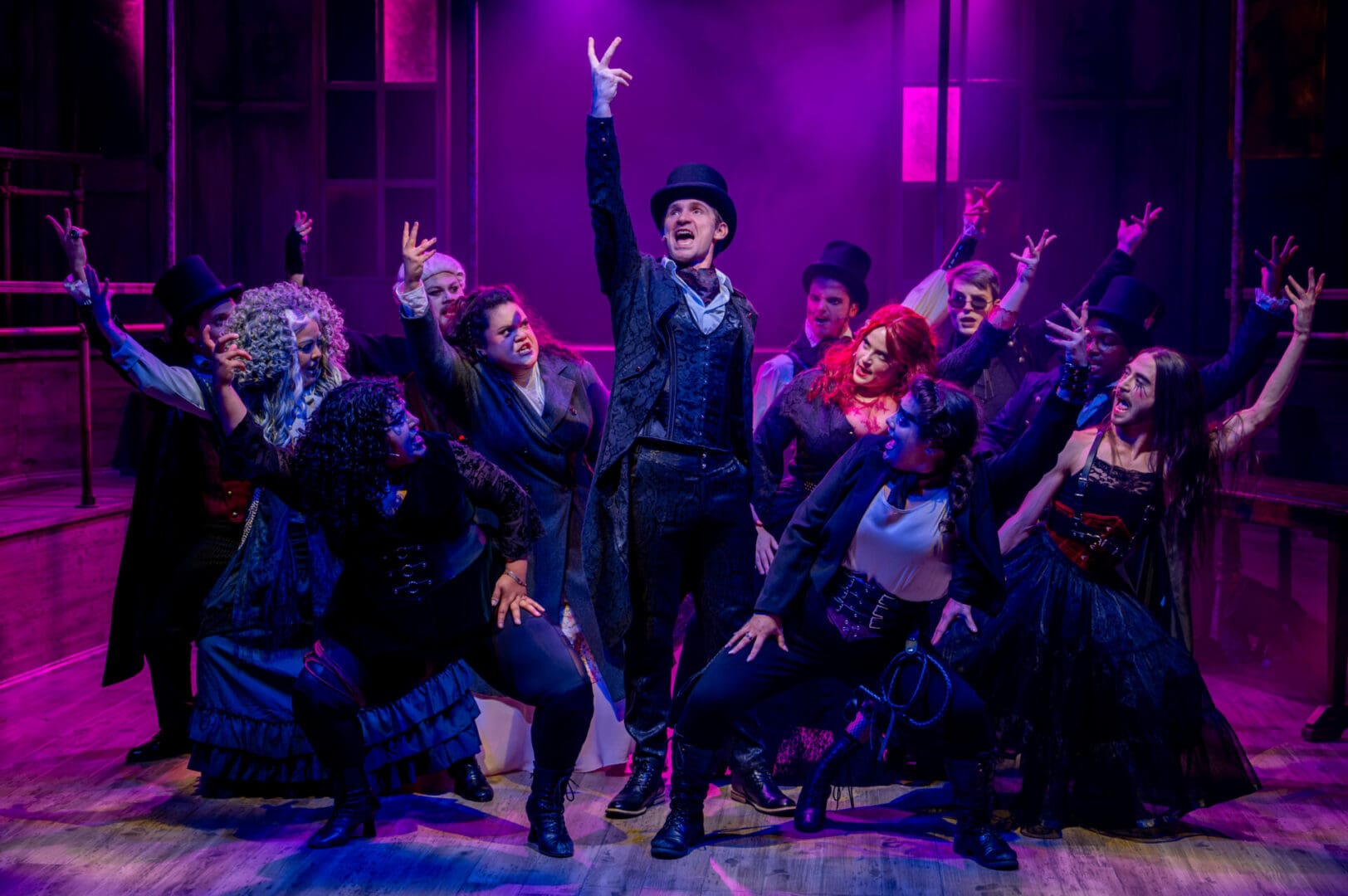
Kokandy Productions’ remount of Leslie Bricusse and Frank Wildhorn’s Jekyll & Hyde with Broadway In Chicago has no problem filling the Broadway Playhouse stage with raucous, dangerous fun.
Seeing Kokandy produce outside of their home at the uniquely charming Chopin Theatre, I was a little apprehensive that a displaced production might lose its luster. My fears were unfounded. There’s plenty to be scared of in Jekyll & Hyde, but a lack of what makes Kokandy Kokandy is not one of them.
David Moreland and the cast
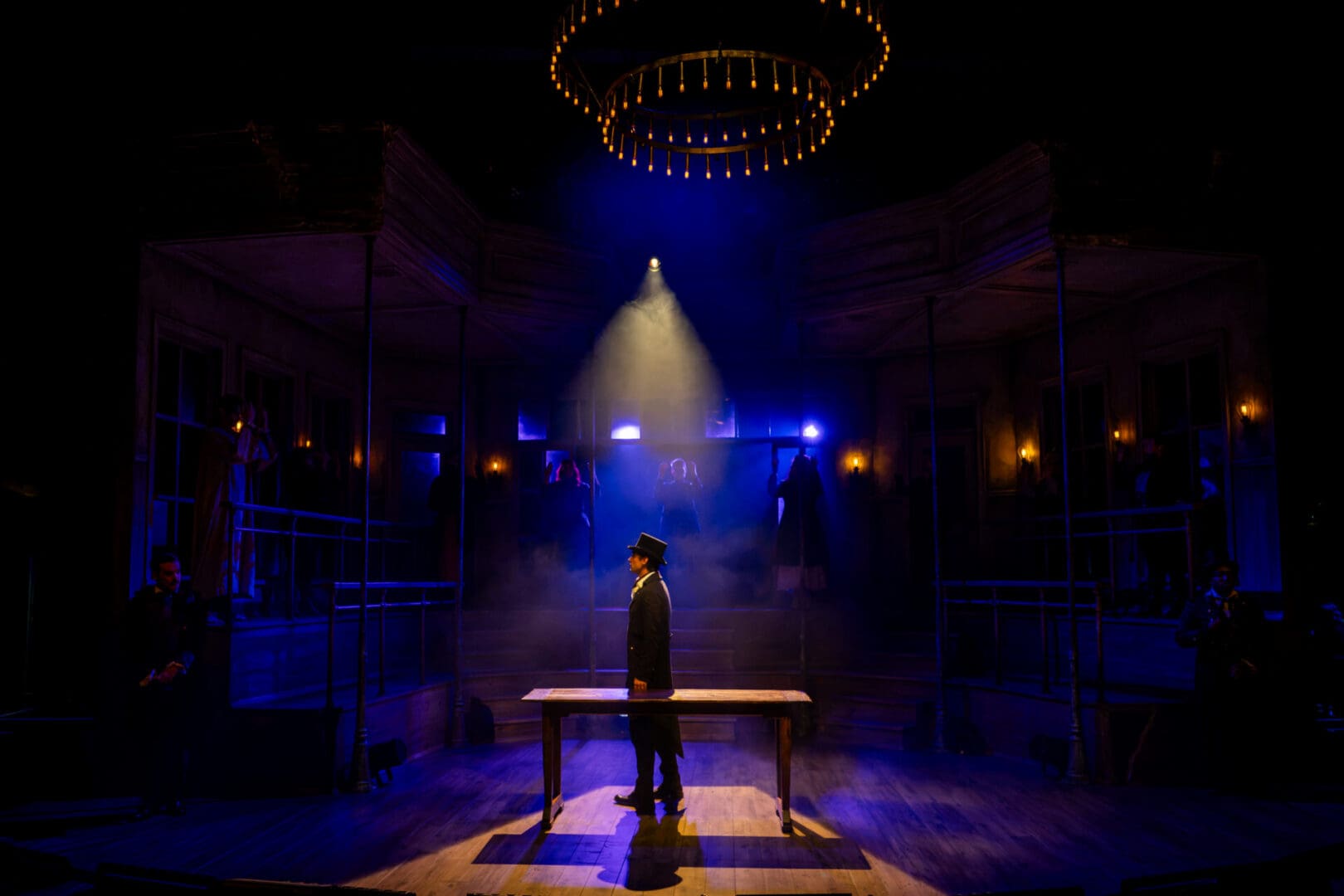
Kokandy is adept at taking mediocre or problematic musicals and making them work in a way you’ve never seen before with expert musicality and big thematic choices. That’s exactly what director Derek Van Barham does with Jekyll & Hyde, with the help of Nick Sula music directing a fabulously balanced fifteen-piece orchestra (sound design by Matt Reich).
The musical by Wildhorn and Bricusse is an adaptation of the 1886 gothic horror novella The Strange Case of Dr. Jekyll and Mr. Hyde by Robert Louis Stevenson, and it’s full of problems: plot holes, the Madonna-whore complex, some weird associations between mental illness and evil, encouragement of suicide, and a general misunderstanding of the themes in the original gothic novella—a condemnation of the hubris of man is pretty much the only one the musical holds onto. But with bold design choices and a cast of powerful voices, Kokandy sweeps us away into a thoroughly enjoyable melodramatic fantasy.
David Moreland and Emily McCormick with the cast
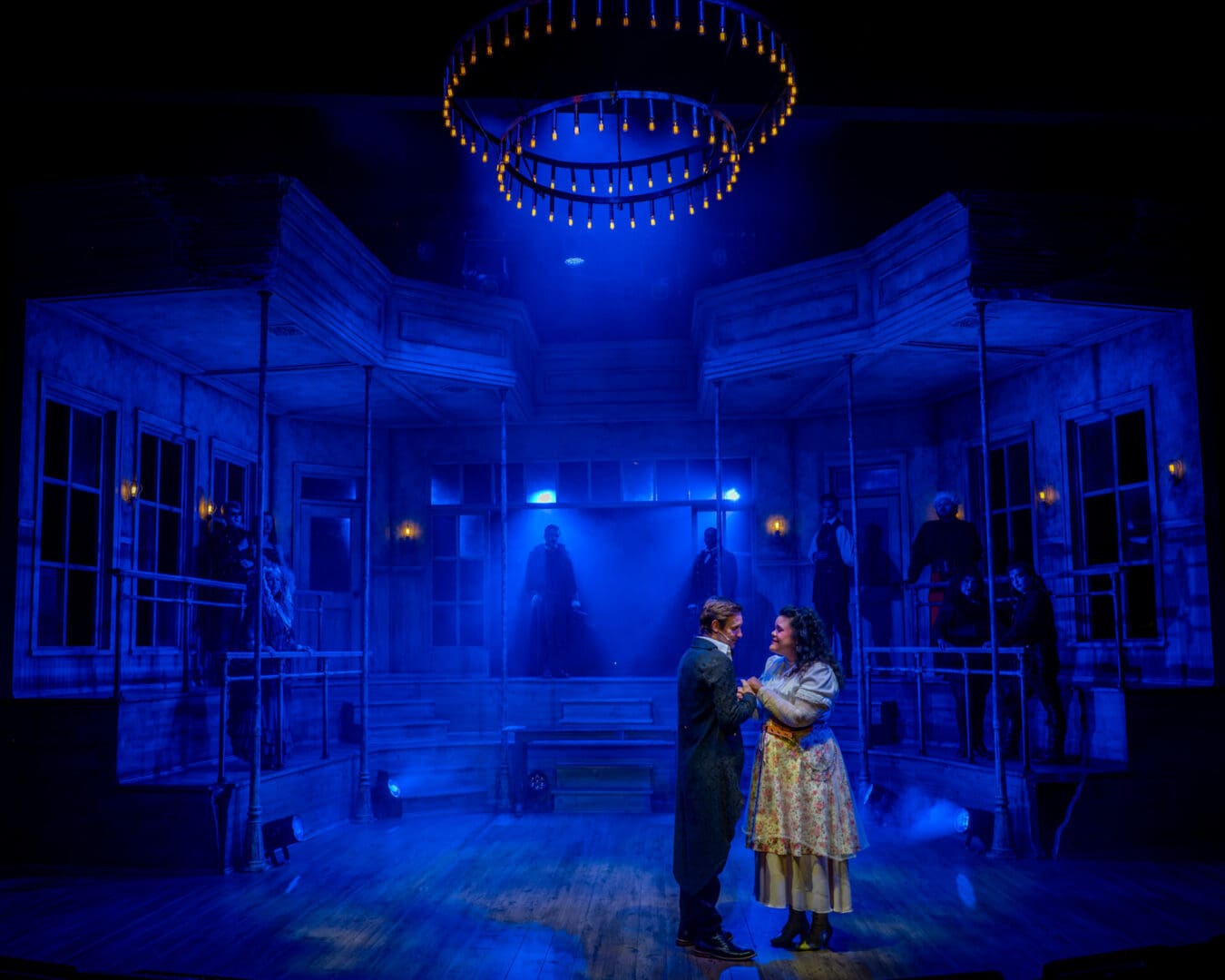
In the musical’s retelling of this classic story, Dr. Jekyll (David Moreland) is a scientist searching for a way to cure humanity of evil, which he believes causes “madness,” by separating good and evil within a person. When the hospital board won’t let him use a mental patient for his experiments, Jekyll decides to test his invention on himself, and when he does, a monstrous version of himself bent on evil, Mr. Hyde, comes out to play.
This entire cast is wonderful, but two stand out as exceptional: Moreland and Ava Lane Stovall, who plays Lucy Harris, the sex worker who tempts Jekyll away from his fiancée, Emma Carew (Emily McCormick).
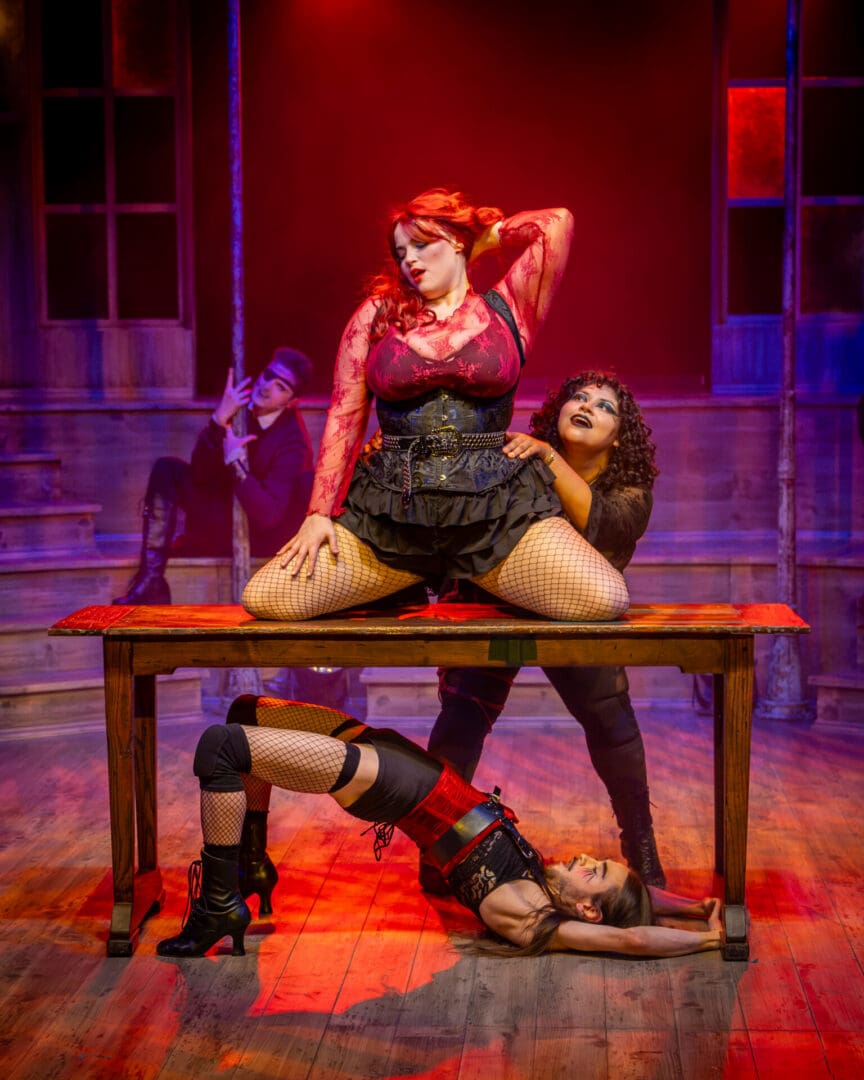
Ava Lane Stovall with (left to right) Quinn Kelch and Ismael Garcia and (below) Quinn Simmons
Stovall’s Lucy wails with all the pain of an objectified woman who realizes she deserves to be treated with love and respect. On the night I attended, her “Someone Like You” produced a stunned silence in the audience before we erupted in applause. Stovall sings the house down and makes us thoroughly enjoy every one of Lucy’s unnecessary power ballads.
Moreland deserves his accolades for this vocally, physically, and emotionally athletic performance of both Jekyll and Hyde. He employs highly specific physicality to shift between the two roles and a complete transformation of his voice from clear and smooth like a viola for Jekyll to rich and growling in a Cockney accent for Hyde.
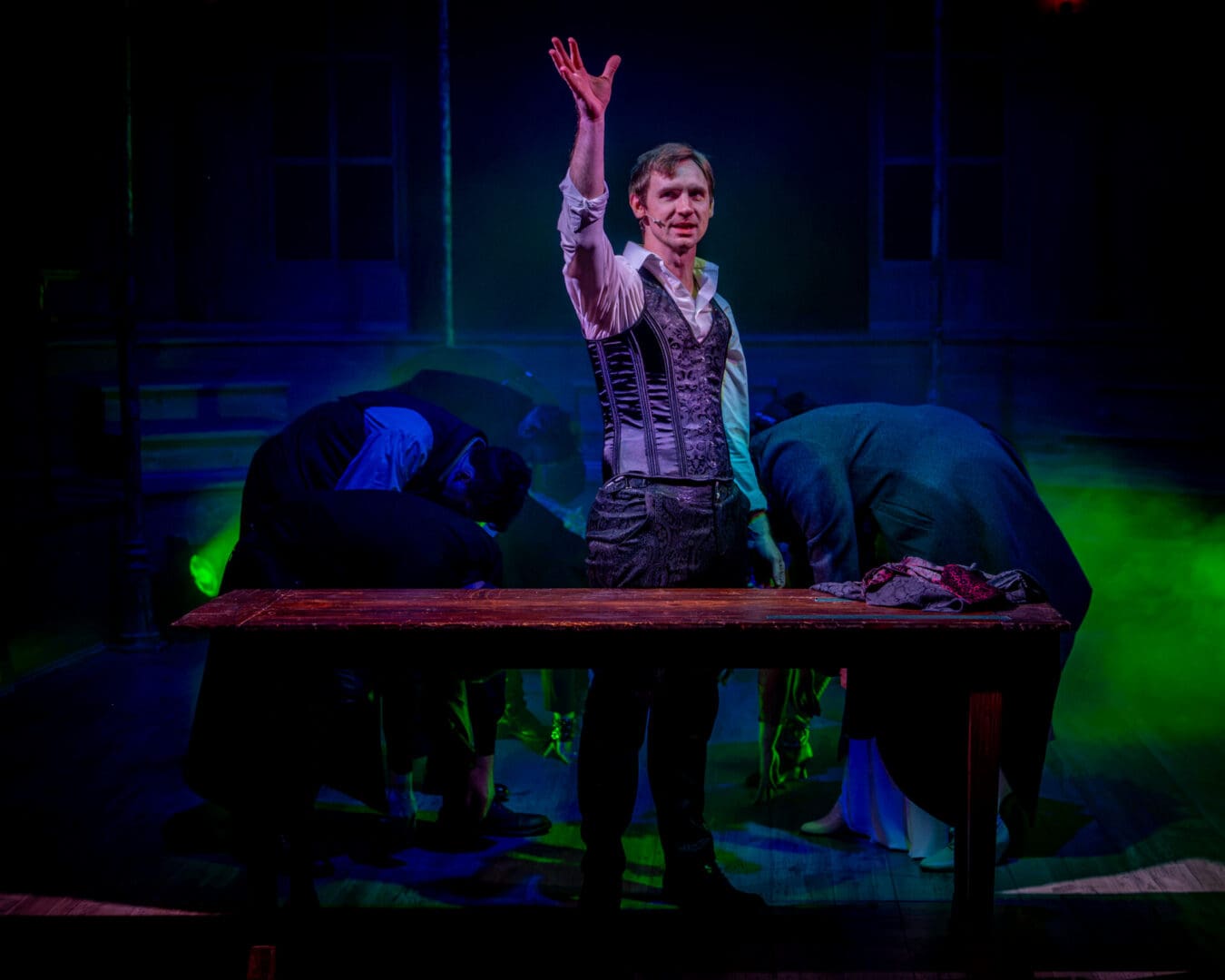
David Moreland and the cast
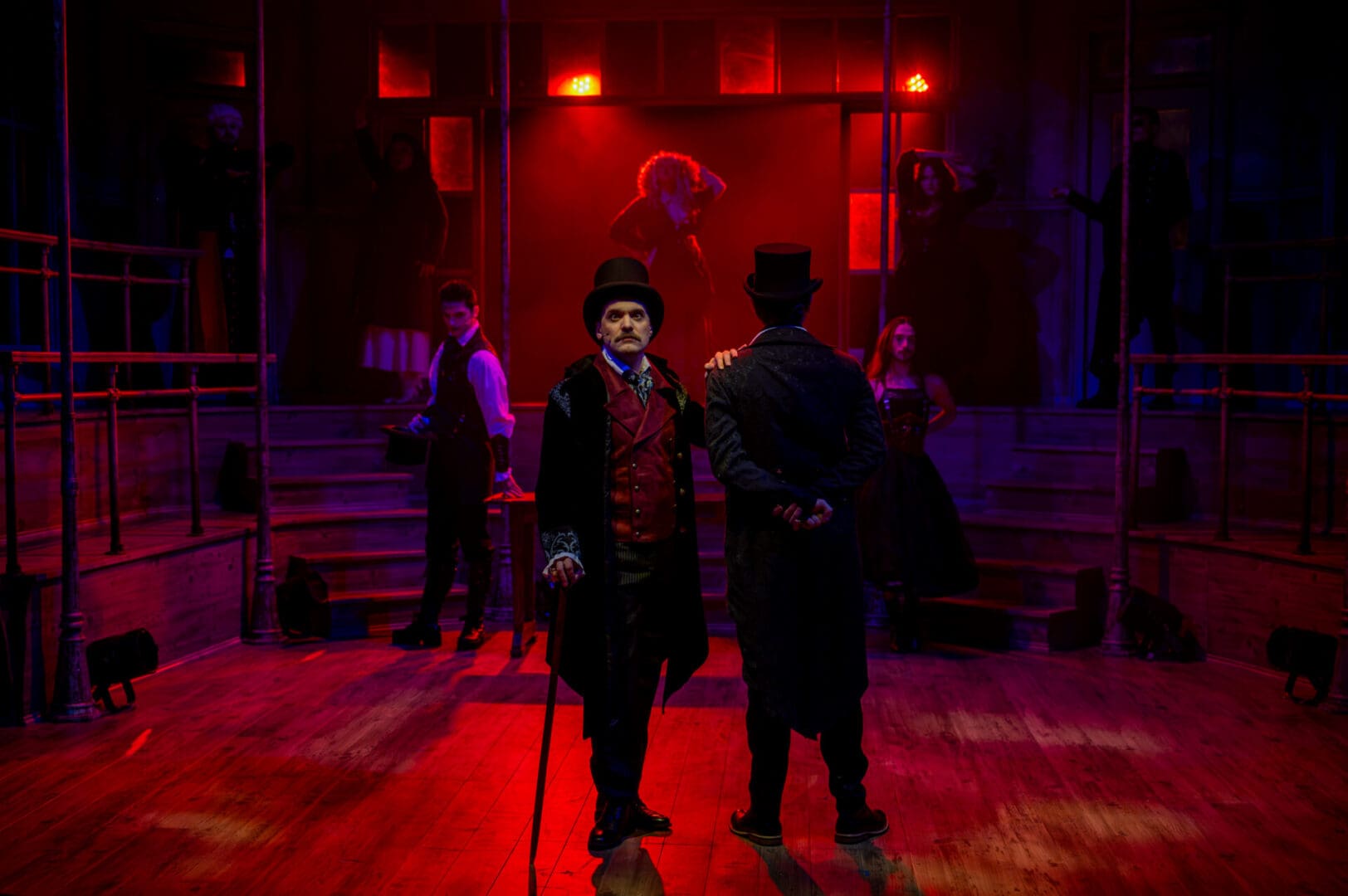
We may need to coin the term “hand acting” just for Moreland, who extends the creation of his two characters all the way through his fingertips. In one moment, Jekyll’s hand reacts as Hyde of its own accord, snapping at his servant, Poole (Quinn Simmons), to allow Lucy to enter, much to Jekyll’s dismay. Sometimes this hand acting is aided by G “Max” Maxin IV’s lighting design, isolating Moreland’s hand in either green or purple light, depending on what it is he’s reaching for, metaphorically. Red signifies the regular flavor of human evil that lives in all of us, purple to represent Dr. Jekyll, or perhaps the hubris of man, and green to very clearly and cleverly tell us when Mr. Hyde, or pure evil, is coming out to play.
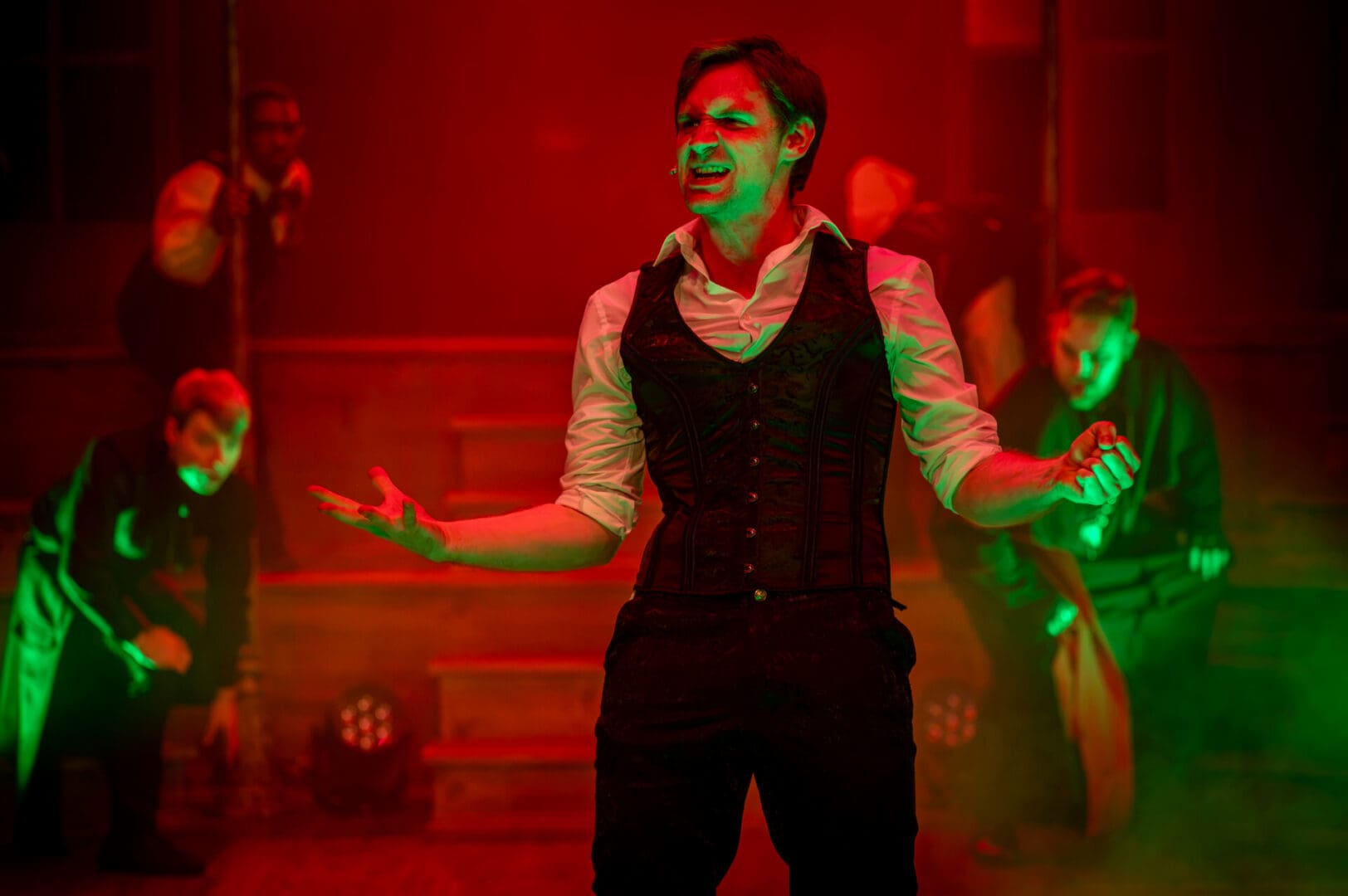
David Moreland and the cast
Costume designer Rachel Sypniewski uses red to this same effect in her kink-inspired costumes. Each character has a touch of red on their mostly black attire (except for the angelic Emma, who wears pink and white). The more evil the character, the more red they have—though this falls apart a little bit when we get to Lucy, who wears a lot of red, including a red wig designed by Keith Ryan, but Lucy isn’t evil, just stuck in the seedy underworld of London.
Here, actually, is my one big question about this production. The costumes incorporate a lot of nods to kink, with several characters wearing harnesses, one tied up in red rope, and one brandishing a little riding crop. Paired with Hyde’s sadomasochistic visits to Lucy, there’s an implication that kink is evil. I don’t think this is Van Barham’s intent, but the implication is there if you’re looking too closely.
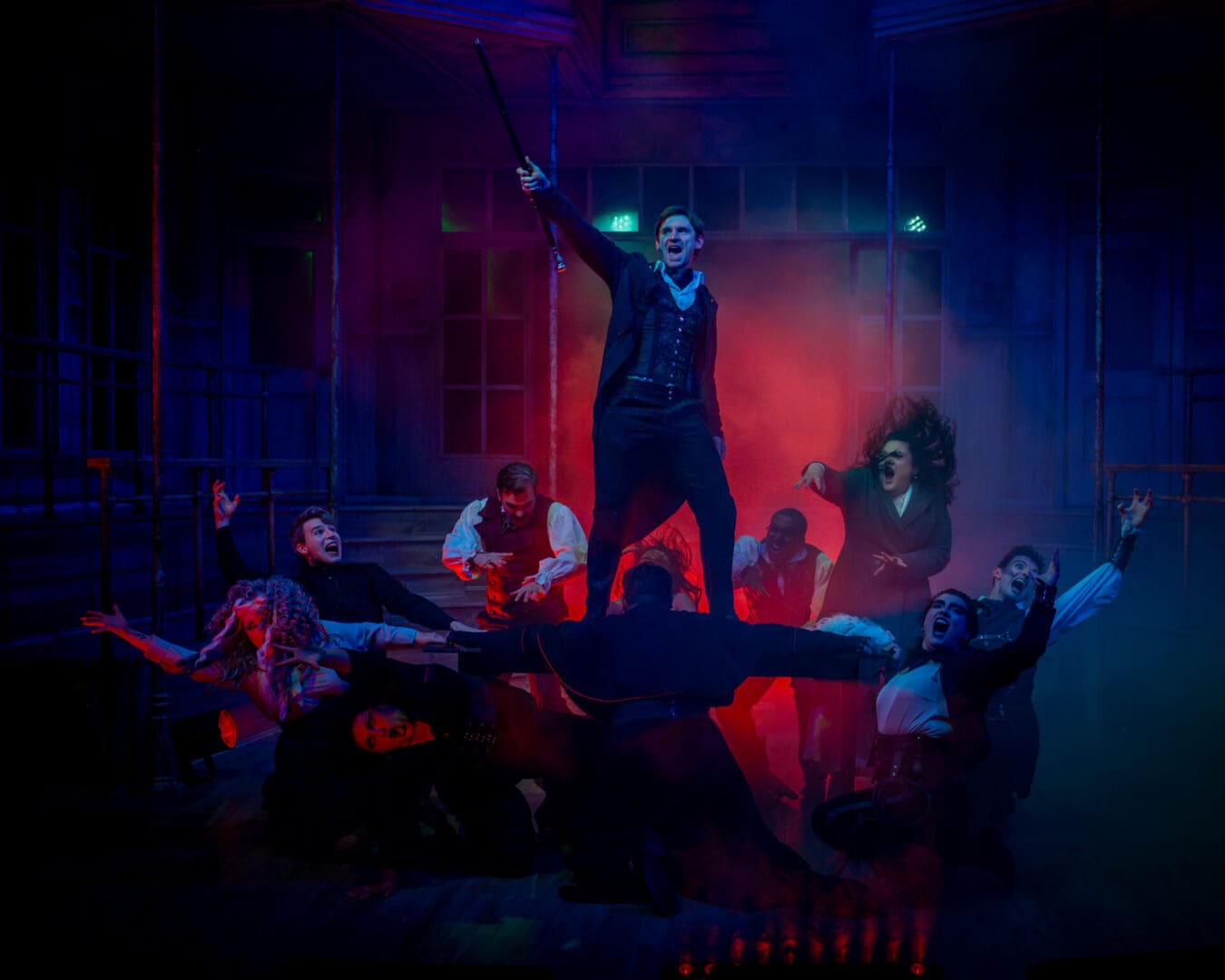
David Moreland and the cast
If the sexual violence is a deterrent for you, please know that intimacy director Kirsten Baity and violence designer Charlie Baker stage these difficult scenes between Hyde and Lucy mostly representationally, hiding the worst of it from the audience with the help of lighting and haze.
Kokandy’s Jekyll & Hyde is remounted by popular demand, and it’s very clear why. The stage is full of talent from performers and designers alike. Just don’t look too closely at the musical’s baked-in problems and enjoy the marvelous spectacle and vocal fireworks show for what it is: Raucous, dangerous fun.
Joe Giovannetti and the cast
✦ ✦ ✦ ✦ ✦ ✦ ✦ ✦ ✦ ✦
photos by Amy Boyle Photography
Jekyll & Hyde
Kokandy Productions / Broadway in Chicago
Broadway Playhouse at Water Tower Place, 175 E. Chestnut St. in Chicago
2 hours and 35 minutes, including intermission
Tue–Fri at 7; select Wed at 1; Sat at 2 & 7:30; Sun at 1; select Sun at 6:30
ends on November 8, 2026
for tickets ($45–$110), visit Broadway in Chicago
for more shows, visit Theater in Chicago
✦ ✦ ✦ ✦ ✦ ✦ ✦ ✦ ✦ ✦
EGREGIOUS FIXES MADE
The Wildhorn/Bricusse paragraph is overloaded, especially the long list beginning “plot holes, the Madonna-whore complex…,” but that list establishes Emma’s central argument: the source musical is deeply flawed and Kokandy makes it work anyway. I would not cut it without permission.
The two consecutive paragraphs devoted to Maxin IV’s lighting repeat some information—the first demonstrates the color scheme in action, while the second explains its symbolism—but they do different jobs, so I left both intact.
The sentence beginning “The more evil the character, the more red they have” creates a potentially interesting contradiction that Emma herself immediately notices with Lucy. I would preserve it; that contradiction leads naturally into her larger concern about the production’s visual association between kink and evil.
