


Areas We Cover
Categories

Theater Review: AMERICAN RHYTHM (Lamb’s Players Theatre / Coronado)
by Milo Shapiro | October 8, 2026
in San Diego, Theater
A CENTURY OF MUSIC,
AND ALL THAT JAZZ
From ragtime to rock, a talented ensemble
celebrates 100 years of American music
with inventive arrangements, dazzling
dancing, and a few welcome surprises
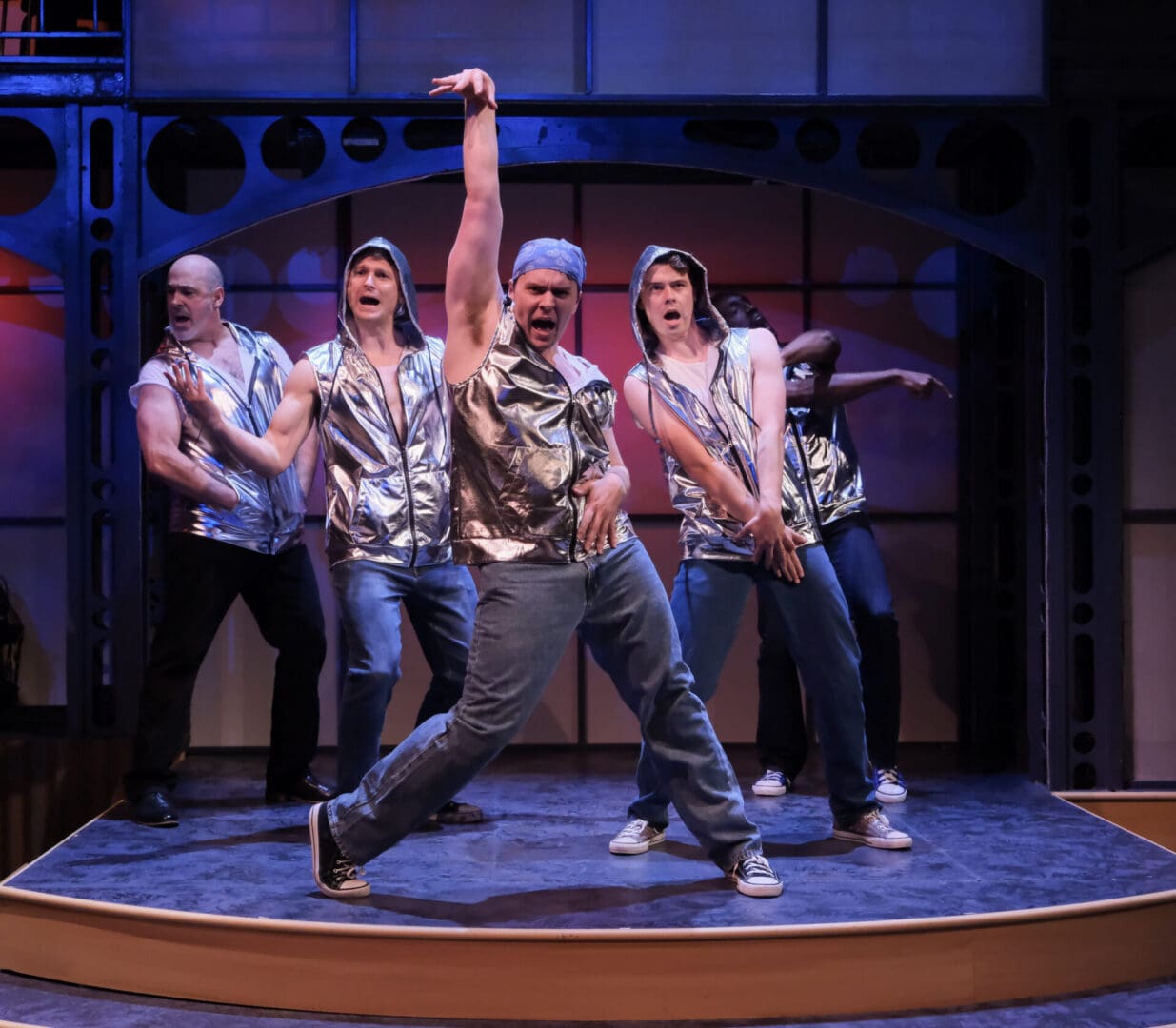
When it comes to musical tribute shows in San Diego, two names are pretty synonymous with the concept: Kerry Meads and Vanda Eggington. Between them, either writing and/or directing, their work includes The 70s: The Golden Age of the Album, R-E-S-P-E-C-T: The Amazing Music of the Women of the 60s and the 70s, Boomers, and miXtape—and those are just the ones I know of. The layout tends to be similar, but with different music, performers, and media insertions, they are always crowd-pleasers that tend to get extended. Their current show at Lamb’s Players, American Rhythm, is no exception to that success list.
One aspect of their appeal is that one never knows how much of a song we’ll get. Sometimes it’s just a line; sometimes the whole song; usually, somewhere in between. A song may start, stop, and then get revisited minutes later. But most end up in mash-ups, frequently in very creative ways that we wouldn’t see coming and at other times bringing us exactly the song we expected and hoped to hear. In all, over two hundred songs are featured in their varied lengths.
This program—recently reworked for this production—was first created in 2000, so the 100 years referenced is the whole 20th century. The time periods they explore are rolled out quite sequentially, with the first act being essentially 1900–1949 and the second act completing the century. This precise split in time pushes the two grand dames of mash-ups to really explore those earlier years, featuring numbers that could easily have been forgotten otherwise with so much recording after 1950. It would have been a shame to miss out on enjoying a trip back to when people were singing the likes of “Daisy, Daisy,” “It’s a Long Way to Tipperary,” and a lovely rendition of “What’ll I Do?”
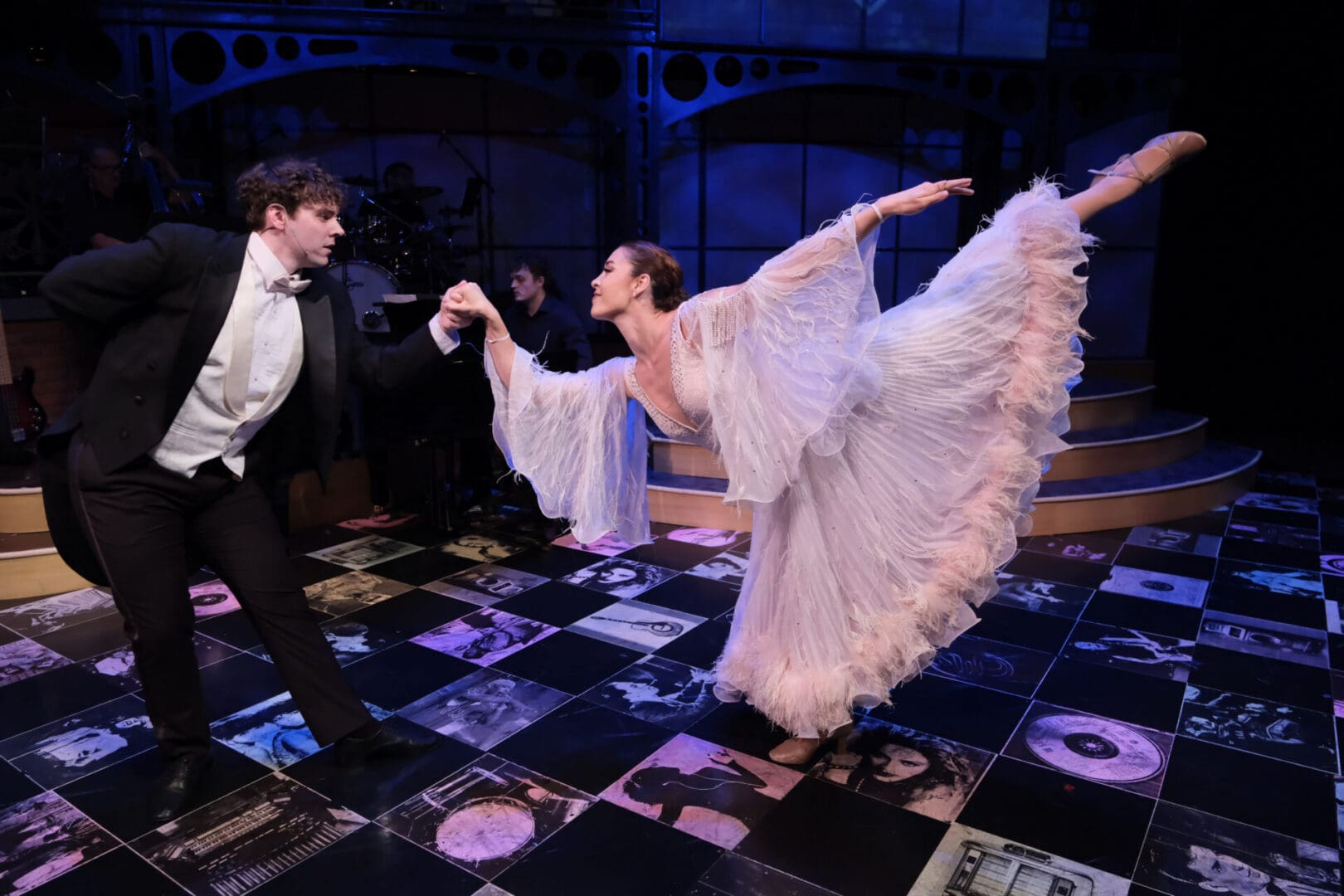
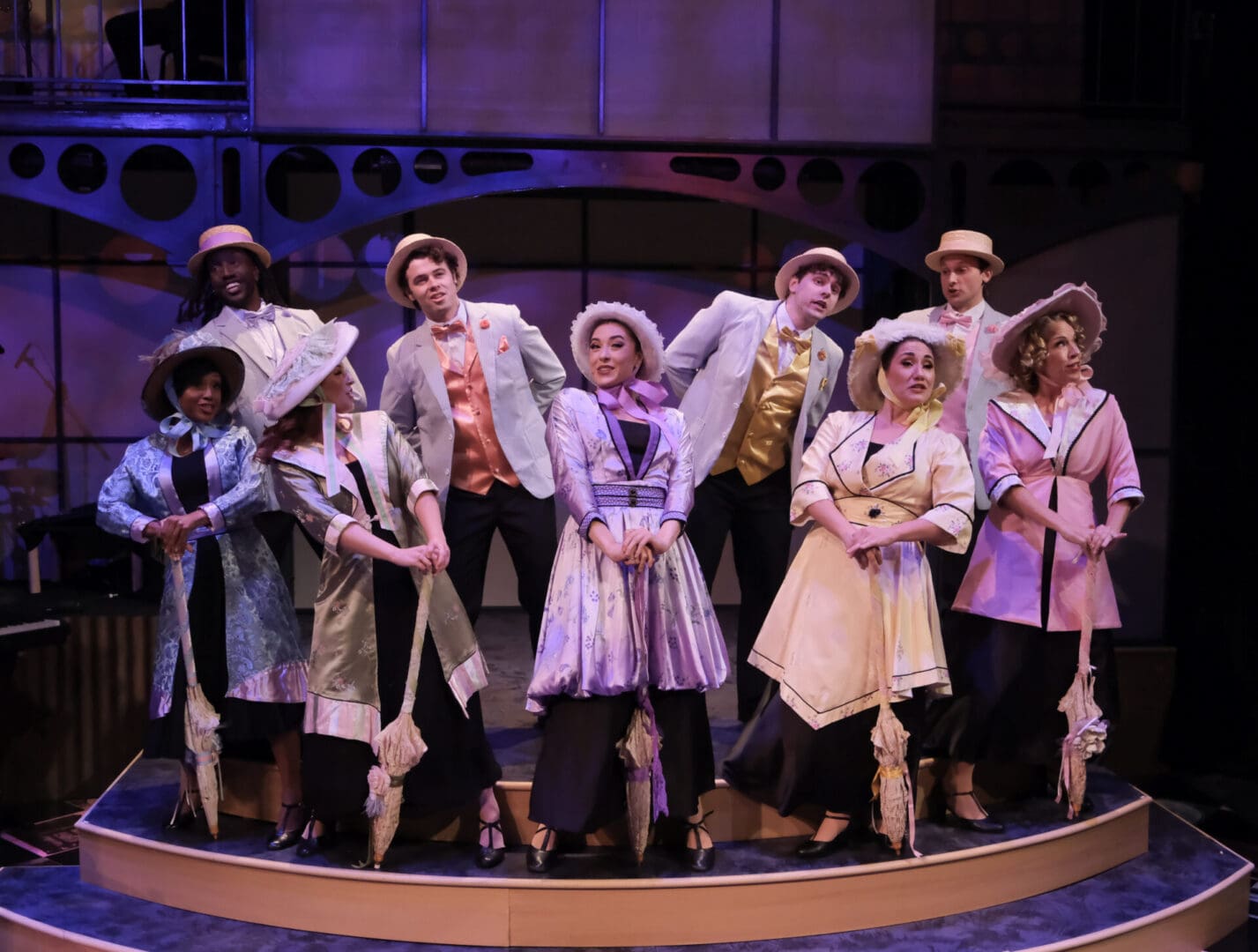
Meads and Eggington have their cast singing almost the entire time for two 75-minute acts. Throughout the show, narrators in period clothing read headlines from old newspapers, reminding us what year we’re up to, what people in the world were talking about then, and how the songs of the times reflect those topics. Moving through patriotic songs of WWI, ragtime fun of the Prohibition/flapper era, and poignant reflections during the Depression, we get to see each of these saluted—the last of which is given a heartfelt treatment with “Brother, Can You Spare a Dime?” Some songs may not have been originally written or sung with quite the connotations that Meads and Eggington give them, but that’s part of the theatrical interpretation, as gorgeous harmonies lend “Bye Bye Blackbird” a solemn tone. Van Angelo’s delivery of the 1929 anti-racist words of Fats Waller and Harry Brooks’ “(What Did I Do to Be So) Black and Blue?” was so powerful that I streamed it at home later to hear the lyrics again.
Video is used dramatically to underscore some of what we see—sometimes with words, as when the consummate professional newscaster Walter Cronkite announces that President John F. Kennedy had been pronounced dead. Although videos with sound like that are powerful, more often, especially in Act I, silent video and slides just add context and humanity to the topics being sung and danced to.
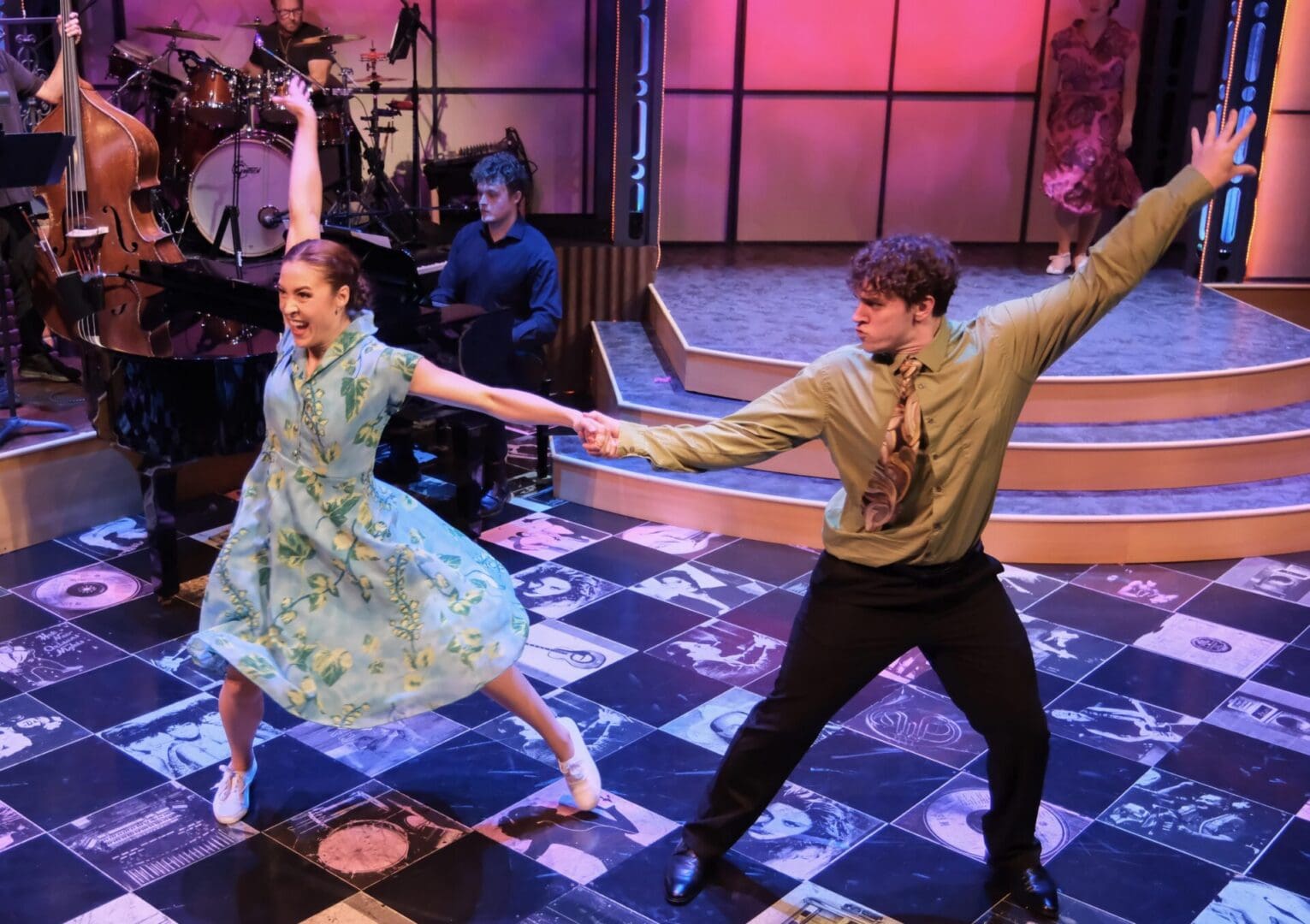
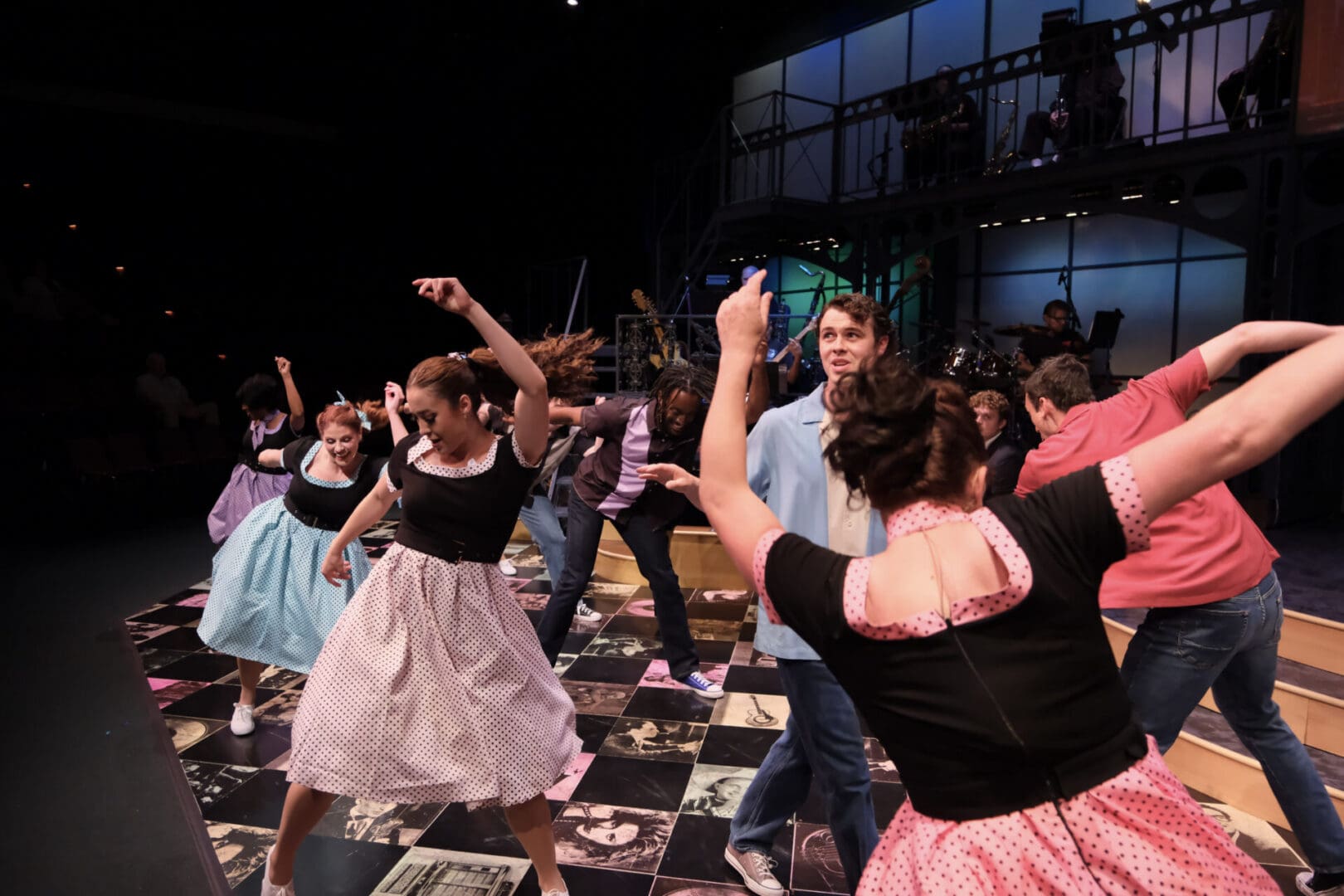
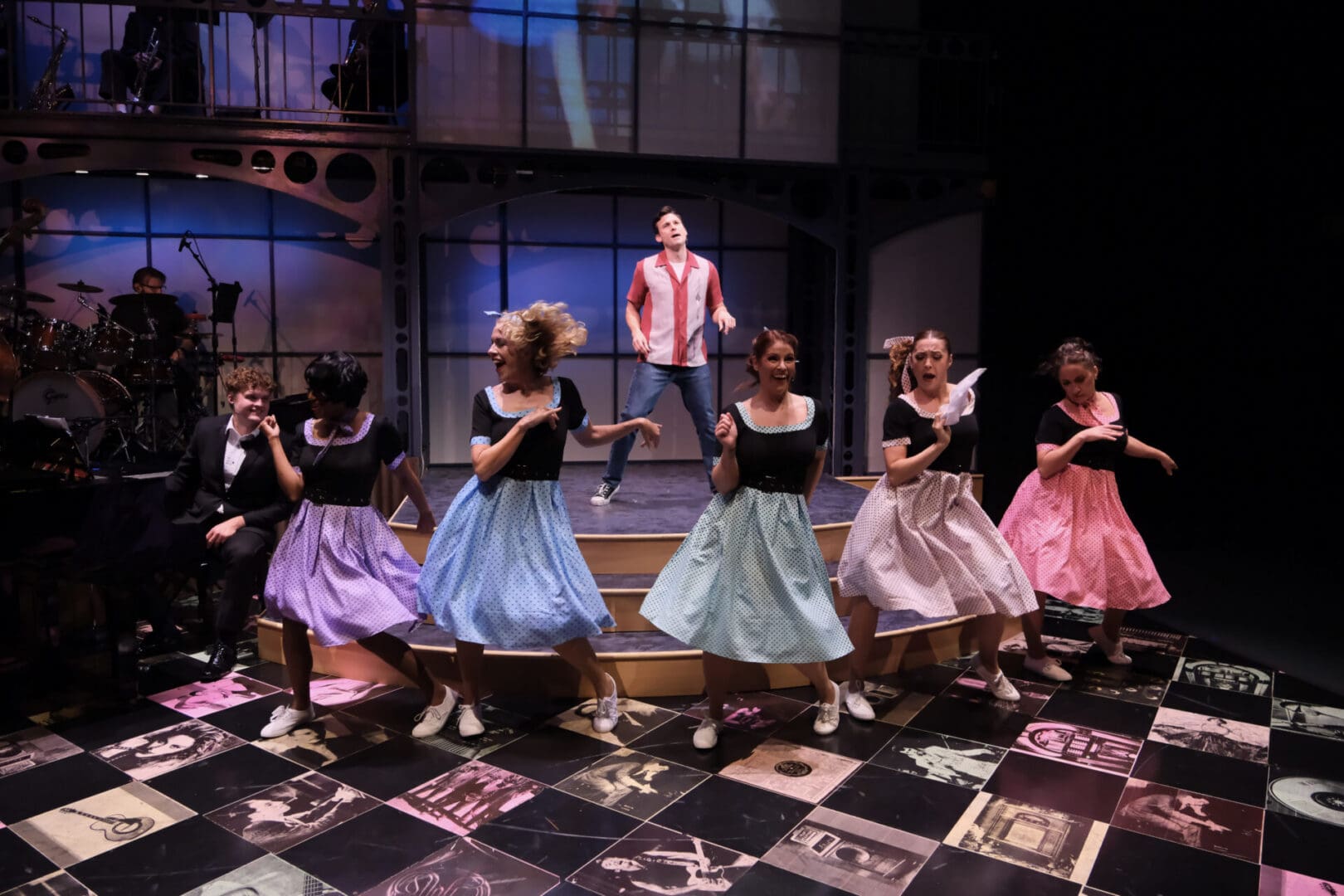
Speaking of dancing, choreographer Colleen Kollar Smith must not have had time to sleep for months coming up with this much material. Dance is an essential part of any good stage tribute to music, and there are a LOT of styles to cover here. No actor onstage is off the hook for quite a bit of impressive footwork, but the duo wisely pair Siri Hafso and Josh Bradford for the tougher work, and they rise to the occasion, covering the range from Argentine tango to quickstep to swing and far more. In particular, Hafso has a few solo moments where you just aren’t sure how she can move that fast, with an impressively rapid booty-shaking “Wipe Out” and a remarkable one-legged tap moment that yielded a “Whoa!” from the audience.
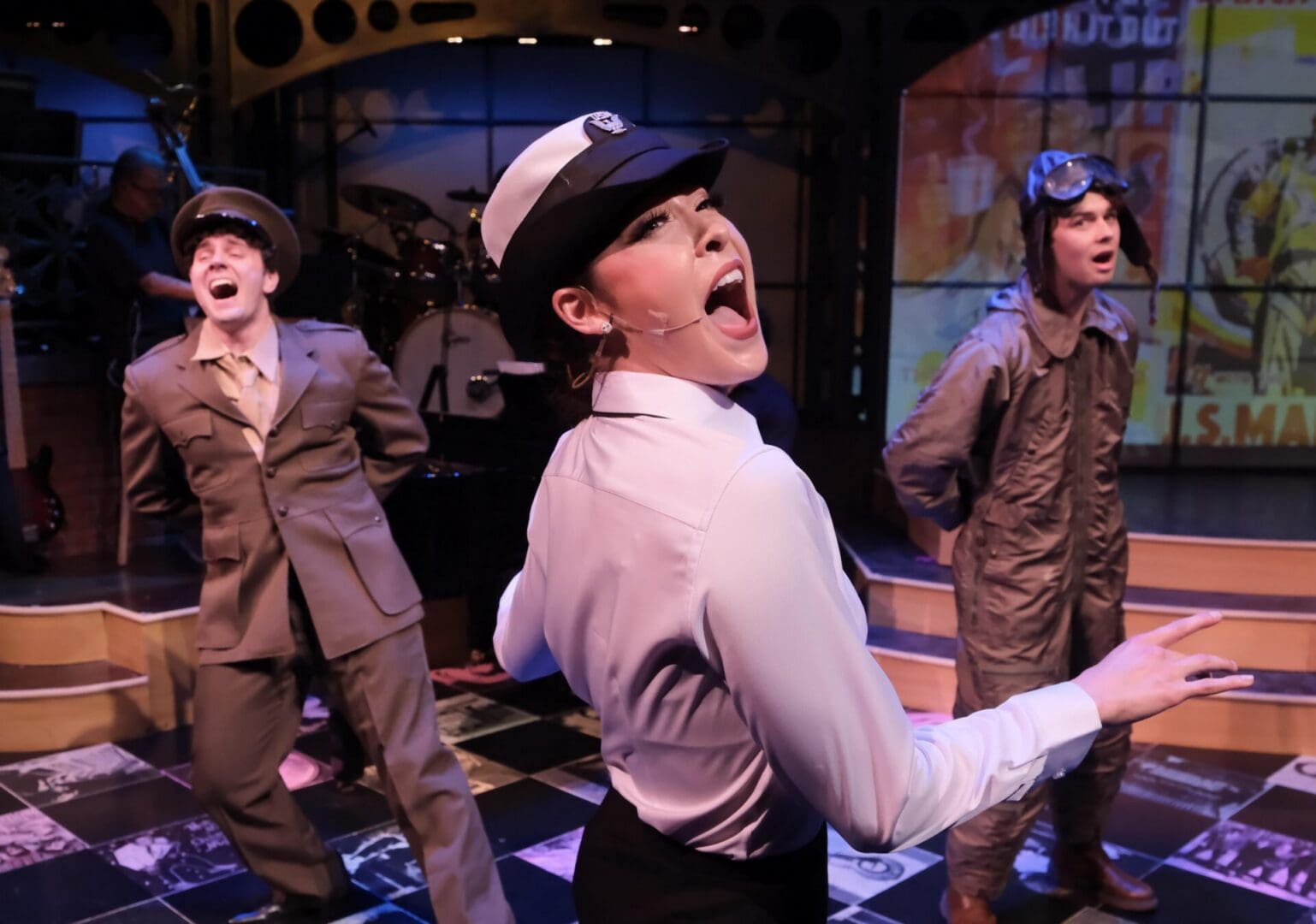
Some of the writing duo’s other musical tribute shows included more vignettes between songs than here; given how strong they can be, one or two fewer songs to enable more of those would be appreciated. That said, some of the ones included were lovely, such as Joy Yandell-Hall as a deserted wife in the 1930s telling her tale before cutting to more music. Ideally, there are moments of story delivered within the music itself, without the need for extra dialogue. Perhaps my favorite moment of the night was Caitie Grady delivering a wartime song of sweet, distant love (“Waiting for the Train to Come In”), and then being abruptly shut down by a military officer at her door with bad news; Grady’s face said so much that it brought a lump to the throat as she takes a moment to gather herself before switching into a mournful “I’ll Be Seeing You.” A clever moment later features two singers having a fight as they record the 1931 hit “All of Me.”
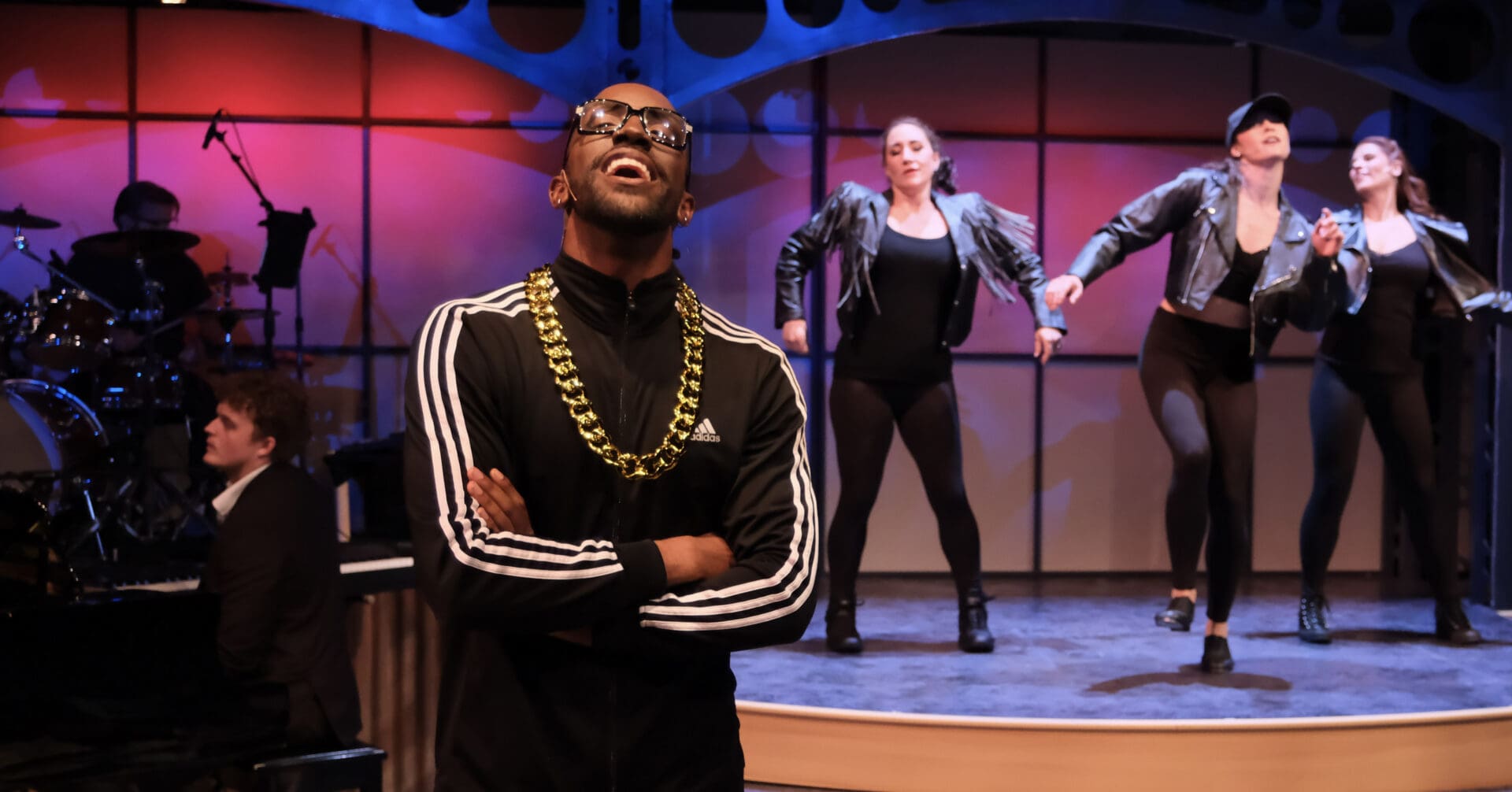
Act II challenges the two writers to figure out how to represent just so much music from 1950–2000. While the response to the Vietnam War was covered well, the 1960s felt rushed, missing out on huge girl groups like the Supremes. Keeping in mind that much of the ’60s music (like the Beatles) came from the British Invasion, the variety and representation covered are admirable. We do hear a bit of Hendrix, but perhaps a touch of Janis Joplin could have fit in there. From the ’60s right into the ’80s, hard rock, heavy metal, and hair bands could have used at least a nod.
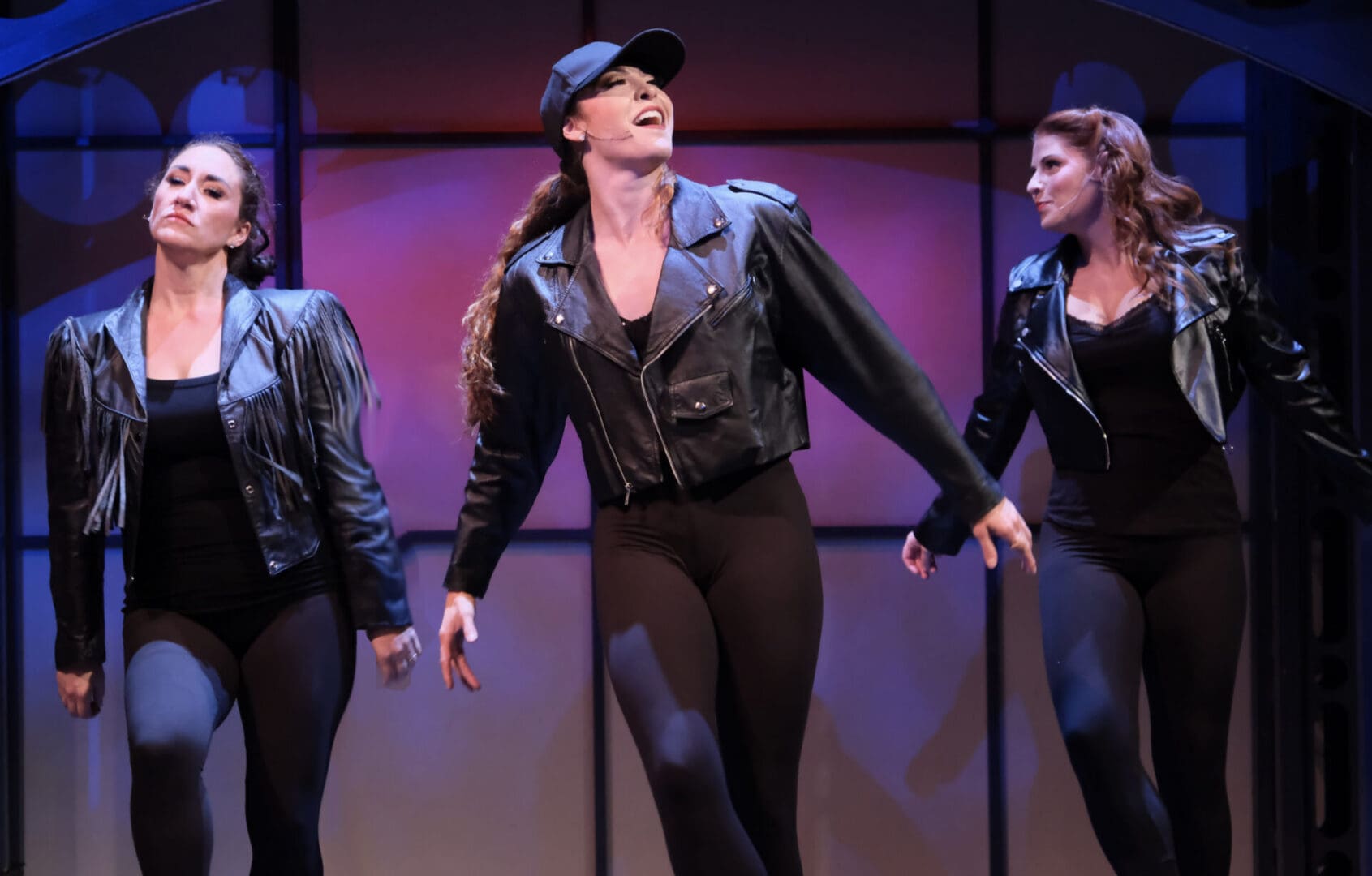
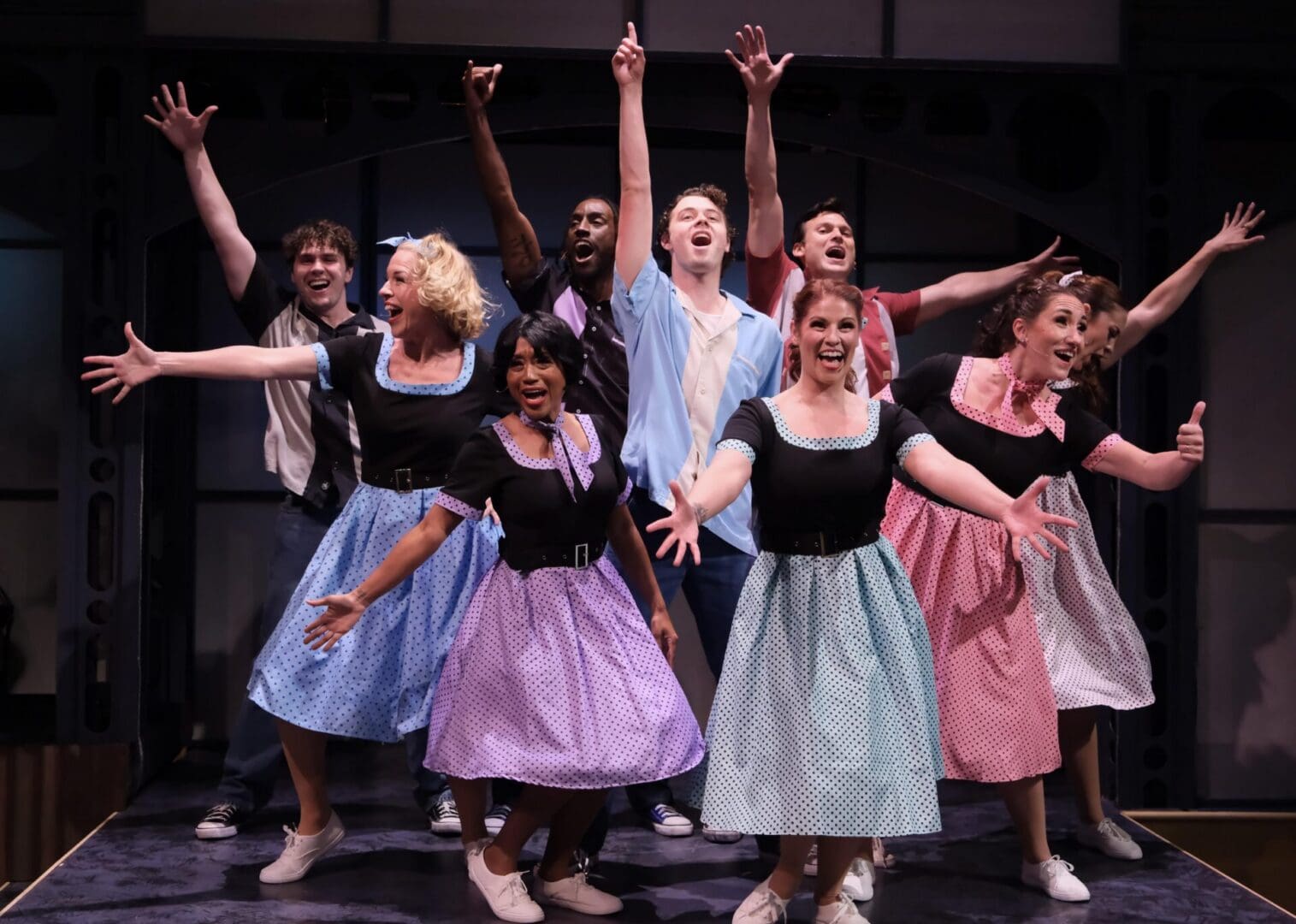
Not to be overlooked, costuming by Jemima Dutra and her team is phenomenal. The insanity of outfit changes backstage can only be imagined, somewhat confirmed in learning that much of the buttoning we see is sewn on, because unseen Velcro is the only way such quick changes can take place. The fewest number of outfits any of the eleven players wears is fifteen—and it goes up from there. Speaking of the eleven players, between the way the actors keep coming out looking different and just how many of them there are, it’s hard to give each their due with highlights, but the entire ensemble, which also included Sarah Busic, Natasha Reese, Lance Arthur Smith, Faith Rush, Ben Reed, and Jimmy Marino, are worthy of praise individually and collectively.
Finally, Lamb’s brings together a terrific set of eight live musicians playing everything from drums to saxophone to clarinet to piano to harmonica—and far more. The musicians are front and center through it all, rather than being hidden behind a scrim. The players are even given opportunities to be woven into the material.
Rather than hitting a wall at the year 2000, the creators knew that the show needed a wrap-up, and they put the cherry on the cake with a medley of three songs that fit the theme of the evening: “One Voice,” “Make Your Own Kind of Music,” and “I Got the Music in Me!”—a perfect ending to an evening reflecting the musical richness of America.
photos by Ken Jacques
American Rhythm
Lamb’s Players Theatre
1142 Orange Ave. in Coronado
Wed at 2; Thu & Fri at 7; Sat at 2 & 7; Sun at 2
2 hours 35 minutes, including intermission
ends on October 24, 2026
for tickets, call 619.437.6000 or visit Lamb’s Players
✦ ✦ ✦ ✦ ✦ ✦ ✦ ✦ ✦ ✦
