


Areas We Cover
Categories

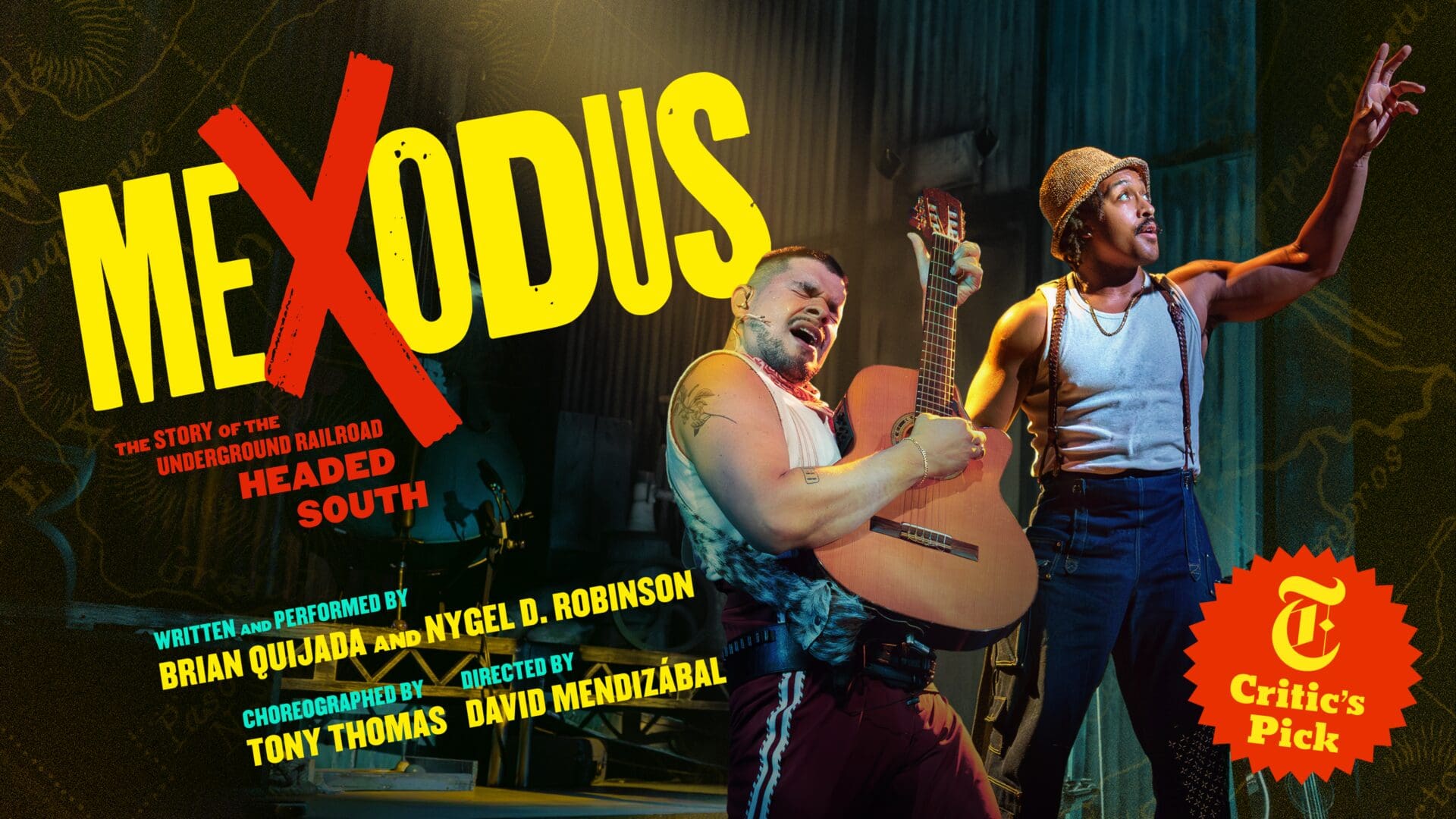
Theater Review: MEXODUS (Studebaker Theater / Chicago)
by Emma S. Rund | November 8, 2026
in Chicago, Theater
THE UNDERGROUND RAILROAD
GETS A NEW TRACK
Two musicians bring a little-known chapter
of American history to life through hip-hop,
live looping, and inventive theatrical storytelling
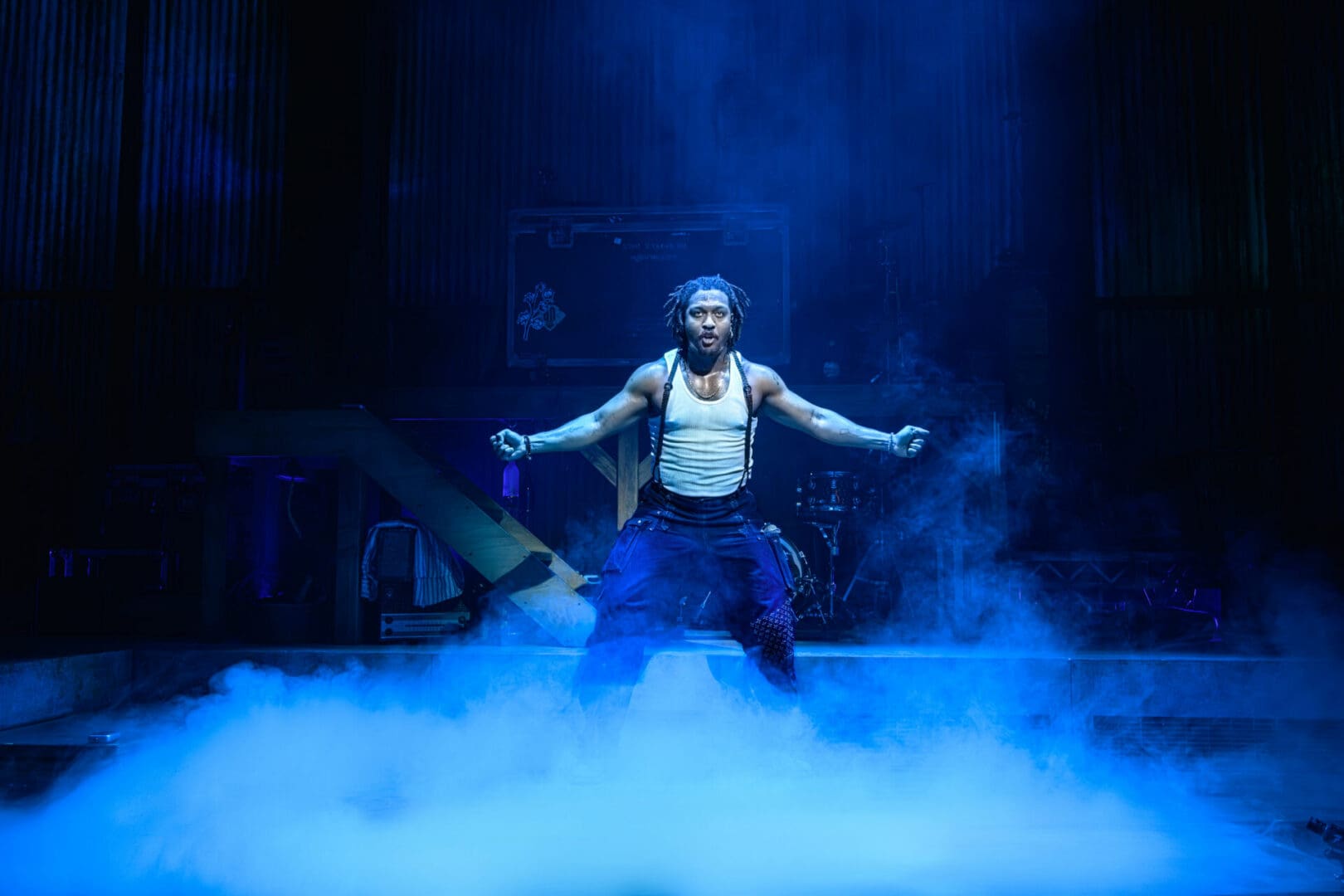
Mexodus takes a leaf out of Hamilton’s book and sets another American history story to hip-hop music with Black and Brown storytellers at the helm. This time, musical theatre is spreading the word about the lesser-known Underground Railroad route from southern Texas to Mexico, across the Rio Grande. Serious history buffs may know about the estimated 3,000 to 10,000 enslaved people who escaped via this route, but most of us are mere mortals who didn’t learn this in school.
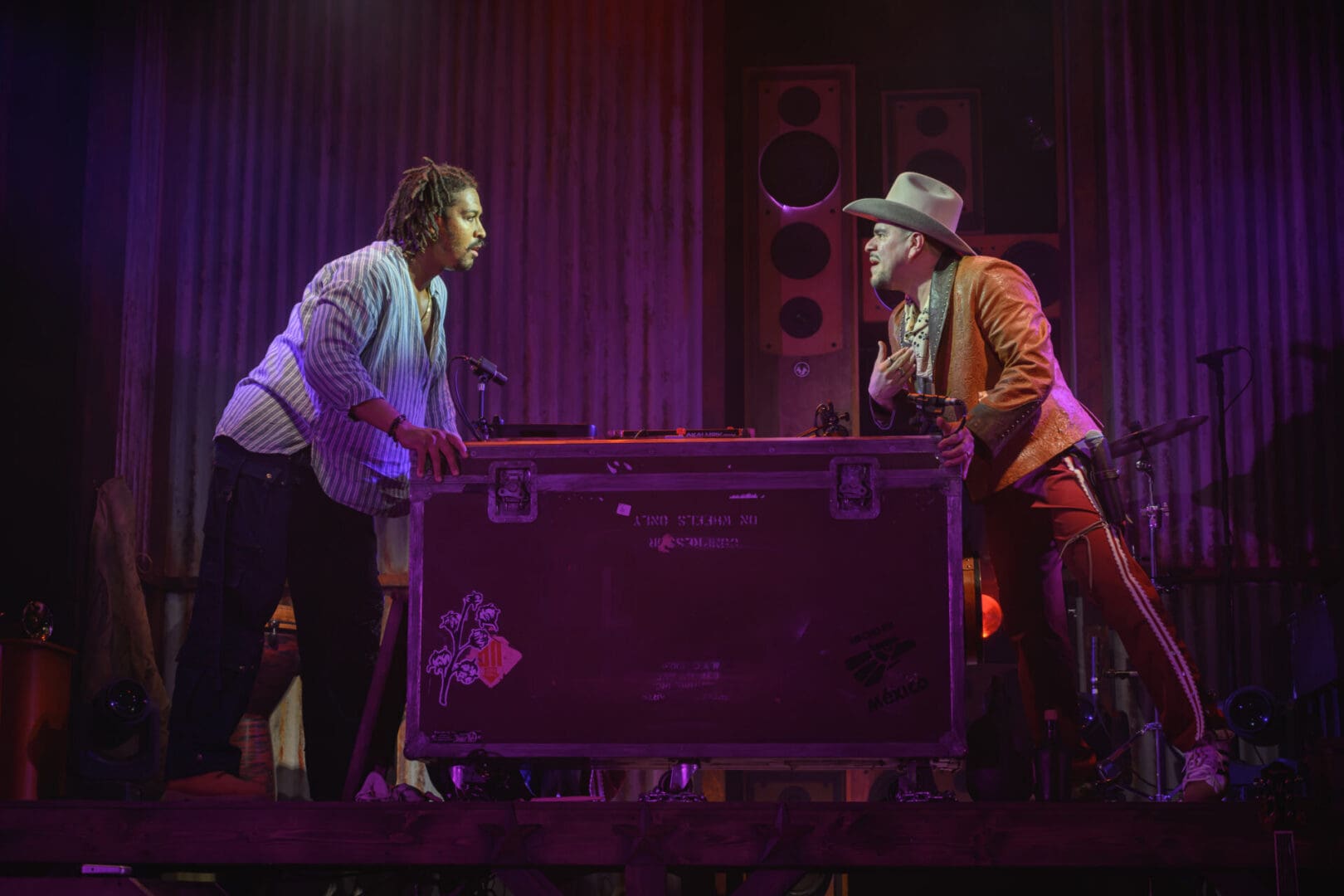
With a concert structure similar to Six, another musical history favorite, Brian Quijada and Nygel D. Robinson, two remarkable musicians and co-creators of the show, hit the stage ready to hype up the crowd, giving us permission to clap and yell and shake ass. But unlike in Six, Quijada and Robinson take the stage as themselves, telling us why this story is so important for them to tell as “two bodies in America” before they take on the roles of their fictional ancestors, Carlos (Quijada) and Henry (Robinson).
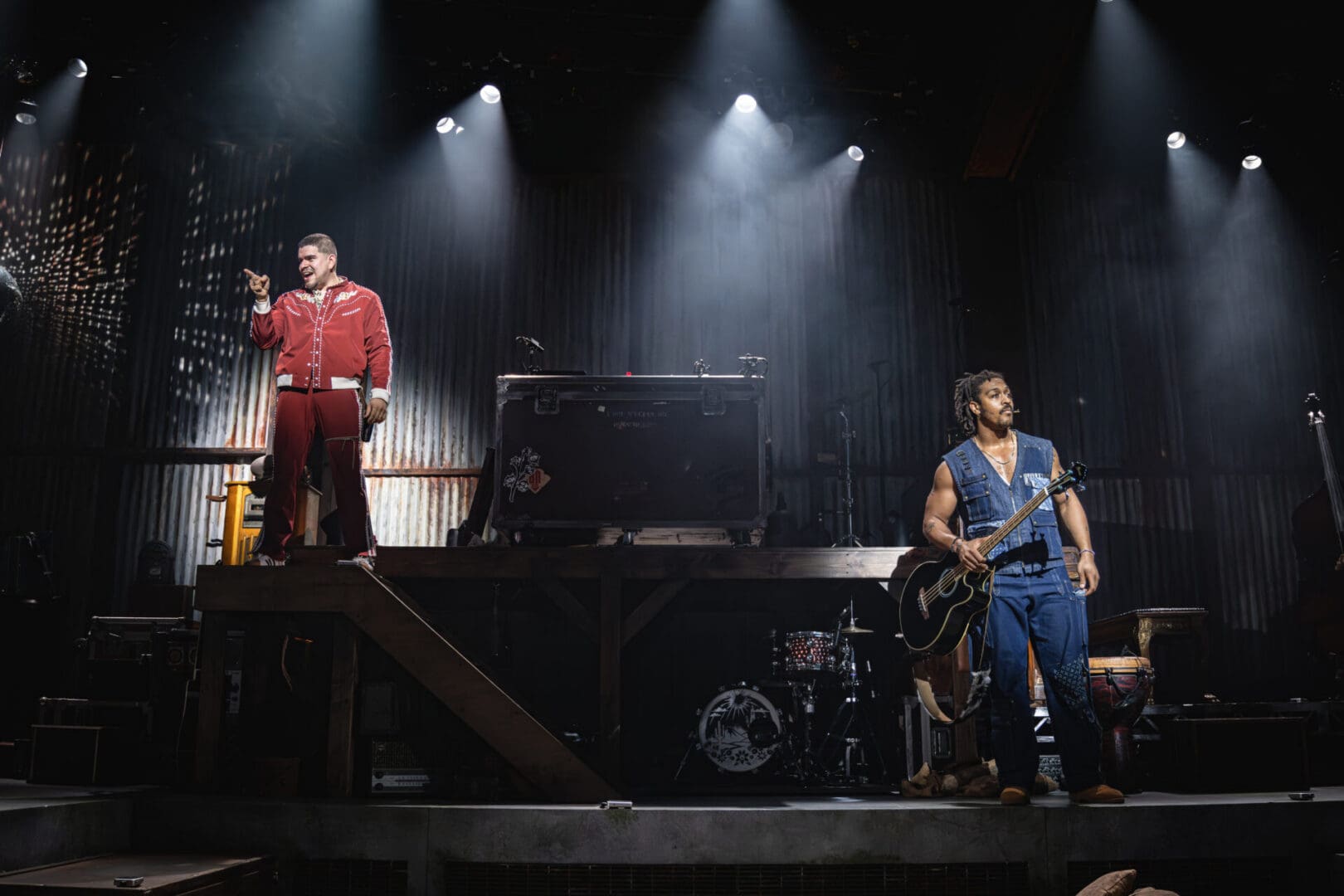
Making use of live instruments scattered around the stage—there doesn’t seem to be anything these two can’t play—Quijada and Robinson create their own accompaniment, mixed live before our eyes (looping systems architecture and sound design by Mikhail Fiksel). They make intentional use of each instrument and musical style to drive the story forward. Henry, an enslaved Black man in southern Texas, escapes across the Rio Grande, almost drowning along the way. But Carlos, a Mexican army medic turned farmer, rescues him. As Henry recovers in Carlos’s barn, the two navigate their differences and learn that “todos estamos juntos en esto.”
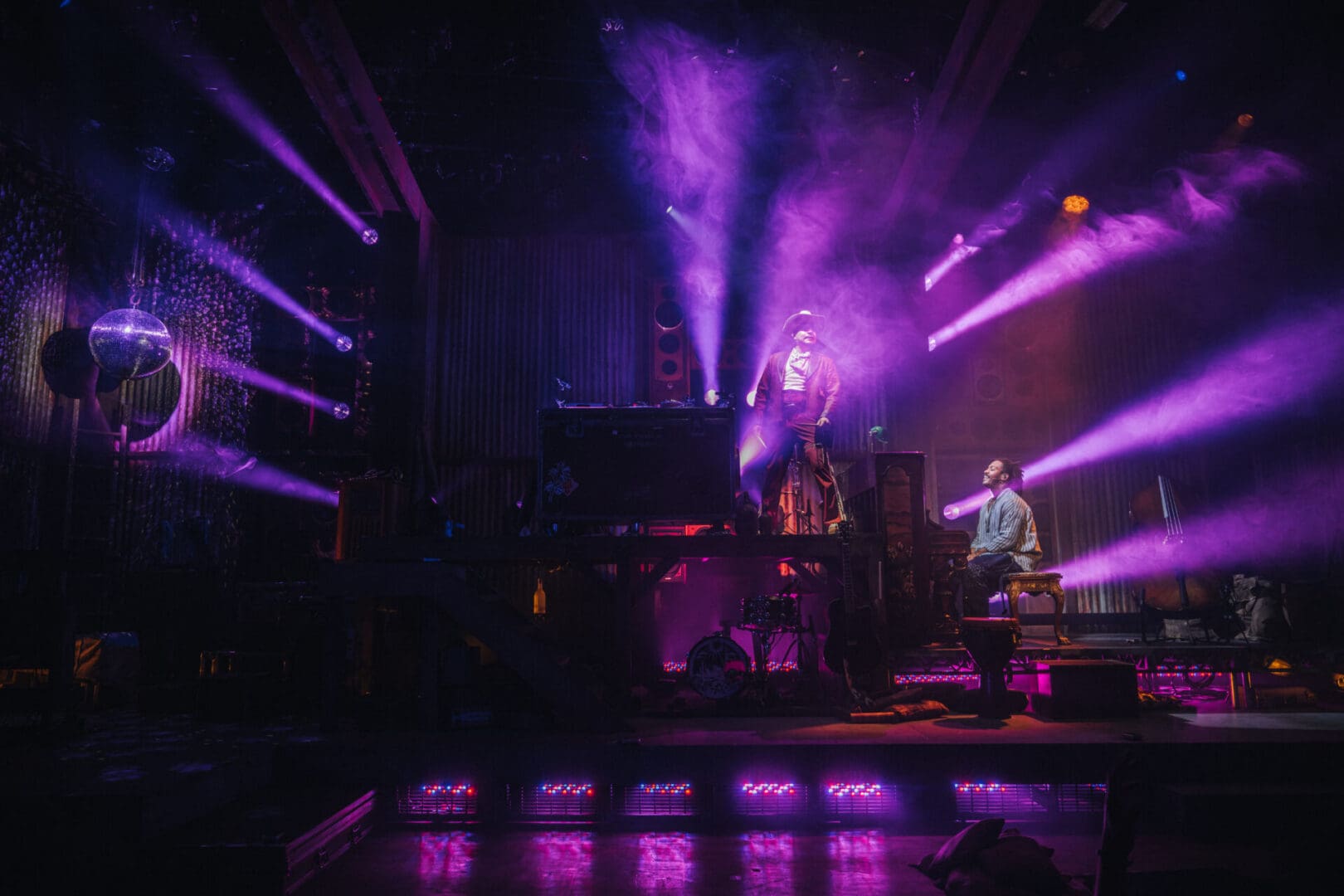
The brilliance of this Chicago premiere, directed by David Mendizábal, lies in its use of musical instruments, including props you might not expect to make sound, in every aspect of the storytelling. On a loop, a plucked hair comb becomes the sound of crickets; snapping fingers become the pops of a crackling fire; a sloshing jug of water becomes the sound of a flood. Quijada and Robinson make physical use of instruments as well. Guitars become guns, and in a particularly successful moment, Carlos and Henry use their guitars as shovels to perform a delicate finger-picked duet as they work to save and farm Carlos’s recently flooded land.
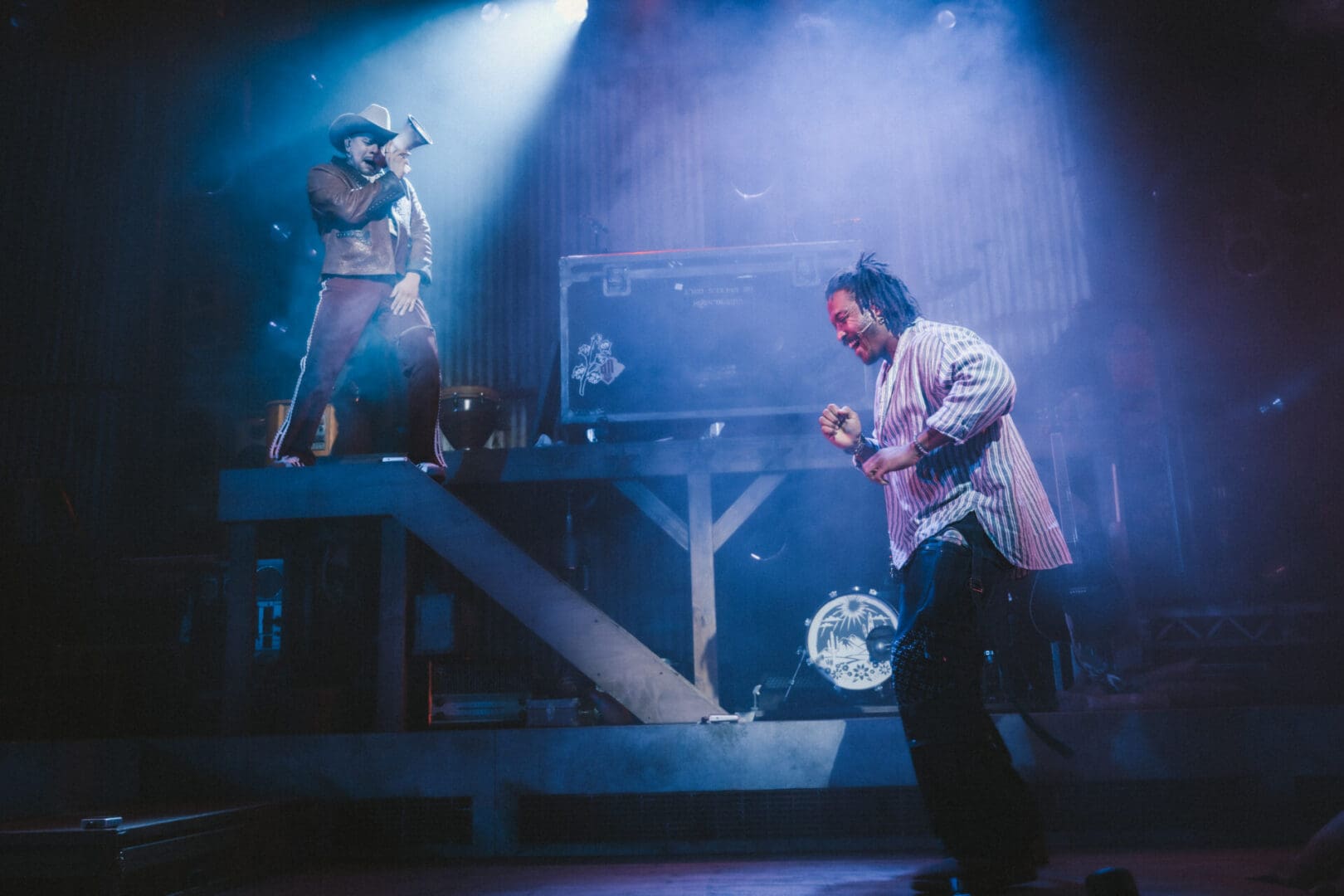
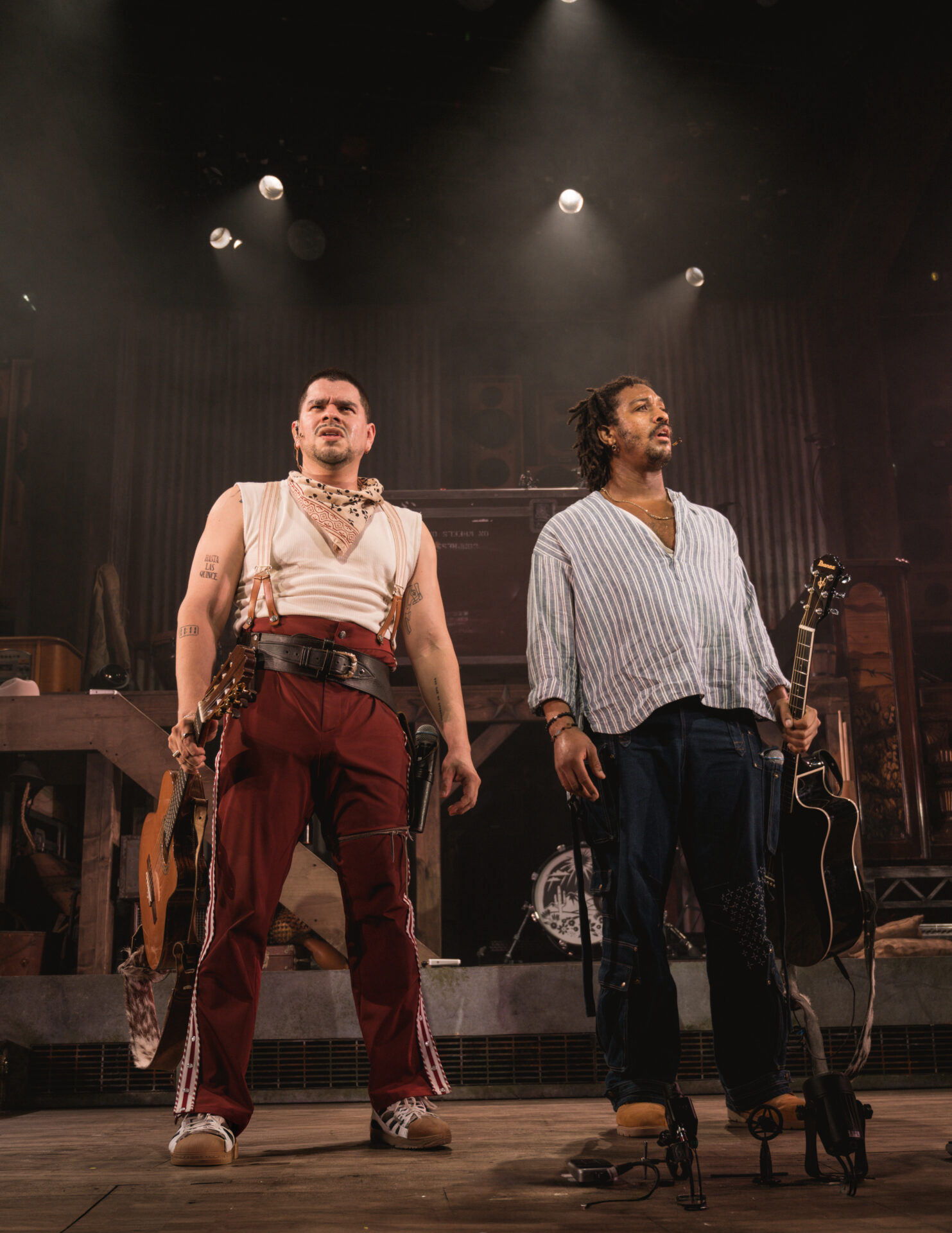
The costumes, also designed by Mendizábal, encapsulate the real people and fictional characters while reflecting both the modern hip-hop and historical subject matter of the show. He puts Quijada in track pants, a leather holster for his handheld mic, and Adidas sneakers with spurs attached.
Lighting designer Mextly Couzin steals the show a few times with spectacular light displays that both aid in telling the story and would not be out of place in an arena concert.
Video and projection designs by Johnny Moreno help the audience follow along with words that fly by, emphasizing important ones like “MERCY” in bright neon letters across the set and incorporating live video of Carlos and Henry from more personal angles as they perform Tony Thomas’s evocative choreography.
The story in Mexodus is simple and straightforward, but its live-mixed hip-hop-meets-boleros concert format makes this limited run a must-see.

✦ ✦ ✦ ✦ ✦ ✦ ✦ ✦ ✦ ✦
photos by Thomas Mundell
Mexodus
Studebaker Theater, P3 Productions and Audible,
in collaboration with Teatro Vista Productions
Studebaker Theater at the Fine Arts Building, 410 S. Michigan Ave.
90 minutes, no intermission
ends on November 21, 2026
for tickets ($36+, students $20), visit Fine Arts Building
✦ ✦ ✦ ✦ ✦ ✦ ✦ ✦ ✦ ✦
