


Areas We Cover
Categories

Dance Review: PAUL TAYLOR DANCE COMPANY (Lincoln Center / New York)
by Gregory Bernard | November 8, 2026
in Dance, New York
THE JOY OF MOVEMENT
From the breezy “Airs” to the exuberant “Esplanade”
and Robert Battle’s premiere “A Starling,”
Paul Taylor’s dancers are a breath of fresh air
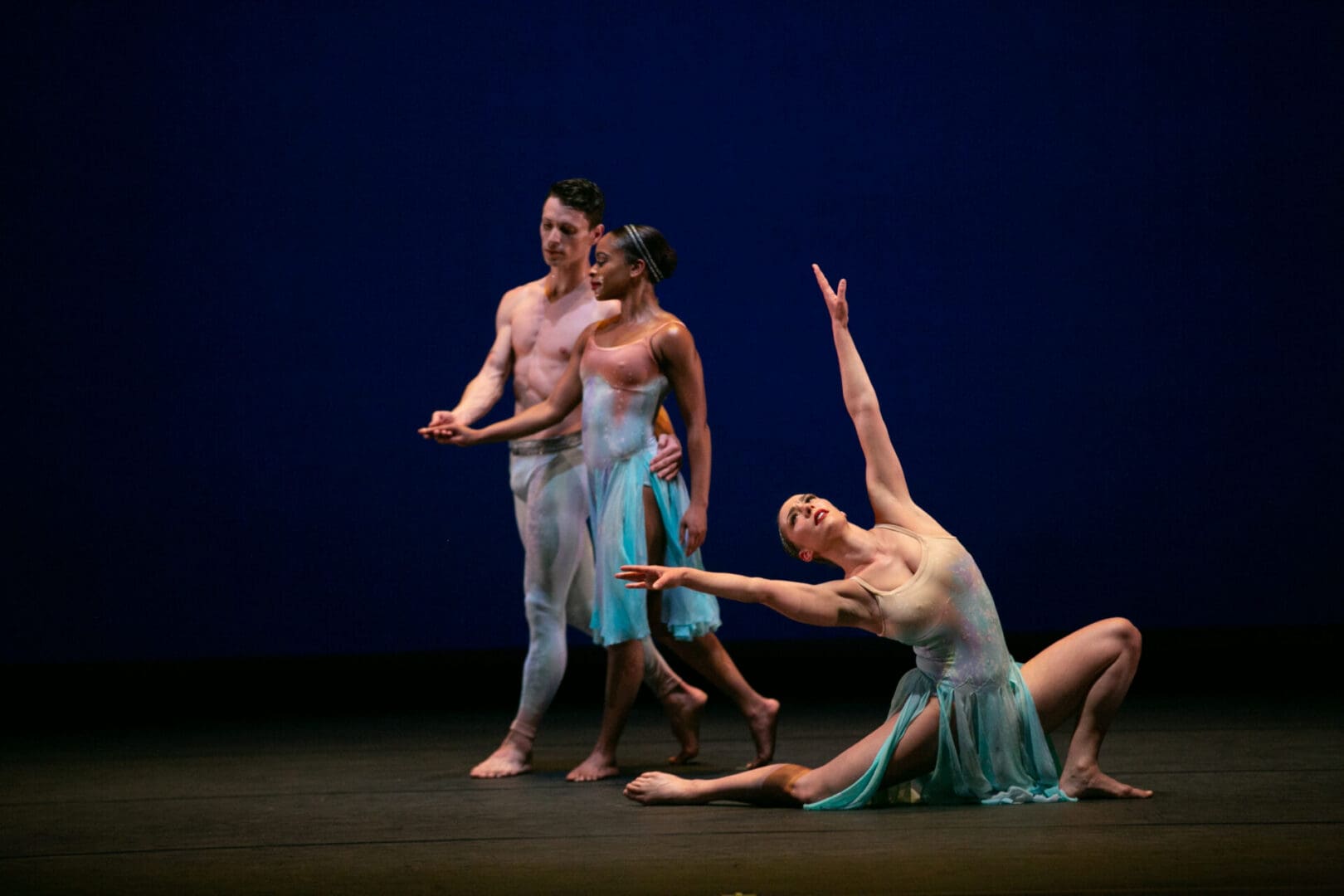
John Harnage, Jada Pearman, Jessica Ferretti in Airs (Whitney Browne)
Paul Taylor’s dance company, founded in 1954, presented three works on November 6 while in residence at the David H. Koch Theater at Lincoln Center, offering a repertoire of both new and classic pieces through November 22, 2026. The program was a thoroughly accomplished evening of dance, showcasing the company’s versatility, technical prowess, and enduring ability to bring joy to the stage.
The opening work, Airs, which premiered in 1978, could hardly have been more aptly titled. Taylor’s choreography had a continuous breeze about it, flowing as effortlessly as the women’s panel skirts, which seemed to catch the wind with every movement. Costume designer Gene Moore dressed the seven dancers in sea-mist green. All were barefoot, while the men performed bare-chested, displaying their impressively sculpted torsos.
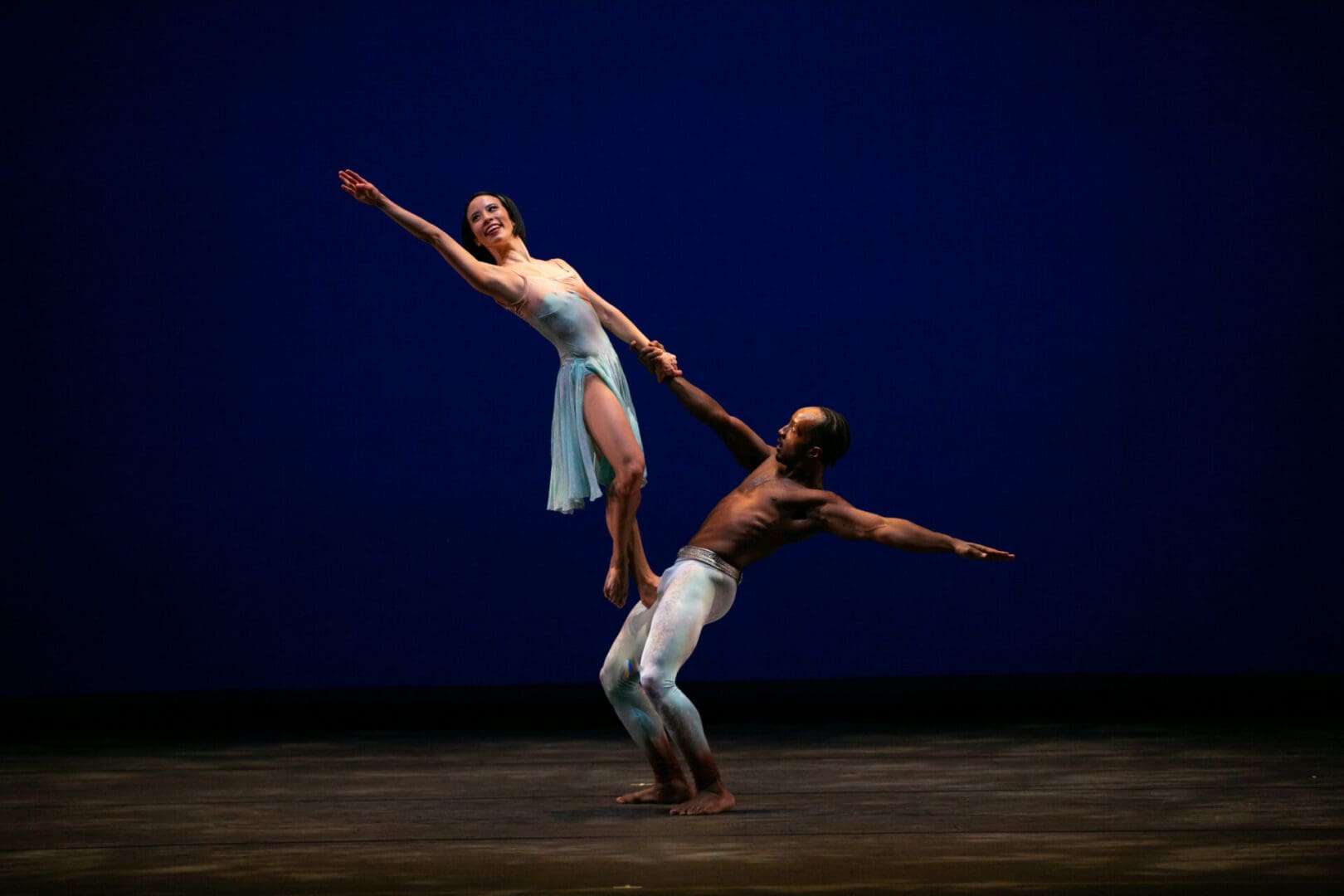
Madelyn Ho, Alex Clayton in Paul Taylor’s Airs (Whitney Browne)
Conducted by Tara Simoncic, the Orchestra of St. Luke’s expertly performed Handel’s excerpts from Concerti Grossi, with the harpsichord adding a distinctive Baroque flavor throughout the ten movements. The music was so buoyant and joyful that the three couples and one female soloist, Jessica Ferretti, seemed unable to contain their delight. Running, lifting, and moving almost nonstop, the dancers displayed an impressive variety of formations and combinations. Highlights included Ferretti’s solo, duets by Jada Pearman and Austin Kelly, and later by Madelyn Ho and Alex Clayton, along with trios, quartets, and full-company sequences. Brief passages of slower walking provided welcome contrast to the otherwise brisk pace. The result was a jubilant breath of fresh air.
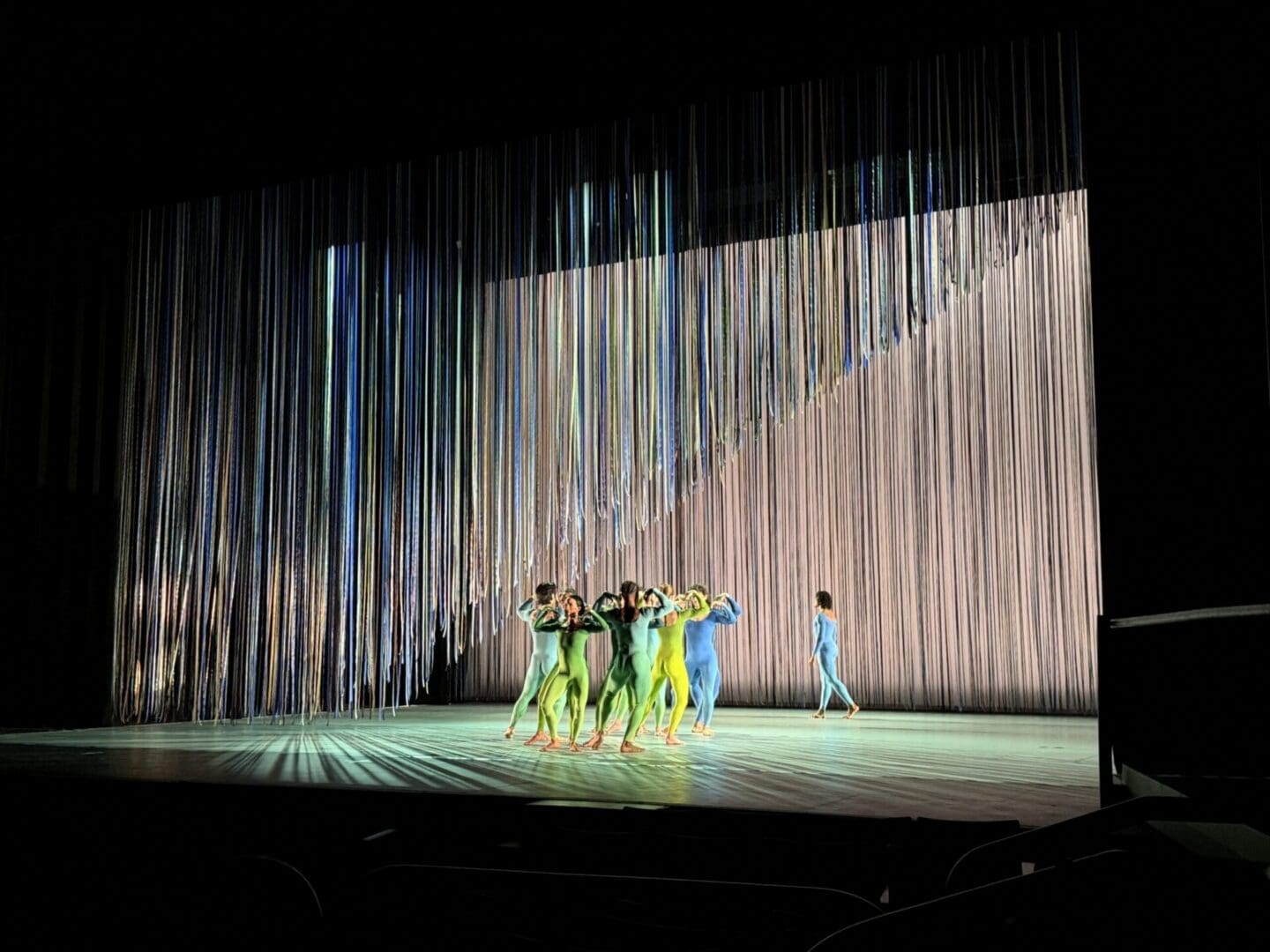
A Starling
The second work, A Starling, was a world premiere choreographed by Robert Battle for eleven dancers. Perhaps more accurately, it was less about a single starling than an entire community of them. With sets and costumes by Anne Patterson, the opening stage picture immediately drew applause. Several layers of hanging ribbons created a shimmering spectacle, with sections rising and falling and their sharply angled edges adding stunning visual depth to each movement. Although striking to look at, the streamers functioned more as a scenic element than as an integrated participant in the choreography.
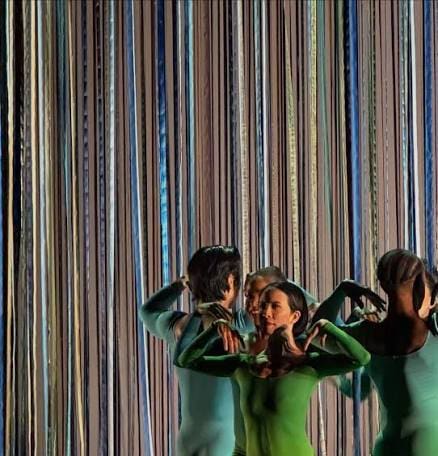
A Starling
John Mackey’s outstanding score was a highlight in its own right, crackling with electricity and percussion reminiscent of the theatrical excitement of Leonard Bernstein, with occasional touches that suggested the cinematic fantasy of Harry Potter. The middle section brought a majestic lushness worthy of the grandest award-winning film scores, under the baton of David LaMarche.
The eleven dancers, all barefoot and dressed in full-body leotards in varying combinations of green and blue, moved with quick, almost animalistic gestures. This flock-like community brought a distinctly contemporary, more angular modern-dance sensibility to the program. The choreography was highly technical, and the dancers performed it with admirable precision and energy. The company members included Ho, Kristin Draucker, Clayton, Devon Louis, John Harnage, Pearman, Ferretti, Kelly, Emmy Wildermuth, Payton Primer, and Caleb Mansor. For me, however, the true star of this work was Mackey’s score, which gave the piece much of its dramatic impact.
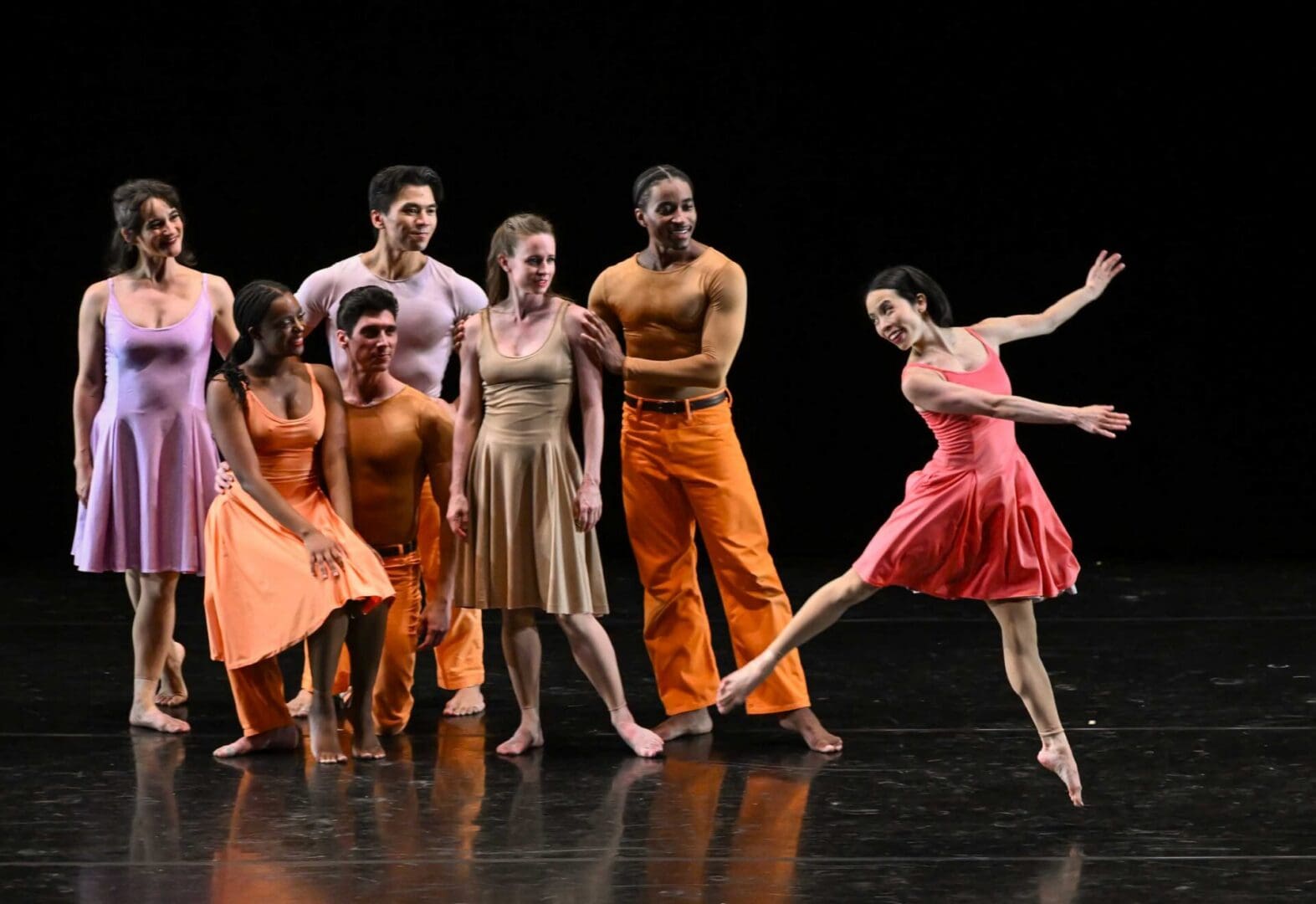
The Company in Paul Taylor’s Esplanade (Ron Thiele)
The final work, Esplanade, first performed in 1975, returned us to Taylor’s choreography. Accompanied by Johann Sebastian Bach’s Violin Concerto in E Major and Double Concerto for Two Violins in D Minor, the performance featured violinists Krista Bennion Feeney and Alex U. Fortes.
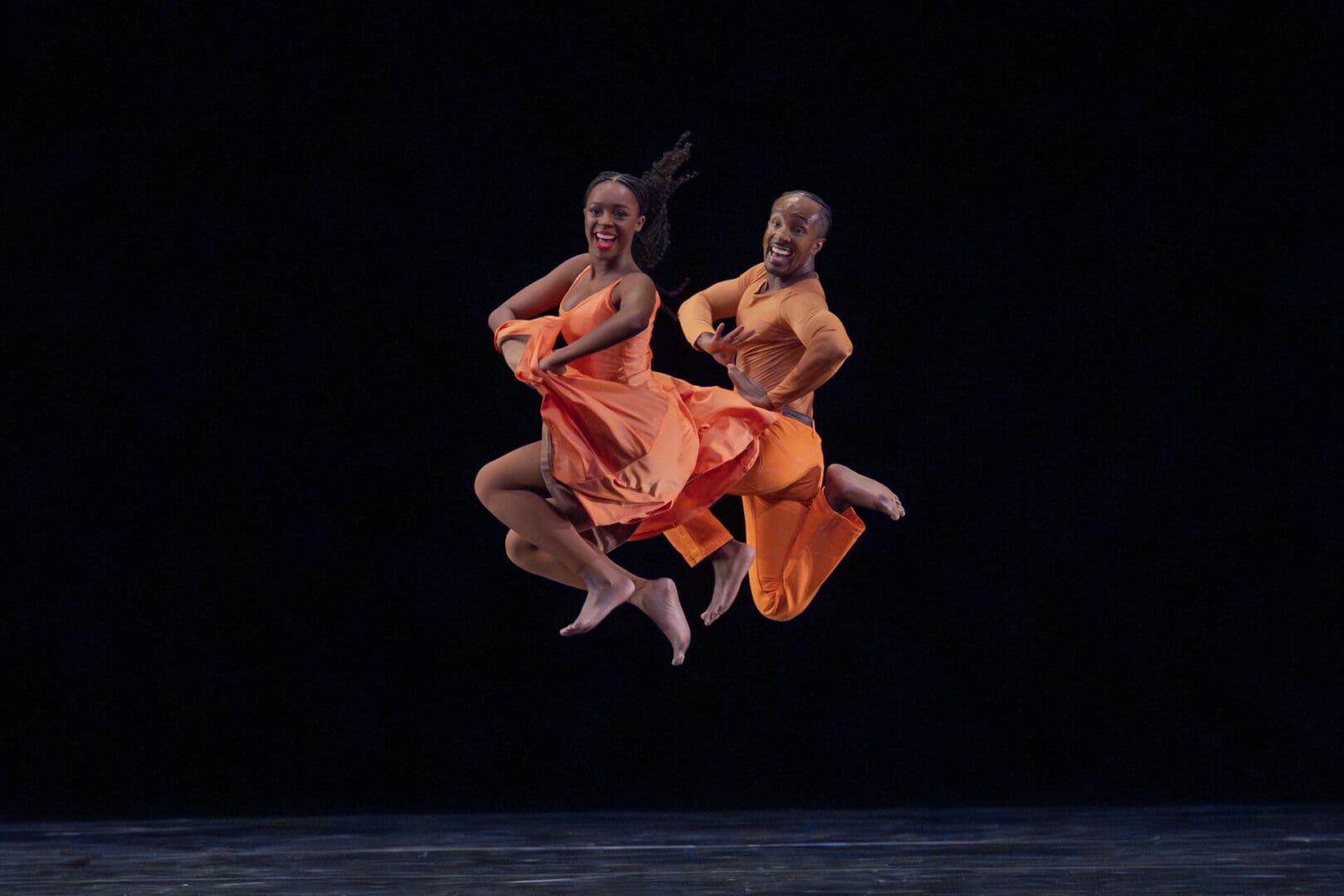
Gabrielle Barnes and Alex Clayton in Paul Taylor’s Esplanade (Hisae Aihara)
The nine dancers, again barefoot, wore costumes in fall colors designed by John Rawlings. The men appeared in pants and muscle shirts, as did one of the women, while the remaining women wore leotard tops and skirts. Against a black backdrop, lighting designer Jennifer Tipton created striking theatrical images through dim side lighting and isolated downlights, giving the dancers a sculptural presence.
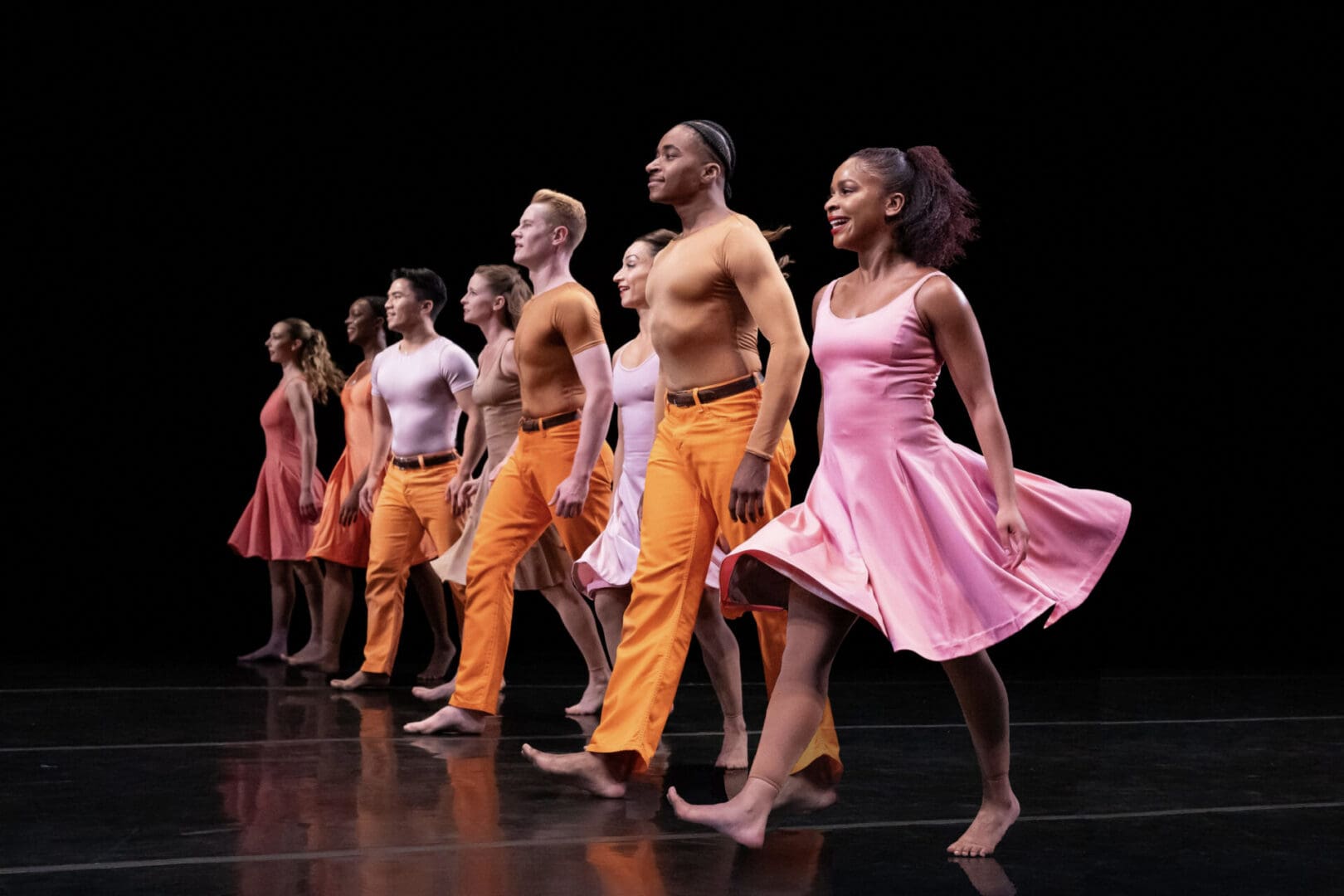
The Company in Paul Taylor’s Esplanade (Steven Pisano)
Conducted by LaMarche, the classical score provided another exuberant foundation for Taylor’s choreography. Running, jumping, rolling, and crawling, the dancers seemed to find endless ways to explore the possibilities of movement. Three couples lifted, twirled, rolled, and were stepped on with infectious playfulness. Once again, smiles filled the stage with unmistakable physical joy.
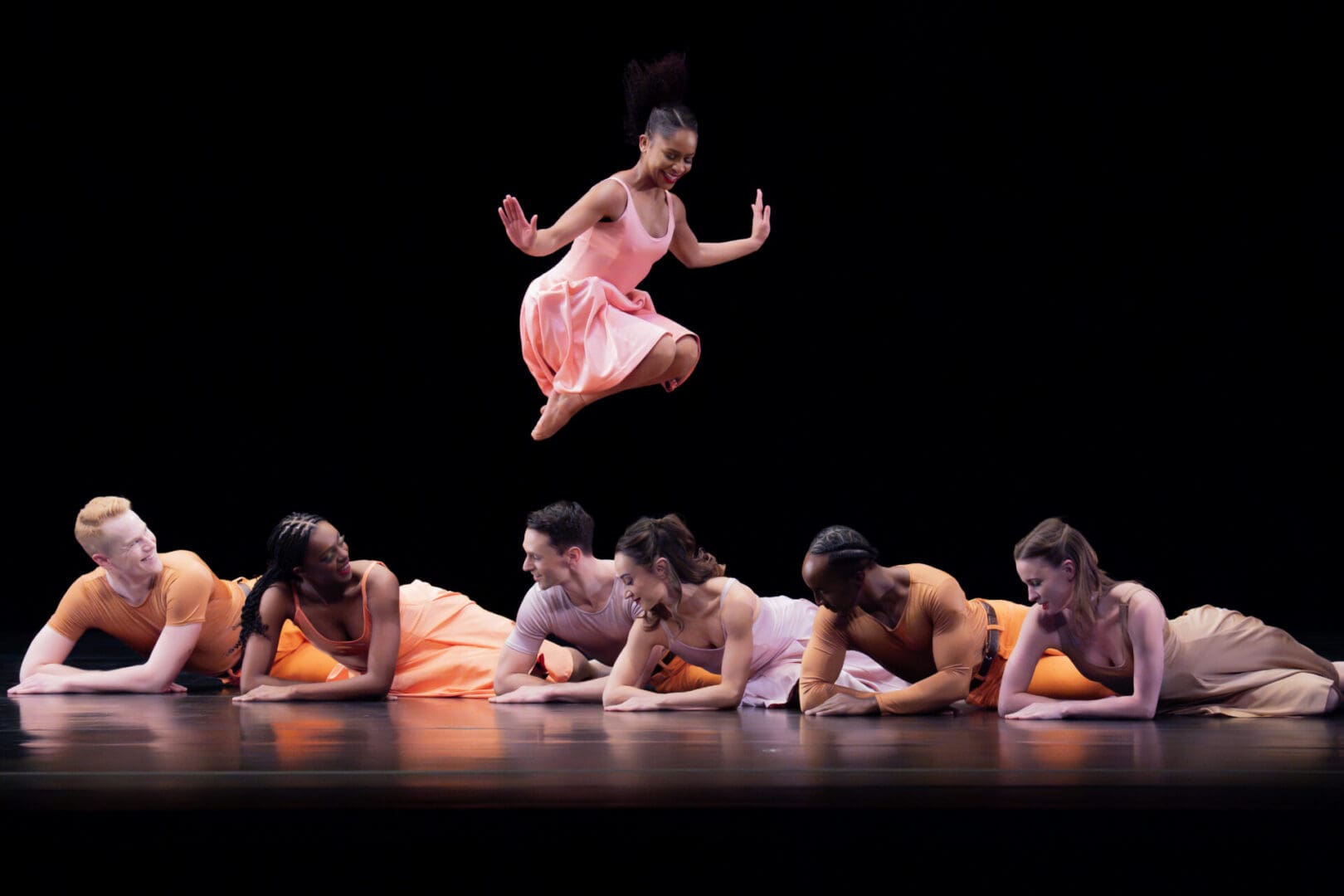
Jada Pearman and company in Paul Taylor’s Esplanade (Hisae Aihara)
Taken together, the three works offered a delightful reminder that dance need not always tell a story to communicate something deeply human. Whether through Taylor’s breezy, playful choreography or Battle’s more contemporary exploration of collective movement, the evening celebrated the freedom, athleticism, and sheer exhilaration of the dancing body. There was no shortage of energy, technical accomplishment, or smiles. And lots of running. The enthusiastic applause that filled the Koch Theater was well deserved. We left feeling just a little lighter, reinvigorated, and smiling ourselves.
✦ ✦ ✦ ✦ ✦ ✦ ✦ ✦ ✦ ✦
Paul Taylor Dance Company
David H. Koch Theater at Lincoln Center
20 Lincoln Center Plaza, New York
running time and programs vary
Tue–Thu at 7; Fri at 8; Sat Nov 14 & 21 at 2 & 8; Sun Nov 15 & 22 at 3
ends on November 22, 2026
for tickets (from $19), visit Paul Taylor Dance Company
✦ ✦ ✦ ✦ ✦ ✦ ✦ ✦ ✦ ✦
