


Areas We Cover
Categories

Theater Review: ASSASSINS (Last to Leave Theater Company / Los Angeles)
by Tony Frankel | November 13, 2026
in Los Angeles, Theater
A LESSON PLAN
WITH A BODY COUNT
An ingenious classroom concept gives
Sondheim’s killers a new assignment,
but too many of them fail to make the grade
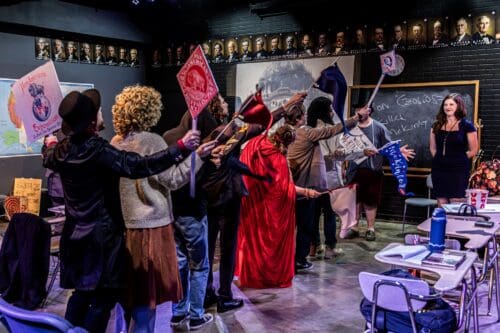
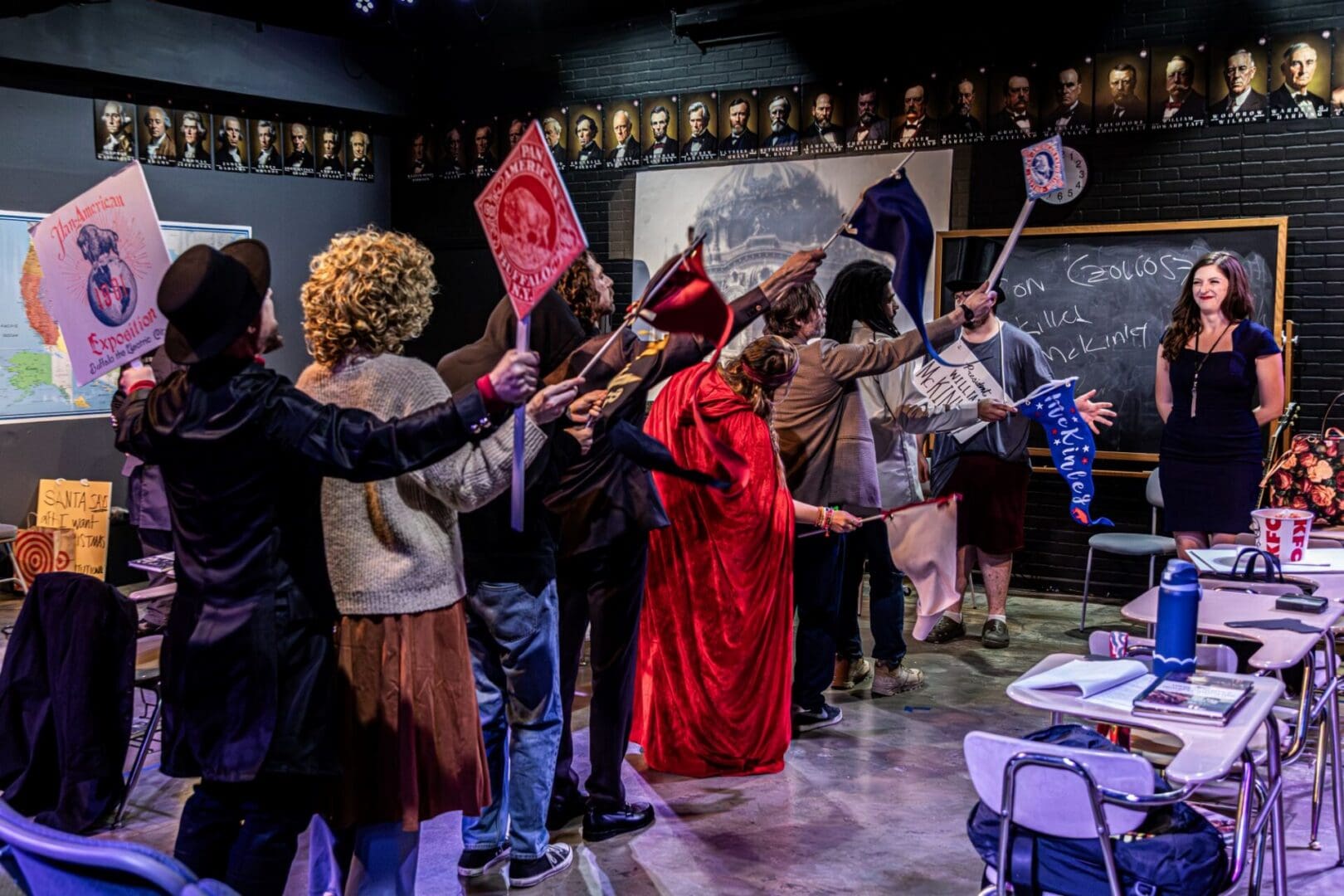
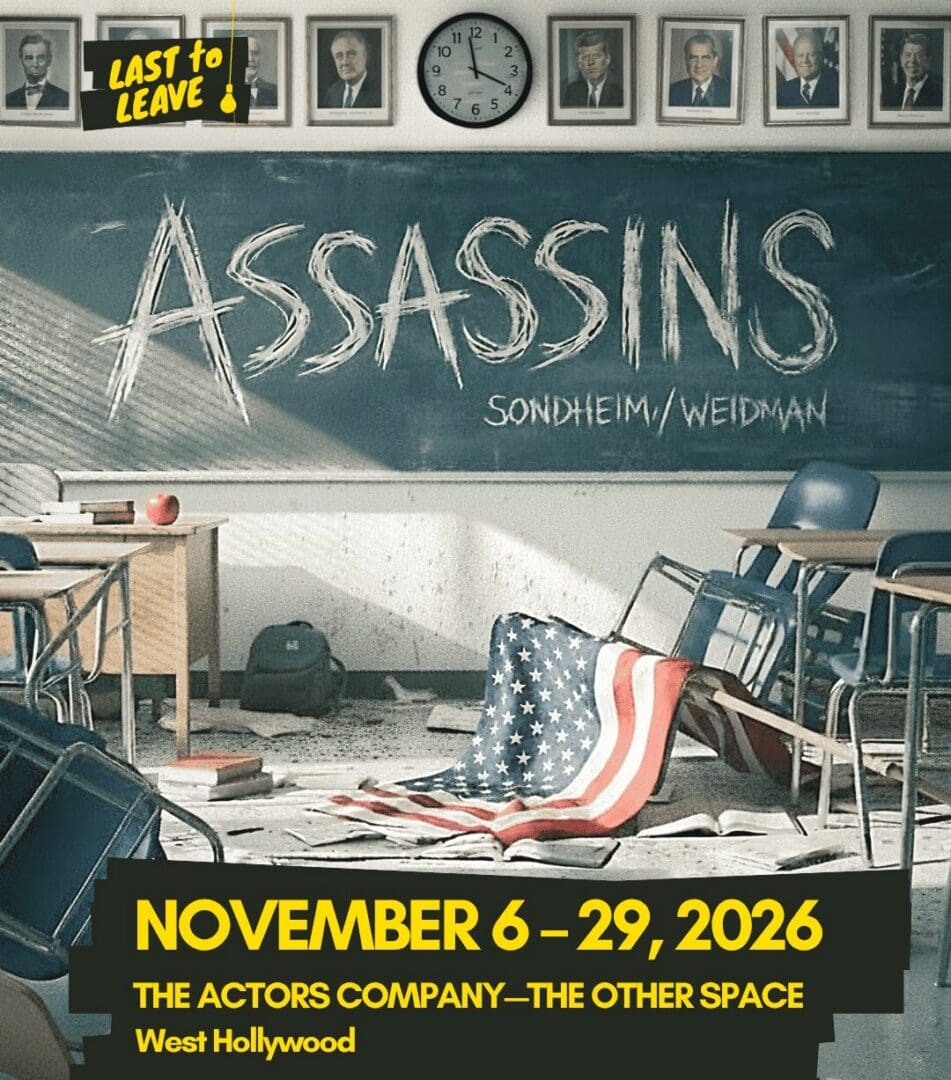
There’s something perversely appropriate about turning Assassins, Stephen Sondheim and John Weidman’s musical about Americans who have killed or attempted to kill a president, into a classroom exercise. After all, what better place to examine the American obsession with violence, grievance, and the promise of being somebody than a room devoted to teaching history? Yet there’s a chilling irony in setting a musical about murderers in a classroom, given how often America’s classrooms have themselves become scenes of gun violence. In the inaugural production by Last to Leave Theater Company, director Matthew Latkiewicz has devised an inspired conceit. Unfortunately, the more insistently he applies it, the less persuasive the musical becomes.
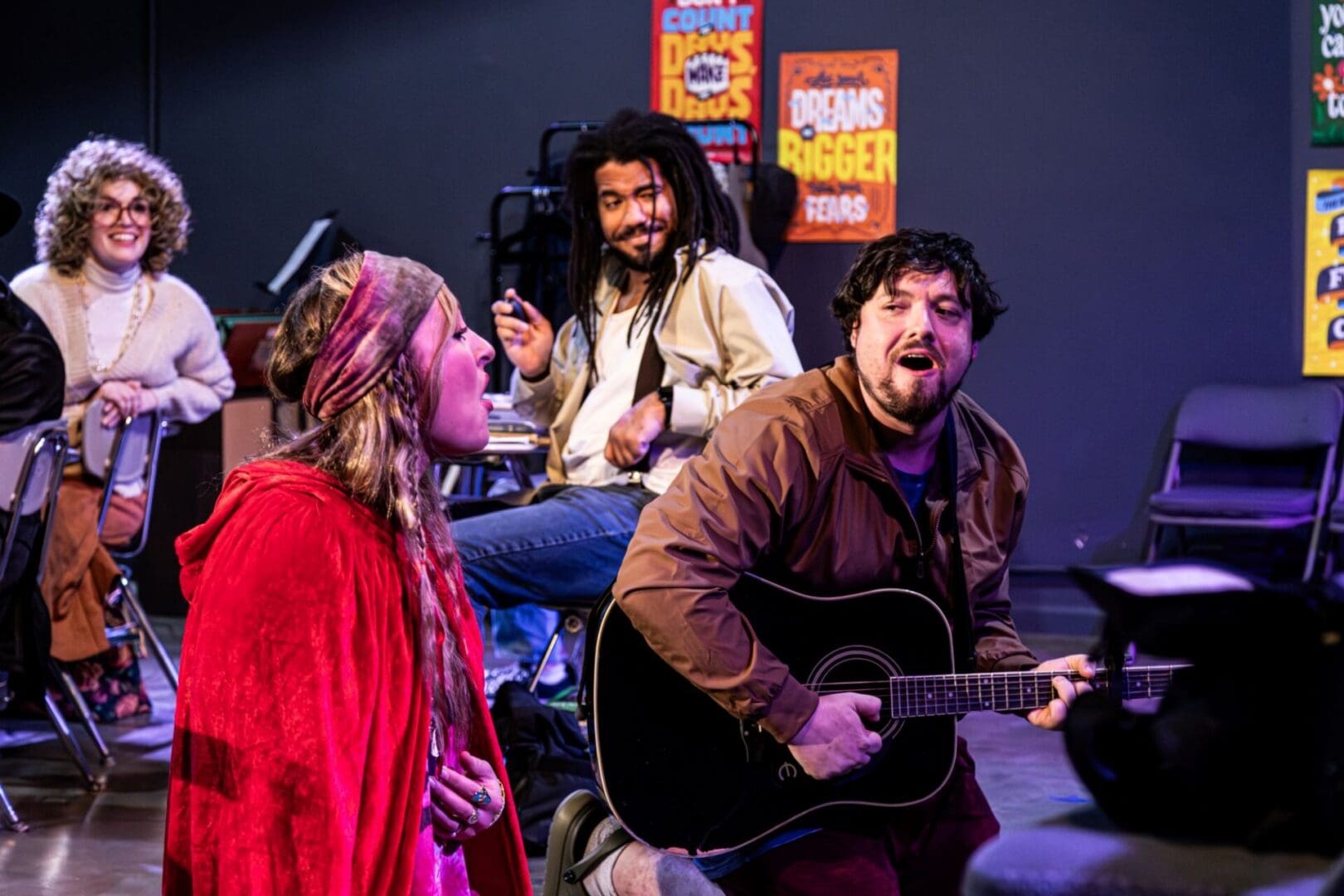
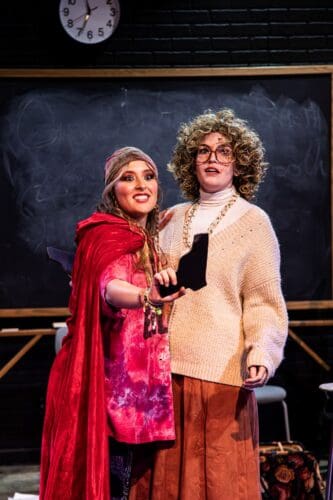
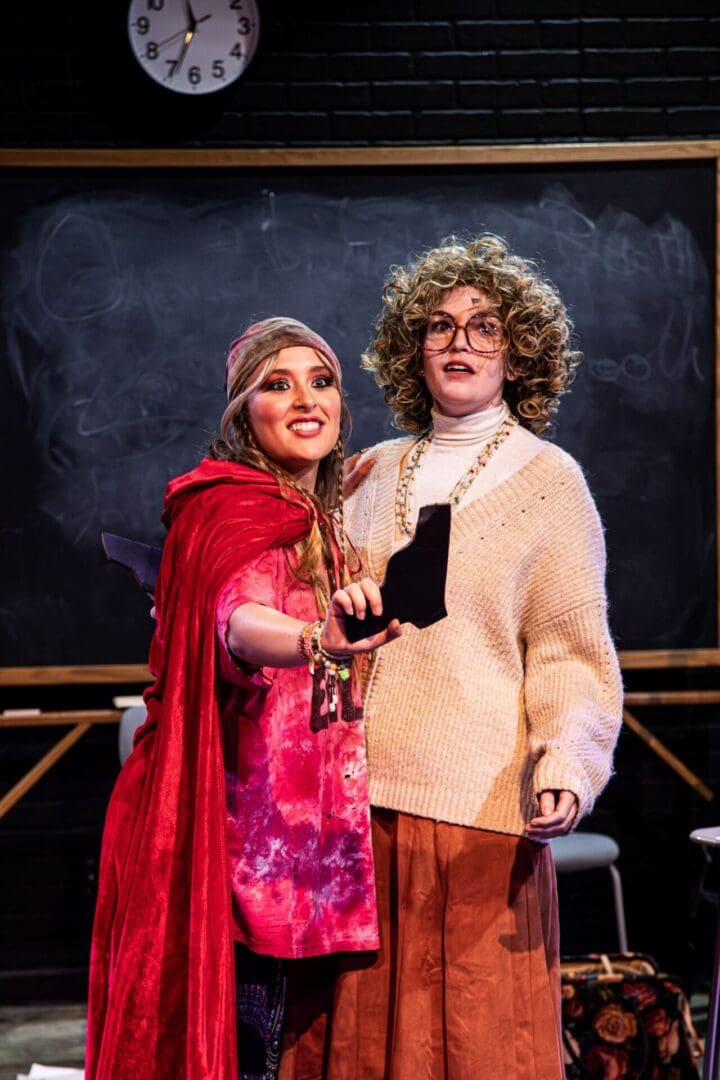
The setting is November 2029, and nine citizens have been assembled for a compulsory “national unity demonstration.” Under the supervision of two government facilitators, they must present their assigned presidential assassins to an audience that has apparently been invited to witness this exercise in civic rehabilitation (none of the songs or dialogue have been changed). We are part of the demonstration, watching the clearly troubled menagerie seated among desks, a blackboard, a working slide projector, and presidential portraits (I couldn’t help but notice that George Washington’s portrait faces Donald Trump’s). The atmosphere is at once a schoolroom, a political indoctrination session, and a community-theater presentation that could go horribly wrong.
And go wrong it does. But not always in the ways Latkiewicz intends.
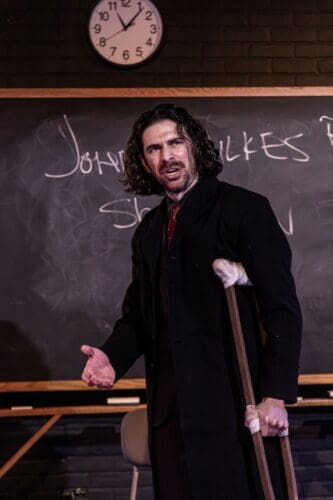
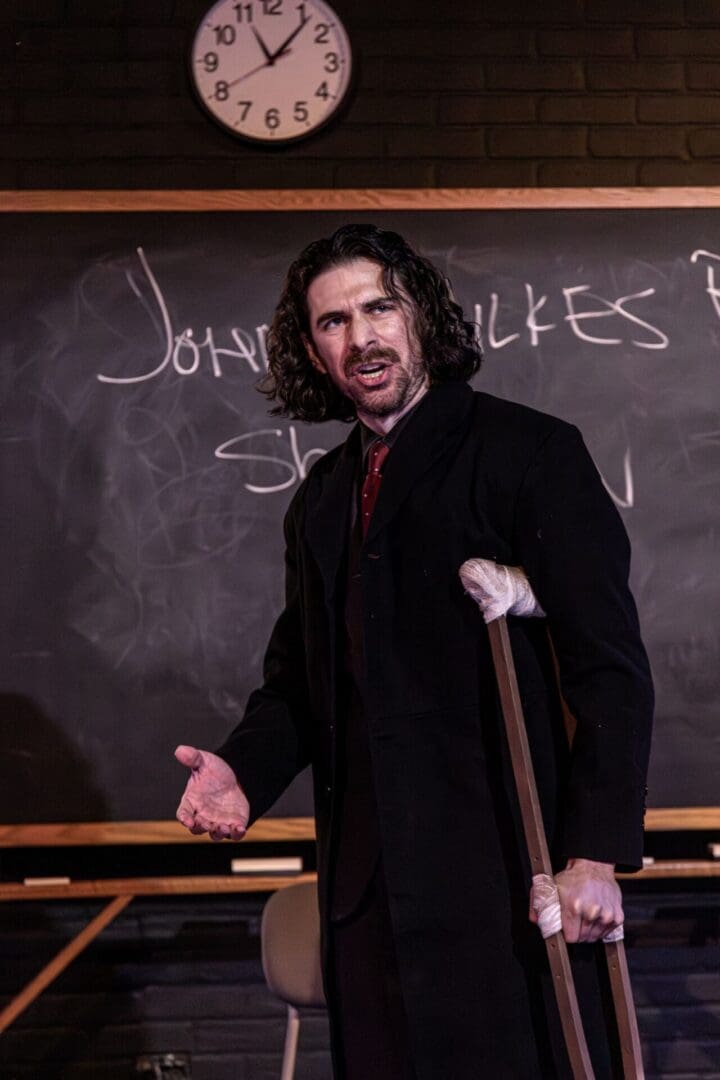
The original Assassins is generally staged as a carnival shooting gallery, where a Proprietor invites a collection of presidential killers and would-be killers to take their shots at the American dream. A Balladeer supplies historical perspective and a measure of sanity until the musical’s extraordinary encounter with Lee Harvey Oswald. Sondheim’s score is a succession of dazzling musical pastiches, with lyrics that can be wickedly funny one moment and devastating the next. Weidman’s book brings together figures who never met, allowing their grievances and delusions to collide across generations.
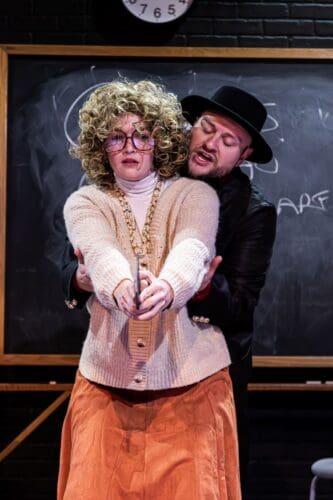
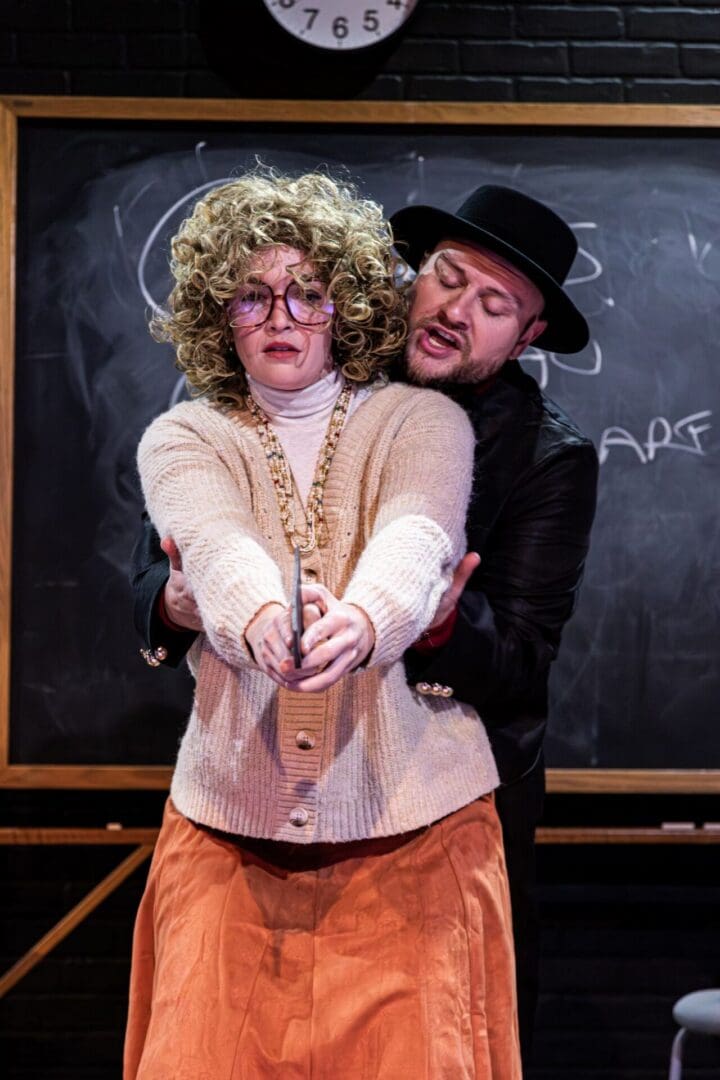
It’s a brilliant theatrical premise, though hardly a flawless musical. The characters are sharply drawn, the tunes are maddeningly catchy, and the lyrics can eviscerate an entire American mythology in a few measures. Yet the work is essentially a series of sketches, with little narrative surprise and fewer genuine revelations about what drives someone to murder a president. Its power lies less in explaining these people than in exposing the enormous distance between what they believe America owes them and what their lives have become.
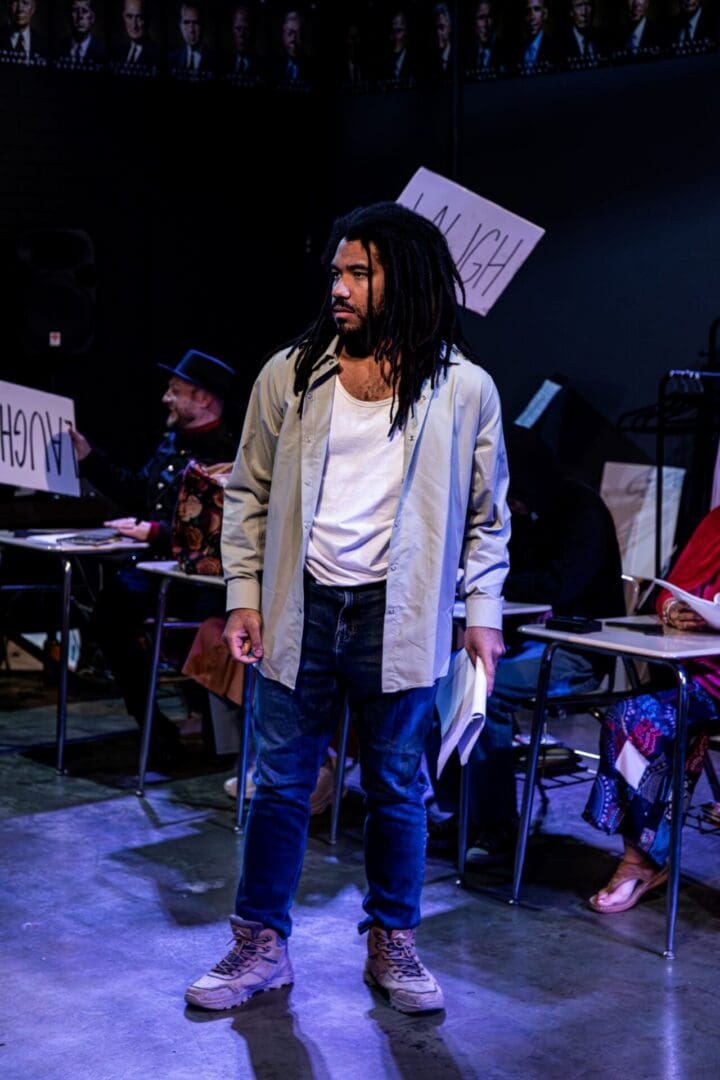
Latkiewicz’s classroom attempts to supply the connective tissue that the original deliberately leaves loose. Here, the assassins are not really assassins but citizens portraying them, sometimes awkwardly, under the watchful eyes of their instructors. The Balladeer (Nick Case) and Proprietor (Nora Elkind) become agents of an authoritarian government, while the students’ assignments gradually take on the character of rebellion.
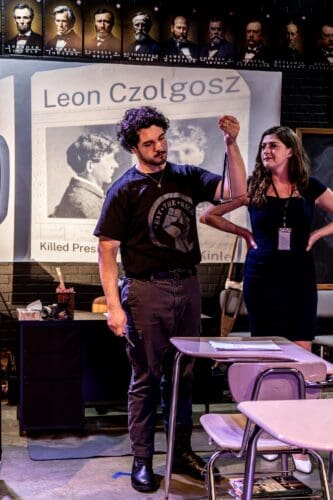
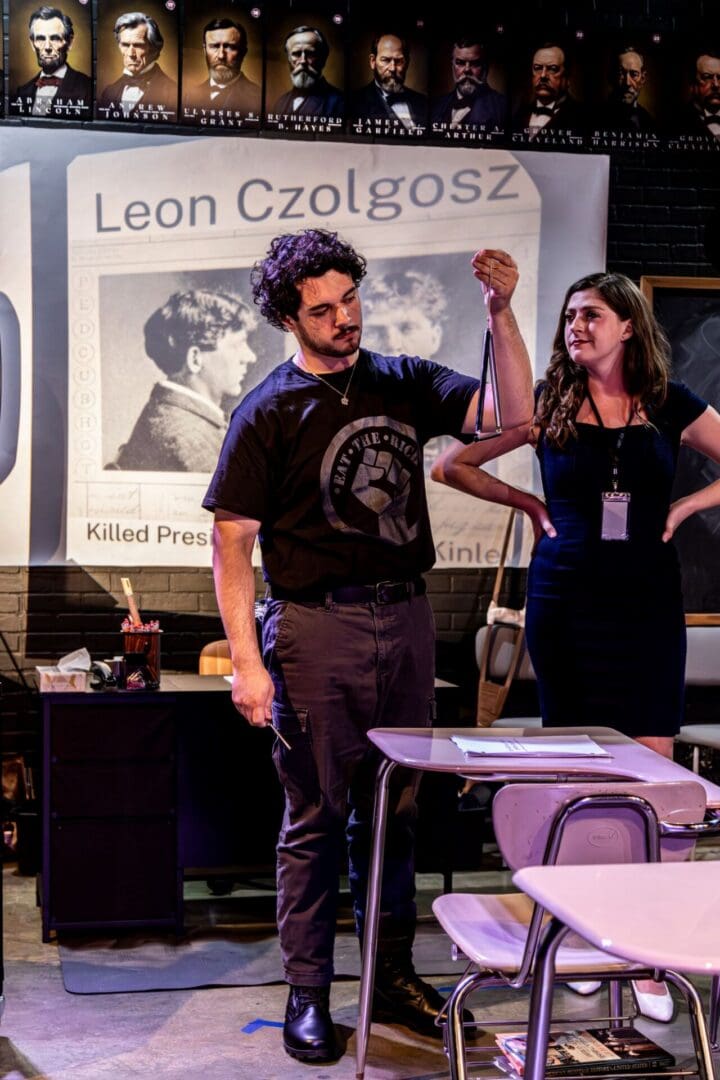
It’s an intriguing reinterpretation, particularly in a country where political violence and government overreach are no longer comfortably distant historical subjects. But the device creates a fundamental problem: Are we watching the assassins, or are we watching frightened citizens trying to impersonate them? Too often, the performers seem caught between those two possibilities. Some stand with the uncertain, deer-in-the-headlights expressions of children putting on a school show, while individual scenes that should have lives of their own are left dangling within the imposed framework.
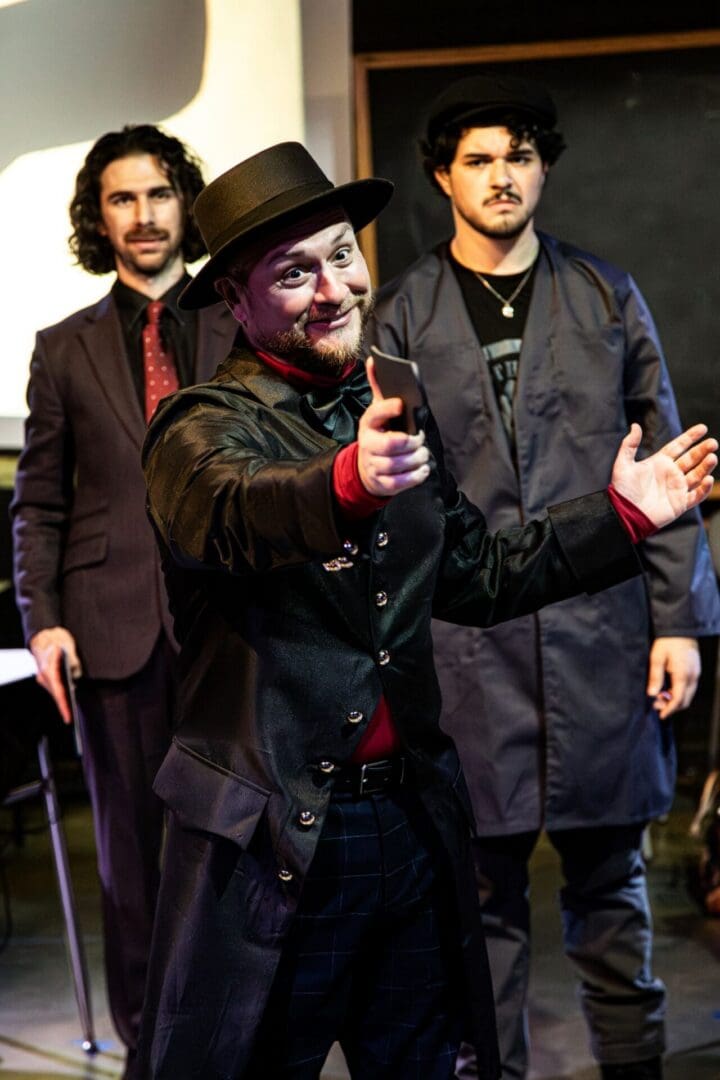
This is especially damaging to the musical’s comedy. The encounters involving Lynette “Squeaky” Fromme (Mary DeLan) and Sara Jane Moore (Annalise Marie Staudt) can be uproariously funny, their absurdities emerging from two wildly incompatible personalities. Samuel Byck, the deranged would-be assassin who records messages to Leonard Bernstein and Richard Nixon, offers another opportunity for comedy as uncomfortable as it is outrageous. Here, those passages feel messy and forced, their comic rhythms smothered by the classroom conceit. Rather than letting the material reveal its own lunacy, the staging seems determined to explain why we’re watching it.
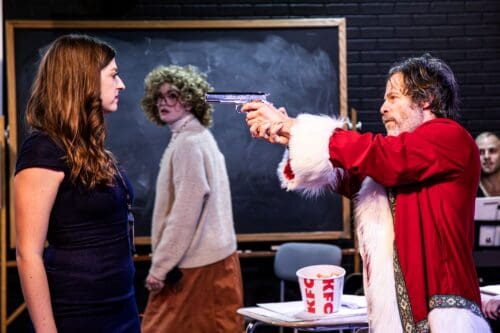
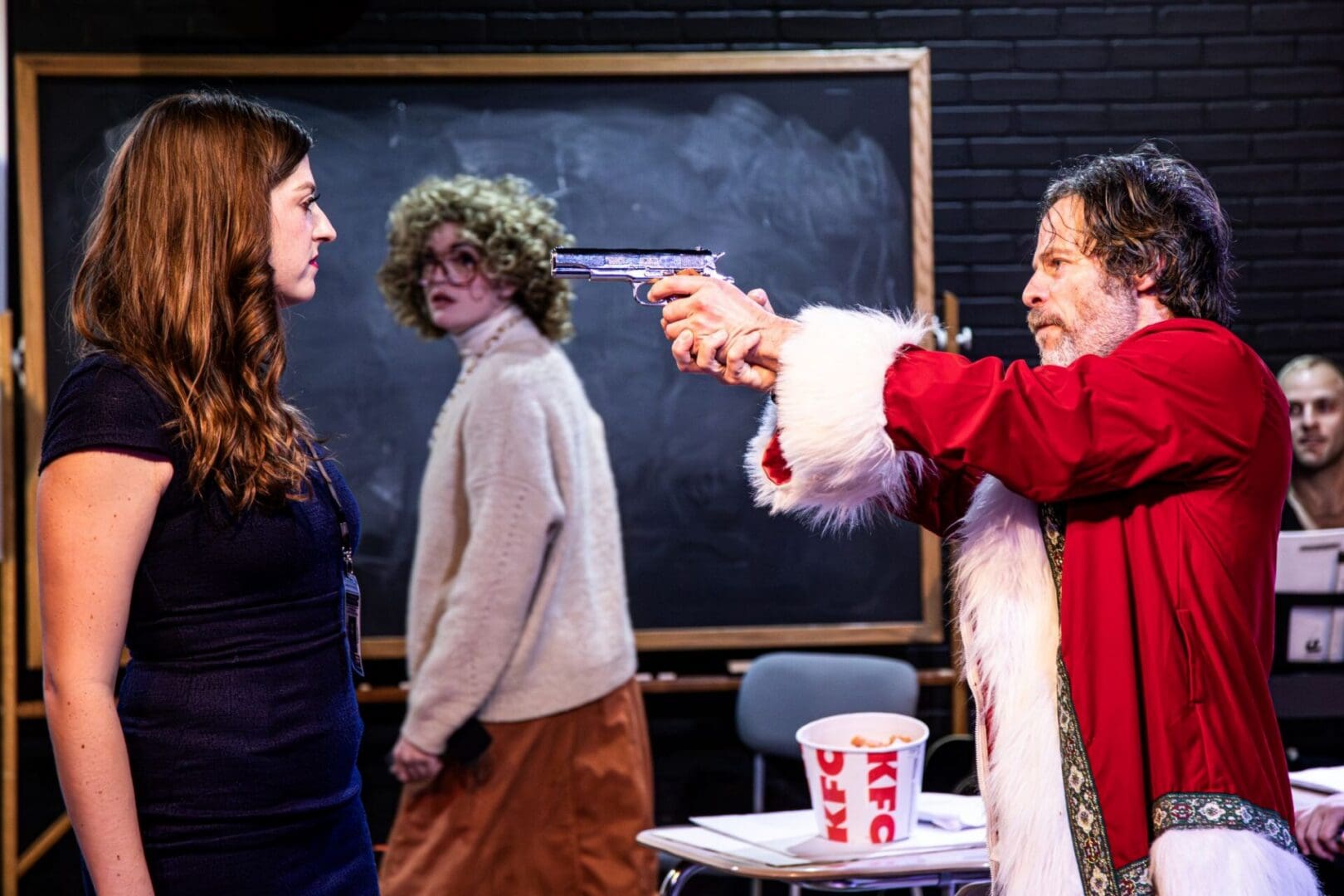
Latkiewicz also plays Byck, and I couldn’t help wishing he had remained exclusively on the other side of the footlights. Not because his commitment is lacking, but because this production desperately needs a director free to observe its competing realities, refine the transitions, and recognize when a conceptual flourish is interfering with a scene. His vision is imaginative enough to warrant a production of its own; what it lacks is the discipline to make every part of Assassins serve that vision.
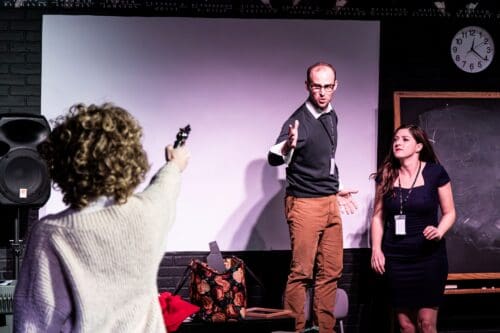
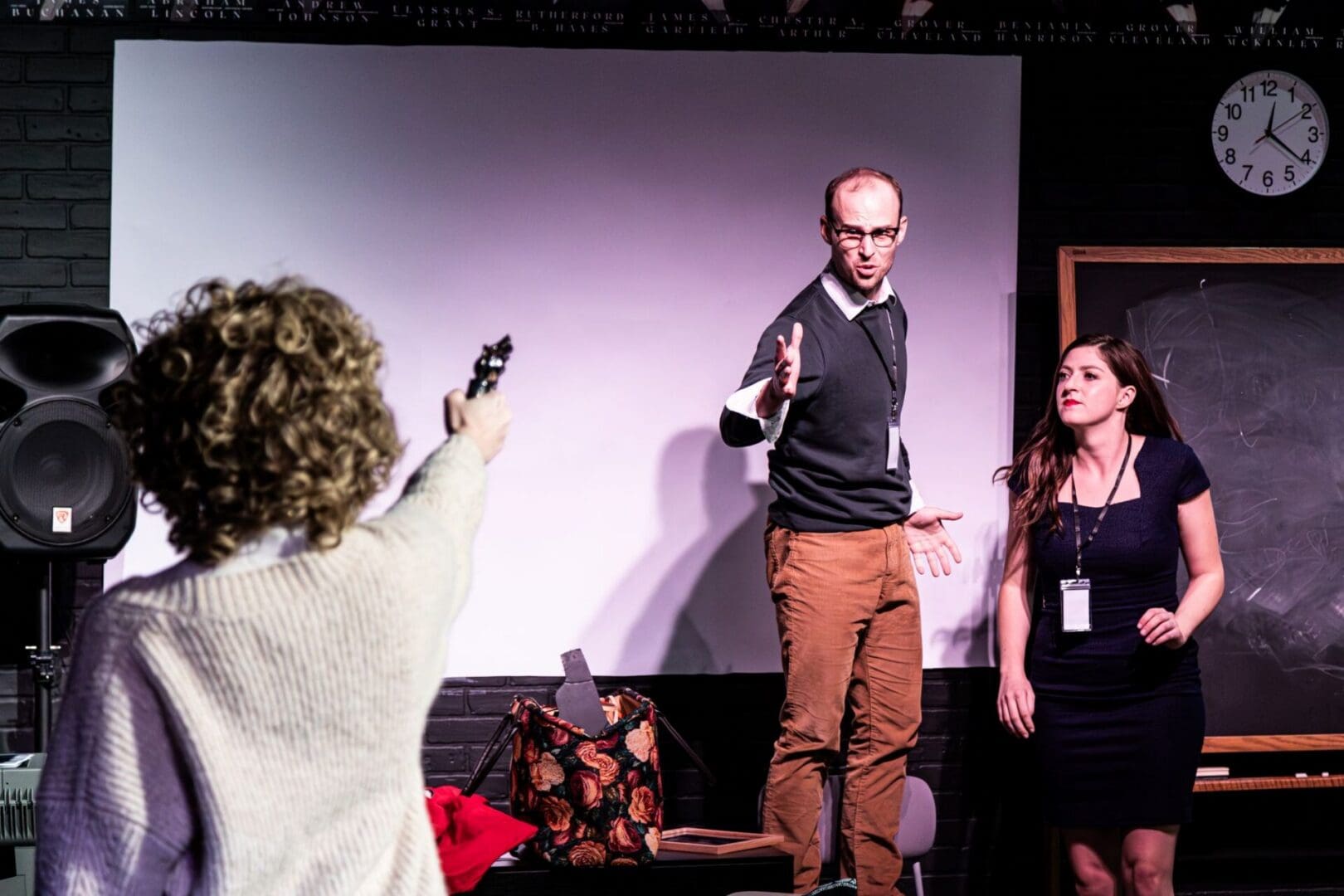
The company itself deserves considerable credit. Elias Wygodny plays John Wilkes Booth, Paul Luoma is Charles Guiteau, Darian Calderon portrays Leon Czolgosz, Michael Colon takes on Giuseppe Zangara, Andrew Gillespie plays John Hinckley Jr., and Zach Hoffman appears as Lee Harvey Oswald. Their commitment to the material is unmistakable, and the ensemble’s strong voices repeatedly remind us just how exhilarating Sondheim’s score can be.
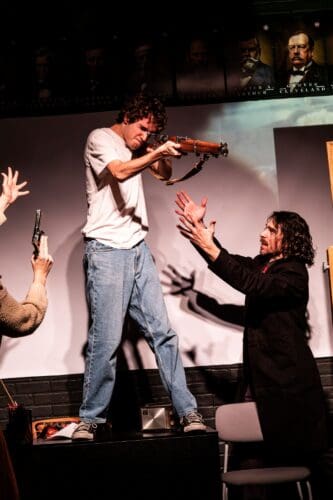
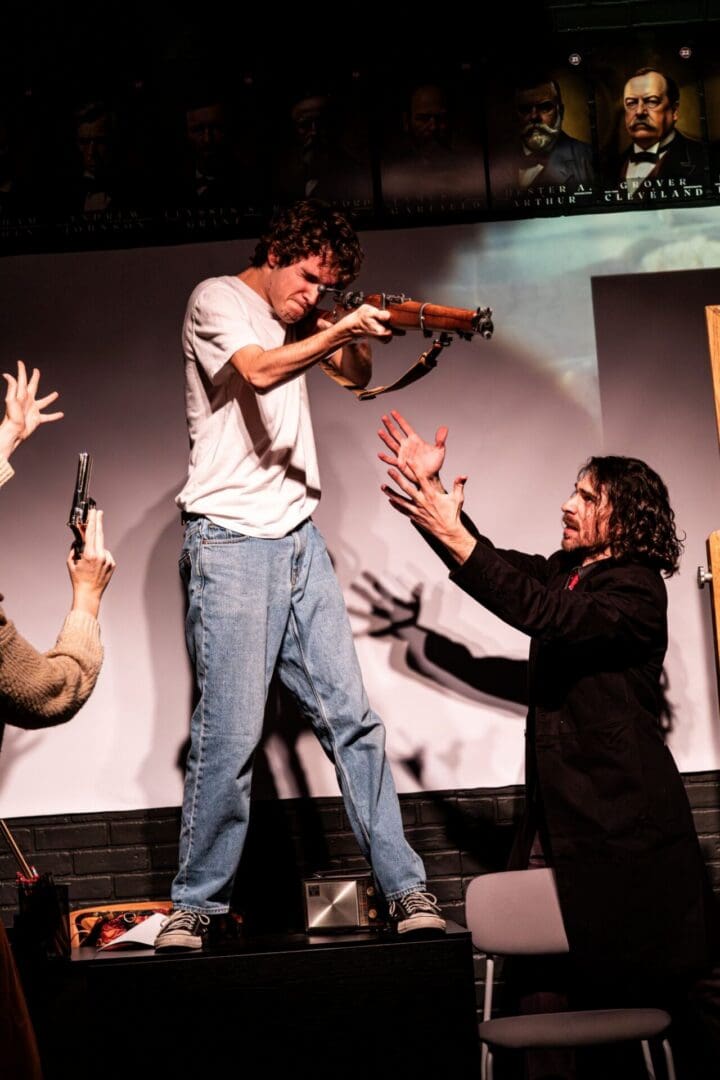
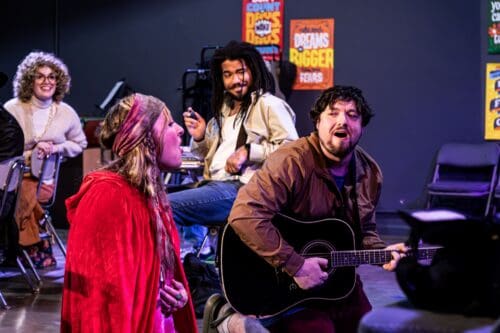
The musical arrangements are particularly resourceful. Under music director Joshua Bartley, whose sometimes overzealous synthesizer accompaniment provides the evening’s backbone, the performers supplement the score with guitars, kazoos, a melodica, and other classroom-friendly instruments, and they are all gloriously unmiked. David Callander’s props and set dressing convincingly transform the intimate space into a government-run classroom, lending an unsettling authenticity to the proceedings. The physical environment makes the government’s peculiar history lesson feel surprisingly plausible, while Nora Elkind’s costumes help establish the uneasy divide between authority and its captive pupils. And Toni White’s clever choreography and movement work especially well, given the obstacle course of desks.
The greatest difficulty arrives when the students finally turn on their teachers. The production appears to want us to understand their violence as an act of liberation, but the circumstances make that response deeply uncomfortable. That discomfort is clearly intentional—Latkiewicz even dispenses with a curtain call, leaving us to sit with what we’ve witnessed. My objection, however, is theatrical rather than moral. We have been sitting through a public demonstration ostensibly intended to confront the country’s murderous impulses. Are we now supposed to approve when the participants kill the people conducting it? If the point is that oppression breeds violence, or that every American harbors the potential for political extremism, the musical has already made those arguments far more eloquently. The new ending doesn’t complicate them so much as muddy them.
Nor does the intimate venue help. With only fifty seats and the action unfolding in close proximity, the classroom atmosphere is inescapable. Unfortunately, so is the discomfort of the chairs. At nearly two hours without an intermission, the physical ordeal becomes another distraction from a production already demanding considerable patience.
Still, I admire the audacity of a fledgling company willing to take on such difficult material and reject the familiar shooting-gallery approach. There is talent here, a great deal of ingenuity, and an evident passion for Sondheim and Weidman’s troubling musical. But ambition isn’t the same as coherence. The classroom is a terrific idea for Assassins; making the entire show behave like a classroom assignment is where the lesson falls apart.
✦ ✦ ✦ ✦ ✦ ✦ ✦ ✦ ✦ ✦
photos by Joel Castro
Assassins
Last to Leave Theater Company
The Actors Company – The Other Space, 916 N. Formosa Avenue
Fri.–Sat. 8; Sun. 2
ends on November 29, 2026
1 hour and 50 minutes, no intermission
for tickets ($40), visit Last to Leave Theater Company
for more shows, visit Theatre in LA
✦ ✦ ✦ ✦ ✦ ✦ ✦ ✦ ✦ ✦
