


Areas We Cover
Categories

Film Review: SAMSARA (directed by Ron Fricke)

by Jason Rohrer | August 26, 2012
in Film
ALMOST PRETTY AS A PICTURE
In the tradition of metaphysical stoner movies like Mondo Cane, Koyaanisquatsi (which he photographed), and Microcosmos, Ron Fricke makes films that show you what’s going on in the places you don’t usually go. Some call what he does “pure cinema,” and the label works inasmuch as he doesn’t use dialogue or narration, or follow characters in a traditional narrative. His command of the 70 mm format is impressive, and his choice of film over video is commendable. But if golf is a walk in the park, ruined, then his new movie Samsara is an acid trip, bummed.
The benefits of a good trip are legion. A trip, properly guided, can unfurl in stream-of-consciousness billows, each image or sensation spawning a smelt-cloud of associations. Ideas may be formed, unfettered from intellectual static. One’s existential angst may be relieved or pinpointed. A walk in nature or a snorkel dive work best, but movies as unlike as Space Odyssey or Evil Dead II can serve very well. Microcosmos is wonderful because it’s stunning to look at and imposes no point of view. And Mr. Fricke’s assertion that he intends his movies as “guided meditations” would seem to bode well. But if Timothy Leary had led trips that made people feel like shit, the hippies would have killed and eaten him.

As stoner movies go, Samsara and its 1992 precursor, Baraka, are misguided at best. Gorgeous photography of dozens of countries’ worth of pristine landscapes, secluded hamlets, and mountaintop monasteries is all very well. Mix in some impressionistic automobile traffic and night-time cityscapes: that’s cool. But too much cleverness in the editing bay (Mr. Fricke co-edited the film with his producer and co-writer Mark Magidson) can turn a simple beauty into an ugly mess. What’s tragic here is not the lost potential of the movie, it’s the lost potential of Ron Fricke, a very good nature photographer who would rather be a politician.
It’s unlikely that these filmmakers would happily accept the label “stoner movie.” That’s fine, if silly. But if they want something more, like “work of art,” they must contend with such labels as “simplistic,” “obvious,” and “agenda-driven.”
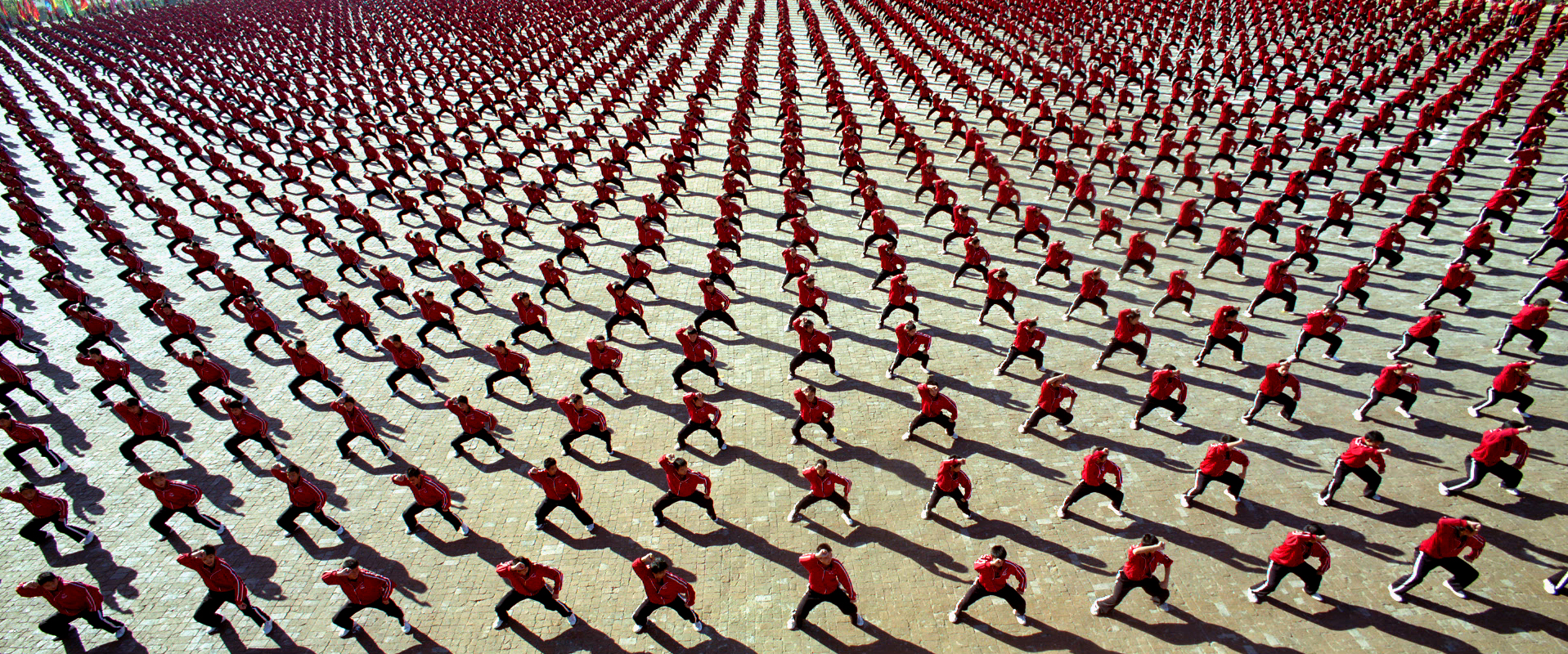
A tone poem is an extraordinarily difficult movie to make. It’s a rare talent that can avoid imposing prejudice onto his work, and for periods this movie offers a lucid look at some really amazing objects. It also can be boring. Mr. Fricke clearly is a fan of the long, steady, Tarkovskian take, but he doesn’t have Andrei Tarkovsky’s vision, or (more’s the pity) his reserve. Time-lapse pictures of stars wheeling over the desert went passe when they became stock interstitial images on Nova.
And yes, visual poetry can be its own reward, but not if the symbolism is all literal. When the connections made are intellectual, ideas about things as opposed to their essence, then the opportunity to commune with God dies. Then the work become a laborious insult to the audience, a strategy which might work out if the payoff amounted to any sort of revelation. But you may as well watch an internet ad for your favorite charity – PETA, Amnesty International – as watch this 95 minute commercial for some of these filmmakers’ fetishes.

As in Baraka, Mr. Fricke and Mr. Magidson here indulge their passion for a style of new-agey, pro-indigenous culture, anti-urbanization message theater. Samsara goes further than Baraka‘s intersplicing of footage from a chicken factory, where chicks are flicked down a Willy Wonka chute onto conveyor belts, with pictures of people packed onto escalators and trains at the Tokyo subway. This time, the food-machine non-metaphor is taken all the way from animal farm (giant circular pens) to slaughterhouse (giant circular pulley system) to mall food court (giant circular people). One’s poetry license gets revoked for lesser offenses.

The big circle motif may be explained by Samsara‘s name: In Sanskrit it refers to the cycle of birth, life, death and rebirth). This theme takes Mr. Fricke on a tour of staring eyeballs (turns out everyone from every culture has them, especially when you ask them to look into the camera as long as they can without blinking). Among other circles investigated are the buttocks and breasts of Japanese sex dolls and the cylindrical shells of small arms ammunition. We are given to understand that the impersonal city has driven the production of these robot-women and infernal devices, but, annoyingly, we only see one redneck family and one rural African tribe posing with their guns. Perhaps the evil city can’t be blamed for everything. Wait, more circles: the crowd of Muslims circumambulating at Mecca, the ring of cows being milked, the horrible cloverleafs of the Los Angeles freeway system – gentlemen, if your message is that we’re all trapped in a big inescapable noose of self-destruction, perhaps you should note that this message traps the audience inside that dismal mindset. If you desire to motivate action in your target audience, it might be a good idea not to encourage them to get stoned and then depress the hell out of them right before they’re supposed to leave the theater energized to fix the world.

And if such is not your intention, what is it? This film fails as art when it urges outrage. It fails as agitprop because it goes halfway before getting sidetracked into pamphleteering, and into just plain tourism. Ooooh, here’s another thing that scares me! Oooooh, look at this pretty hillside! And here’s this French performance artist I found. He rubs clay all over his head. Isn’t that? Just?
There’s no denying that many of the filmmakers’ associations are thought provoking. The trouble is that the thoughts provoked are the filmmakers’, which firmly classifies this movie as propaganda. Which, again, could be fine if its story needed to be told. But anyone in the West who would bother to seek out this niche film already read Upton Sinclair’s The Jungle in high school or college, so she already knows about the ickiness of industrialized food production. And Republican NRA-member lawmakers, or arms dealers? Unlikely to be swayed by visual reasoning, or even hear about it. They’re watching some other movie, in which guns save the world.

There are people, like the person next to me at the screening, who “like to be told not to eat meat.” Fair enough; we all need a little reminder now and then. We need not be scolded for an hour and a half in a sermon masquerading as a good time. Lest this review be taken as a screed against mixing pretty pictures with social conscience, I must recommend Michael Glowagger’s 2005 Workingman’s Death, a tour of the world’s worst jobs that includes a lengthy, informative section on some Indonesian sulfur miners who also receive a once-over from Mr. Fricke. The difference? Mr. Glowagger’s film has a sense of humor and proportion. Workingman’s Death investigates these men. We are informed that many of the miners have come to a remote paradise (and made it into their own personal hell by taking this, the only job available) to escape criminal prosecution for a variety of crimes. We discover that they make animal sacrifices to the live volcano from whose steaming mouth they chip out canary-yellow sulfur. We are told that a prostitute and a sandwich will consume a day’s wages for carrying over a hundred pounds in a primitive yoke on a four-hour stumble along a terrifying cliffside road. Samsara is content to briefly show them laboring against their cinematic backdrop of tropical beauty, in context of man’s inability to know when he’s got it good, or how we exploit ourselves, or something. Then Ron Fricke flits off to some other shiny object of desire. And rubs his index finger in disapproval.
photos Courtesy of Oscilloscope Laboratories
Samsara
released by Oscilloscope Laboratories
rated PG13 | 99 minutes
opens nationwide on August 31, 2012
for venues and information, visit Oscilloscope
