


Areas We Cover
Categories

Interview: MICHELE RAGUSA (Now appearing in THE BUTCHER BOY at Off-Broadway’s Irish Repertory Theatre)

by Gregory Fletcher | August 27, 2022
in Interviews, New York
GETTING TO THE MEAT OF HER CAREER
Michele Ragusa is blessed and touched by the theater Gods — they’re real, trust us. Her career in theater is simply glowing, full of variety, and seemingly constant, conquering both musical comedy and drama. Her resume of credits is thrilling: On Broadway, Michele has recently created the role of Austin in Flying Over Sunset (written and directed by James Lapine) and has also appeared as Elizabeth in Young Frankenstein, Pennywise in Urinetown, Evelyn Nesbit in Ragtime, Caroline in Titanic, Mona in A Class Act, and the Novice in Cyrano. Off-Broadway credits include Christopher Durang’s Adrift In Macao, and Craving for Travel at Playwrights Horizons. She also appeared in the 20th Anniversary Concert of Titanic at Lincoln Center.
Regionally, she has starred in Gypsy, Grand Hotel, The Boy From Oz, Bullets Over Broadway, Mame, Hello, Dolly!, Lend Me A Tenor, Annie, Boeing, Boeing, Thoroughly Modern Millie, A Funny Thing Happened on the Way to the Forum, The King and I, Spamalot, Sweeney Todd, Singin’ in the Rain, Into the Woods, Kiss Me, Kate, The Drowsy Chaperone, Company, Mary Poppins, Guys and Dolls, and The Full Monty. On TV, she’s been seen in Happyish and Law and Order SVU.
Stage and Cinema correspondent Gregory Fletcher applauded Ms. Ragusa’s latest theater credit at Off-Broadway’s prestigious Irish Repertory Theatre, where she’s playing Mrs. Nugent and Kathleen in the world premiere of The Butcher Boy with book, music, and lyrics by Asher Muldoon. (And for those familiar with the novel by Patrick McCabe or Neil Jordan’s 1997 film — yes, it’s a new musical.) Mr. Fletcher was able to meet with the busy and popular actress for an interview.

########################
Gregory Fletcher: Michele, I love how in one theater season, you’ve performed on one of the largest Broadway stages [the Vivian Beaumont in Flying Over Sunset] to a much smaller Off- Broadway stage at Irish Rep. How do the vastly different sizes of theaters affect your work?
Michele Ragusa: Well, the beauty being at Lincoln Center is that the space just goes on and on and on. To be able to create and perform on a stage that has every bell and whistle in New York is a gift to experience: a private dressing room, a large orchestra, technical effects at the top level imaginable, the video projections, smoke, all that stuff — it’s a dream opportunity I think every actor has. And yet, moving into a theater that seats 125, there’s something so beautifully intimate about it; first and foremost, I am a huge fan of not wearing a microphone. To be able to create harmonies and to allow your voice to work acoustically, to be completely in charge of the sound and the blending, I’m a big fan of that.
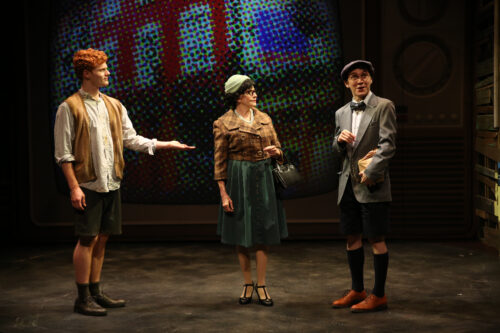 Nicholas Barasch, Michele Ragusa,and Daniel Marconi in The Butcher Boy
Fletcher: The two characters you play in The Butcher Boy are so different. I loved seeing the contrast in your portrayal. Of course, you’re helped in the writing and costume design, but what’s your process for making the character so clearly different when playing more than one onstage?
Ragusa: Well, one of the things that separates the two women I inhabit is the dialect. When we started rehearsals, one had a regular Irish dialect and the other one from Dublin. So, there were vowel changes and such, and I was pitching them very differently to help create a very clear definition of these two women. But a week before previews began, a decision was made that Mrs. Nugent should have a British dialect. And for anyone reading this who’s done dialect work, that change really threw me for a loop. Not that I’ve never done a British dialect, but I had really cemented these two women in vastly different Irish dialects. Luckily, I had two more sessions with our dialect coach, so despite a couple misfires where I’d start to say the line in the Irish dialect, I locked in the new sound. But when examining the two women, it’s too simple to place blame on Mrs. Nugent. I think she’s somewhat misunderstood. Did she create the conflict with Francie Brady? I don’t think she did. She was upset and misspoke, but is that what took Francie down the rabbit hole? She loves her son Phillip fiercely and wants to protect him. Did she set up her son for failure by sending him to school with a blazer and a gold chain? Maybe. But I don’t think it was intentional. Where Mrs. Nugent is a mama bear, Kathleen is much more earthy and easy going. She likes to laugh for sure and she loves her daughter, but it’s in a very different way than what’s happening to the other. I really love stepping into Kathleen’s shoes because she’s just so grounded and earthy. For me, continuing to define the two specifically is how I keep the two separate.
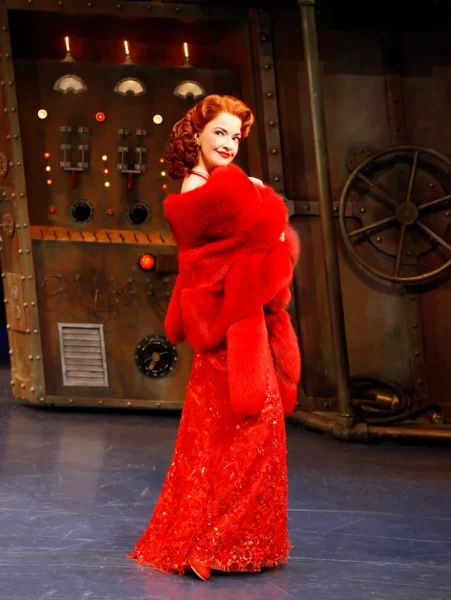 Elizabeth - Young Frankenstein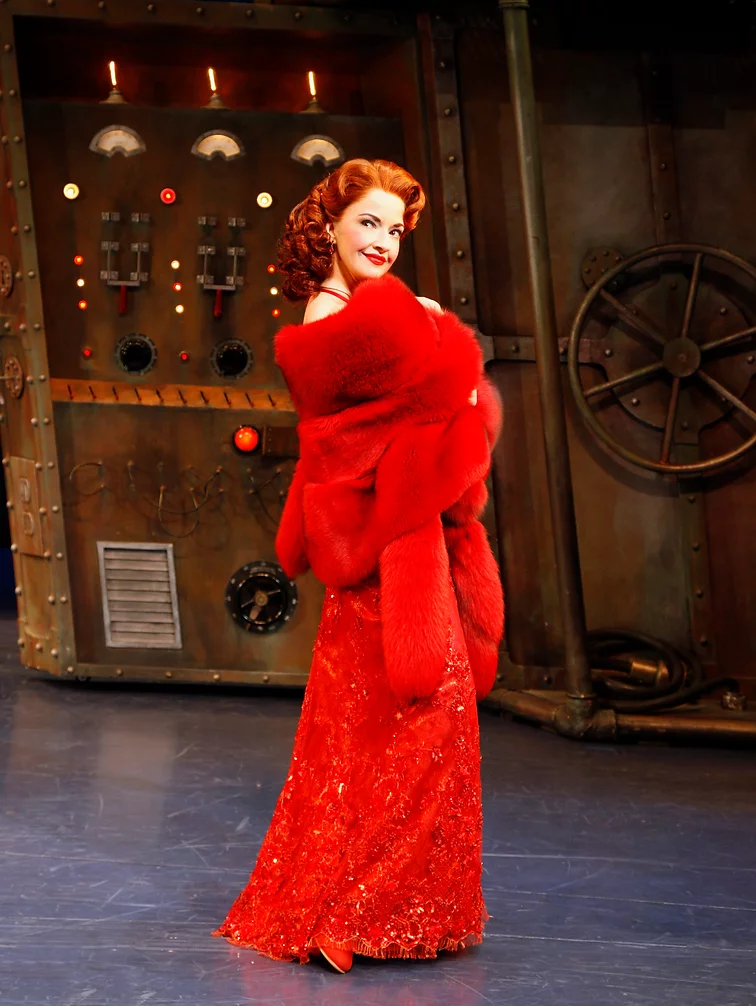
Fletcher: I loved you so much in Young Frankenstein. How does the style of the show affect your creative process? Certainly, Mel Brooks is a far cry from The Butcher Boy.
Ragusa: Yes, Brooks is a whole other animal, so to speak. I really think I’m lucky that I understand vaudeville. A lot of this came from my training. There’s a difference between a vaudeville style of comedy and modern comedy. Having knowledge of how vaudeville plays can really assist you in landing humor for Mel Brooks. It’s old school timing. But I’ve been in the presence of some actors who, on occasion, didn’t get the difference between the two. I learned how to do that; I was taught the different styles of acting, including the variations of playing comedy. Is it not taught anymore? I don’t have the answer to that; I don’t really know. And of course, comedy is much harder than drama. It’s said that it’s easier to make someone cry than to make them laugh — that may be true. But understanding timing and understanding the beats that will line up to create the best laugh you can get are key. Mel Brooks’s humor is Borscht Belt humor, and it’s wonderful to be able to go all the way to the edge, you know? Going all the way to the goal post with your comedy, and yet always remaining full and truthful, that’s a big key for me. I can get my toes right to the line, but it will always be based in truth. It’s not just “waving the rubber chicken,” you know, it’s always based in a truthful reality for the character. The character must really believe that this moment is happening and even though it may be blown way out of proportion, it’s still based in truth. That’s what gives the audience the highest amount of delight, I think.
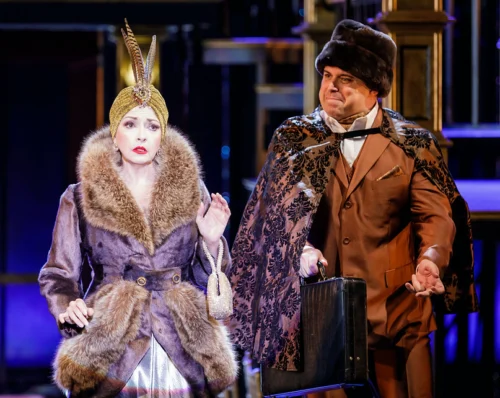 Grushinskya - Grand Hotel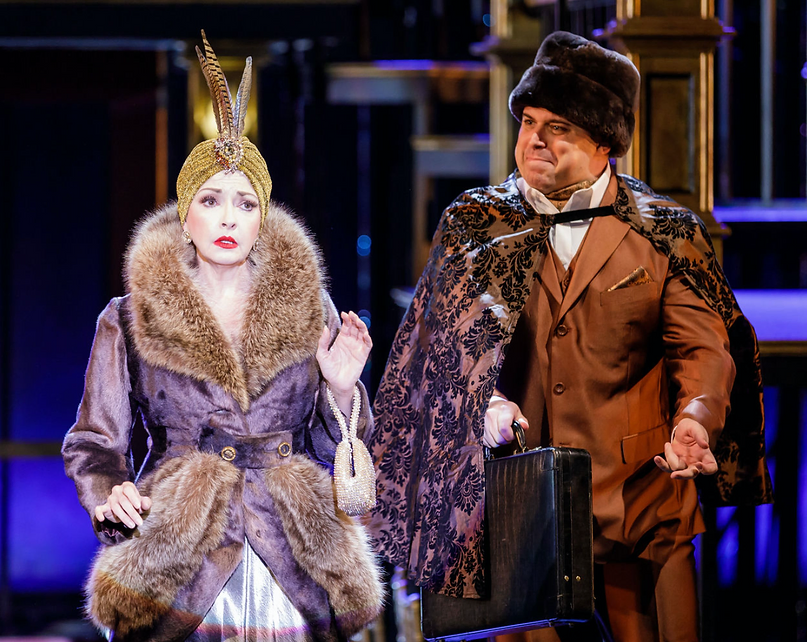
Fletcher: I know you earned your BFA at Niagara University, just outside Buffalo. (And a star-alum at that!) Are you from Western New York?
Ragusa: Yes, and I try to go back at least once a year, if not twice. I don’t have my parents anymore, and cousins have all moved away, but my chosen family is there. So, it’s great to go home. And you know, Buffalo is having quite the renaissance. The city has really rebounded: the food scene, the real estate, I love to go home. And my husband is a huge fan of Buffalo, too. He likes to say that we may be the only two people who discuss the possibility of retiring to Buffalo! And the theater scene, too. There’s so much theater up there.
Fletcher: After you graduated from NU, when you were first out of school, what kind of survivor jobs did you have?
Ragusa: Well, I did that thing that so many students do. They attended the NETC auditions, where basically all the New England theaters come together in a room, and you’re given two minutes to basically show them what you can do. I chose two songs I pasted together. I did a cutting of “Greenfinch and Linnet Bird” into the end of “Adelaide’s Lament.” I think I got something like 15 callbacks! I mean, it was ridiculous; I was blown away. And so, I landed a summer job at the Mount Washington Hotel, performing these little shows in the evening and singing in the dining room. With room and board, that was my first performing job.
When it ended, I went back to Buffalo but knew I wanted to move to New York City. But first, I got a job teaching at Studio Arena at their theater school. David Frank, the executive director at the time, was directing a Glaswegian drama called Men Should Weep. He needed to cast two children in the play, 10 to 12 years old. He asked me if I had any students who’d be able to take on the dialect. So, I pulled some together, and we did some theater games as an audition. Then he asked me to read the scene with them. The next day, he called me into his office and said he had some thoughts about the scene and asked me to read it with him. So, I did, and I think I did an Irish dialect because I didn’t know how a Glaswegian sounded. You know, I just
