


Areas We Cover
Categories

Los Angeles Theater Review: CHOIR BOY (Geffen)
by Jason Rohrer | September 27, 2014
in Los Angeles
SWEET SONGS UNSUPPORTED
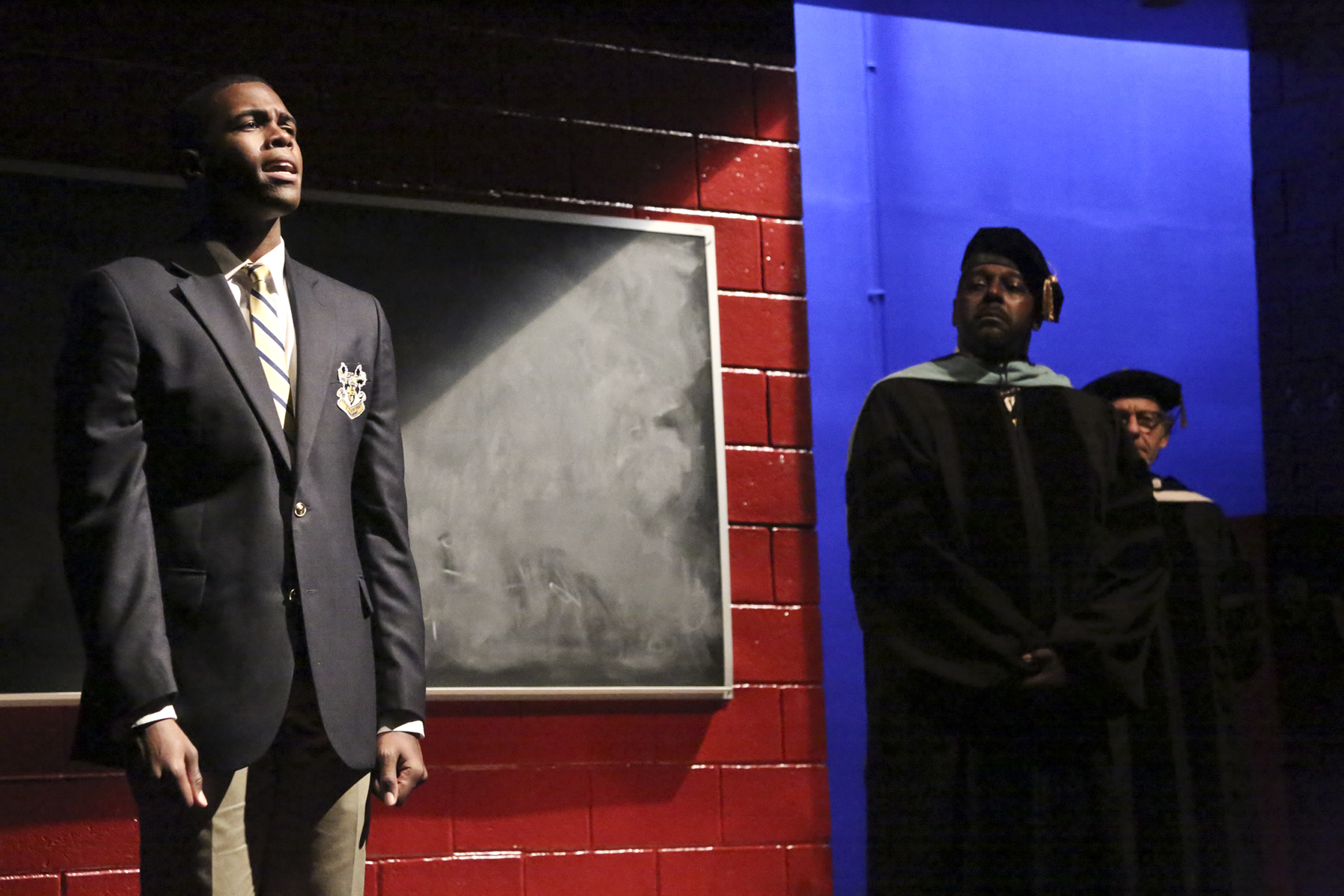
 Tarell Alvin McCraney’s 2012 Choir Boy is a tantalizing, underdeveloped play-with-music not entirely improved by Trip Cullman’s direction, now at the Geffen a year after the production’s Manhattan Theater Club bow. Jason Michael Webb’s tasteful vocal arrangements sound terrific via Fitz Patton’s crisp sound design, but the very assurance and gravity of the “negro spirituals” overpower the playwriting. This wouldn’t be the case if these fine actors and remarkable singers had anything like this much story to tell with their acting, and if the songs were sufficiently integrated to the play. But most of the vocals are underwhelmingly staged as scene changes, and like the scenes themselves they are unsatisfyingly brief. It is a very bad sign when one wants a scene change to be longer. But the budding drama stops almost every 10 minutes for over 100, making it hard to care.
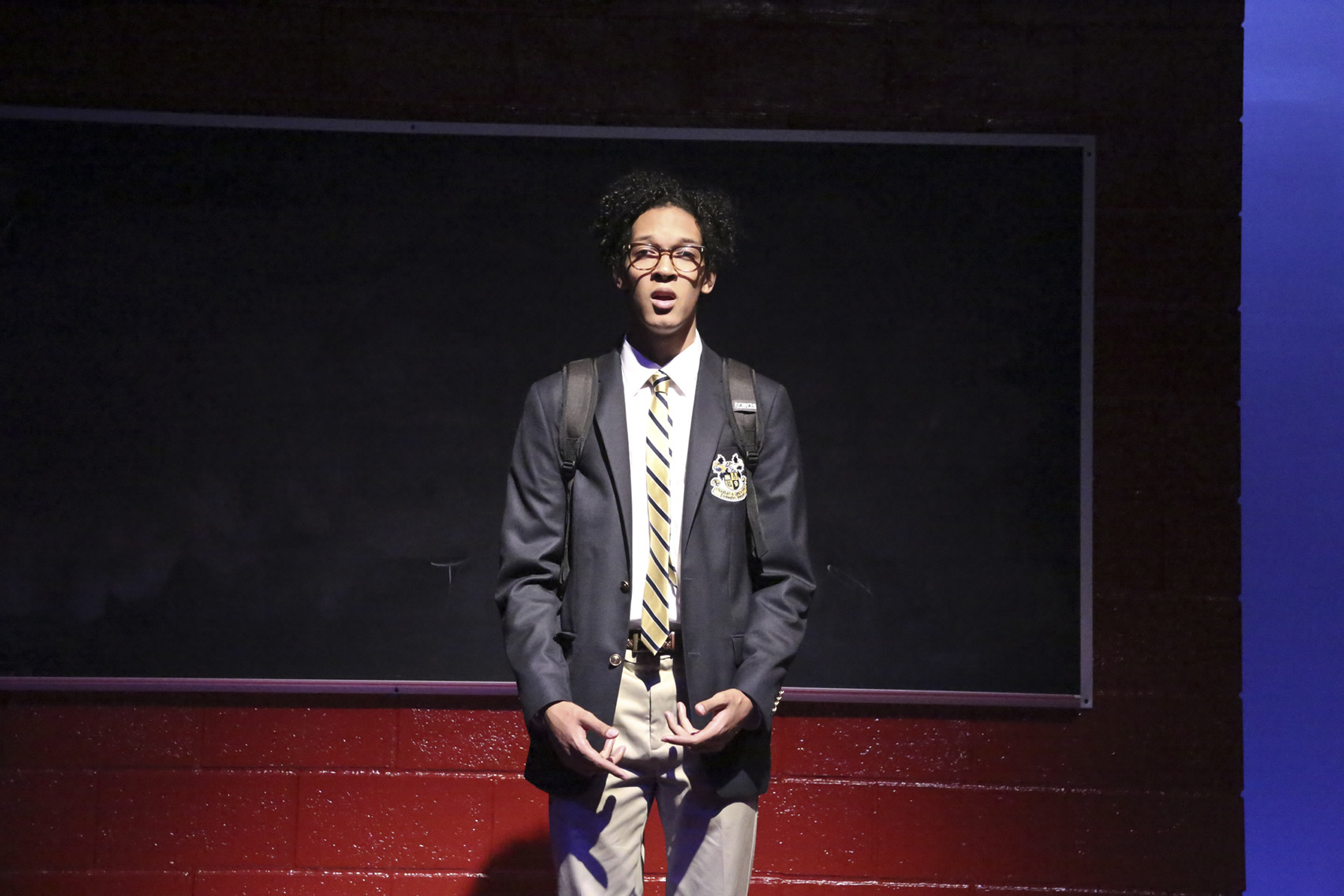
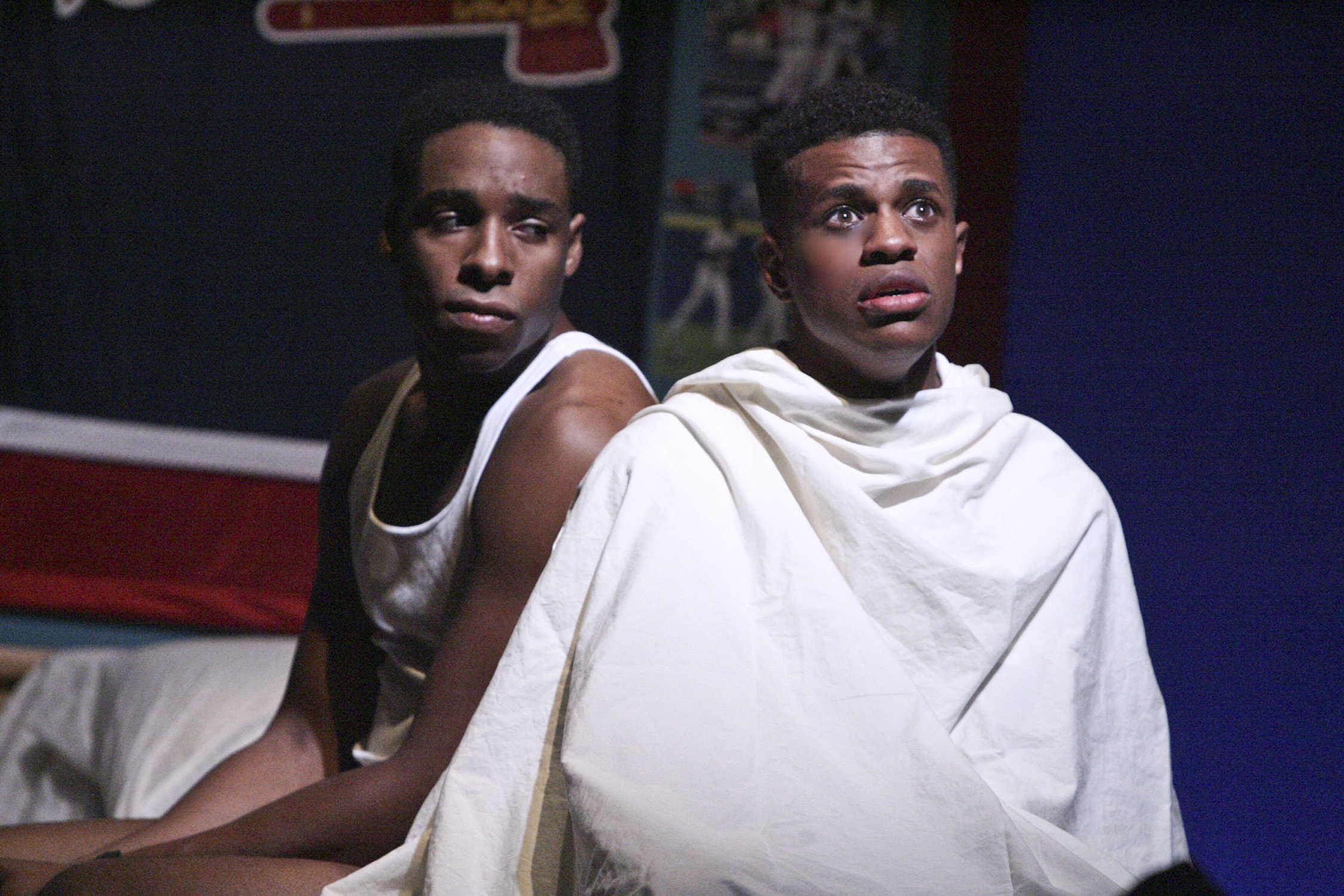 At a boys’ preparatory academy, McCraney tosses a salad of school club politics, alma mater love, honor codes, forbidden romance, personal loyalty, sexual bigotry, and black identity infighting fifty years on from the Civil Rights Act – you could feed four plays with this many possibilities. The exemplary cast does much with the shallow exploration that a brief, one-act presentation allows these disparate themes. McCraney’s talk can be sharp, and the tongues of actors as good as Michael A. Shepperd and Jeremy Pope can cut with this dialogue. In fact all the rich character on this stage comes from the director and his actors; as written, most of the roles are underdressed mouthpieces for grievances and observations that deserve a more thorough airing. Late revelations color and illuminate some of these sketches; would that they came sooner. Rarely, songs emerge organically from the action; would that there were more such moments, even though artlessly presented, as when choir members launch into an on-the-nose application of “Motherless Child.”
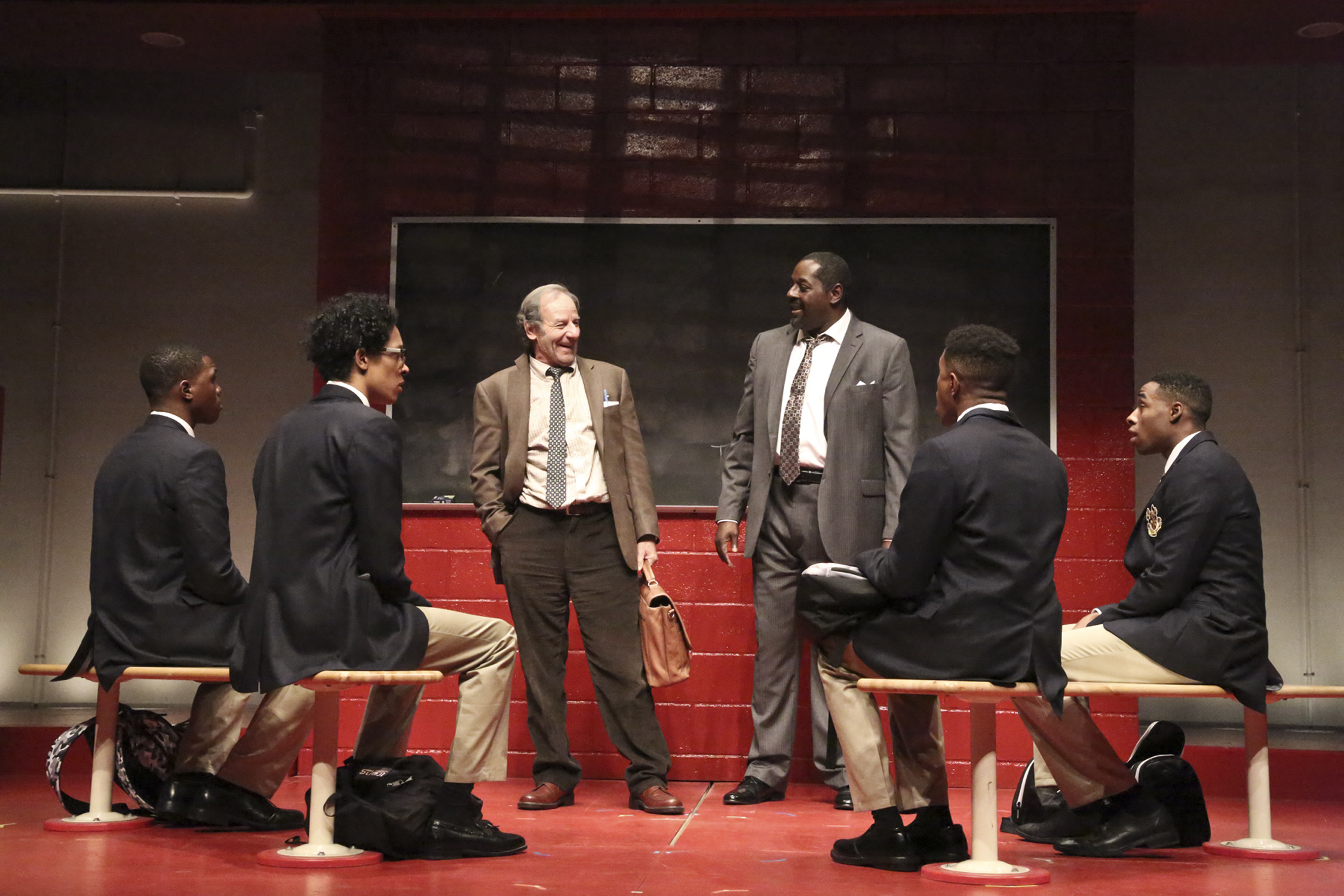
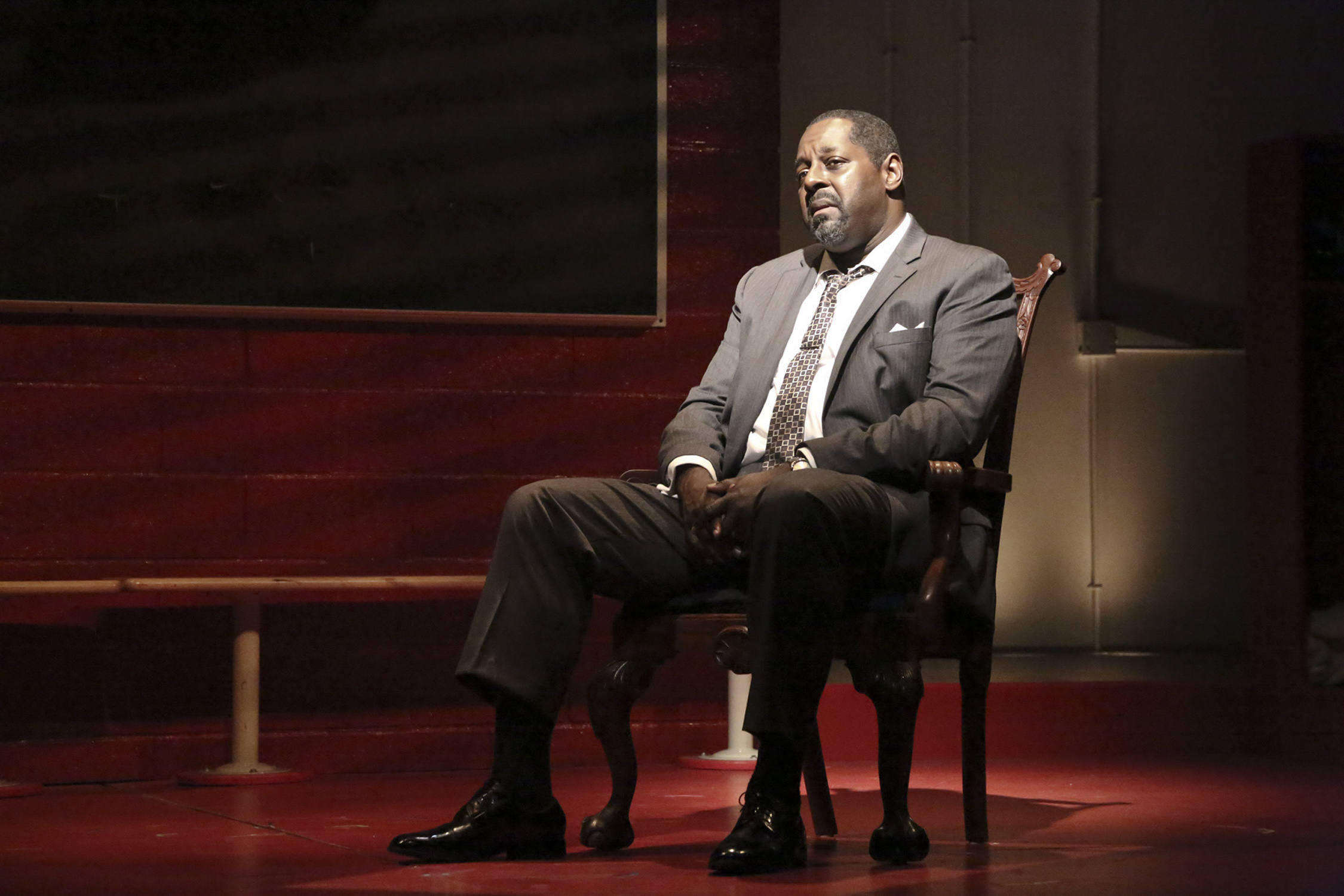
 There’s a moment near the end of the play fairly typical of my issues. Two scions of a beloved institution discuss the fate of a student: an old-time white Freedom Marcher, also a teacher (an enthusiastic Leonard Kelly-Young), and a relatively new black headmaster, also a former legacy student (Sheppard). Says the Freedom Marcher: Fellows with “black eyes” weren’t allowed certain privileges in the old days, either. In fact yes, at this point in the play someone has a black eye, and has been disallowed certain privileges. But under the circumstances, the ramifications of this statement are so numerous as to make it incoherent.
- Is he saying things haven’t gotten any better?
- Is he saying things have gotten better?
- Is he saying some things shouldn’t change?
- Is he even using “black eye” as a euphemism for “embarrassing injury to one’s reputation” at all? Or is he being literal?

This white Freedom Marcher is also given to awkward black jokes; and all the boys we’ve seen at this school could be said to have black eyes, in that they’re all black.
- Is the statement, then, to suggest that the school is actually, and always has been, integrated? That’s a huge revelation, if the interpretation is correct.
- Are we to understand therefore (or regardless) that in the old days whites did the keeping down of black folk, whereas now they do it to themselves? If so, that’s a big moment.
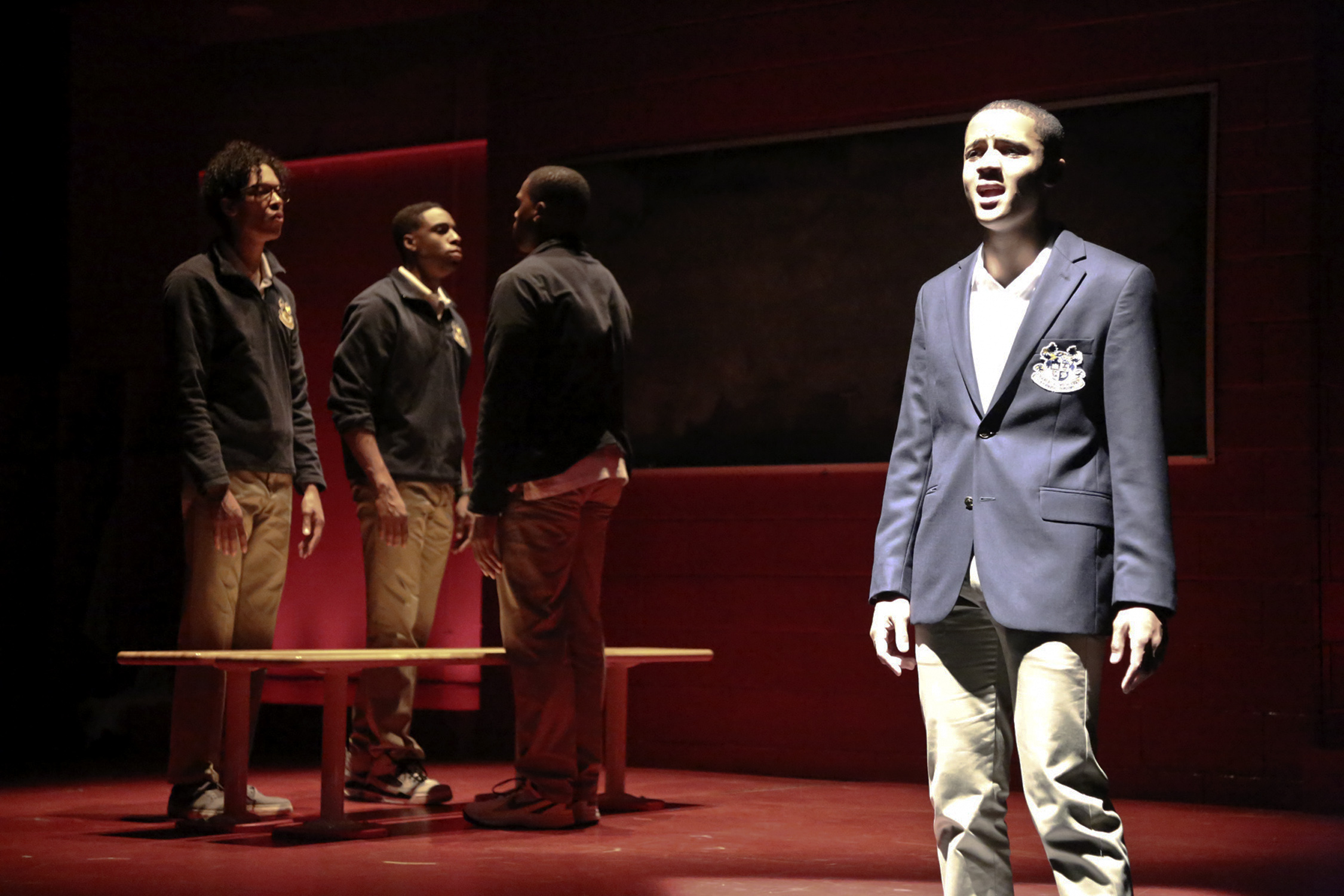
Whatever it is, does the moment land? It doesn’t, partly because it’s got too many potential interpretations; partly because like most of the story points, it’s flatly directed; and partly because it’s immediately whisked offstage by yet another short burst of glorious song.
photos by Michael Lamont
Choir Boy
Gil Cates Theater at the Geffen Playhouse
10886 Le Conte Avenue in Westwood
Tues-Fri at 8; Sat at 3 & 8; Sun at 2 & 7
scheduled to end on October 26, 2014
for tickets, call 310.208.5454 or visit Geffen Playhouse
