


Areas We Cover
Categories

Los Angeles Theater Review: BROKEN FENCES (The Road on Magnolia in North Hollywood)
by Jason Rohrer | March 26, 2016
in Los Angeles
FENCES THIS AIN’T
We are taught that tolerance is a virtue, that common ground is not only findable but a state of mind. We are taught that our obligation is to our neighbor as much as to ourselves. We learn in school, or in church, that home is the foundation of community. We know it. We write tidy plays about it, in which characters deliver speeches to the audience because this way the message can’t possibly get lost – in story, say, or plot, or developed action. Theme is most important to a lecture, and what we are taught, we are also taught to regurgitate. So in the sense that theater substitutes for church and proxies for political education in many lives, Steven Simoncic’s Broken Fences is a good example of issue play as sermon. If you want complexity of discourse, well-crafted structure, nuanced character, you will not find it in this text about yuppies contributing to gentrification by buying their first house in the Chicago ghetto of Garfield Park.
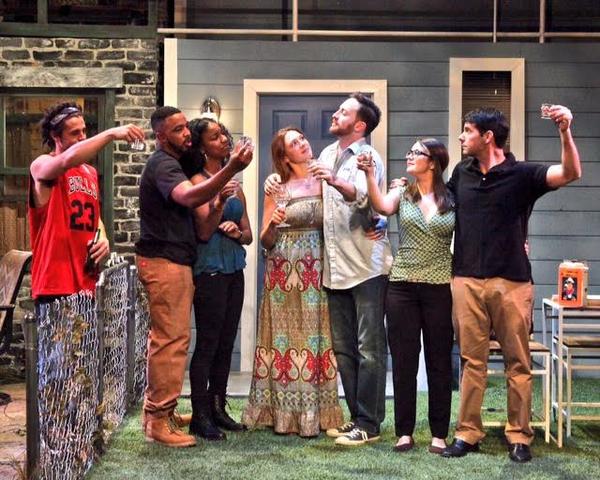
Instead you’ll meet stereotyped white people and somewhat more investigated black people. You’ll be asked to consider the obvious right thing to do in various circumstances. You’ll be informed of the feelings and ambitions of characters who say to each other nothing more depthful or specific than what they say directly to you. You’ll be told about things rather than watch them happen.
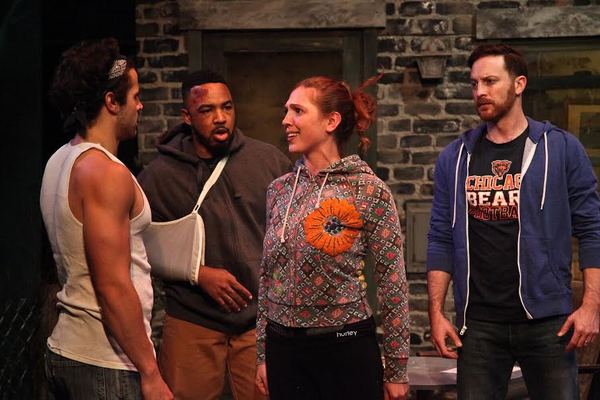
The actors in Andre Barron’s Road Theatre production are good. But this writing and this direction preempt any real opportunity for acting, because all the characters do is talk. In this play’s presumption, it’s the audience’s job to care about socially conscious exposition. Either your goodwill supplies the humanity missing from the Special Report superficiality, or you’re a bad citizen unwilling to meet the play’s intentions three-quarters of the way.
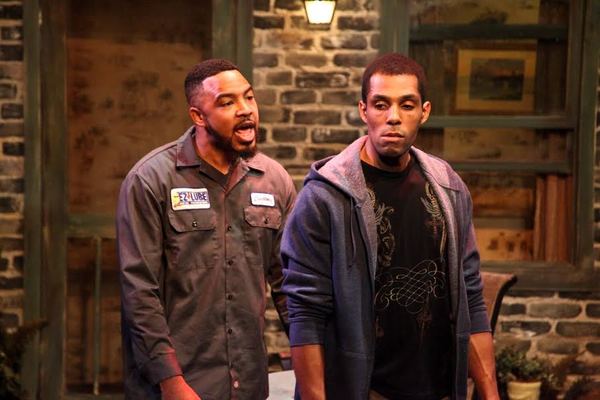
John Iocavelli’s set and Joseph “Sloe” Slawinski’s sound are the two storytelling elements that work. The stark physical contrast of side-by-side two-story house facades, one broken-down and one freshly refurbished, sets a tone the production has trouble keeping up. The menacing noise of traffic and bad news media landed me in a specific place and time. The actors get no similar favor from the spotty lighting, or from direction that enforces the script’s unrelieved didacticism. When the actors aren’t speaking in the dark, they’re speaking while not really making a salad, or speaking while not really assembling a crib. But boy, when they drop realism and speak through the fourth wall, or give other characters longwinded monologues about stuff they already know, they really do that.
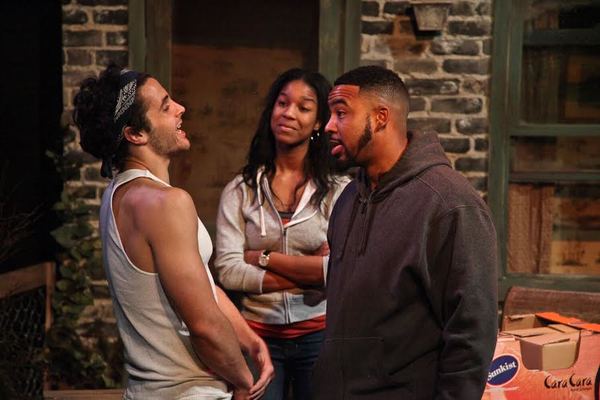
There’s an inspired scene at the top of the second act, in which a situation that matters to two characters has a momentary impact on several others. For a few minutes they act like a neighborhood instead of an archipelago of talking points, and the script acts like a play, inventing precise incident and detail, furthering theme without the crutch of pronouncement. On each side of this scene, except for a nice (but brief) surprise at the tail end, I felt the play’s finger in my face for an hour of unnecessary instruction. I know my duties as a liberal; I am aware of white privilege; I already think black people have the shit end of the American stick. Useful political art will challenge my tastes, not engrave them on the spoon that overfeeds me.
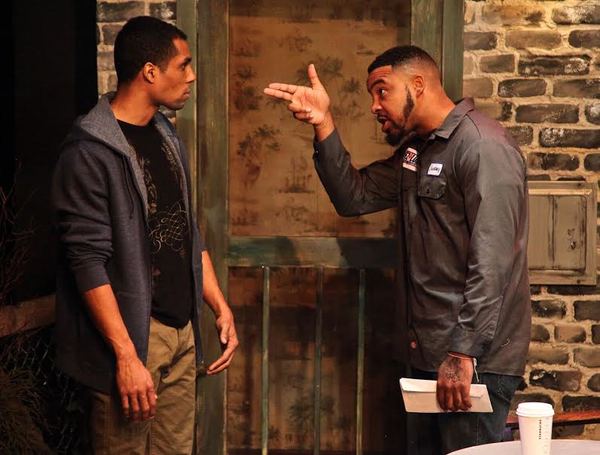
It is, incidentally, no reparation to write white characters as two-dimensional as these. By comparison the black half of this story deserves its own play; over stage right, in the dirt yard in front of the unpainted brick, there’s actual jeopardy. Get the characters to talk to each other, have them meet the challenges they talk about, and I’ll want to spend time with them. But nothing can be done for the characters stage left, in front of the pretty blue siding and the Teflon lawn. Perhaps Simoncic wishes to offer a turnabout-as-fair-play monument to the cardboard black people white people have been writing for centuries. But aren’t we bored by yoga-n-Starbucks-n-suburbs cliches from writers of any color? Delivered by a white playwright to (and about) the almost exclusively white American theater audience, these ciphers seem particularly safe and sad. A pander is a terrible thing to waste.
photos by Michele Young
Broken Fences
The Road Theatre Company
The Road on Magnolia
NoHo Senior Arts Colony
10747 Magnolia Boulevard in North Hollywood
ends on April 17, 2016
for tickets, call 818.761.8838 or visit Road Theatre
