


Areas We Cover
Categories

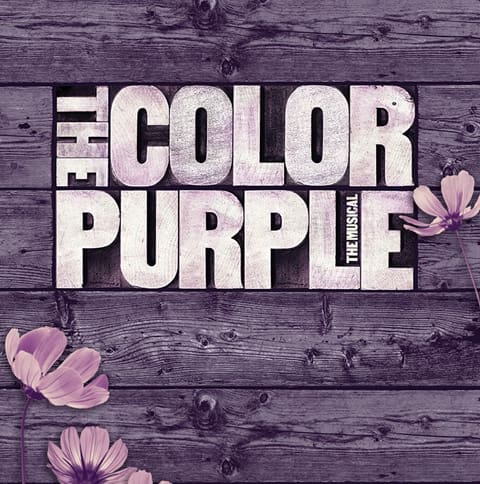
Theater Review: THE COLOR PURPLE (Zephyr Theatre, Chromolume Theatre Company)
by Nick McCall | March 20, 2026
in Los Angeles, Theater
CAN ANYONE SAVE THIS MUSICAL?
A committed cast and strong vocals can’t
overcome a rushed, softened adaptation
that drains the story’s power
In their mission statement, Chromolume Theatre is “dedicated to presenting Broadway’s forgotten musical theatre gems.” So, for their current production, they’re doing The Color Purple at The Zephyr Theatre. With two major Broadway productions in 2005 and 2015, and then spun into a new movie-musical in 2023. it’s hardly forgotten and, to my dismay after seeing it for the first time, hardly a gem.
Based on Alice Walker’s 1982 novel, later adapted by Steven Spielberg for the screen in 1985, The Color Purple follows Celie, a poor Black woman struggling to survive and make sense of her life in early 1900s Georgia. Her father beats and rapes her, then takes her babies away. He marries her off to Mister, a neighboring farmer with children of his own. This is no better, as Mister abuses her, too. Celie perseveres, finding strength in the love she has for her sister, Nettie, even after their forced separation. After Nettie escapes to Africa as a missionary, Celie finds herself increasingly isolated—until she is slowly transformed by the women around her. Chief among them are Sofia, who refuses to be broken by any man or system, and Shug Avery, a confident, sensual blues singer whose arrival upends Celie’s sense of self and sparks her first experience of romantic love.
Jonathan Farrington, Jodi Marks
Not to worry about all of the novel’s oppression and misery, however—Marsha Norman‘s libretto smooths it all into bland commercial Broadway pablum. Gone is the cruelty that Celie perpetuates: her blunt advice to Sophie’s husband Harpo, “Beat her”—the moment in the movie that most haunted me—is softened with sympathetic reasoning, as if the show is terrified that we have anything but uncomplicated identification with her. Gone is Sofia’s humiliation from the mayor and his wife, which, at least in this staging, she performs on herself. The men, who should invoke terror, are hardly on stage long enough to be a threat. At barely two hours, excluding intermission, the adaptation blazes through characters and story so quickly that major plot points arrive unexpectedly and little lands with any force. It’s fan service.
My only previous experience with the material was seeing the 1985 film once, a few months ago, so the story isn’t in my blood yet. The production, therefore, needed to guide me along. Director Elijah Green, though skilled at managing traffic as quickly as possible, neglects to actually stage the written words. In Celie and Shug’s first scene together, Shug, fully clothed and less than a minute after meeting, asks, “You ain’t never seen a naked woman before?” Gobsmacked, I realized this was the bathtub scene. Just a basic wooden stage chair—no tub, no eroticism. So much for that lesbian relationship everyone won’t shut up about. As the scene continues, Celie asks if she pulled Shug’s hair too hard while brushing, but why would she ask when Shug didn’t flinch? The love duet between Celie and Shug is indistinct at best, excruciating at worst.
Veronica Driscoll, Minque Taylor
Scenic design by Shawn Plunkett is of little help. While the minimal set evokes Celie’s squalor, it does nothing to signify other locations, such as the dress shop, leaving us to wait for characters to tell us where we are. Props are sorely lacking. The few we get are distracting, such as an actor holding a shiny mailbox and the smallest prop baby imaginable. Lighting design by Daniel Michener is serviceable but not especially moody. Shon LeBlanc’s costumes are wonderfully varied, but far too clean and tidy. How do we know by looking that Celie is the abused, unpaid help? Her dress has a tiny rip at the waist. The story spans 30 years, yet, due to a lack of appropriate costume, hair, and makeup, characters don’t age. In an unforced error, cast members have visible tattoos and a nose piercing—this is a period piece! Ariella Salinas Fiore, credited as intimacy director, gets fourth billing for a staging that has no intimacy.
Musical director Miki Yokomizo (on keyboard) leads a three-piece band with Kiarah Davis on electric guitar and Tony Jones on drums. Aside from the drum part—which leans too heavily on snare and hi-hat, obscuring lyrics—Yokomizo maintains a fine balance between musicians and vocalists, placing amps behind the unmiked actors (a practice more companies should adopt). Choral work is strong, with an all-female chorus near the end particularly lovely. Choreographer Katie Powers-Faulk encourages individuality in the energetic musical numbers, though having the cast slam chairs during one song ruins vocal intelligibility.
Veronica Driscoll
The young, eager, and raw (as in, not yet seasoned) cast goes far in trying to sell this middling musical. Veronica Driscoll plays Celie with a potent voice that stands out even in full ensemble, though she never quite sheds the look of a fresh, starry-eyed kid newly cast as a lead in a Hollywood musical. Minque Taylor as Shug Avery, Celie’s love interest—with whom she has no romantic chemistry—is effective in quieter moments, but her voice disappears behind the chorus during “Push da Button,” where the character should blow the roof off. Shelby Williams brings welcome innocence as Nettie. Jodi Marks (Sofia), Jonathan Farrington (Harpo), and Amaya J (Squeak) supply strong comedic skills—however questionable the decision to tilt The Color Purple toward musical comedy.
Lonnie Jones III, in the thankless role of Mister, barely has the opportunity to register as a villain before being handed an insufferable redemption song. Jayla Bryant, Milyah Law, and Olivia Leyva bring life and attitude as the Greek chorus—a concept the musical abandons at intermission. Miscasting undercuts key roles: Stephen Gregg is unthreatening as rapist Pa, and towering Jordan McAllister, without even a hint of gray hair, plays Ol’ Mister by shimply shpeaking with a shilly voish. However, the large, lively 20-member cast as a whole made up for the actors’ shortcomings in their individual roles.
Lonnie Jones III
The score, by pop and R&B artists Brenda Russell, Stephen Bray, and Allee Willis, never quite coalesces. None of the three had written a musical before this one and it shows. The styles bounce from blues to gospel to eighties R&B to African chants, but rarely settle long enough to register as character-driven. The songs are generic and interminable.
In spite of the short running time, I couldn’t wait to get out. Even so, the audience was filled with fans, energized by the vocal athleticism on display up close and without microphones. For those enamored of American Musical Theatre, you can skip The Color Purple. It took me 21 years to see a production—and that seems about right.
Veronica Driscoll, Shelby Williams
✦ ✦ ✦ ✦ ✦ ✦ ✦ ✦ ✦ ✦
photos by James Esposito
The Color Purple
Chromolume Theatre
Zephyr Theatre, 7456 Melrose Ave.
Fri and Sat at 8; Sun at 3; Sun at 7 (March 22 & 29); Sat at 4 (March 28)
ends on March 29, 2026
for tickets ($40), visit CHR Theatre
In June (as part of the Hollywood Fringe Festival) comes the song cycle Elegies, with music and lyrics by William Finn. Next up in July is If/Then (music by Tom Kitt, book and lyrics by Brian Yorkey), and the season will conclude with Road Show (music and lyrics by Stephen Sondheim, book by John Weidman) in November.
for more shows, visit Theatre in LA
✦ ✦ ✦ ✦ ✦ ✦ ✦ ✦ ✦ ✦
