


Areas We Cover
Categories

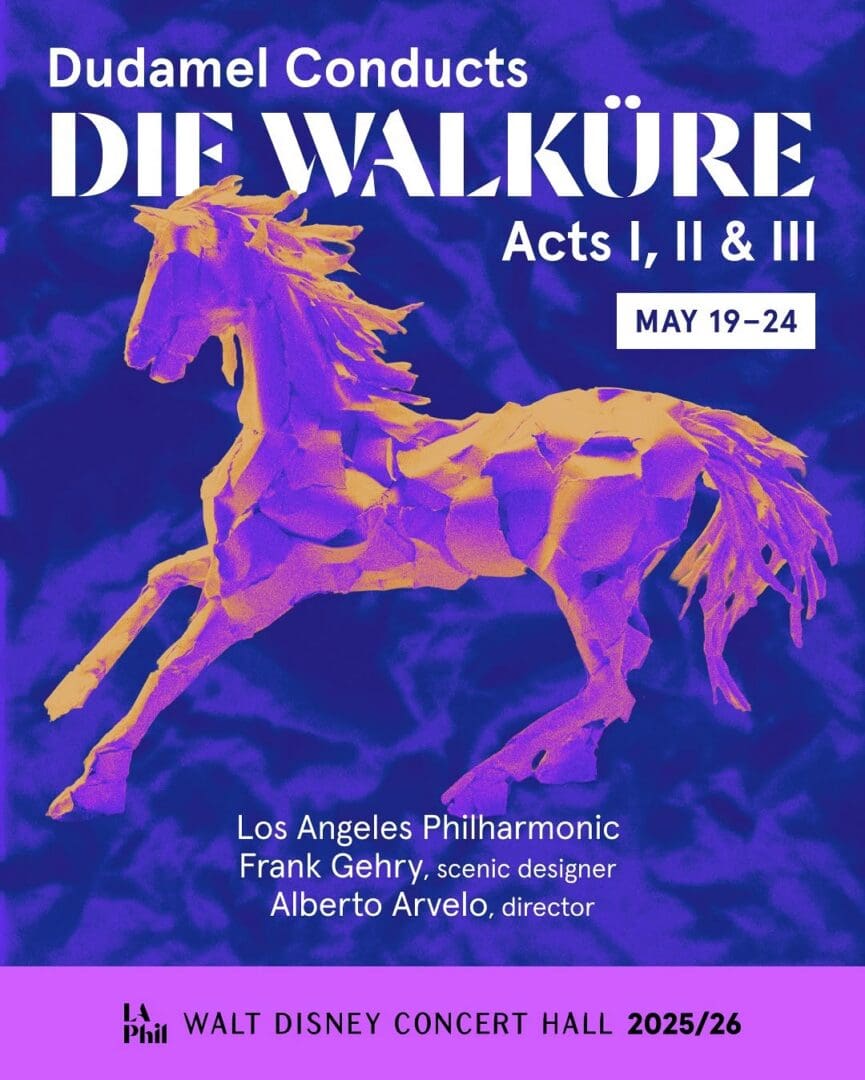
Theater Review: DIE WALKÜRE (LA Phil / Disney Hall / Los Angeles)
by Nick McCall | June 23, 2026
in Concerts / Events, Los Angeles, Theater
A RING BROKEN OUT OF SHAPE
A misguided presentation undermines
Wagner’s masterpiece and Gustavo
Dudamel’s farewell-season ambitions
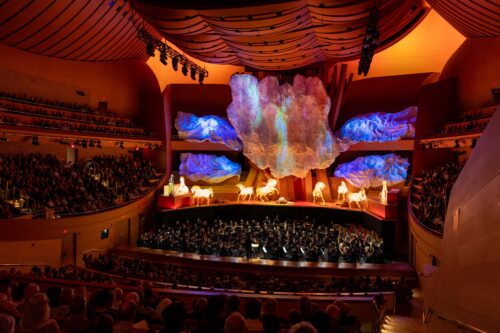

The Los Angeles Philharmonic’s presentation of Richard Wagner’s Die Walküre, conducted by Gustavo Dudamel during the final month of his tenure as Music and Artistic Director, should have been one of the crown jewels of the season. Instead, a combination of uninspired staging, questionable directorial choices, and a baffling presentation format left one of the greatest operas ever written feeling strangely diminished.


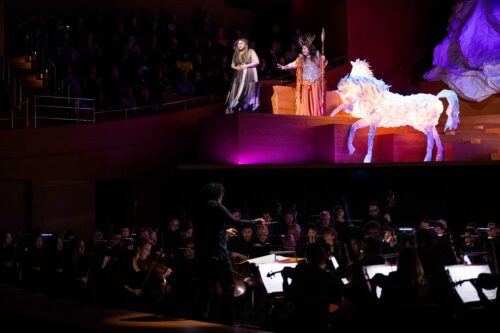
Alberto Arvelo directs in a workmanlike fashion without much sense of wonder, reducing Wagner’s world of gods and heroes to something surprisingly ordinary. In his interpretation, Wotan becomes a crybaby who collapses in Brünnhilde’s lap, Brünnhilde is transformed from battle-hardened warrior into Daddy’s wide-eyed little girl, and Siegmund seems surprised that he has actually pulled Nothung from the tree. The mythic scale essential to Die Walküre rarely emerges.


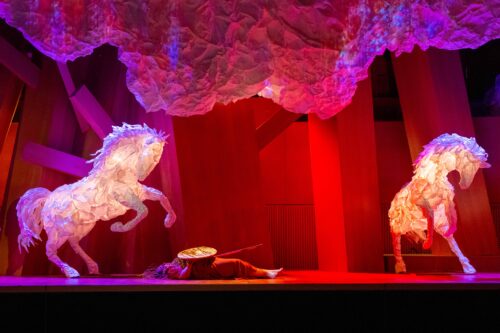
Other directorial decisions fare little better. Sieglinde contemplates stabbing Hunding as if drugging her husband were not agency enough. Siegmund throws Nothung aside in disgust. Wotan appears seemingly out of nowhere to snap the sword across his knee. Uncredited fight choreography has performers waving swords and shields like children playing at combat. Across the board, acting is marked by excessive arm-waving, noisy hyperventilating, and a surprising reluctance for performers to look directly at one another.


Vocally, the cast proves mixed. Jamez McCorkle is miscast as Siegmund, lacking both heroic urgency and vocal heft. Soloman Howard‘s Hunding never develops much menace. Ryan Speedo Green‘s Wotan sounds underpowered, though the staging often places him facing away from large portions of the audience. By contrast, Sarah Saturnino brings conviction to Fricka, while Jessica Faselt and Christine Goerke handle Wagner’s punishing vocal demands with apparent ease. Goerke, however, receives little help from the direction, which requires her to spend much of the evening huffing, puffing, and stomping about barefoot as though in constant physical distress.


The visual design offers few compensations. Frank Gehry‘s scenic concept largely repeats ideas from the Philharmonic’s 2024 Das Rheingold, with raised platforms surrounding a lowered orchestra and fabric clouds covering portions of the hall. Omar Cerrada‘s projections often resemble ambient lighting more than meaningful imagery, while Tomás Osinski‘s paper-sculpture horses seem oddly inconsequential. The lighting proves especially disappointing. Siegmund sings of Nothung’s dazzling brilliance, yet the sword appears little more than a dull metal prop. Most damaging is the conclusion. Wagner’s “Magic Fire Music” demands overwhelming theatrical magic; instead, Brünnhilde lies beneath what resembles a dim weather-map swirl while the stage glows faintly orange. After waiting three evenings to reach this moment, the payoff is negligible.

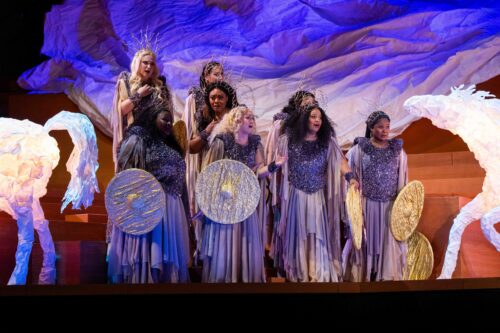
Musically, Dudamel appears determined not to overwhelm the singers. Admirable in theory, the approach results in an orchestra that feels unusually restrained. The Los Angeles Philharmonic still produces flashes of its customary brilliance during orchestral passages, but much of the evening lacks the overwhelming force Wagner’s score requires. Even the Valkyries sound surprisingly polite. Matters are not helped when the horns enter late during “The Ride of the Valkyries,” a lapse Dudamel quickly corrects but cannot entirely erase. Nor does “Magic Fire Music” ever achieve the radiance or power the score promises.

The production’s relationship with Disney Hall itself creates additional challenges. My Orchestra East seat compounded the problem. Besides creating an unbalanced listening experience, it made following the text unnecessarily difficult. Because Die Walküre was staged in a proscenium configuration within Disney Hall’s normally vineyard-style layout, patrons seated in the side sections had compromised sightlines to the supertitles projected above the stage. Additional titles were therefore projected at the rear of the hall, creating a constant visual tug-of-war as audience members repeatedly shifted their attention between the action in front of them and the text behind them. From Orchestra East, scenic elements and the architecture itself further obscured portions of the projections, making a premium-priced seat feel remarkably close to an obstructed-view location.
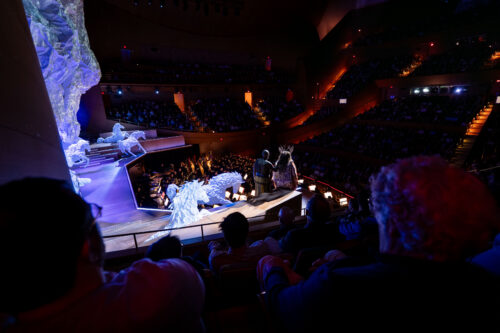

Nor was the decision to divide Die Walküre into three separate evenings any help. Wagner structured the opera’s acts to build momentum across a single performance. Here, each act arrived just as the drama was gathering force, only to stop for twenty-four hours. What functions as suspense across an intermission becomes frustration across three nights. Considering the cost of attending all three performances, the format often felt more punishing than innovative.
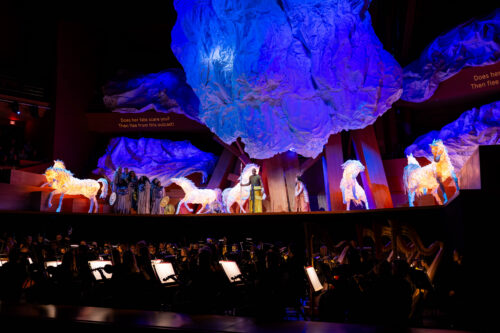

One aspect I genuinely admired was the darkened, makeshift orchestra pit. When the staging lost my confidence, the orchestra itself became a compelling visual focus. It offered a welcome alternative to the traditional advice to simply close one’s eyes when a production fails.

The Los Angeles Philharmonic still has not committed to completing its Ring cycle. Based on this installment, that may not be such a bad thing. If this is how the remaining operas would be treated, a concert of highlights might ultimately prove the wiser course.
✦ ✦ ✦ ✦ ✦ ✦ ✦ ✦ ✦ ✦
photos by Elizabeth Asher
Die Walküre
Gustavo Dudamel, conductor
Los Angeles Philharmonic
reviewed on May 19-21, 2026
ended on May 24, 2026
for future performances, visit LA Phil
✦ ✦ ✦ ✦ ✦ ✦ ✦ ✦ ✦ ✦
