


Areas We Cover
Categories

Theater Review: SAFE HOUSE (Theatre Row / New York)

by Paola Bellu | September 9, 2026
in New York, Theater
THE TROUBLE WITH PLAYING IT SAFE
Fine performances keep an overloaded
family drama on solid ground
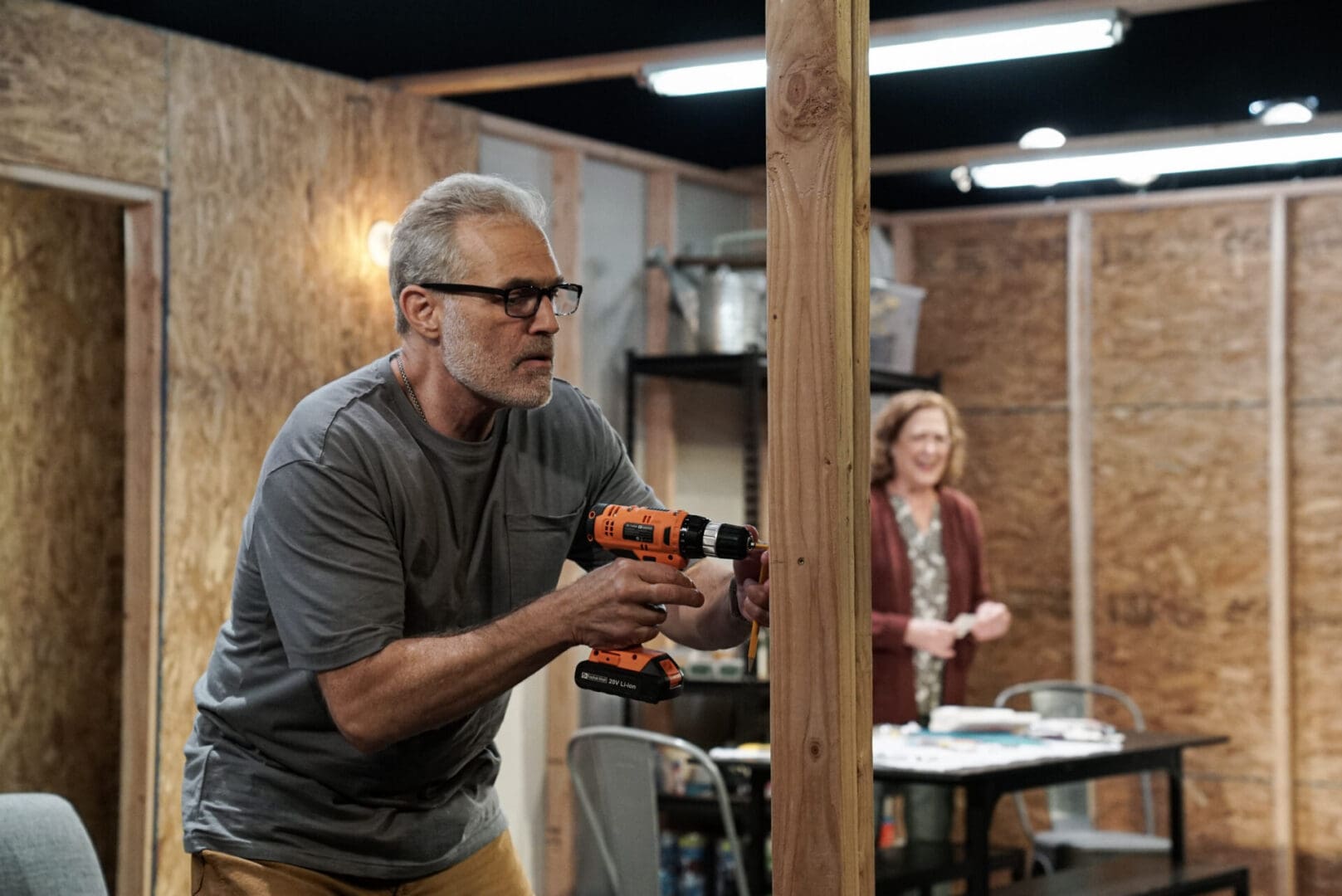
Marc Kudisch and Karen Ziemba
It is ironic how some wealthy folks convince themselves that they can trust luxurious bunkers with thick walls and armed guards to survive the collapse of society, without thinking that hired helpers are human. Even a modest, hidden bunker is no guarantee; someone can always break in and take everything you thought would keep you safe. L.B. Browne’s new play, Safe House, asks how much control we can really have over what comes next, and the answer, these days, can take some extreme forms. Or, that’s what I thought for much of the play’s first 30 minutes.
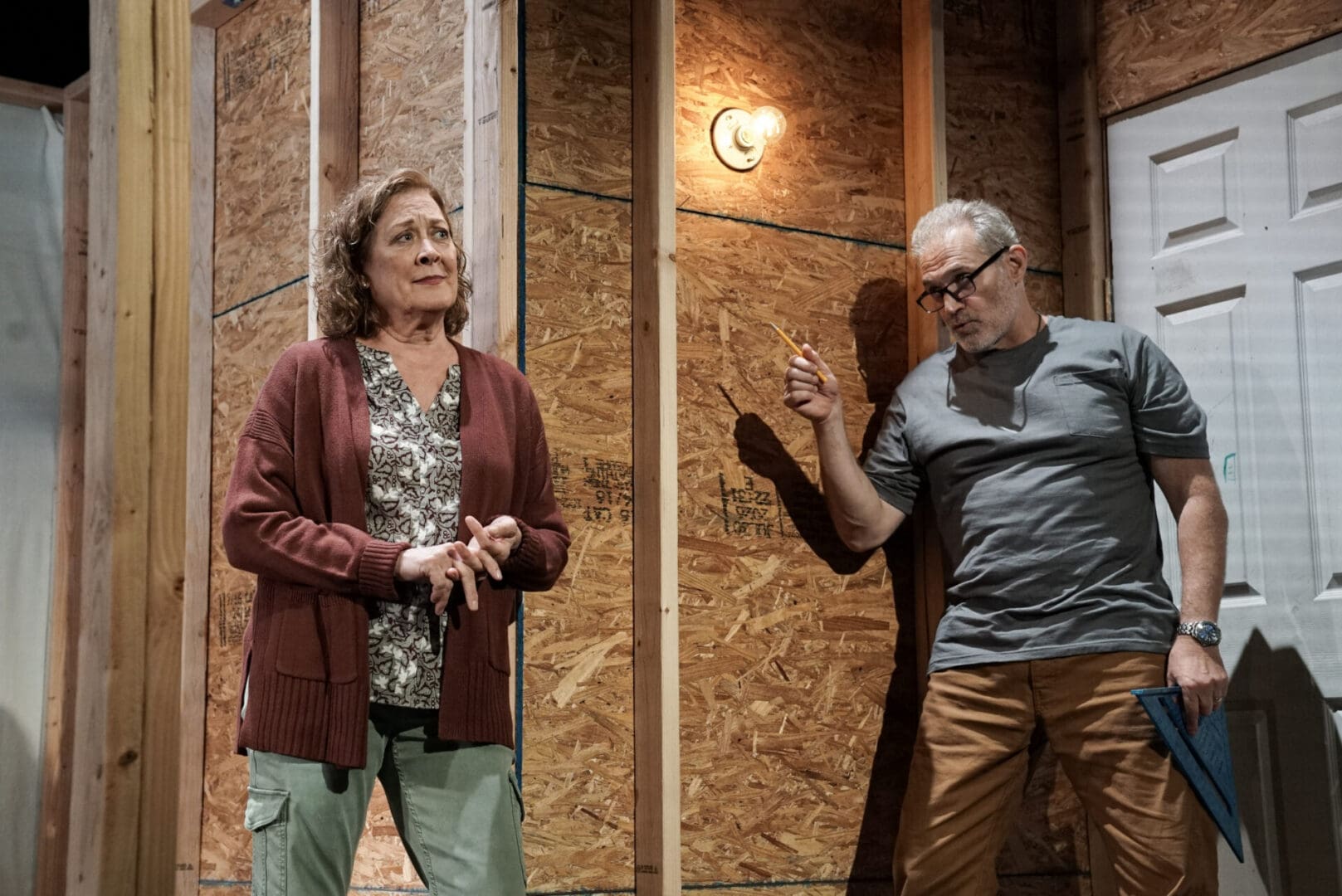
Karen Ziemba and Marc Kudisch
Tightly directed by Benjamin Viertel and making its world premiere at Theatre Row, Safe House begins with Rock, a Pennsylvania father convinced that the next U.S. presidential election will plunge the country into a second civil war. But his preparations for political catastrophe quickly collide with a crisis much closer to home. The bunker he has built to protect his loved ones from the chaos outside soon becomes the setting for a different kind of survival.
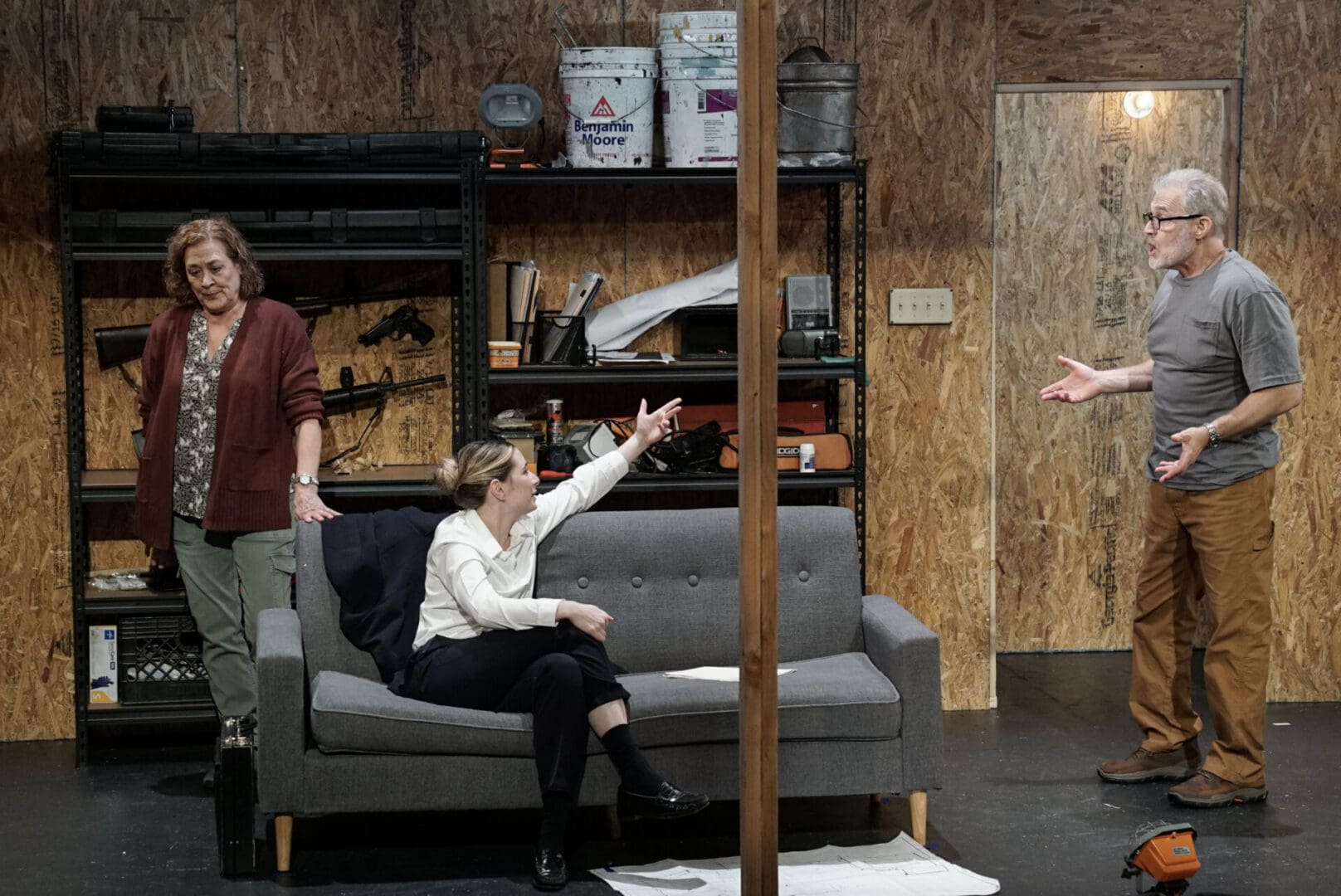
Karen Ziemba, Anna Roman, and Marc Kudisch
Marc Kudisch is Rock, and he delivers a remarkably realistic portrayal of a man facing neurological decline while still appearing strong, active, and firmly at the helm of his family. Tragic and comic, Rock has transformed anxiety into a philosophy: “Hope is what gets you killed. Preparation, discipline, that’s what counts.” His whole identity is built around competence. Even the appearances of his dead father (Glenn Seven Allen) aren’t simply hallucinations, but Rock’s internalized authority figure.
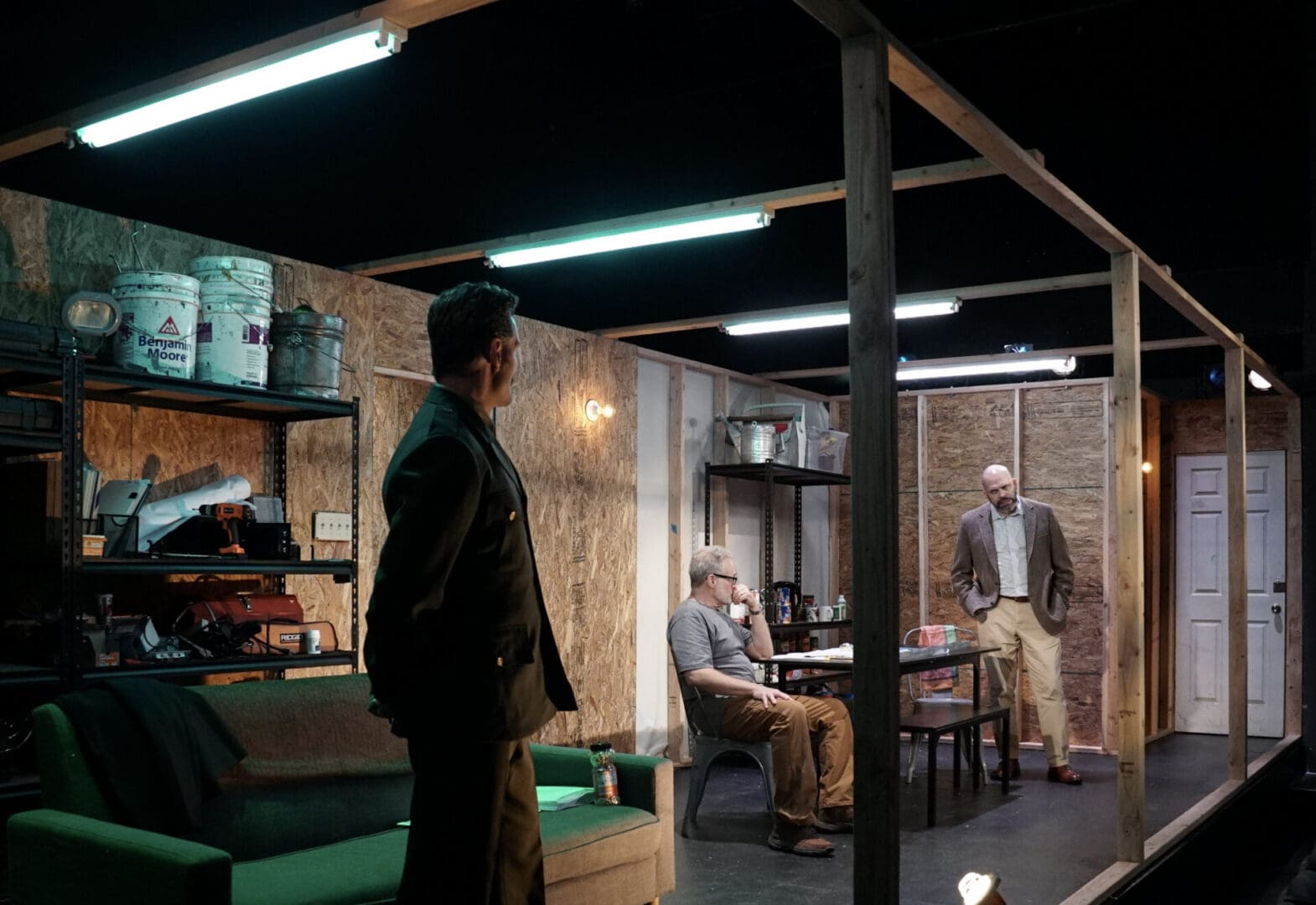
Glenn Seven Allen, Marc Kudisch, and Justin Lee Miller
His wife Slipper, played by Karen Ziemba, is much more reality-oriented, but she is also participating in a complicated system of accommodation and emotional caretaking. She is constantly trying to bring her husband back into the present, redirecting conversations when they become dangerous, basically performing emotional damage control. Ziemba effortlessly holds the audience’s attention, natural, grounded, and deeply human. The two characters are a closed emotional ecosystem: Rock produces anxiety, Slipper regulates it and makes it possible for Rock to continue functioning. Then Rock produces more anxiety.
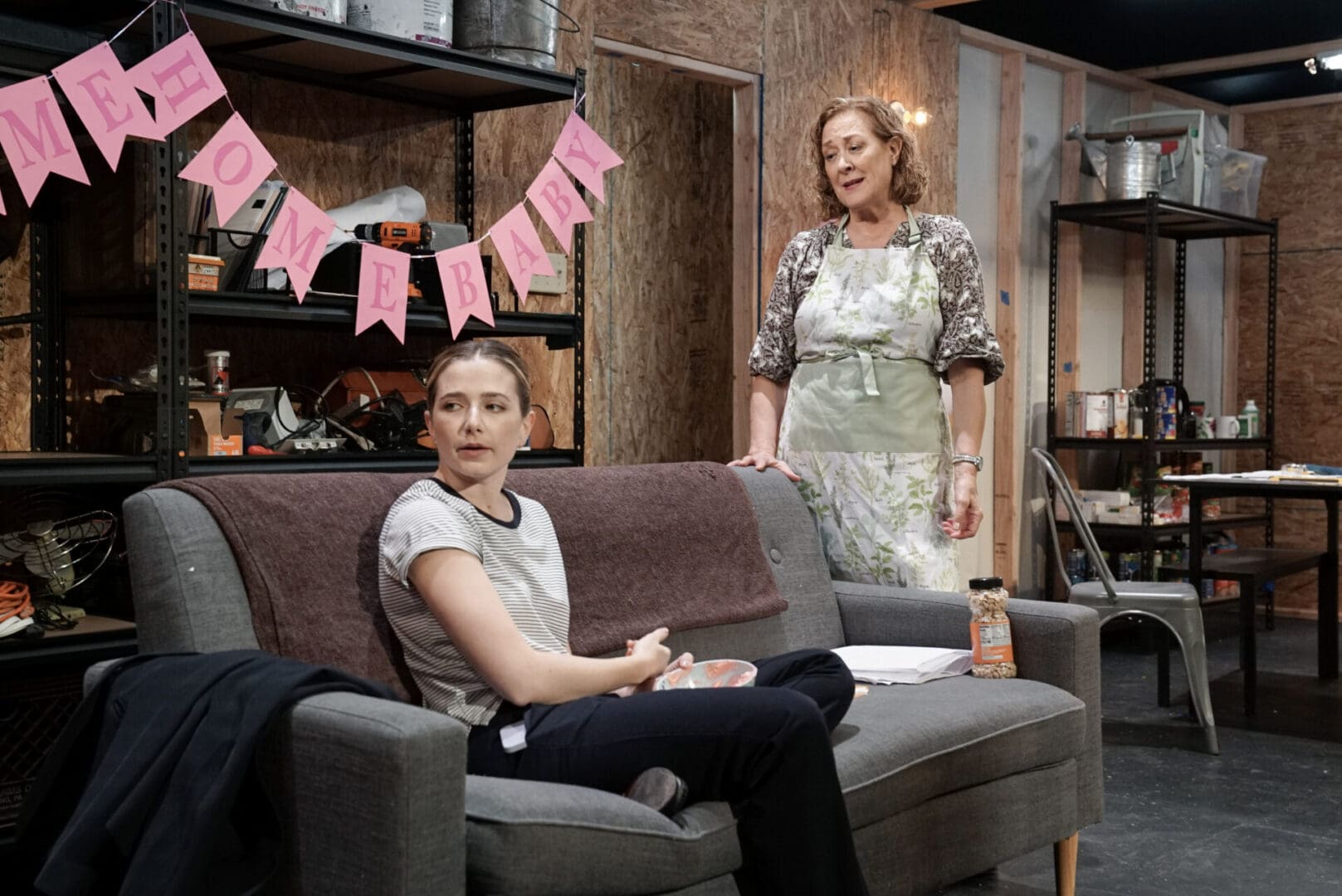
Anna Roman and Karen Ziemba
Their daughter Ashley, a 27-year-old attorney, is the most functional person in the family. She is played by Anna Roman, who completely vanishes into her character. Ashley has a career, navigates bureaucracy, solves practical problems, sees her father’s deterioration, and understands when not to provoke him. But her competence is an adaptation to a family in which someone always has to manage a crisis.
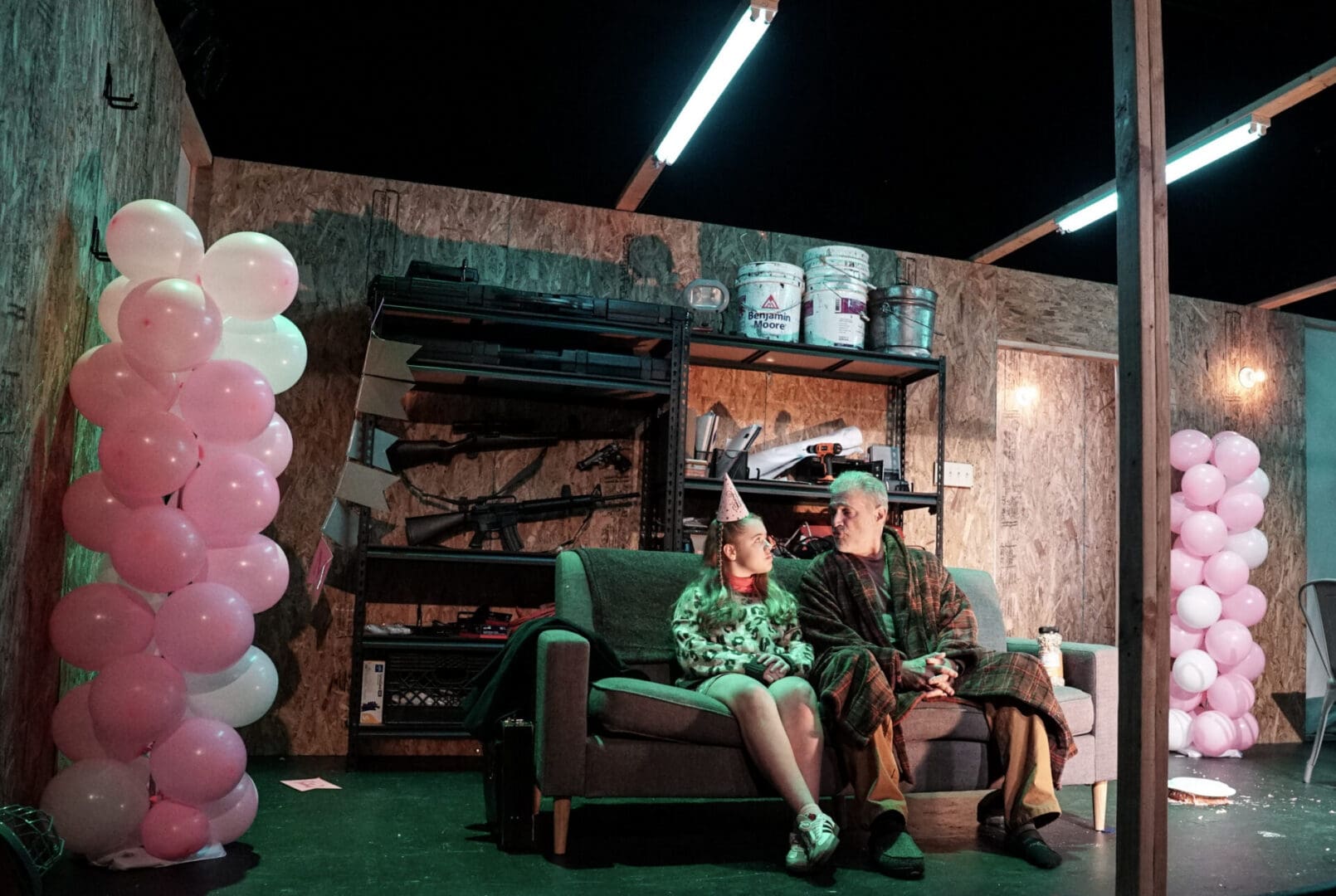
Julianna Layne and Marc Kudisch
Any one of these threads could have made for a compelling story, but the writer moves far beyond survivalism, politics, and a family dealing with its patriarch’s neurological decline. Enter Claire, 17, fiercely independent and extremely vulnerable. After running away a year earlier, she returns pregnant, still seeking acceptance from a father who has taught her that love and belonging come with severe conditions. Julianna Layne, as Young Claire, gives us a deeply affecting portrayal of a 7-year-old daddy’s girl who is faced with a terrible decision, while Grace Church passionately embraces teenage Claire’s rebellious nature. Justin Lee Miller plays the family physician and a police officer, two roles that seem to exist mainly to move the plot along without carrying much dramatic weight.
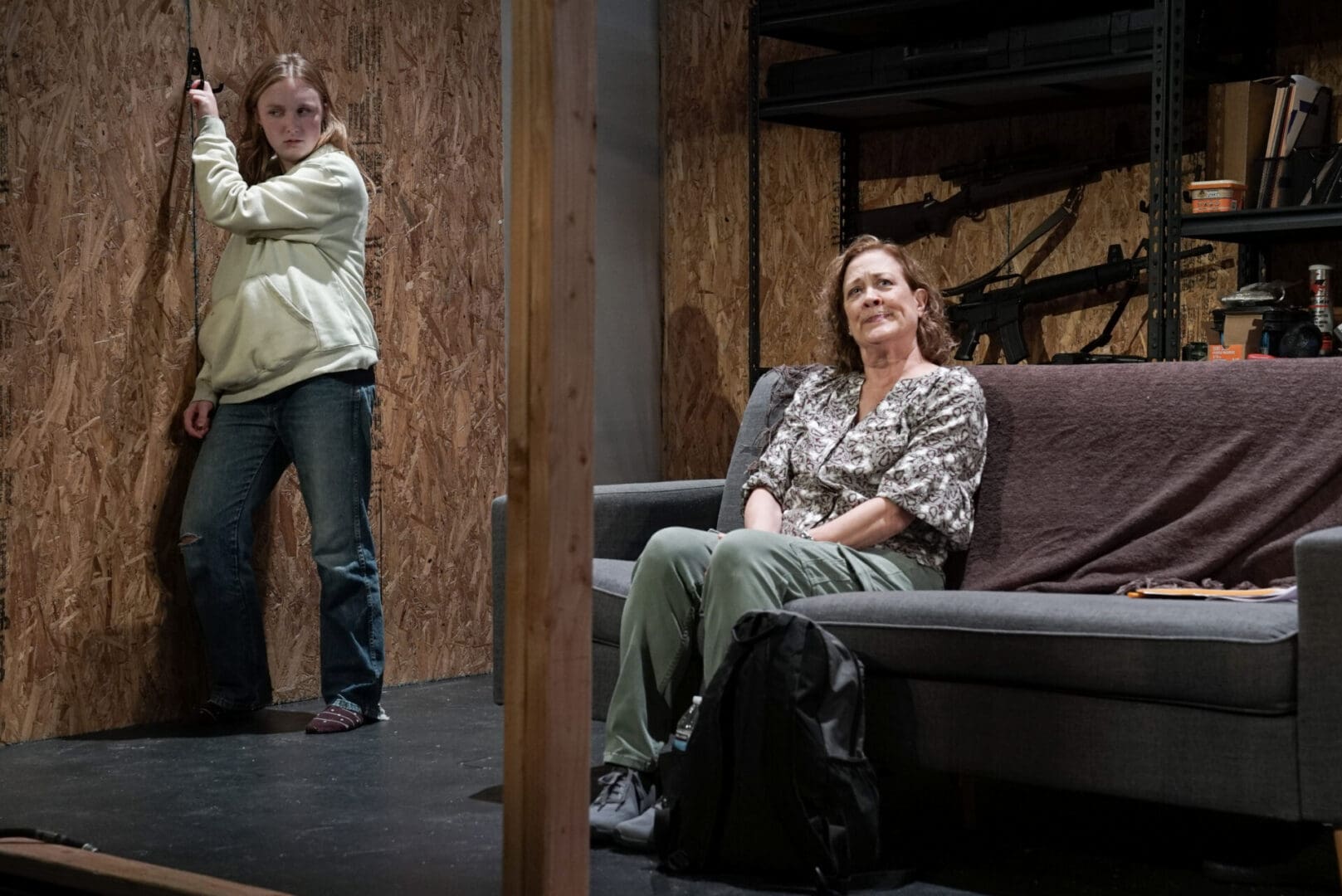
Grace Church and Karen Ziemba
The cast is tight and the chemistry palpable; however, the story keeps piling on drama when there is already plenty to explore: Rock is not merely ill but dying of Huntington’s disease, and Claire is not simply a runaway high-school dropout but 24 weeks pregnant and involved in some sort of eco-terrorist group. None of it is absurd, but the accumulation feels overwhelming, leaving the characters with little room to develop as they are constantly forced to react to the next crisis.
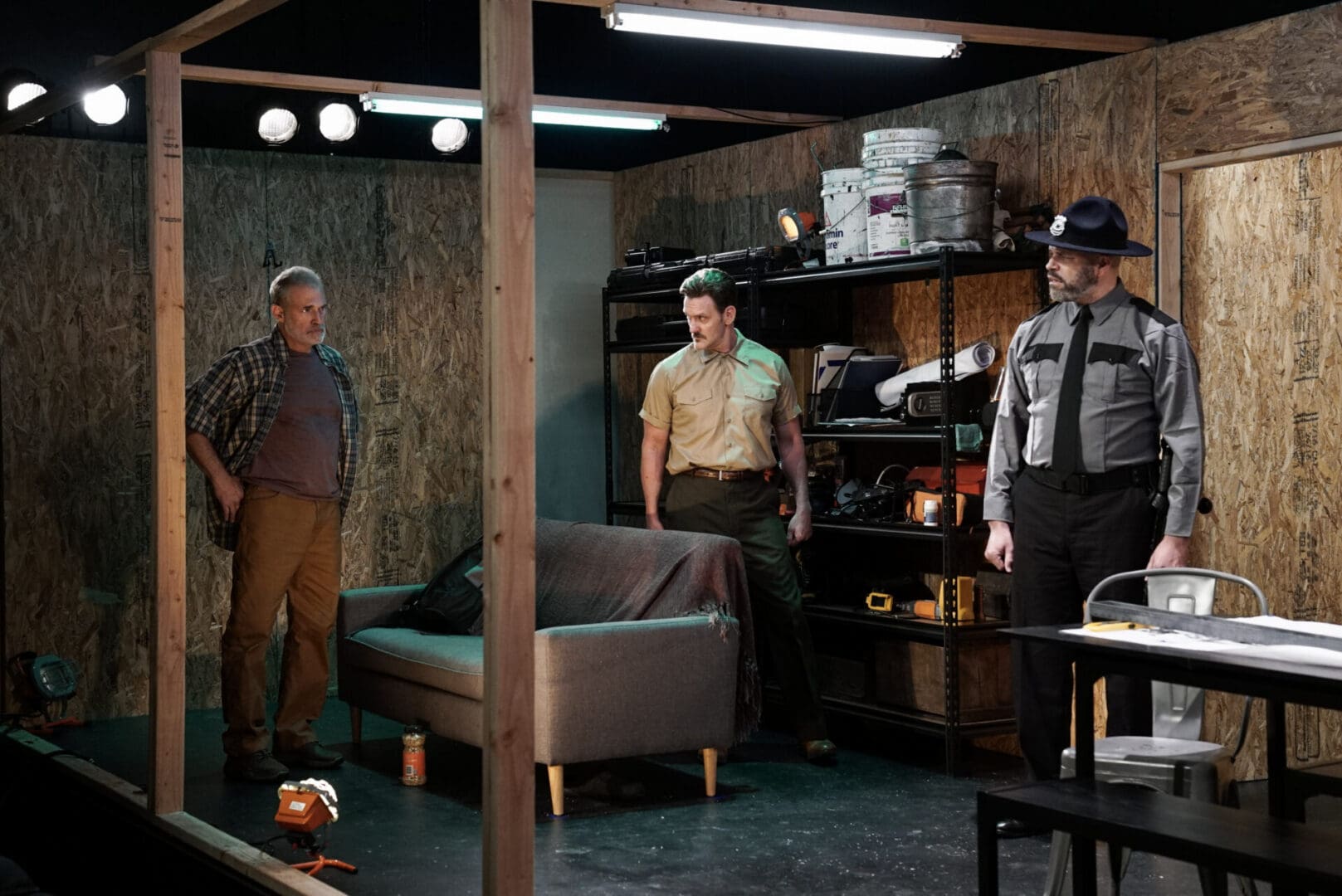
Marc Kudisch, Glenn Seven Allen, and Justin Lee Miller
Forest Entsminger’s set is a skeletal “birdcage,” perfectly evoking the unfinished, utilitarian feel of a basement. The shallow playing space combines a living area and workshop, with a green sofa and heavy-duty shelving units crowded with paint buckets and power tools, a sparse dining setup, and mismatched chairs—minimalistic but functional. Overhead, cold fluorescent shop lights cast their unforgiving glare, softened by wall sconces and low footlights. Mary Ellen Stebbins’ high-contrast lighting heightens the garage-like aesthetic, while ARTONE’s costumes feature an earthy palette that blends seamlessly into the basement setting.
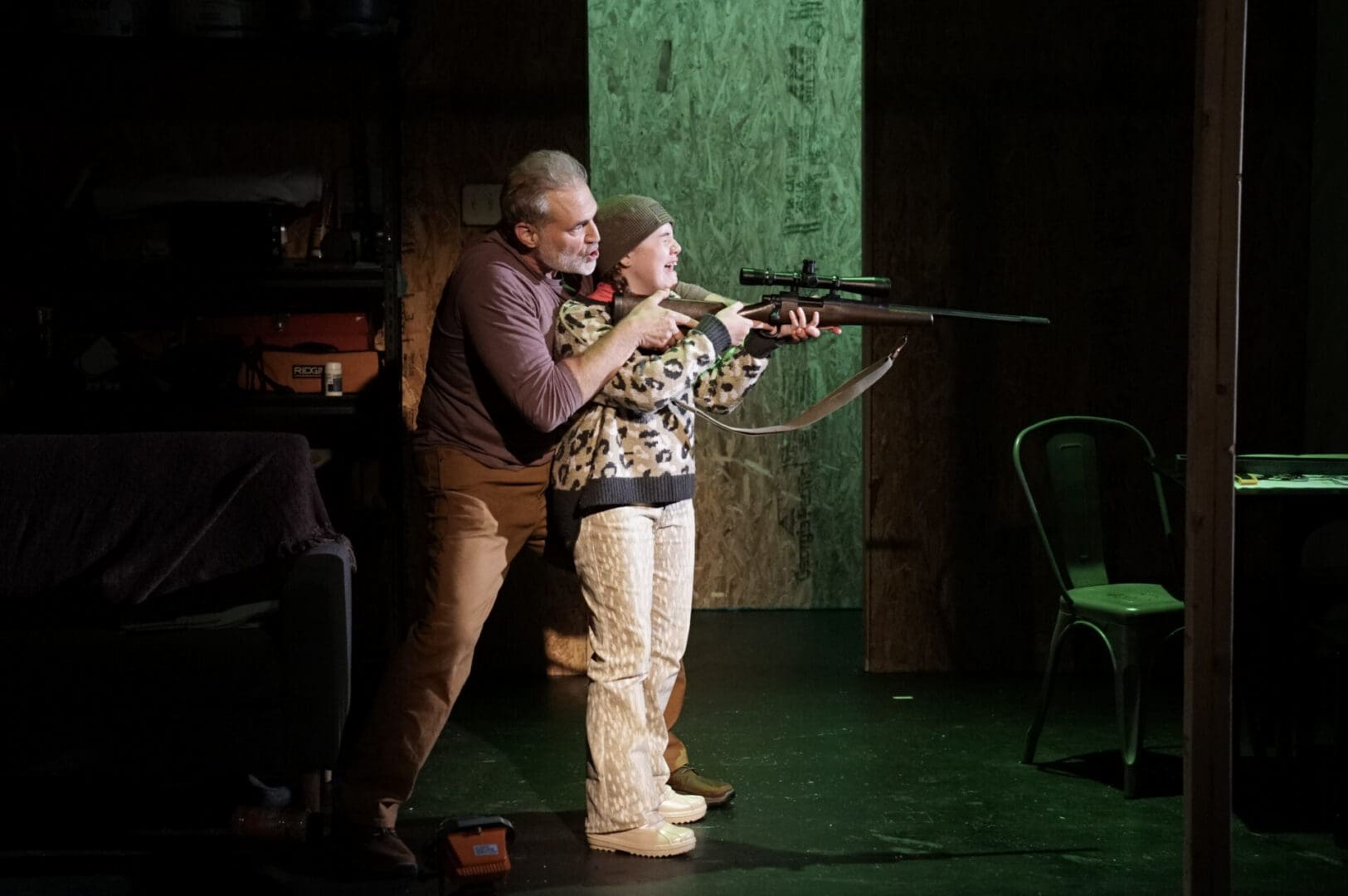
Marc Kudisch and Julianna Layne
The play has perhaps more calamity than it knows what to do with, stacking one catastrophe on another, and it could certainly afford to lose a few. Fortunately, there is a solid play beneath the pile, and a passionate cast brings it to life with energy, conviction, and heart. With all its excesses, it remains well worth a late-summer evening.
✦ ✦ ✦ ✦ ✦ ✦ ✦ ✦ ✦ ✦
photos by Viktorija Mickute
Safe House
split/decision
Theatre Row, 410 W. 42nd St. in New York
Tues.–Fri. 7; Sat. 2 & 7; Sun. 2
ends on Sept. 13, 2026
90 minutes, no intermission
for tickets ($39–$67), visit split/decision and Theatre Row
for more shows, visit Theater in New York
✦ ✦ ✦ ✦ ✦ ✦ ✦ ✦ ✦ ✦
