


Areas We Cover
Categories

Dance Review: OSCAR (The Australian Ballet at New York City Center)
by William Keiser | October 8, 2026
in Dance, New York, Tours
A KISS, A SIGH,
BUT WHERE’S THE DANCE?
Christopher Wheeldon’s Oscar Wilde ballet offers
a moving story and striking imagery, but too little
of the athletic movement that makes ballet thrilling
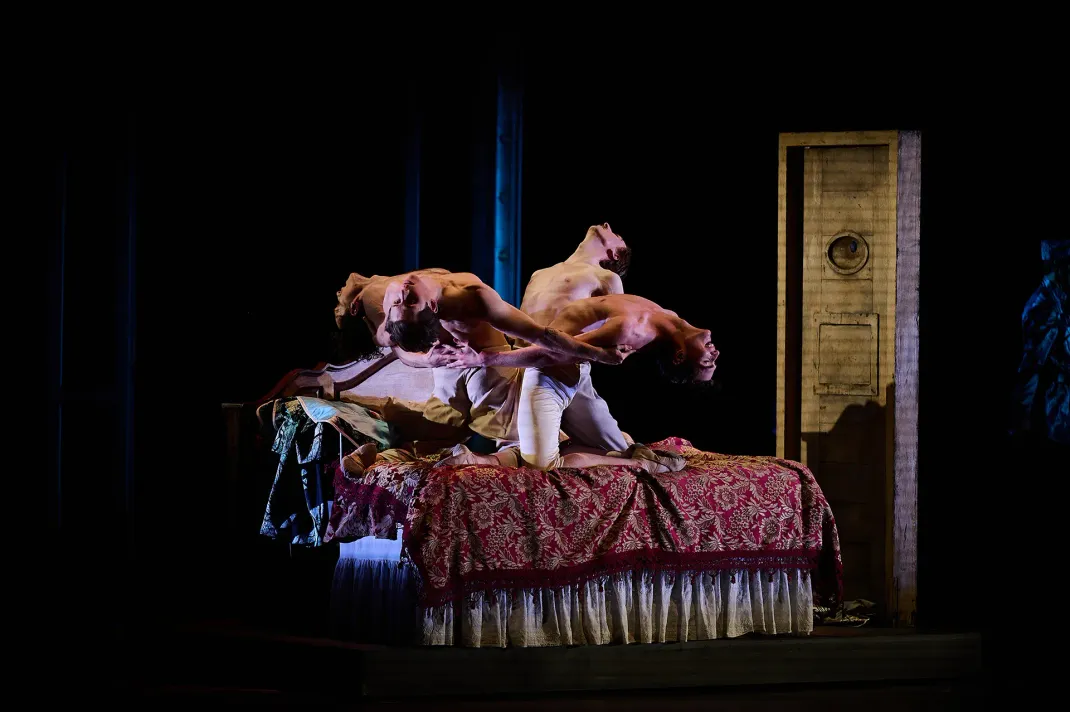
The Australian Ballet on tour in Oscar at New York City Center (Daniel Boud)
Ah, the biopic ballet. This time, it’s Oscar, the story of the life of Oscar Wilde, performed by The Australian Ballet on tour this week at New York City Center. Choreography is by the prolific Christopher Wheeldon, whose full-length works (among them Alice’s Adventures in Wonderland and Like Water for Chocolate, both scored by Joby Talbot, who also composed the music for Oscar) chart a decisive path toward narrative in a dance landscape of increasing abstraction. This latest addition to Wheeldon’s canon roughly follows the life story of the eponymous writer over two acts, plus prologue and epilogue. In between sequences of biography are divertissements imagined from Wilde’s literary works, specifically The Nightingale and the Rose (a plaintive fairy tale) and The Picture of Dorian Gray.
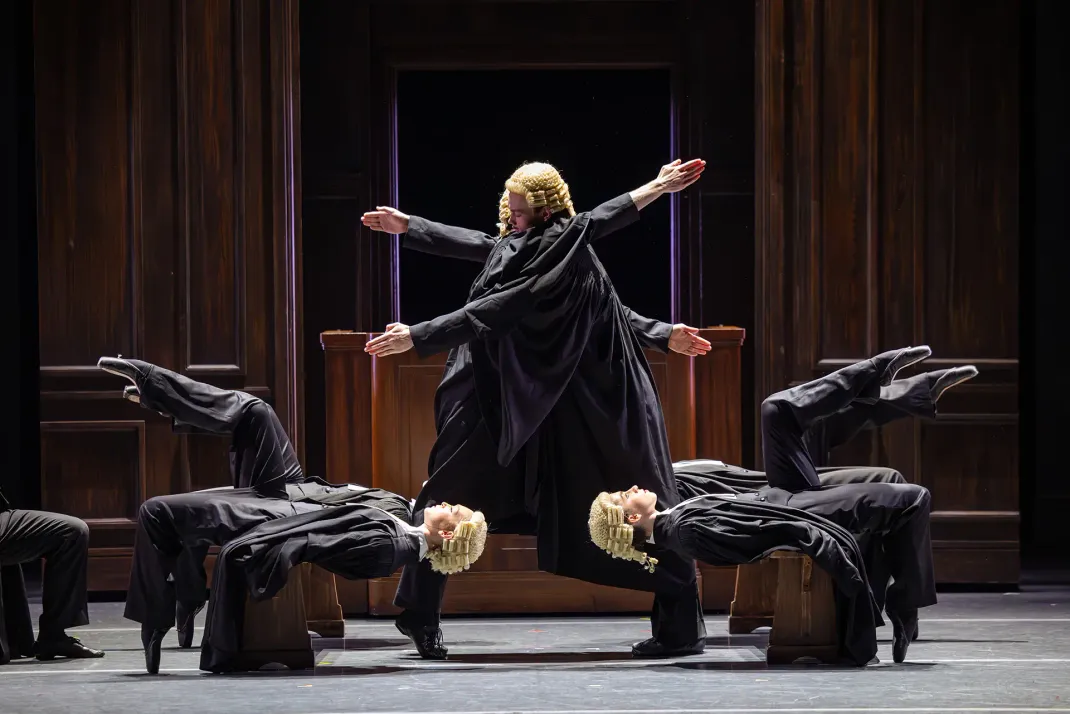
Oscar (Daniel Boud)
The scene opens on Wilde’s 1895 trial for “gross indecency between men.” Black-clad barristers in white wigs and pointe shoes dart about, projecting extended arms at right angles (Jean-Marc Puissant, set and costumes). A narrator (Sean O’Shea) strides onstage and speaks the context of the trial and verdict; then the set is wheeled away and replaced with a prison cell and solitary cot, on which the suffering Oscar (Callum Linnane) is thrown. We backtrack to Oscar’s youth—but first, the introduction of the character of the Nightingale, a lady on pointe. Back to the story: Oscar’s wife, Constance; the meeting of his first lover, Lord Alfred “Bosie” Douglas (Elijah Trevitt); a jaunt through the queer London demi-monde; then intermission. Upon our return from the concession stand, we are back in the jail cell, tracking Oscar’s dream flights through Dorian Gray and the theatrical death of the Nightingale. At the close of the action, Oscar flees England and expires. The narrator returns to recite a sonnet by Bosie about Wilde’s death. The scrim falls. The projected photograph of the real Oscar Wilde floats to rest on the closed curtain, and the audience applauds.
Elijah Trevitt, Yipeng Xu (Christopher Rodgers-Wilson)
The challenge of such a plot-heavy ballet is clear: it’s difficult to write, much less to dramatize. Wheeldon attempts to render it in movement by dividing his lexicon: prosaic real characters (Oscar, Constance, Bosie, etc.) are given specific simple themes, which splinter into later variations. When we meet Oscar, he performs a solo with quirky bent-arm movements and flips of the wrist, promenades on flat, and a motion that imitates writing in the air with a quill.
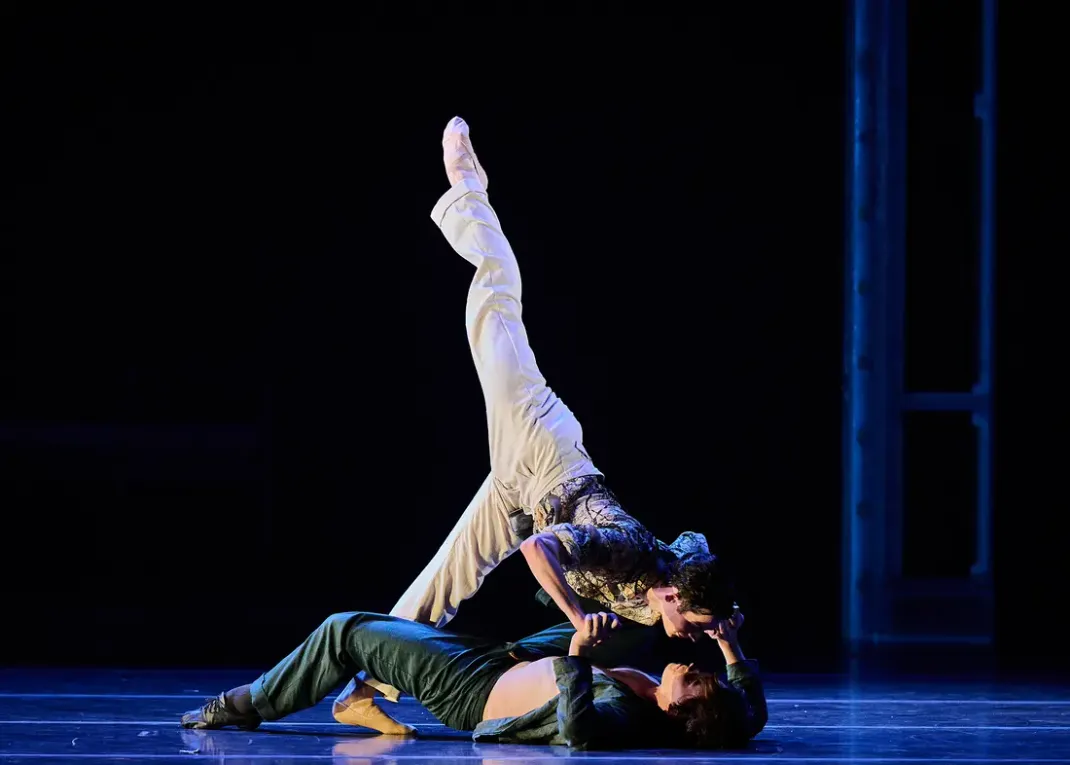
Adam Elmes, Jarryd Madden (Christopher Rodgers-Wilson)
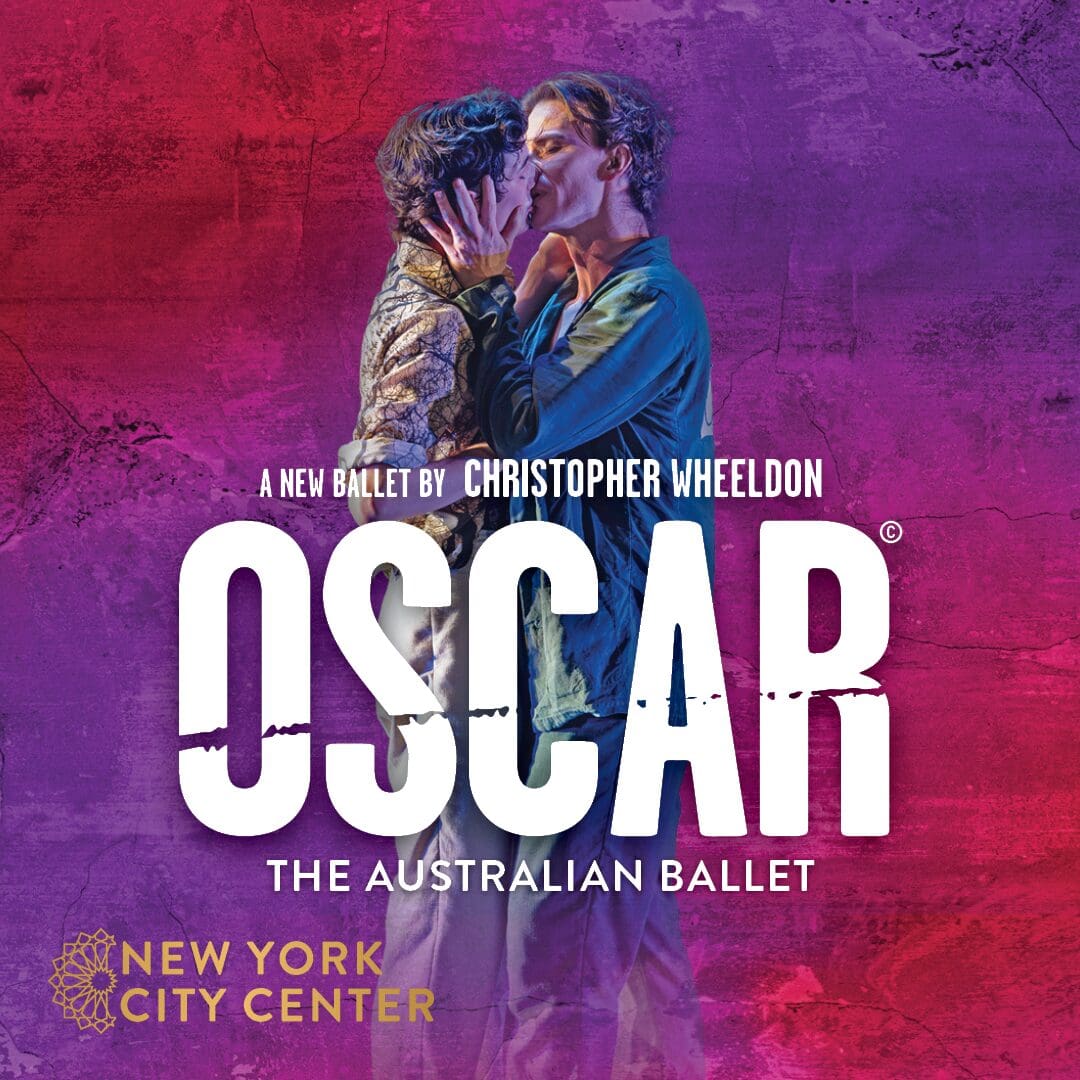
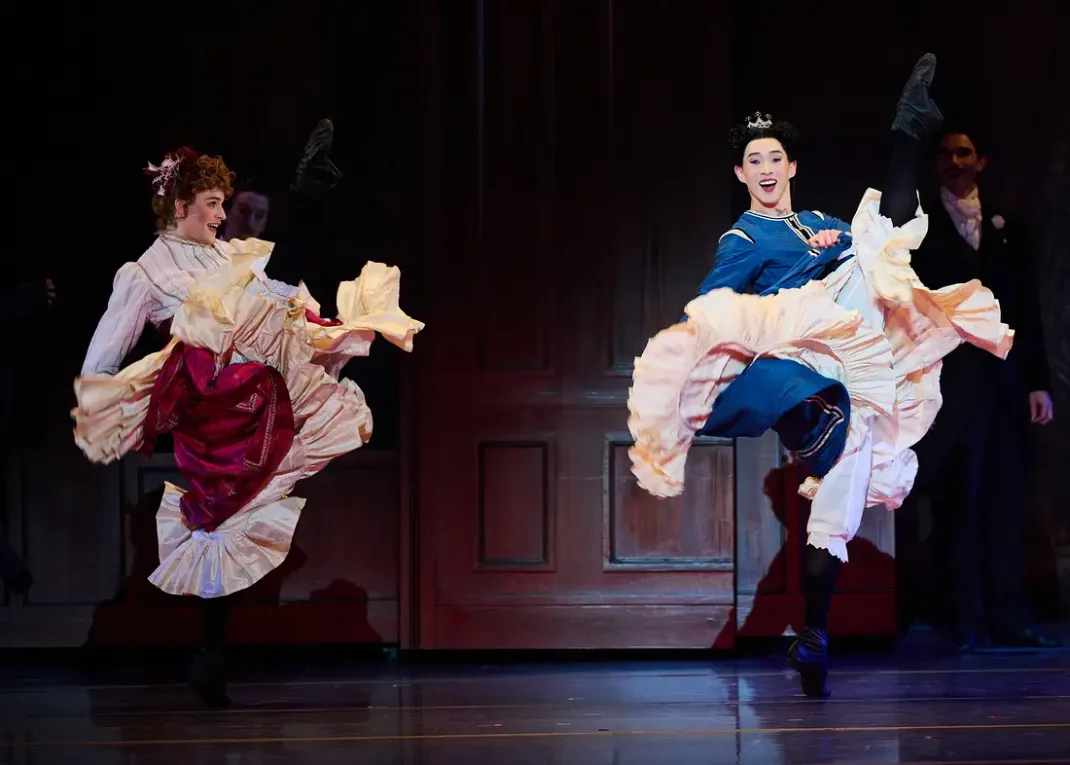
Bosie, as he comes in and out of Oscar’s life—through their flirtation, when Constance is out of the room—gets his own, slightly varied version of arabesques on flat, hints at floorwork, and the occasional springing sissonne. The court enters and executes Wheeldon’s pleasant, angular partnering. The most striking images are two drag queens of the demi-monde, dancing a vigorous Punch-and-Judy routine; the poetic device of two figures pressed together, the one behind forming the arms of the one in front; and, of course, the KISS—between Oscar and Bosie—which has graced buses in New York City for a season.
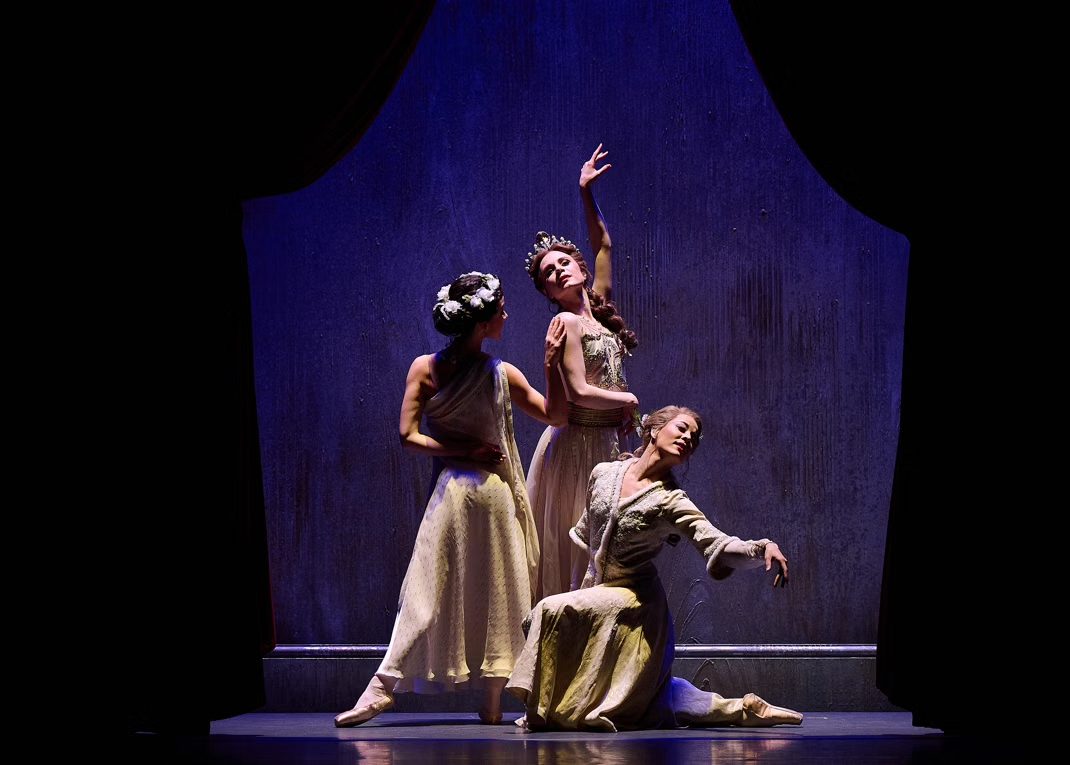
Mia Heathcote, Benedicte Bemet, Jill Ogai (Christopher Rodgers-Wilson)
The issue with the biopic ballet, which has become a popular way to cajole new audiences into the theater (see my reviews of the Dutch National Ballet’s Frida and the Scottish Ballet’s Mary, Queen of Scots), is that the elements that produce excitement and movement are mostly sets and costumes. Sadly, Oscar is no exception. This ballet is very light on actual dance. The entire show could be performed without warming up. For an uninitiated audience member, the evening is enjoyable; there is a palpable sense of hope in the air because of the daring subject matter (TWO MEN KISSING? IN A BALLET!).
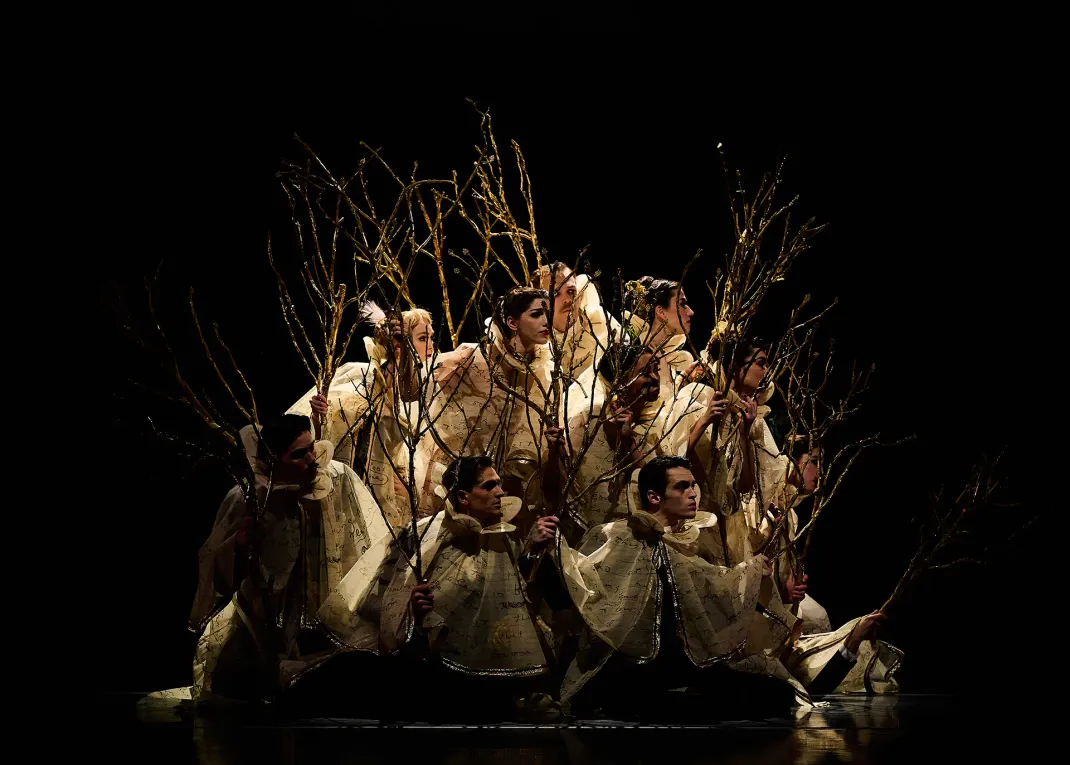
Oscar (Christopher Rodgers-Wilson)
But for someone who loves dance—and I mean, real, athletic, risk-taking movement as an art form, not moving hands and doing an occasional polite en dedans turn—this ballet could have been performed by my grandmother. When dancers go onstage to perform a solo, they move for a few seconds, then run off—it seems they are always on their way offstage. The partnering, which is inventive and creative, becomes repetitive because it is broken by no feats of movement—no big jumps, no big turns. The choreography demands so little technical skill that it scarcely uses the vocabulary of classical ballet to tell its story. The majority of what is happening onstage is dancers in plié, making shapes with their arms, or worse: performing melodramatic pantomime. The one female lead en pointe, the Nightingale, who symbolizes the glorious tragedy of the open and vulnerable, gets nary a moment onstage alone to eat space with her limbs and live.
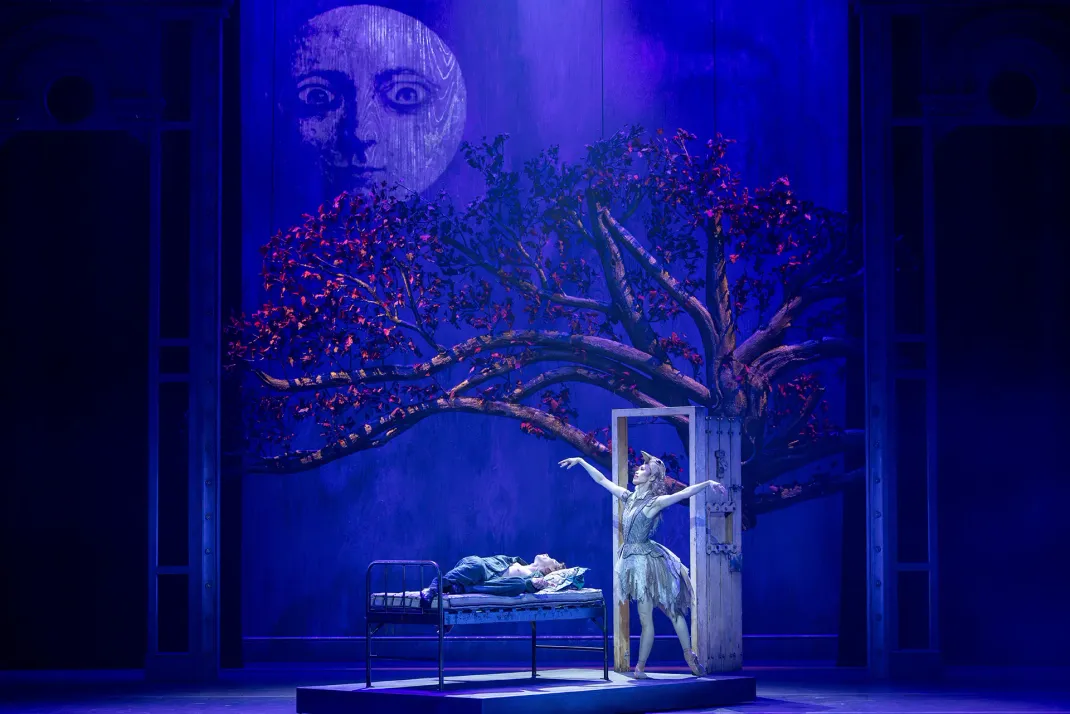
Ako Kondo, Jarryd Madden (Daniel Boud)
For me, I want to see the moving, tragic love story between two men—in classical ballet—maybe more than most. This, for me, was an enjoyable evening, but it left a large gap where someone else might try to do that.
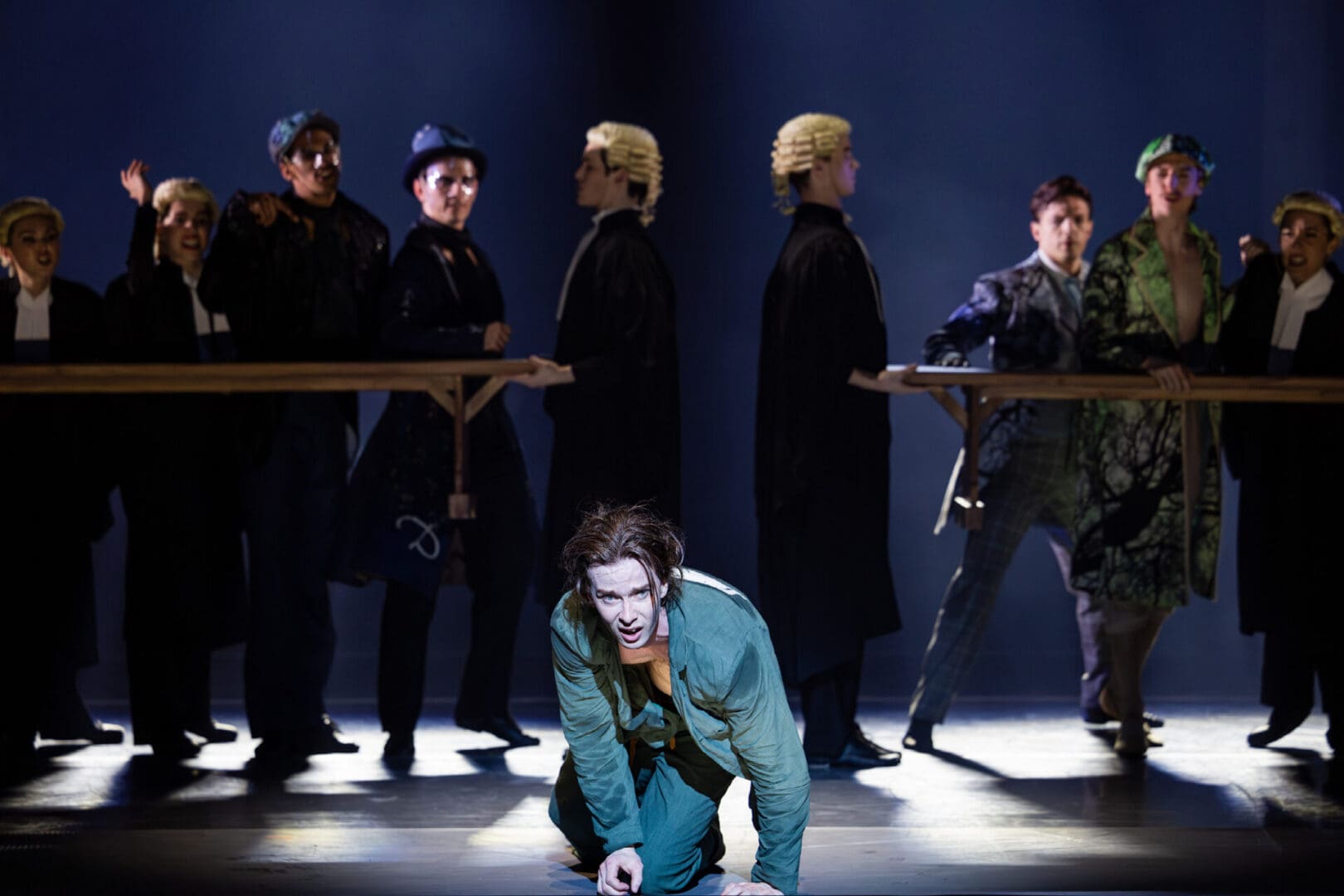
Jarryd Madden (Daniel Boud)
✦ ✦ ✦ ✦ ✦ ✦ ✦ ✦ ✦ ✦
Oscar
The Australian Ballet
New York City Center, 131 W. 55th St. in New York City
with the 48-piece Orchestra of St. Luke’s performing live
ends on October 11, 2026
for tickets, visit New York City Center
for more info, visit Australian Ballet
✦ ✦ ✦ ✦ ✦ ✦ ✦ ✦ ✦ ✦
