


Areas We Cover
Categories

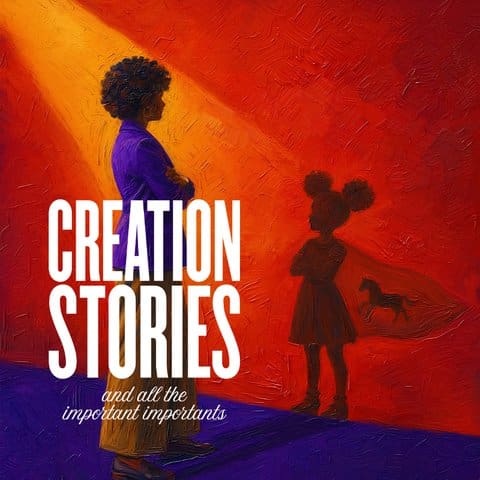
Off-Broadway Review: CREATION STORIES AND ALL THE IMPORTANT IMPORTANTS (Lincoln Center Theater / LCT3)
by Gregory Bernard | October 11, 2026
in New York, Theater
THE ART OF CREATION,
THE PAIN OF LONGING
Mfoniso Udofia’s inventive new play finds
extraordinary theatrical expression in a woman’s
struggle with motherhood, grief, and self-forgiveness
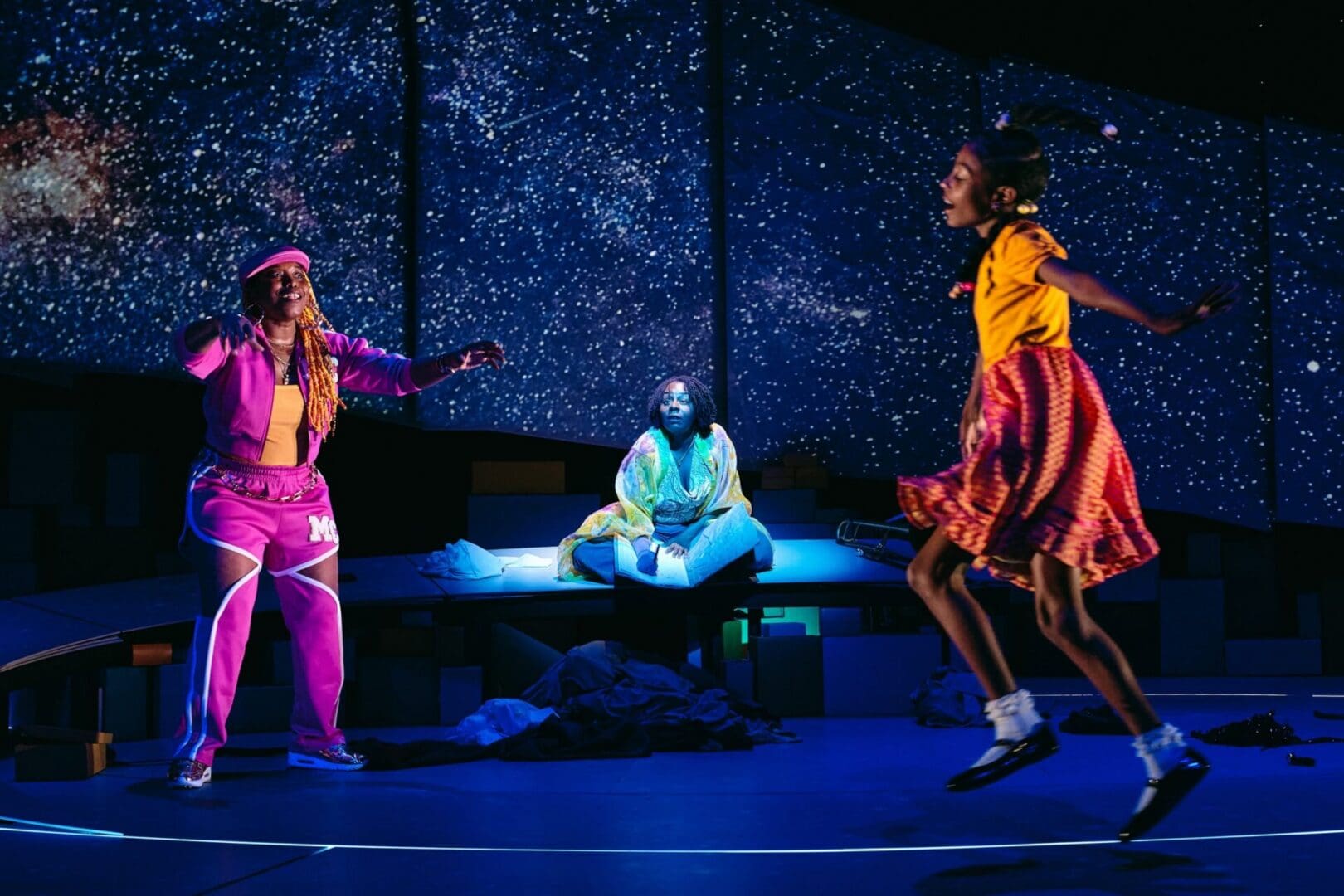
Donnetta Lavinia Grays, Abigail C. Onwunali, Savannah Commodore
The world premiere of creation stories and all the important importants at Lincoln Center Theater begins with a nightmare. Haunted by the Raffia, a Nigerian earth spirit of creation, thegrownwoman (Abigail C. Onwunali), a middle-aged Black woman, awakens to another day of seemingly endless obligations. Running late, she narrates her life in the third person: “The grown woman finds something clean to wear.” “The grown woman makes blueberry tea.” Though she engages in actual conversations with Alexa, her mother, her students, and her doctor, much of her day unfolds through this curious self-narration as she rushes from medical appointments to the classroom, shopping for her mother, and home again. It is an exhausting routine, made all the more urgent by the fact that she is on her fifth In Vitro Fertilization (IVF) cycle, anxiously awaiting the results of her latest blood test.
Into this carefully managed expressionistic world crawls little girl/the uncome (Savannah Commodore), emerging from a pile of clothes while thegrownwoman showers. Playing her trombone and speaking directly to thegrownwoman, the child is a constant presence who receives no direct acknowledgment in return. Is she thegrownwoman’s future daughter, the child she longs to bring into the world, or a manifestation of her own younger self? The ambiguity is part of the play’s intriguing theatrical language, allowing the child to exist somewhere between memory, possibility, and longing.
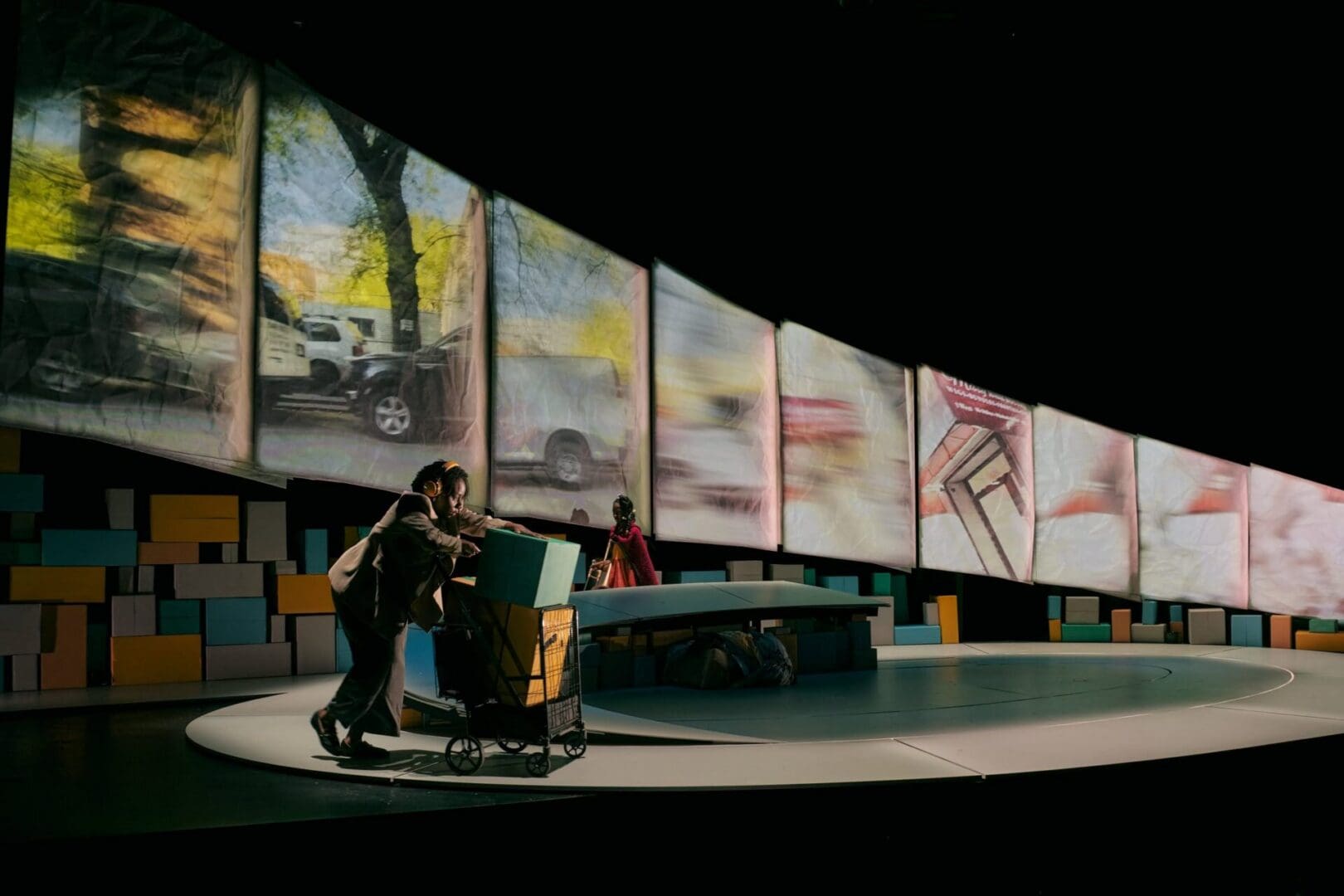
Abigail C. Onwunali
Representing something far more primal and mysterious, the Raffia is played by Donnetta Lavinia Grays, who also lends her voice as Alexa, catering to all the music needs of thegrownwoman—and there are many playlists that help sustain her through her demanding day. Not until the third character Grays plays, Mr. Cornell, a human-sized child’s toy, do we get to see her face and ample stage charisma.
Playwright Mfoniso Udofia brings a distinctly non-Western sensibility to the stage, expanding the possibilities of theatrical storytelling beyond conventional realism. Under Tamilla Woodard’s inventive direction, the production creates a world in which the everyday and the mythic coexist, and physical movement becomes as essential to the storytelling as dialogue. Adesola Osakalumi’s movement direction keeps the production spinning forward with a sense of urgency that mirrors thegrownwoman’s frantic pursuit of her daily responsibilities. Beneath such routines and relentless forward motion lies a profound struggle with creation, identity, and the possibility of motherhood.
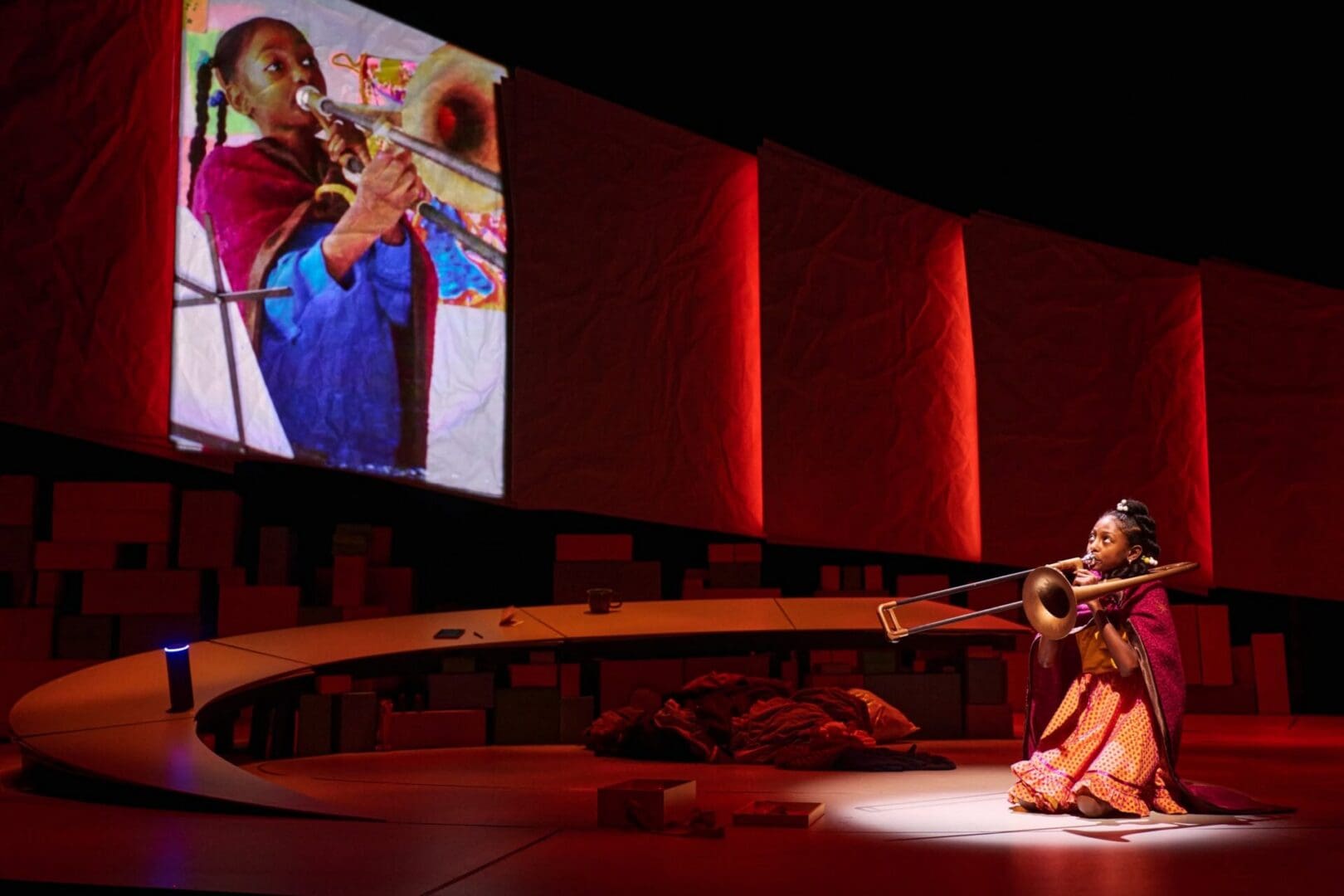
Savannah Commodore
Jason Ardizzone-West’s set, filled with colorful boxes, a curving ramp, and circular pathways, establishes a dynamic playground for the action, beautifully illuminated by Alan C. Edwards. Katherine Freer’s projections across several overlapping screens and the sound design by Bailey Trierweiler and UptownWorks further enrich the atmosphere.
The Obie nominators should take note of Onwunali’s tour-de-force performance. This day-in-the-life portrait is a roller coaster of movement, emotion, vocals, and passion. Onwunali propels herself through the character’s exhausting schedule with such intensity that each task is doubly charged by the next. Her physicality and voice convey a woman trying to keep every part of her life in motion while struggling to contain the uncertainty threatening to overwhelm her. Onwunali sweeps you along with her, making it nearly impossible to look away for an instant.
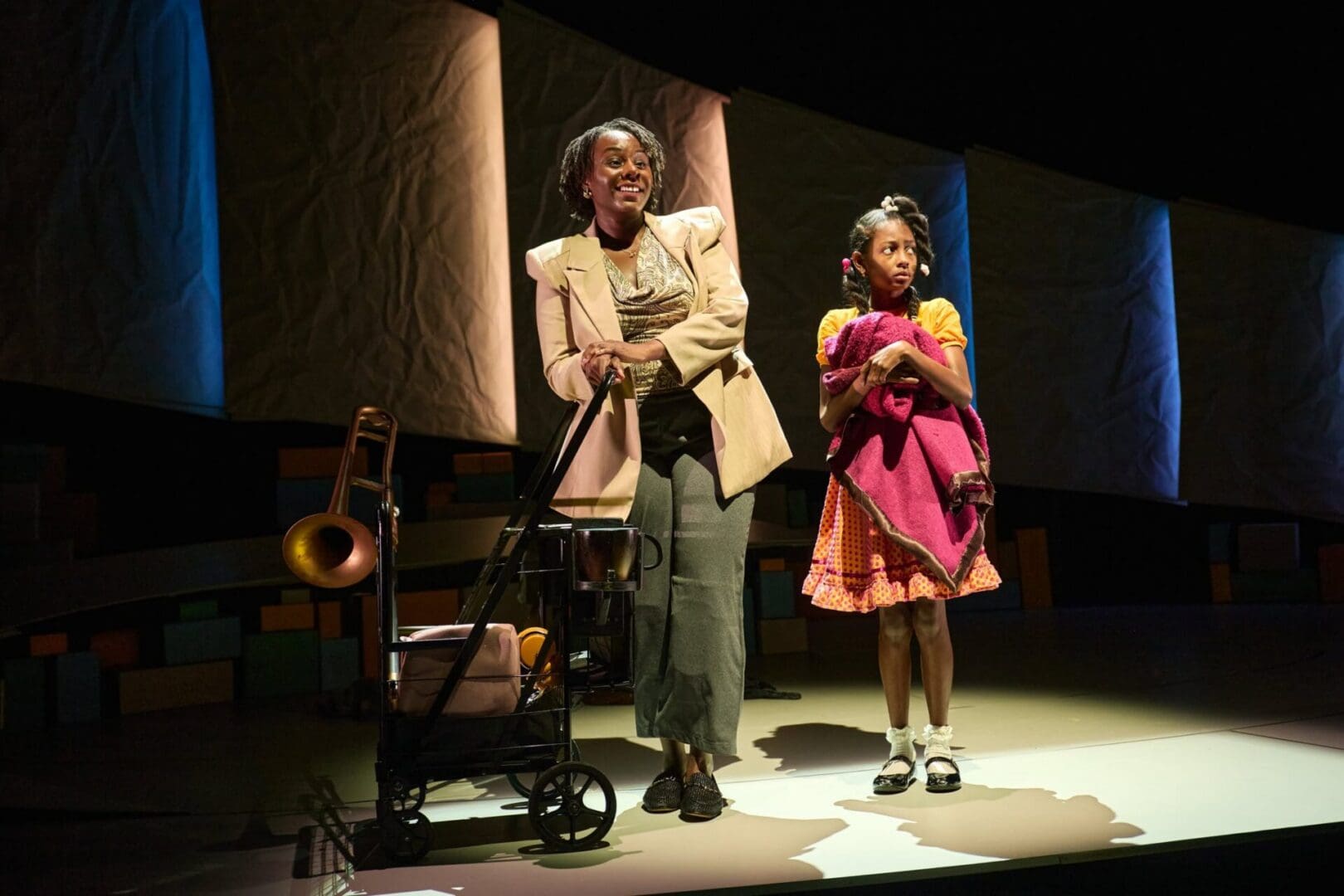
Abigail C. Onwunali, Savannah Commodore
There is a different kind of magic in Commodore’s performance as the little girl. Her ability to listen, focus, and subtly respond is remarkable. The way she watches thegrownwoman, absorbing every gesture and emotional shift, suggests an understanding that extends far beyond her years. Her attentive presence gives the character a life of her own, deepening the mystery of who—or what—she represents.
Grays brings charm, abundant stage presence, and considerable power to her multiple roles. Her transformations among the Raffia, Alexa, and Mr. Cornell help establish the production’s fluid theatrical universe, where voices and identities can shift without warning and the ordinary can suddenly become extraordinary.
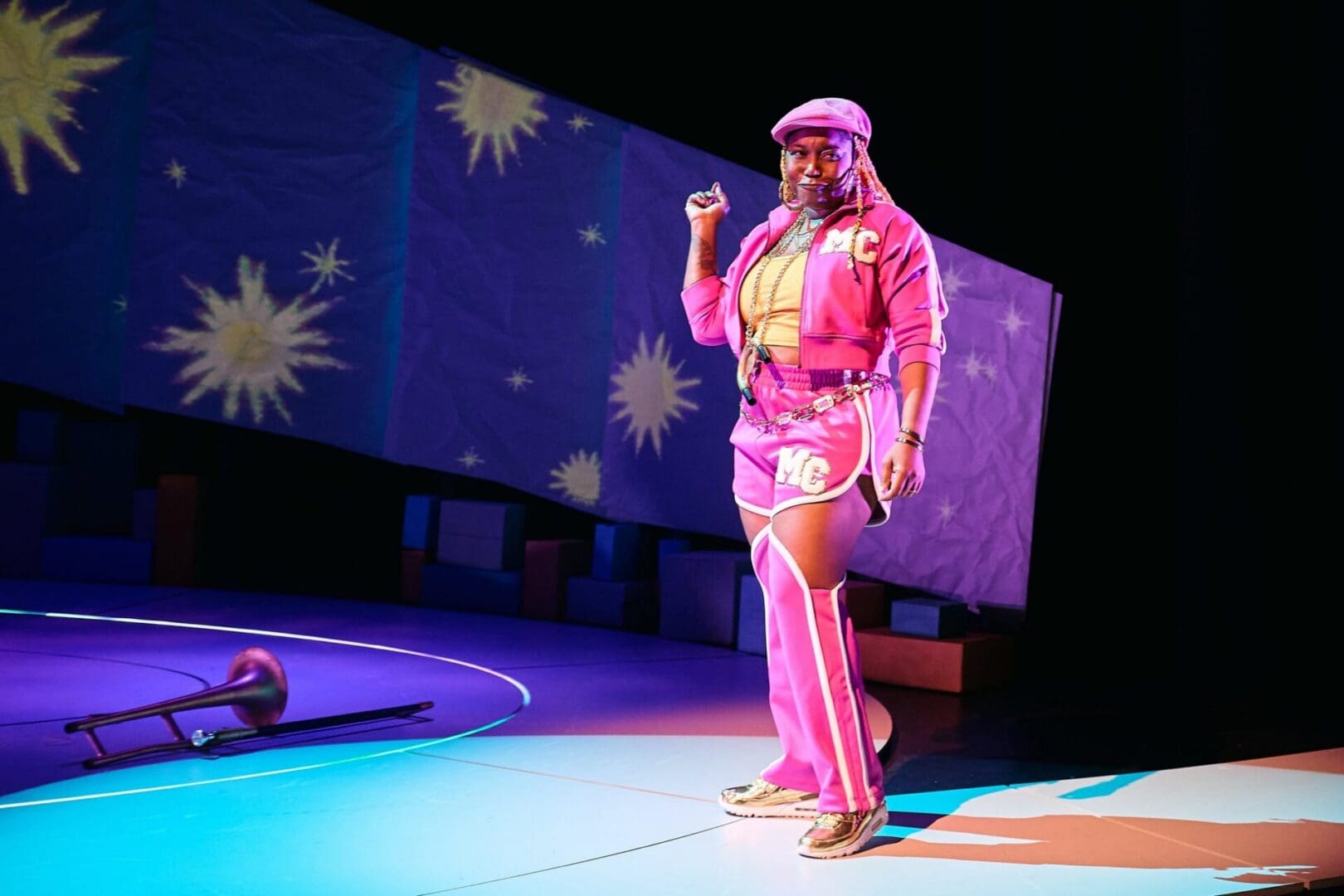
Donnetta Lavinia Grays
One of the play’s surprises is its classroom sequence. Not since Water by the Spoonful has a classroom scene felt so much like attending a lesson taught by a true professor onstage. Here, the lesson is even longer and more thorough, yet its extended exploration becomes an integral part of the experience rather than a mere detour. The classroom offers another window into thegrownwoman’s mind and work, revealing a teacher who can guide others through ideas even as she struggles to make sense of her own life. It is a testament to Udofia’s writing that the scene sustains its interest while enriching the play’s larger concerns.
Ultimately, however, the story leads toward heartbreak. One of the production’s most stirring images comes when thegrownwoman picks up a pile of dirty laundry and transforms into the Raffia herself. The mundane becomes mythic, and an ordinary household task gives way to a striking embodiment of creation itself. It is a beautiful, unexpected theatrical moment, charged with the emotional weight of everything that has preceded it.
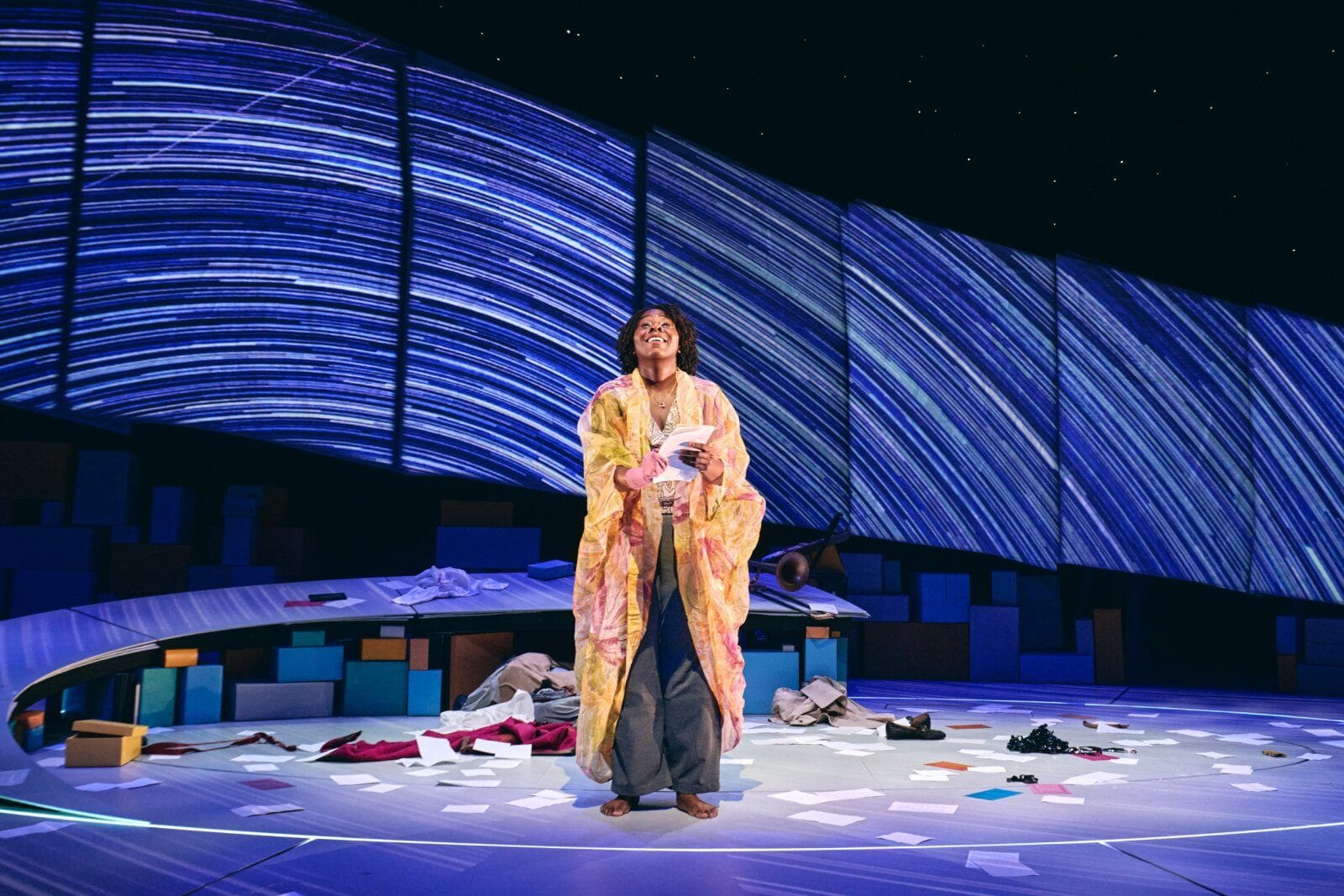
Abigail C. Onwunali
The final realization, accompanied by falling papers, brings the story to a meaningful and wise conclusion. Rather than offering an easy resolution to thegrownwoman’s longing, the ending opens the door to a broader understanding of what creation might mean. The possibility of becoming a mother is only one part of a much larger reckoning with how we define ourselves when life refuses to follow the script we have written for it.
At 95 minutes without intermission, the production is an impassioned theatrical passage through grief, self-forgiveness, and the redefinition of creation. Its restless energy may leave you breathless, but its most lasting moments emerge when the movement stills and the emotional truth comes into focus. Udofia, Woodard, and their accomplished company invite us to consider that creation is not simply about bringing another life into the world. It may also be about learning to forgive ourselves, making peace with what we cannot control, and recognizing alternative ways to bring meaning into our lives.
✦ ✦ ✦ ✦ ✦ ✦ ✦ ✦ ✦ ✦
photos by Valerie Terranova
creation stories and all the important importants
LCT3 at Lincoln Center Theater
Claire Tow Theater, 150 West 65th Street in New York City
95 minutes, no intermission
ends on November 1, 2026
for tickets, call 212.239.6200 or visit LCT
✦ ✦ ✦ ✦ ✦ ✦ ✦ ✦ ✦ ✦
