
Areas We Cover
Categories


Barnaby Hughes
-
Chicago Opera Review: EUGENE ONEGIN (Lyric Opera)
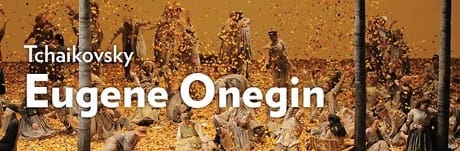
KWIECIEŠƒ’S ONEGIN IS EUGENE THERAPY Having brought seven new productions to Chicago this year, perhaps it was inevitable that Lyric Opera would bring an old one out of the woodwork. But what an excellent one to choose. Tchaikovsky’s Eugene Onegin was last heard nearly ten years ago, so this would seem not a season too…

-
Chicago Opera Review: THE INVENTION OF MOREL (Chicago Opera Theater at the Studebaker Theater)
COPELAND’S MOREL LACKS INVENTION Four years ago, Long Beach Opera (Artistic and General Director Andreas Mitisek’s other company) staged Stewart Copeland’s The Tell-Tale Heart, giving the one-act opera it’s U.S. debut. Based on the short story by Edgar Allan Poe, it was an undeniably madcap production with little to recommend itself beyond sheer novelty. As…
-
Chicago Opera Review: CARMEN (Lyric Opera)
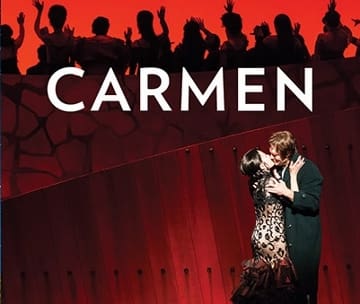
MORE BULL THAN BEAR, BUT NOT MUCH Because Bizet’s Carmen is so well-known, from the exuberance and buoyancy of the overture to the singalong Toreador Song, it’s hard to put together a production that is going to please everyone. One way to make things more interesting for the audience is to switch out some of…
-
Chicago Opera Review: NORMA (Lyric Opera)
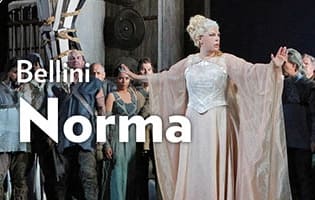
BRAVO FOR BELLINI’S BEL CANTO CONQUEST The second of two bel canto operas performed this season, Vincenzo Bellini’s Norma is a far more satisfying experience than Donizetti’s Lucia di Lammermoor was. For one, the story is more compelling, portraying heroic sacrifice rather than madness. In terms of musical enjoyment, the cast’s finest singer is on…
-
Chicago Opera Review: THE MAGIC FLUTE (Lyric Opera of Chicago)
THIS FLUTE IS MAGICAL Few operas are more delightful than Mozart’s Magic Flute (Die Zauberflöte), which fuses fantasy and adventure with high ideals and memorable melodies. Lyric has aptly billed it as family-friendly fare (child tickets are available), playing up the opera’s whimsical elements at the expense of its moral philosophy and social criticism. The…
-
Chicago Opera Review: DON QUICHOTTE (Lyric)
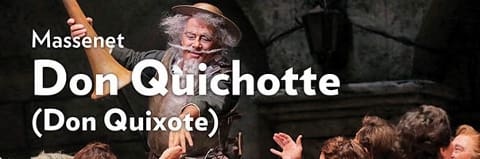
SPANISH WINE IN FRENCH WINESKINS: CLíSICO AND CHARMANTE Jules Massenet (1842-1912)’s Don Quichotte is a delightful opera that, in contrast to Wagner’s Das Rheingold or Berlioz’s Les Troyens, makes few demands on the audience. It is relatively short, tells a well-known story, and balances comedy and drama without overweening tragedy. Although the current production is…
-
Chicago Opera Review: LES TROYENS [THE TROJANS] (Lyric Opera of Chicago)
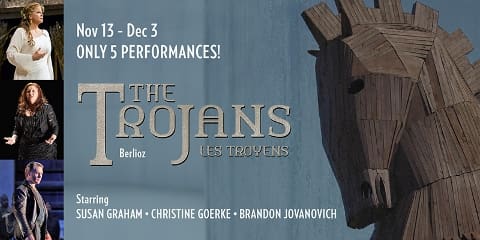
WHEN BIGGER ACTUALLY IS BETTER Everything about Les Troyens is big. Hector Berlioz’s massive opera boasts 5 acts, lasts nearly 5 hours even with numerous small cuts (and two 30-minute intermissions), has 22 named roles, and requires a vastly expanded chorus (about 100 singers) and 2 orchestras (the main one in the pit and another offstage) as well as…
-
Chicago Theater Review: LONGER! LOUDER! WAGNER! THE SECOND CITY WAGNER COMPANION (The Second City and Lyric Opera)
MAKING FUN OF OPERA FUN AGAIN This mostly satirical Lyric Opera/Second City co-production contains little irony apart from the title. For while it definitely IS about Wagner, it most certainly IS NOT loud or long (But why louder and longer anyway? Louder and longer than what?). This ninety-minute show comprises a series of interconnected sketches…
-
Chicago Opera Review: LUCIA DI LAMMERMOOR (Lyric Opera)
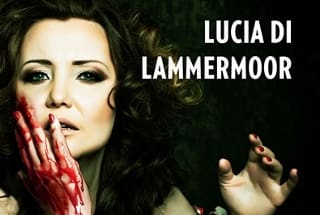
PLEASE, SIR, I WANT SOME LAMMERMOOR Perhaps this season’s opening production of Wagner’s Das Rheingold raised the bar too high. Lyric’s follow-up effort doesn’t quite reach those celestial heights. And this comes from someone who much prefers Donizetti’s bel canto score. Indeed, this Lucia di Lammermoor is eminently enjoyable to listen to, boasting excellent performances…
-
Chicago Opera Review: DAS RHEINGOLD (Lyric Opera)

LYRIC BRINGS HOME THE GOLD Wagner’s Ring Cycle has arrived in Chicago and it is magnificent. If you’re like me and you’ve never seen it before, then prepare yourself for an experience beyond imagining. Richard Wagner’s epic fantasy features a cast of gods, giants, dwarves, and nymphs, a plot contrasting love and beauty with power…
-
Chicago Opera Review: LA CALISTO (Haymarket Opera)

THE GODS MUST BE ARE CRAZY! It’s not often that one gets to see the same opera twice, especially when the opera in question is a delightful rarity like Francesco Cavalli’s La Calisto, which debuted in 1651 and remained unperformed for more than three centuries. Fortunately, La Calisto’s popularity is growing; and after seeing Haymarket…
-
Chicago Theater Review: THE KING AND I (Lyric Opera)
A ROYAL PRODUCTION The King and I is a rather curious bundle of contradictions and opposites. First, it’s based on a true story, but plays out more like a fairy tale. In fact, it doesn’t seem all that strange that a king with dozens of submissive wives should fall in love with yet another woman,…
-
Chicago Opera Review: ROMEO AND JULIET (Lyric)
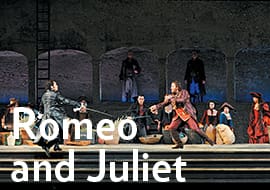
UNEVEN PRODUCTION COMBINES CARNIVAL AND ROMANCE As part of Chicago’s yearlong celebrations marking the 400th anniversary of William Shakespeare’s death, Lyric Opera has mounted a production of Charles Gounod’s Roméo et Juliette. One of the French composer’s finest works, and an excellent example of French opera, it successfully debuted in 1867. Although the plot needs…
-
Chicago Opera Review: DER ROSENKAVALIER (Lyric)
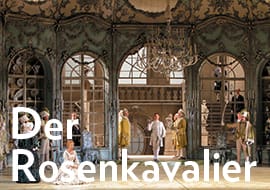
MAJESKI’S MAJESTIC MARSCHALLIN Lyric Opera’s new production of Der Rosenkavalier is beautiful, charming, and magnificent. It delightfully exceeded my expectations and gave me a new appreciation for the operas of Richard Strauss. I’m not quite sure what I expected, but I’ll admit to being apprehensive. Four-hour operas in German are, well, long, especially on a…
-
Chicago Opera Review: LA VOIX HUMAINE & GIANNI SCHICCHI (Chicago Opera Theater at the Harris)
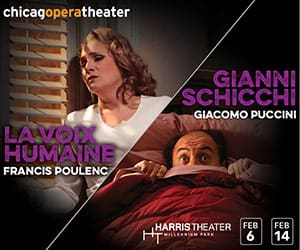
A DAMNED GOOD PAIRING What could be a more appropriate title for an opera than La Voix Humaine? What better source material for an opera than Dante’s Divina Commedia? Chicago Opera Theatre combines the two in the unusual pairing of Poulenc’s operatic monologue and Puccini’s one-act Gianni Schicchi. It is a surprisingly successful and enjoyable…
-
Chicago Theater Review: VICES and VIRTUES (Profiles)

IF BREVITY WAS THE SOUL OF ETHICS: One of the advantages of one-act plays is that if they’re bad, you don’t have to wait long for them to be over. (I can’t ever remember wishing a good play would go on longer.) Fortunately, Neil LaBute’s Vices and Virtues isn’t at all bad. Some of the…
-
Chicago Opera Review: NABUCCO (Lyric Opera)
STAGNANT STAGING AND CRAZY COSTUMES, BUT THE CAST AND CHORUS CAPTIVATE There’s a good reason why Verdi’s operas are typically described as “grand opera.” They’re big and bold, requiring massive orchestras and choruses. Soloists need strong voices with ample range and power. If this makes them somewhat formidable to produce, then Nabucco has a reputation for…
-
Chicago Opera Review: BEL CANTO (Lyric Opera)
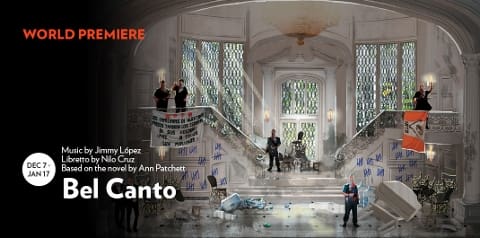
DISAPPOINTING DEBUT DELIVERS DAMAGED GOODS Lyric Opera’s world premiere production of Bel Canto fails to live up to its name (translation: beautiful singing). While first-time opera composer Jimmy López expressly does not attempt to write in the bel canto style, neither does he write beautiful vocal lines’”at least not very many, or enough, of them….
-
Chicago Opera Review: THE MERRY WIDOW (Lyric)
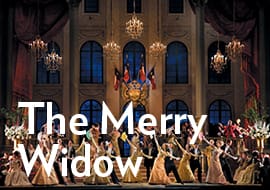
A MERRY WIDOW MAKES FOR A MERRY AUDIENCE After the unbearable ugliness of Berg’s Wozzeck, Lyric Opera’s beautiful production of Franz Lehár’s The Merry Widow (Die Lustige Witwe) comes as a breath of fresh air. Originally staged last season at the Metropolitan Opera, this production features a brand new English translation by Jeremy Sams of…
-
Chicago Opera Review: AMADIGI DI GAULA (Haymarket Opera Company)
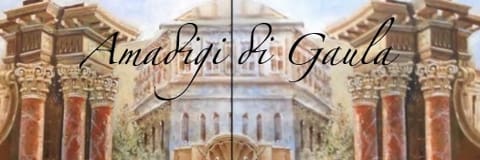
HURRAH FOR HAYMARKET’S HANDELIAN HERO Appropriately enough, Haymarket Opera Company (HOC) is kicking off its fifth season with a Handel opera that premiered on London’s Haymarket Street 300 years ago. The fifth of the German composer’s operas written in England, Amadigi di Gaula is a delightfully magical drama set in the exuberant baroque style that…

Interview: DAVID SERERO (director of “Tovah,” a documentary about Tovah Feldshuh)
by Shari Barrett | August 31, 2026
in Film, Interviews, Los AngelesMusic Preview: PACIFIC JAZZ ORCHESTRA BENEFIT CONCERT (October 10, 2026 | L.A.)
by pwsadmin | August 30, 2026
in Los Angeles, MusicTheater Review: ADOLESCENT SALVATION (Theater Wit / Chicago)
by Croydon Fernandes | August 29, 2026
in Chicago, TheaterDance Preview: GLORYA KAUFMAN PRESENTS DANCE AT THE MUSIC CENTER 2026–27 (L.A.)
by pwsadmin | August 28, 2026
in Dance, Los AngelesTheater Preview: KAIJU (The Road Theatre Company & BroadStage / Los Angeles)
by pwsadmin | August 28, 2026
in Los Angeles, TheaterDance Preview: DRACULA, A DARK SHADOW (State Street Ballet / Santa Barbara)
by Gregory Bernard | August 28, 2026
in Dance, Los Angeles, RegionalTheater Review: BEING PIAF (Odyssey Theatre Ensemble / Los Angeles)
by Ernest Kearney | August 27, 2026
in Los Angeles, Theater
Search Articles
Please help keep
Stage and Cinema going!
